General
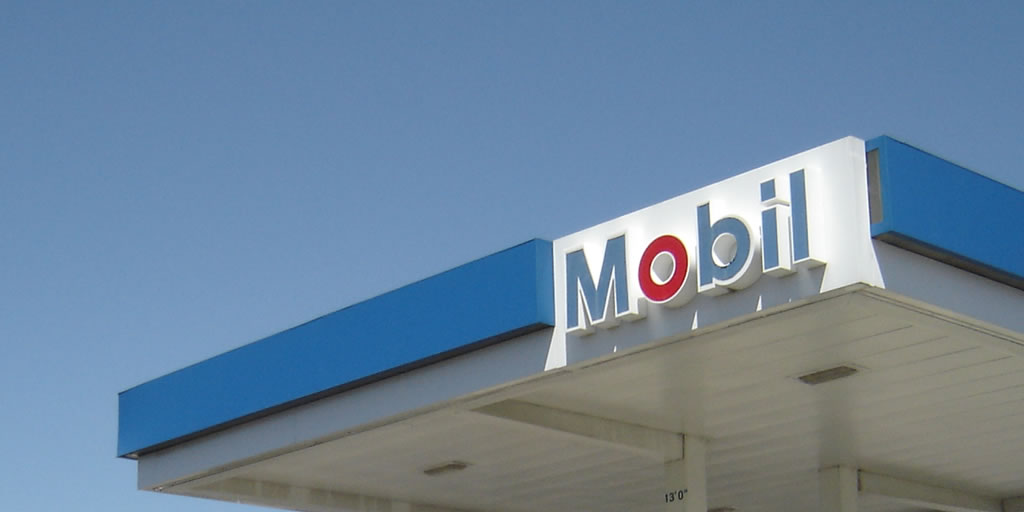
Court Authorises EFCC to Arrest Mobil Nigeria MD
By Modupe Gbadeyanka
The Economic and Financial Crimes Commission (EFCC) has been given the permission to arrest the Managing Director of Mobil Oil Nigeria Plc (11 Plc), Mr Richard Laing, after he allegedly failed to honour invitations from the anti-graft agency.
The EFCC, in a statement on Wednesday, disclosed that the authorisation for the arrest of Mr Liang was given by Justice Okon Abang of the Federal High Court sitting in Abuja.
According to the commission, the application for a bench warrant on the ExxonMobil Nigeria chief was granted on Friday, January 29, 2021.
The EFCC explained that three invitations to Mr Liang to aid its investigation into an alleged procurement fraud in the Major Integrity Pipelines Project involving Mobil Producing Nigeria as the contracting company, Suffolk Petroleum Services Limited as the main contractor, Saipem Contracting Nigeria, Global Offshore Limited and Van Ord as sub-contractor to SPSL were rebuffed by him.
The frustration of ignoring its calls led the agency to approach the court to obtain an order to apprehend him to answer questions relating to the alleged fraud to the tune $213 million.
Mobil Oil is one of the oil companies trading their shares on the Nigerian Stock Exchange (NSE). Yesterday, the value of the company’s stocks remained unchanged at N228 each, with 32,153 units traded by investors.
It is not certain if the news of the intended arrest of its chief executive would affect its share price at the market on Thursday.
General
Sahel Insurgency Pushes Toward Nigeria as Extremist Groups Gain Footholds
By Adedapo Adesanya
A new report released by the Armed Conflict Location & Event Data Project (ACLED), a Washington-based crisis-tracking consultancy, has warned that extremist groups are jostling for control across West Africa stretching from Mali to Nigeria.
It warned that militant organizations, once contained largely within Mali and parts of Burkina Faso, are now converging along a dangerous belt extending all the way to Nigeria. Over the last decade, tens of thousands have been killed and millions displaced, making West Africa the world’s deadliest hotspot for jihadist activity.
The southward spread of militant violence from the Sahel has made the past year in Benin Republic, which foiled an attempted coup on Sunday, its deadliest on record, with nearly 70 per cent more fatalities as al-Qaeda affiliate Jama’at Nasr al-Islam wal-Muslimin (JNIM) stepped up attacks from eastern Burkina Faso.
JNIM crossed a new threshold in October when it staged its first documented attack inside Nigeria after a decade of bloodshed in Mali and major incursions into Burkina Faso and Niger. ACLED reports that the group is now embedding itself in the northwest and parts of the north-central region.
ACLED warns that if current trends persist, 2026 may bring deeper instability and fragmentation in the central Sahel and along its southern borders. Nigeria’s northmost part lies within the southern fringe of the Sahel ecological zone.
Nigeria is already fighting a war against terrorism in the North East, where Boko Haram and Islamic State West Africa Province (ISWAP) operate across the Lake Chad basin.
This development presents a fresh security dilemma for President Bola Tinubu, who is already contending with mass abductions, banditry, and long-running insurgencies.
He already faces additional pressure from US President Donald Trump, whose claims of systematic killings of Christians in Nigeria have been widely debunked but continue to fuel diplomatic tension.
ACLED noted that Russia’s military partnerships with juntas in Niger, Burkina Faso and Mali, which seized power in recent years riding a wave of anti-French sentiment are weak, evidenced by Mali currently witnessing its highest monthly levels of recorded violence since 1997.
It also noted that the region’s wave of coups has only worsened long-standing drivers of extremism: deepening poverty, environmental stress, corruption, broken governance, and humanitarian collapse. Just recently, a coup occurred in Guinea Bissau and one was almost successful in neighbouring Benin Republic.
“In the coming year, this subregion is likely to become a key arena of competition among militant groups,” Mr Heni Nsaibia, West Africa senior analyst at ACLED, said in the report. “One of the key developments shaping the outlook for 2026 is the consolidation of a new frontline in the Benin, Niger and Nigerian borderlands.”
General
The Poster That Breathes: Designing Visuals That Feel Alive Even When Still
Have you ever noticed a poster that seemed to move, not actually, but emotionally? Perhaps its colors seemed to pulse or the composition changed with your eyes. That’s the magic of visual rhythm, when static design seems cinematic, living, and breathing.
-
Directional flow: Diagonal or curved lines imply movement.
-
Circular composition: Reeks of energy captured during spin.
-
Gradient play: Gradual color transitions mimic emotional movement.
Emotional pacing: imparting stillness with a heartbeat
-
Blending light and dark areas to replicate pulses of energy and serenity.
-
Employing color temperature changes — to cool, warm — to convey mood shift.
-
Creating layered depth, so that observers feel air and space even on a two-dimensional surface.
Creating a poster that feels cinematic
-
Thoughtful framing — all that leads the viewer in one emotional direction.
-
Atmospheric lighting — the shadows are as full of feeling as highlights.
-
Anticipation — the feeling that the next frame is about to be cut in.
When silence speaks louder
-
One feather drifting across black space can feel like time standing still.
-
A whispery ripple over calm water evokes emotional tension.
-
A texture dissolving into nothing feels like wind blowing through light.
Bringing identity to logos
Giving your poster life with Dreamina
Step 1: Write a text prompt
Step 2: Adjust parameters and generate
Step 3: Customize and download
Editing: the art of breathing room
The final exhale
General
FCCPC Seals Ikeja Electric Headquarters Over Alleged Consumer Rights Violation
By Adedapo Adesanya
The Federal Competition and Consumer Protection Commission (FCCPC) on Thursday sealed the premises of the Ikeja Electric Distribution Company (IKEDC) in the Alausa area of Lagos for alleged violation of consumer rights.
Leading FCCPC official to carry out to closure, the Director of Surveillance and Investigation, Mr Bola Adeyinka, said the move was in line with the Federal Competition and Consumer Protection Act (FCCPA) 2018 after repeated attempts to resolve the matter.
“Sealing this facility is a proportionate enforcement measure taken only after repeated engagement and several opportunities for voluntary compliance,” Mr Adeyinka said in a statement.
“The seal will remain in place until Ikeja Electric complies fully with the directives issued by both NERC and the FCCPC and provides written evidence of that compliance,” he added.
According to the FCCPC, the Nigerian Electricity Regulatory Commission (NERC) issued a binding decision directing Ikeja Electric to unbundle a Maximum Demand account into 20 non-Maximum Demand accounts, to recognise each of the 19 residential units and a service point owned by the complainant as separate customer units, and to provide the required metering and connection.
“Ikeja Electric did not carry out that decision,” the statement read in part. “Because of this failure, the complainant has been without electricity supply for more than two and a half years.
“This was despite paying all charges requested by Ikeja Electric and meeting every obligation. The lack of electricity has prevented the complainant from putting the 19 residential units to use.”
It said the move followed unsuccessful attempts to resolve the issues through warnings and dialogue.
FCCPC listed one of such attempts to include a directive to the company in April 2025 on the steps required and the timelines for compliance.
However, “No action was taken. On 2nd October 2025, the Commission issued a Compliance Notice requiring full compliance within seven business days.
“The company still did not comply,” the commission explained.
As of press time, Ikeja Electric, which supplies electricity to several areas in Lagos, has not yet commented on the matter.
-
Feature/OPED6 years agoDavos was Different this year
-
Travel/Tourism9 years ago
Lagos Seals Western Lodge Hotel In Ikorodu
-
Showbiz3 years agoEstranged Lover Releases Videos of Empress Njamah Bathing
-
Banking7 years agoSort Codes of GTBank Branches in Nigeria
-
Economy3 years agoSubsidy Removal: CNG at N130 Per Litre Cheaper Than Petrol—IPMAN
-
Banking3 years agoFirst Bank Announces Planned Downtime
-
Banking3 years agoSort Codes of UBA Branches in Nigeria
-
Sports3 years agoHighest Paid Nigerian Footballer – How Much Do Nigerian Footballers Earn