
General
DPR Television Programme Returns on NTA

By Adedapo Adesanya
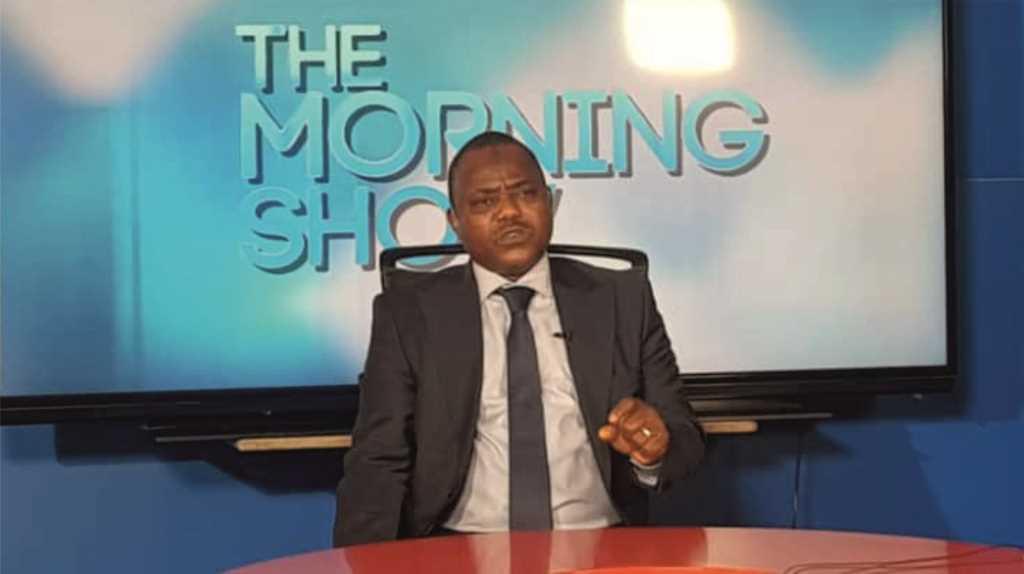
A television programme put together by the Department of Petroleum Resources (DPR) will return to the screens from Thursday, May 6, 2021, the agency has confirmed.
The show will air on all Nigeria Television Authority (NTA) channels on DSTV channel 251, STARTIMES channel 104 and GOTV. It would also be available to view in parts of African countries and Europe.
The 13-episode programme slated to air at 6:00 p.m. is designed to deepen stakeholders understanding of the roles and responsibilities of DPR as well as provide an update on global oil and gas industry matters to viewers.
According to a statement signed by its Head, Public Affairs, Mr Paul Osu, the programme will showcase how the agency has continued to use its service instruments of licences, permits and approvals to enable business and create opportunities for investors and stakeholders in the oil and gas industry in Nigeria.
The DPR added that it will continue to guarantee investments, enable participation and authorise activities in the oil and gas industry in alignment with the aspirations of the government to provide energy security for the nation and create jobs for Nigerians.
The DPR is responsible for ensuring compliance with petroleum laws, regulations and guidelines in the oil and gas industry. Other responsibilities include monitoring of operations at drilling sites, producing wells, production platforms and flow stations, crude oil export terminals, refineries, storage depots, pump stations, retail outlets, any other locations where petroleum is either stored or sold and all pipelines carrying crude oil, natural gas and petroleum products.
Currently led by Mr Sarki Auwalu, the agency carries out the following functions, among others: supervising all petroleum industry operations being carried out under licences and leases in the country; ensures that operations are in line with national goals and aspirations including those relating to flare down and domestic gas supply obligations; ensuring that health, safety and environment regulations conform with national and international best oil field practice.
It also maintains records on petroleum industry operations, particularly on matters relating to petroleum reserves, production/exports, licences and leases; advises Government and relevant agencies on technical matters and public policies that may have an impact on the administration and petroleum activities.
It is its duties to process industry applications for leases, licences and permits; ensure timely and accurate payments of Rents, Royalties and other revenues due to the government, and maintain and administer the National Data Repository (NDR).



By Modupe Gbadeyanka
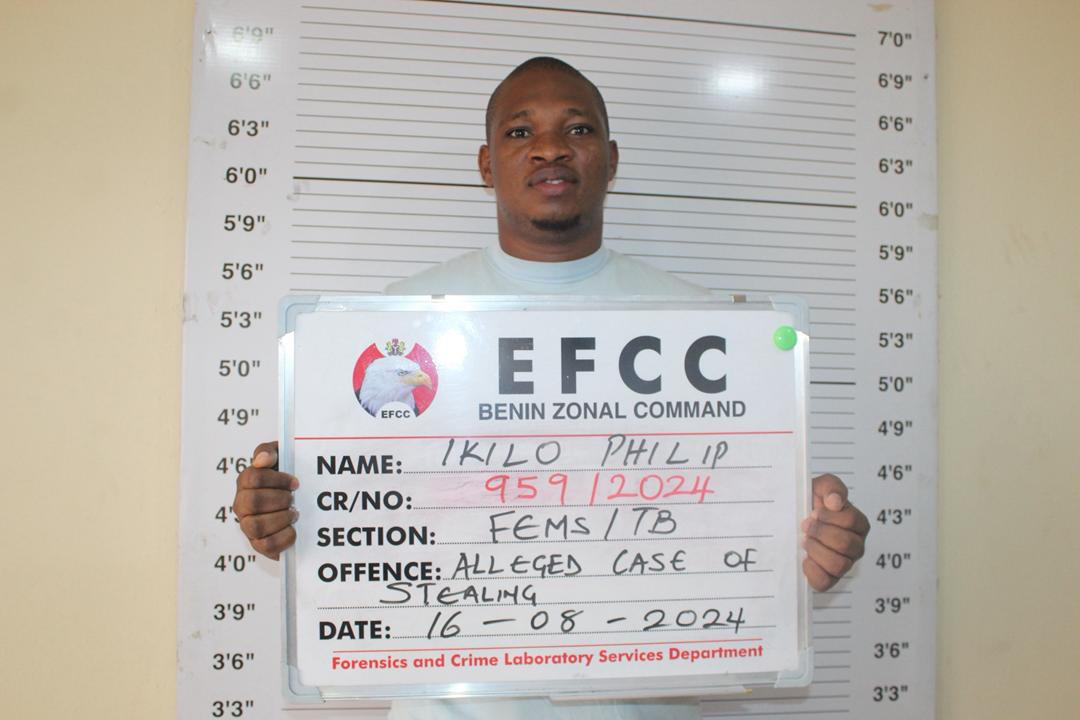
One Mr Osamudiamen Philip Ikilo has been handed a two-year imprisonment for a Bitcoin fraud to the tune of $19,400.
He was found guilty and convicted of the crime by Justice W.I. Aziegbemhin of the Edo State High Court sitting in Benin City, the state capital.
Delivering the judgment on Monday, March 23, 2026, the judge sentenced Mr Ikilo to two years’ imprisonment without an option of fine.
The convict got into trouble when he offered to assist his victim, Ms Cynthia Imade Alile, to convert her 0.52092582 Bitcoin worth $19,400, but failed to remit the money after the conversion.
Ms Alile petitioned the Economic and Financial Crimes Commission (EFCC), which looked into the matter and brought him before the court for prosecution on a one-count charge of stealing.
“That you Osamudiamen Philip Ikilo (m) sometime in March 2024 within the jurisdiction of this court did steal Bitcoin worth the sum of $19,400 belonging to one Cynthia Imade Alile by fraudulently converting the said sum to your use, and thereby committed an offence contrary to Section 287 of the Criminal Law of Edo State Law 2022 and punishable under Section 294 of the same Law,” the charge read.
When the charge was read to him during arraignment by the EFCC, the defendant pleaded not guilty, setting the stage for trial.
In the course of the trial, prosecution counsel, A. S. Bala-Ribah, called two witnesses and also tendered documents which were admitted by the court. On his part, the defendant called two witnesses, including himself.

By Adedapo Adesanya
Justice Emeka Nwite of the Federal High Court in Abuja has affirmed the final forfeiture of $13 million linked to a Lagos socialite, Ms Aisha Achimugu, and her company, Oceangate Engineering Oil & Gas Limited, to the federal government of Nigeria.
Delivering judgment, Justice Nwite held that the Economic and Financial Crimes Commission (EFCC) established that the foreign currency was proceeds of fraud and unlawful activities.
The judge further held that Oceangate Engineering Oil & Gas Limited failed to establish how it came by the money, saying the anti-money laundering agency satisfied all requirements for the funds to be classified as proceeds of fraud and to be forfeited to the appropriate authority.
He dismissed the claims that the $13 million was gifts received into the Oceangate Engineering Company by Ms Achimugu, adding that the woman never came to the court to show cause why the huge amount of money should not be forfeited to the government.
He held that no single person who gave the monetary gift to Aisha Achimugu to the tune of $13 million was called to testify.
The judge further held that the burden to establish genuine ownership of the money was not established by the applicant to counter the claims of the anti- graft agency that the money was the proceeds of fraud based on its investigation.
According to the judge, Oceangate Engineering Company did not show the business it undertook that fetched it the money, nor did it show whether any payment was made to it by any of its customers.
Justice Nwite had, on August 22, 2025, granted the anti-graft agency’s motion ex parte for an interim order forfeiting the sum of $13 million linked to Oceangate Ltd to the Federal Government over allegations that the fund was proceeds of unlawful activity.
The judge had then directed the commission to publish the order in a national daily for interested people to show cause within 14 days why the fund should not be permanently forfeited to the federal government.
By Adedapo Adesanya
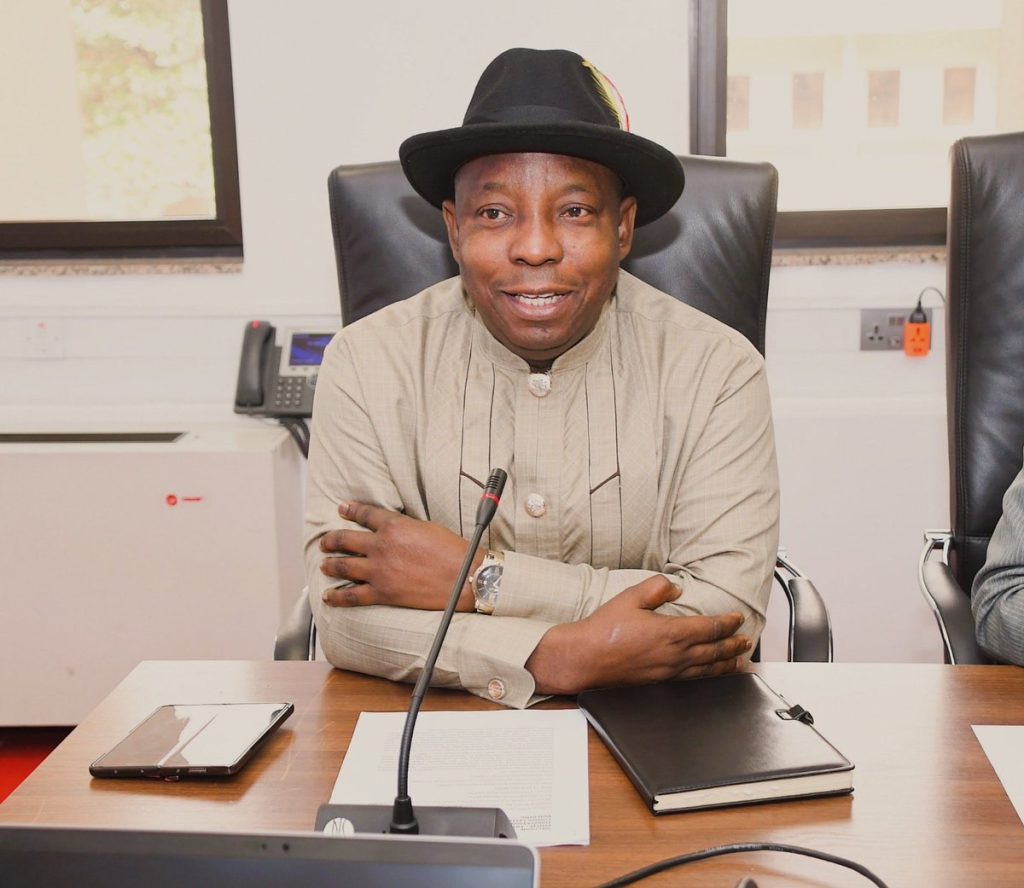
The federal government has inaugurated a 17-member Planning Committee to coordinate the National Flag-Off of the Energise Commercialisation Now (ECoN) Initiative, a flagship programme aimed at transforming research outputs into economic value.
Speaking at the inauguration in Abuja, the Permanent Secretary of the Ministry of Innovation, Science and Technology, Mr Philip Ndiomu Ebiogeh, described the initiative as a strategic intervention to convert Nigeria’s vast research and innovation outputs into market-ready products, scalable enterprises, and job-creating opportunities.
He noted that ECoN will mobilise stakeholders nationwide to identify bankable innovations and accelerate their transition from laboratories to the marketplace, stressing that the country must move beyond theoretical research to practical solutions that drive industrial growth and national prosperity.
The Permanent Secretary disclosed that the Minister of Innovation, Science and Technology, Mr Kingsley Tochukwu Udeh, had earlier briefed the First Lady, Mrs Oluremi Tinubu, on the initiative and proposed her as a champion of the programme, with the national flag-off scheduled for Kano State.
He explained that Kano was deliberately selected due to its historic role as a commercial and industrial hub, offering strong potential to attract investment, stimulate enterprise, and create jobs.
The Committee is chaired by the Minister, with the Permanent Secretary as Co-Chairman, while the Director-General, National Biotechnology Research and Development Agency, NBRDA, and the Director-General, Sheda Science and Technology Complex, SHESTCO, serve as Alternate Chairmen.
Members include Professor Nnayelugo Ike-Muonso, Dr Kazeem Kolawole Raji, Dr Jummai Adamu, Dr (Mrs) Obiageli Amadiobi, Dr Kabiru Mu’azu, Dr Anwal Mustapha, Engr Ibiam Oguejiofo, Mr Moses Fatogun, Mr Adamu Sulaiman (a representative of SMEDAN), Dr Prince Lawrence Eze, Mr Sani Garba, Dr Muhammad Mustapha, Dr Chioma Okeke, Mr Luther Onyemkpa, Mr Charles Egumgbe, and Dr Nwankwo Nnenna serving as Secretary.
The national flag-off is proposed for late April or early May 2026, subject to Presidential approval.
The Ministry reaffirmed its commitment to positioning innovation as a key driver of economic diversification and sustainable development, in line with President Bola Tinubu’s Renewed Hope Agenda.











-
 Feature/OPED6 years ago
Davos was Different this year
-
Travel/Tourism10 years ago
Lagos Seals Western Lodge Hotel In Ikorodu
-

 Showbiz3 years ago
Estranged Lover Releases Videos of Empress Njamah Bathing
-
 Banking8 years ago
Sort Codes of GTBank Branches in Nigeria
-

 Economy3 years ago
Subsidy Removal: CNG at N130 Per Litre Cheaper Than Petrol—IPMAN
-

 Banking3 years ago
Sort Codes of UBA Branches in Nigeria
-

 Banking3 years ago
First Bank Announces Planned Downtime
-

 Sports3 years ago
Highest Paid Nigerian Footballer – How Much Do Nigerian Footballers Earn