General
Media Leaders Discuss Digital Transformations, AI, Others at Bloomberg Forum 2023
By Adedapo Adesanya
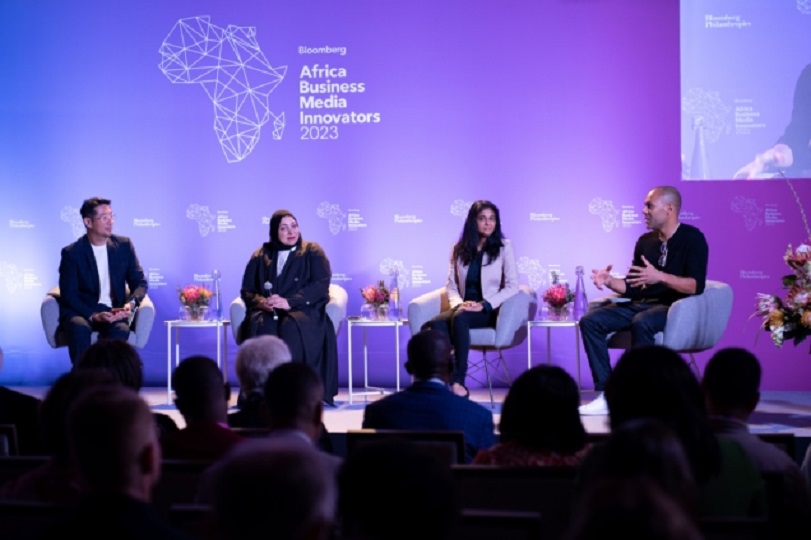
Media, business, government, technology, and community leaders from across Africa and the globe are in Cape Town, South Africa for this year’s annual Africa Business Media Innovators (ABMI) forum.
They are in the country for the 2023 Bloomberg Foru, which started on Tuesday, October 31, and will end on Wednesday, November 1, to explore innovative approaches to fostering a vibrant media sector in Africa.
The event is co-hosted by the chief executive of Bloomberg Media, Mr M. Scott Havens, the Editor-in-Chief Emeritus of Bloomberg News, Mr Matthew Winkler, and the Corporate Philanthropy for the Middle East and Africa at Bloomberg, Ms Erana Stennett.
The ABMI forum focuses on the ideas and business solutions that can contribute to the future of media and journalism in Africa and has brought together a range of speakers including media owners, senior editors, business leaders, government offices, community leaders, and philanthropic organizations from over 10 countries.
Participants heard from speakers on a range of topics from the influence of AI and digital technologies on media in Africa, to the future of work in the newsroom and the sustainability of legacy publications across the continent.
Day one concluded with a Gala Dinner at the Zeitz Museum of Contemporary Art Africa in Cape Town, followed by a private tour of Mary Evans’ exhibition ‘GILT’, led by Ms Koyo Kouoh, Executive Director, and Chief Curator, Zeitz MOCAA.
Speaking at the event, Ms LaSharah Bunting, CEO, Online News Association, said, “Media continues to evolve with the needs and development of our readers, watchers, and listeners. As our viewers have changed, so too have our ways of working. I look forward to discussing how newsrooms harness the opportunities of our evolving media landscape, while also tackling some of the most pressing challenges, such as misinformation and fake news.”
As for Ms Thembisa Fakude, CEO, Mail & Guardian, she said, “While technological innovation is providing huge opportunities for African media to open its reporting to a wider audience, we must be mindful of the risks that come with this, particularly around misinformation. Given the pace of this technological revolution, it’s crucial that the news industry comes together to discuss how we continue creating a vibrant and responsible news industry that informs the public while supporting economic growth right across the continent.”
Ms Danai Gurira, Actress, Playwright, Activist, Artistic Director of Almasi Collaborative Arts, UN Women Goodwill Ambassador, said storytelling is one of the most powerful tools for changing the perception of Africa and allowing a complex, rich self-exploration of its history and unique culture.
“It’s boundless possibilities to give Africa its own voice is what brought me to writing and acting, and I seek to connect with other innovators to share ideas and discuss solutions for taking Africa’s creative industry to the next level.”
The annual event forms part of the Bloomberg Media Initiative Africa (BMIA), a pan-African program launched by Michael R. Bloomberg in 2014. The initiative is designed to advance business journalism in Africa and accelerate the development of a globally competitive media and financial reporting industry.
General
DisCos Collect N196bn in March, Miss N50bn of Billed Revenue
By Adedapo Adesanya
Nigeria’s electricity distribution companies (DisCos) generated N196.13 billion in revenue in March 2026, despite billing customers a total of N246.43 billion during the month, according to the latest commercial performance report released by the Nigerian Electricity Regulatory Commission (NERC).
The figure represents a slight decline from the N196.68 billion collected in February, highlighting persistent challenges in revenue recovery across the power distribution segment, even as energy supplied to the grid continued to improve.
NERC’s March 2026 fact sheet showed that electricity billing rose by 1.71 per cent from N242.29 billion recorded in February, reflecting increased energy deliveries and customer charges. However, collection efficiency declined to 79.59 per cent from 81.17 per cent in the previous month, indicating that a significant portion of billed revenue remained uncollected.
The regulator disclosed that DisCos received 293.76 million kilowatt-hours of electricity during the review period, representing a 6.02 per cent increase compared to February. The development suggests a modest improvement in power availability across the distribution network.
Despite the increase in energy supplied, revenue recovery remains uneven across the industry. NERC reported that the average approved tariff for March stood at N124.30 per kilowatt-hour, while actual collections averaged ₦100.75 per kilowatt-hour, resulting in an overall revenue recovery efficiency of 81.05 per cent.
Among the eleven DisCos, Ikeja Electric emerged as the strongest performer, posting a revenue recovery efficiency of 99.30 per cent. Eko Electricity Distribution Company followed with 95.73 per cent, while Benin DisCo recorded 85.18 per cent.
At the lower end of the performance table, Kaduna Electric recorded the weakest recovery rate at 35.65 per cent. Jos DisCo and Yola DisCo also struggled, achieving recovery efficiencies of 53.53 per cent and 58.58 per cent, respectively.
Ikeja Electric also led in collection efficiency with 96.38 per cent, ahead of Benin DisCo at 90.97 per cent and Eko DisCo at 87.68 per cent. Kaduna, Jos and Yola remained the poorest performers in this category, underlining the persistent commercial and operational challenges facing power distributors in parts of northern Nigeria.
In terms of billing efficiency, Eko DisCo ranked first with 92.30 per cent, followed by Port Harcourt DisCo at 90.36 per cent and Ikeja Electric at 87.76 per cent. Yola DisCo recorded the lowest billing efficiency at 58.68 per cent.
The latest figures underscore the mixed realities within Nigeria’s power sector. While electricity supply and customer billing continue to improve, revenue collection remains a major obstacle to the financial sustainability of the industry.
Analysts note that stronger metering penetration, improved customer confidence, reduction in energy theft and more efficient collection systems will be critical if DisCos are to close the widening gap between electricity supplied, billed revenue and actual collections.
The March performance report comes as regulators and industry stakeholders intensify efforts to strengthen the commercial viability of the electricity market, attract fresh investment and improve service delivery across the country.
General
Interswitch Adopts Temenos Platform to Deliver Banking Services to African Lenders
By Adedapo Adesanya
Interswitch has entered into a partnership with Geneva-headquartered banking software provider Temenos to offer managed banking services to financial institutions across the continent, deepening its push into banking technology.
The partnership will see Interswitch adopt Temenos’ banking technology across core banking, digital banking, payments, wealth management, and financial crime management.
This will enable the firm to provide cloud-hosted and on-premises managed services to lenders on the continent. The service will initially target Nigeria, Ghana, Côte d’Ivoire, Kenya, and other African markets.
“This is a pivotal moment for Interswitch as we accelerate our expansion beyond payments and reimagine digital banking for Africa,” Mr Jonah Adams, managing director for Digital Infrastructure and Managed Services at Interswitch, said in a statement.
By combining Temenos’ software with its existing footprint across the continent, Interswitch is positioning itself as a technology partner that can help banks upgrade critical systems without having to manage the complexity of large-scale technology deployments.
“By adopting Temenos’ cloud-native, composable platform, Interswitch gains the flexibility and scalability to accelerate its next phase of growth and deliver banking services that meet the needs of African markets,” Mr Adams added.
For Temenos, the deal strengthens its presence in Africa through a partner with deep relationships across the banking sector. It lost one of its banking customers, Sterling Bank, in 2024 after the tier-2 Nigerian bank switched to SEABaaS, a new custom-built core banking application.
“Interswitch is an important new customer and partner for Temenos in Africa,” said Mr William Moroney, Chief Revenue Officer at Temenos. “Interswitch’s strong presence across the continent also extends our reach and further strengthens our ecosystem and partner network.”
Founded in 2002, Interswitch built its reputation as one of Africa’s largest payments companies through products such as Quickteller and Verve, its domestic card scheme.
General
TGI Group, Wilmar to Form $12bn West Africa Food Giant in Major Merger
By Adedapo Adesanya
Tropical General Investments (TGI) Group and Singapore-based Wilmar International have agreed to combine their Nigeria and Republic of Benin operations into a 50:50 joint venture aimed at building a dominant integrated food and agribusiness platform across West Africa, targeting a market estimated at $12 billion.
The proposed merger will consolidate operations across several value chains, including agriculture, oil palm plantations, edible oils, edible nuts, rice, food manufacturing, and distribution, creating one of the region’s largest end-to-end food production and supply chains.
Under the arrangement, both firms will integrate their complementary strengths, with Wilmar contributing global expertise in palm oil, speciality fats, and large-scale agribusiness operations, while TGI brings established local manufacturing capacity, consumer brands, and an extensive distribution network across Nigeria and neighbouring markets.
Chairman and Chief Executive Officer of Wilmar International, Mr Kuok Hong, said the partnership would enhance both firms’ ability to serve Africa’s expanding consumer base, describing Nigeria and Benin as strategic growth markets.
“For more than four decades, TGI Group has built a leading position in Nigerian food manufacturing and distribution. This partnership will leverage Wilmar’s global scale and expertise as well as TGI’s local knowledge to deliver innovative food solutions across Africa,” added TGI Group founder and chairman, Mr Cornelis Vink.
On his part, Vice Chairman of TGI Group, Mr Farouk Gumel, said the deal reflects confidence in Nigeria’s long-term economic prospects, adding that it would deepen domestic value addition, strengthen food security, support smallholder farmers, and create jobs.
Adding his input, Wilmar’s Africa Head, Mr Santosh Pillai, described the transaction as a strategic fit, noting that the combined entity would have the scale, local insight, and operational depth needed to better serve consumers in the region.
The companies said the transaction is expected to be completed in the 2026 financial year, subject to regulatory approvals and other customary conditions.
-
Feature/OPED6 years agoDavos was Different this year
-
Travel/Tourism10 years ago
Lagos Seals Western Lodge Hotel In Ikorodu
-
Showbiz3 years agoEstranged Lover Releases Videos of Empress Njamah Bathing
-
Banking8 years agoSort Codes of GTBank Branches in Nigeria
-
Economy3 years agoSubsidy Removal: CNG at N130 Per Litre Cheaper Than Petrol—IPMAN
-
Banking3 years agoSort Codes of UBA Branches in Nigeria
-
Banking3 years agoFirst Bank Announces Planned Downtime
-
Sports3 years agoHighest Paid Nigerian Footballer – How Much Do Nigerian Footballers Earn