General
NDLEA Foils Exports of Cocaine, Meth to UK, Saudi, Others
By Adedapo Adesanya
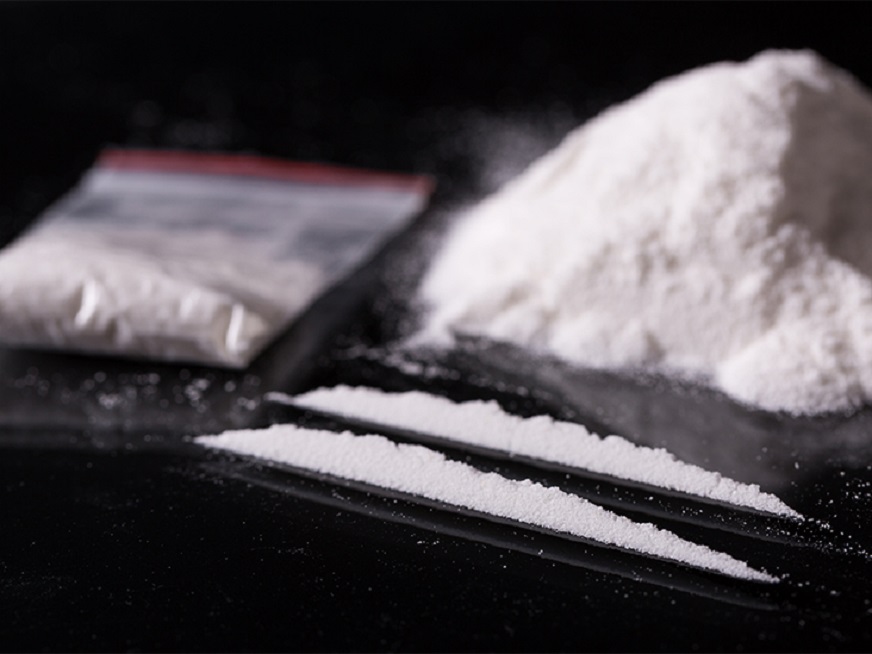
Operatives of the National Drug Law Enforcement Agency (NDLEA) have intercepted consignments of illicit drugs, including cocaine, methamphetamine, and its precursor chemical, ephedrine going to the United Kingdom, Saudi Arabia, New Zealand and Cyprus.
The interceptions were made at the Murtala Muhammed International Airport (MMIA), Lagos; the Nnamdi Azikiwe International Airport, Abuja; and at the offices of some courier companies.
At least three traders at the Trade Fair Complex in the Ojo area of Lagos, with Mr Nwudele Basil Christopher, Mr Chiedu Ezenwani Francis and Mr Donatus Nwojiji arrested in connection with attempts to export the 52.10 kilograms of ephedrine, a precursor chemical and active ingredient for the production of methamphetamine.
NDLEA spokesman, Mr Femi Babafemi, disclosed on Sunday that the ephedrine was concealed in bunches of fishing threads and packed among other items in jumbo sacks, adding that they were intercepted at the SAHCO export shed in the Lagos airport on Sunday, January 31 and Monday, February 1, 2023.
According to him, it took the painstaking efforts of NDLEA officers and the deployment of sniffer dogs to be able to discover the complex mode of concealment of the illicit substance.
At the Nnamdi Azikiwe International Airport (NAIA), Abuja, vigilant operatives of the Agency on Monday, February 13, intercepted a 29-year-old Mr Apeh Kelvin Ogbonna while attempting to board Turkish airline flight TK0624 going through Istanbul to Cyprus, with 4.5 kilograms of methamphetamine concealed in false bottoms of his travelling bag.
The suspect claimed he was running a boutique business in Enugu before he decided to travel to Cyprus for a degree in Business Administration.
At three different courier firms in Lagos, operatives intercepted two cocaine consignments weighing 400 grams each, going to the United Kingdom and Saudi Arabia. They were hidden in the walls of cartons used for packaging.
Two other consignments containing 500 grams and 100 grams of methamphetamine were also blocked from being shipped to New Zealand after they were discovered concealed in food items.
Meanwhile, no fewer than 2,684,900 pills of tramadol and other pharmaceutical opioids were seized by operatives during interdiction operations in some states in the past week.
In Adamawa, a total of 250,000 pills of tramadol and exol-5 as well as 1800ml of codeine neatly concealed in the reserve fuel tank of a trailer from Onitsha, Anambra State, were seized at Mubi, and a dealer, Hussaini Ibrahim (a.k.a Bafu) arrested.
While a total of 279,000 pills of tramadol 200mg and 225mg were recovered from a suspect, Mr Hammajan Suleman, along Okene-Abuja highway in Kogi, on Monday, February 13, 376 blocks of skunk weighing 229.36kgs and a Toyota Camry car used in conveying the consignment from Edo state enroute Kano by another suspect, Mr Moses Alabi were handed over to NDLEA by a patrol team of the Nigerian Army, in Lokoja on Tuesday, February 14.
In the same vein, two suspects: Mr Christian Nnachor, 23, and Mr Chinonso Obiora, 20, arrested with 1,843,900 tablets of Diazepam and 300,000 pills of Exol-5 by soldiers along Abuja-Kaduna express road were transferred to the Kaduna State Command of NDLEA on Monday, February 13 while Mr Christopher Maduka, 43, was arrested with 10,000 ampoules of pentazocine injection by NDLEA operatives on Saturday 18th Feb. along Abuja-Kaduna highway.
In Kano, Mr Ahmed Suraj Rabiu was nabbed with 89 bottles of codeine syrup in the Badawa area of the state, while Amadu Musa and three others were arrested in Kofar Mata with 53 blocks of cannabis weighing 41.9kgs. In Niger state, a suspected trans-border trafficker, Mr Abdullahi Isah, was arrested along the Jebba-Mokwa highway with 188 blocks of skunk that weighed 107 kilograms, which he was attempting to take to Niger republic.
While 24kgs of Arizona variant of cannabis and 2,000 pills of opioids were recovered from Mr Ibrahim Isiyaku along Nguru- Kano road in Yobe, no fewer than four suspects: Mr Usman Abubakar, a Chadian; Mr Muhammad Ali; Mr Ibrahim Yahaya, and Mr Babagana Abdullahi were arrested in connection with the seizure of 61.45kgs of cannabis and 22.1kgs of exol-5 in Jigawa with follow up operations in Kano.
The consignments were ordered by Mr Usman with a view to taking them to Chad.
General
Nigerians Turn to Solar Energy as Petrol Prices Bite Harder
By Adedapo Adesanya
Nigerians continue to seek alternative power sources, primarily solar, causing the consumption of Premium Motor Spirit (PMS), also known as petrol, to fall by 16.9 per cent in March 2026.
Prices of the petroleum products have been up since last month as a result of the US-Israel attack on Iran and its blowback.
According to data from the Nigerian Midstream and Downstream Petroleum Regulatory Authority (NMDPRA), daily petrol consumption dropped from 56.9 million litres in February to 47.3 million litres in March, marking one of the steepest month-on-month declines in recent times.
This fall is significant not just for its size, but for what it signals in a country where petrol has long remained the dominant fuel for transport and off-grid electricity generation, which has been epileptic.
The drop of over 9 million litres per day suggests that households, transport operators and small businesses had to adjust their consumption patterns in response to sustained fuel price pressure, which rose to as high as N2,000 in some parts of the country, following the blockade of the Strait of Hormuz.
At the same time, total PMS supply rose marginally from 39.5 million litres per day in February to 40.1 million litres in March, representing a 1.5 per cent increase. This contrast between rising supply and falling demand points to a market that is not constrained by availability but increasingly shaped by affordability and substitution effects.
Prices of petrol in Nigeria typically rise due to global market conditions since the government removed fuel subsidy, which led to changes in the cost of buying the fuel weekly.
Also, Dangote Refinery, which handles a chunk of Nigeria’s domestic supply, relies on international markets to get crude feedstock due to shortages from the Nigerian National Petroleum Company (NNPC) Limited. This comes into play when pricing for the local market.
Also, the March figures could suggest rising renewable energy adoption as residential estates, businesses and commercial buildings are gradually expanding, driven largely by the need to escape rising diesel and petrol costs.
However, adoption is slow because of how expensive a solar power setup is, with the cost running into millions of Naira.
Energy experts told Business Post that, beyond cost, there are several factors, such as holding false beliefs as well as a lack of energy management.
Mr Danieel Anomfueme, a Port Harcourt-based solar expert, told this newspaper, “While going solar is a much better alternative to fuel-based generation (napkin maths puts it at ~3 years fuel cost ), most can’t make the move because they lack the upfront money. While there are solar financing companies, the credit cost and options don’t make it attractive.”
“We are wasteful energy-wise because we grew up with it being heavily subsidised electricity, and we don’t bother to know about energy conservation or efficiency of appliances. This is why someone will be spending 400k+ monthly on band A, but expect their “#6m setup” to power all those appliances 24/7 daily,” he added.
For the expert, interested Nigerians can design a solar setup, have an overview of it and get to build it up little by little as the money comes.
“They don’t have to deploy everything at once.”
General
Kaduna Electric Vows to Prosecute Attackers of Workers
By Adedapo Adesanya
The management of Kaduna Electricity Distribution Company (KEDCO) has announced a sweeping crackdown on individuals who assault its staff members, warning that offenders would face prosecution and possible public exposure as incidents of violence against its workforce continue to rise.
In a statement issued on Thursday, the company expressed concern over what it described as a “disturbing surge” in attacks on its field workers and third-party partners.
It explained that the affected workers were primarily involved in meter installation, revenue collection, and maintenance of electricity infrastructure.
According to the company, the growing trend of harassment, physical assault, and even unlawful detention of its staff poses a significant threat not only to employee safety but also to the stability of electricity service delivery across its coverage areas.
According to the Discos’ Deputy Managing Director, Mr Abubakar Mohammed, the company will no longer tolerate any form of aggression against its workers.
“Let this serve as a clear warning to anyone who engages in the assault of our staff. Kaduna Electric will pursue every case to its logical conclusion,” he said.
“We will work closely with security agencies to ensure offenders are brought to justice and face the full weight of the law,” Mr Mohammed added.
He further revealed that the company plans to publicly disclose the identities of those found responsible for such attacks.
According to him, names, photographs, and other details of offenders will be published across the company’s official platforms as well as in national and local media.
“This measure is intended to ensure accountability and serve as a strong deterrent. Anyone who chooses to attack our personnel should be prepared not only to face prosecution but also public exposure,” he added.
Kaduna Electric stated that assaults on utility workers carry serious legal and financial consequences.
It also said that offenders risked criminal charges that might result in fines or imprisonment, in addition to civil liabilities such as compensation for medical treatment, psychological trauma, and lost work hours.
While condemning the attacks, the company urged customers to adopt peaceful and lawful means of resolving disputes, advising customers to channel complaints through its customer service units or relevant regulatory bodies.
The management reaffirmed its commitment to protecting its workforce and partners, stressing that a safe working environment is essential for delivering reliable and efficient electricity services.
Disagreements between electricity providers and consumers are often linked to billing disputes, metering issues, and service delivery concerns. This has worsened with recent challenges to the power supply across the country.
However, Kaduna Electric says it remains open to resolving such issues through dialogue, but insists that violence against its staff will no longer be tolerated.
General
Senate Summons Ojulari, Kyari Over N210trn NNPC Audit Queries
By Adedapo Adesanya
The Senate, through its Committee on Public Accounts, has given the management of Nigerian National Petroleum Company (NNPC) Limited an April 29 deadline to appear before it to account for the N210 trillion flagged in audit reports from 2017 to 2023.
The committee directed the chief executive of the state oil company, Mr Bayo Ojulari, to appear alongside his predecessor, Mr Mele Kyari, on the scheduled date unfailingly.
Also expected to appear are former Chief Financial Officer (CFO) of the firm, Mr Umar Ajia; Mr Bala Wunti and the external auditors of the national oil company.
The committee’s resolutions followed a motion moved by the senator of Imo West, Mr Osita Izunaso, and seconded by Mr Adams Oshiomhole, the senator representing Edo North.
Chairman of the committee, Mr Aliyu Wadada, said that the N210 trillion in question, as contained in the audit reports, must be fully accounted for by the company’s management.
Mr Wadada said that the explanations provided by NNPCL to the 19 audit queries were unsatisfactory, noting that Nigerians deserved clear, detailed and convincing responses.
“This committee, and by extension, the Senate, is not satisfied with the blanket explanation given by NNPCL on N103 trillion, which it claimed represents liabilities.
“Liabilities have components such as retention fees, legal fees and audit fees. Specific amounts spent on each of these components must be clearly stated and explained.
“Detailed explanations are also required for the N107 trillion, which NNPCL said was expended on joint venture cash calls as well as funds allegedly owed by some defunct banks whose identities were not disclosed.
“Consequently, it is resolved that NNPCL is given an additional two weeks to appear before this committee unfailingly.
“The deadline for compliance is Wednesday, April 29,” Mr Wadada said.
A member of the committee, Mr Abdul Ningi, had called for the invocation of the National Assembly’s powers to compel the appearance of NNPC officials, citing repeated failures to honour invitations.
“We must treat this matter with utmost seriousness. The strength of democracy rests significantly on the authority of the legislature.“Unfortunately, there appears to be a growing reluctance to honour invitations from the National Assembly, leaving members feeling helpless in enforcing compliance,” he said.
-
Feature/OPED6 years agoDavos was Different this year
-
Travel/Tourism10 years ago
Lagos Seals Western Lodge Hotel In Ikorodu
-
Showbiz3 years agoEstranged Lover Releases Videos of Empress Njamah Bathing
-
Banking8 years agoSort Codes of GTBank Branches in Nigeria
-
Economy3 years agoSubsidy Removal: CNG at N130 Per Litre Cheaper Than Petrol—IPMAN
-
Banking3 years agoSort Codes of UBA Branches in Nigeria
-
Banking3 years agoFirst Bank Announces Planned Downtime
-
Sports3 years agoHighest Paid Nigerian Footballer – How Much Do Nigerian Footballers Earn