
General
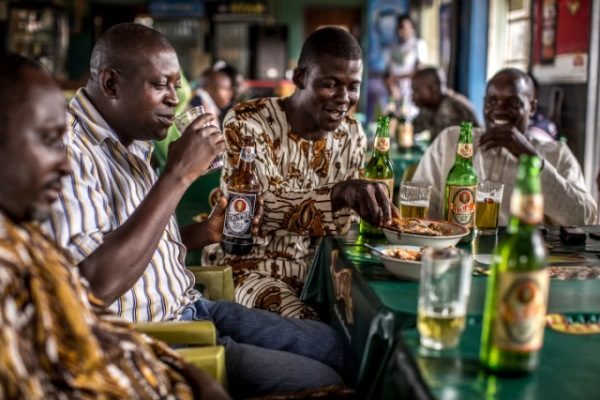
Nigeria Leads 10 Biggest Beer Drinking Countries

By Dipo Olowookere
The list of top 10 biggest beer drinking countries in Africa has been released by a market research group called Global Data, formerly known as Canadean and the lead spot was occupied by Nigeria, the most populous nation in the continent.
As a result of its population, Nigeria led the chart with 12.28 litres of beer consumed per year.
Beer makes up just 16 percent of alcohol consumption in Nigeria, while other drinks make up 84 percent due to the high popularity of home-brewed beverages.
Africa is by far the fastest growing region for beer consumption and research showed that over 5 percent annual growth of beer consumption in Africa, compared with 3 percent for Asia and less than 1 percent for Western Europe.
“There is untapped potential,” Global Data Analyst Andrew Curran said, noting that although, Ivory Coast is outside the top 10 beer consuming countries in Africa, it is showing more or less matching growth rates to the top 10.
Nigeria is being followed on the top 10 beer consuming countries in Africa by Uganda, which consumes 11.93 litres per year; Botswana is third, with 7.96 litres per year, leaving Kenya in the fourth position, with 9.72 litres per year.
While Namibia and Burundi consume 9.62 litres per year and 9.47 litres per year, respectively, South Africa and Gabon consume 9.46 litres per year and 9.32 litres per year, respectively.
Rwanda consumes 9.10 litres of beer per year, while Tanzania consumes 7.7 litres of beer per year.
However, Global Data’s research identified Ivory Coast as one of the continent’s most dynamic economies, with annual growth of over 8 percent, and her beer market is also expected to expand.
“The Ivory Coast is outside the top 10 beer consuming countries in Africa, but it is showing more or less matching growth rates to the top 10,” the report said, adding that Ivory Coast has also gained importance since the recent merger between rivals SAB Miller and InBev.
According to Curran, SAB Miller and InBev have consolidated their dominance in South Africa and forced Heineken to focus on the francophone West.
He believes that success in the Ivory Coast could lead to further gains in the region, such as in Burkina Faso and Benin,
Global Data’s report of Ivory Coast’s push to the top 10 biggest beer drinking countries in Africa came on the heels of Dutch multinational Heineken’s investment of $160 million in the West African country’s beer market.
Heineken recently launched a new brewery named Brassivoire in association with distribution specialists CFAO on the outskirts of the Ivorian economic capital Abidjan.
The $160 million state-of-the-art facility has capacity to produce 160 million liters of beer a year. The brewery will produce Heineken Ivoire beer, the result of extensive research into local tastes.
Brassivoire has around 200 highly-skilled local employees, who have received over 3000 hours of training between them, according to General Manager Alexander Koch.
The Dutch beer giant Heineken, which is the world’s second largest brewer, is targeting the Ivory Coast, and has said that its Ivoire brand has been well received and intends to scale up production.
The vast majority of beer consumers in Ivory Coast are provided by French company Castel Groupe, which owns popular brands including Solibra, Flag and Castel. Castel Groupe previously held near monopoly on Ivorian beer market.
However, with the inauguration of a new $160 million state-of-the-art plant, Heineken has made an ambitious play for the fast-growing Ivorian beer market.
“It (Ivory Coast) has a young population, a high rate of urbanization – almost 50 per cent already – a dynamic economy and there is only one player so far,” says Heineken CEO Jean-Francois Van Boxmeer.
What this means is that the battle for the soul of Ivory Coast’s beer market may have commenced. Already, Heineken believes its new Ivoire beer can eat into Castel’s market share, with its relatively low price and a product designed for local consumers.
“We researched for years,” Koch said, adding, “We developed the bottle, the name, the color code, even the recipe together with the Ivorian consumer.”
He said the new beer has performed well so far, and production will soon increase. “The Ivoire brand has had an incredibly good reception from the Ivorian consumer,” Koch stated, adding, “We are currently running at full capacity and will bring forward some of our investments to meet demand.”
Source: The Nation



By Adedapo Adesanya
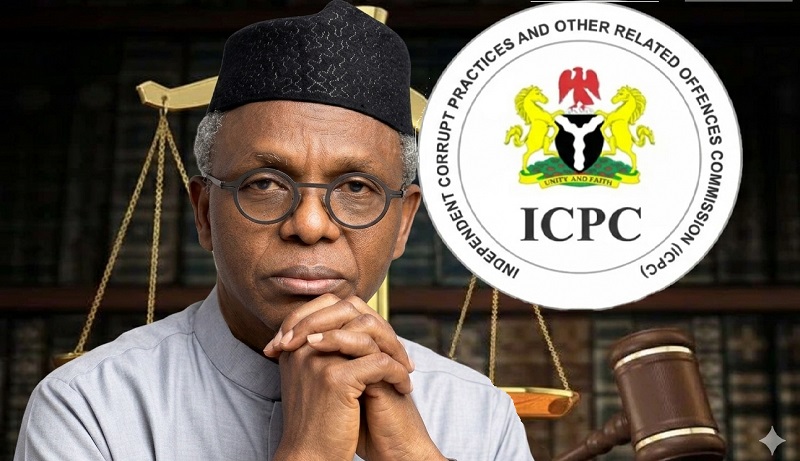
The Independent Corrupt Practices and Other Related Offences Commission (ICPC) has secured a court order to extend the detention of former Governor of Kaduna State, Mr Nasir El-Rufai.
This order gives the anti-graft agency ample time to finalise its investigation into allegations against the former governor, which has now deepened as a result of some new findings.
Subsequently, the new order, which was granted on Tuesday in the presence of Mr El-Rufai’s lawyer, will expire on Thursday, March 19.
However, Mr El-Rufai’s lawyer, whose application to quash the first remand order was declined by a Chief Magistrate Court in Bwari, has returned to the same court to nullify the latest order.
Justice Okechukwu John Akweke has fixed March 17 to decide whether or not he should set aside the latest detention order.
He said, “Upon hearing and listening to the prosecuting counsel, Dr Osuobeni Ekoi Akponimisingha Esq., praying this Honourable court for the following orders:
“An order of this Honourable Court issuing a remand warrant against the Respondent (NASIR AHMAD EL-RUFAI) in favour of the Applicant, i.e. Independent Corrupt Practices and other Related Offences Commission (ICPC), to detain the Respondent (NASIR AHMAD EL-RUFAI) in its custody for another fourteen (14) days pending conclusion of investigation activities on allegations of Money Laundering/abuse of office.
“And for such other or further order(s) as this Honourable court may deem fit to make in the circumstances. It is hereby ordered that: Application granted as prayed.
“That the Applicant, i.e. the Independent Corrupt Practices and other Related Offences Commission ICPC is hereby ordered to re-detain the Respondent (NASIR AHMAD EL-RUFAI) for an additional 14 days to enable the commission to conclude investigation activities.
“That the return date shall be the 19th day of March 2026, for the report of compliance.”
The scrutiny of Mr El-Rufai by the ICPC follows the report of the Kaduna State House of Assembly’s ad hoc committee constituted in 2024 to investigate finances, loans and contracts awarded between 2015 and 2023 under his eight-year administration of the state.
By Adedapo Adesanya
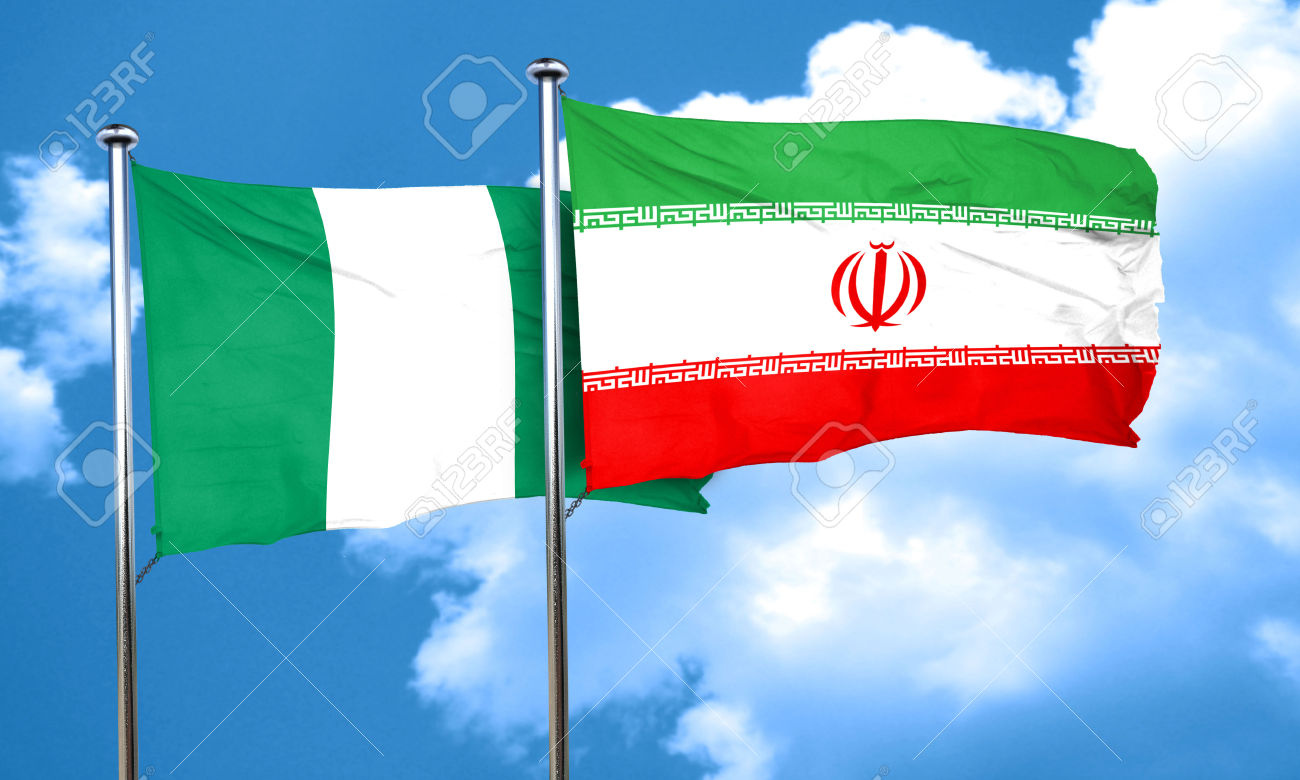
The federal government has begun evacuating willing Nigerians in Iran, escorting them across the Armenian border to ensure their safety amid escalating tensions in the Middle East.
The evacuation follows the growing crisis that began on February 28 after coordinated military strikes on Iran by the United States and Israel.
The attacks triggered retaliatory missile and drone strikes across parts of the region, raising fears of a wider conflict.
The chief executive of the Nigerians in Diaspora Commission (NiDCOM), Mrs Abike Dabiri-Erewa, disclosed this in a post on her X handle on Tuesday.
She said officials of the Nigerian Embassy in Tehran are coordinating the evacuation of Nigerians who wish to leave the country and are facilitating their safe passage into Armenia.
Mrs Dabiri-Erewa also reassured that no Nigerian in Iran has so far been affected by the ongoing tensions, noting that embassy officials remain stationed at the border to receive and assist evacuees.
Her post read, “Willing Nigerians [are] being escorted across the Armenian border by officials of the Nigerian embassy in Iran for safe passage. No Nigerian in Iran has been affected by the war as officials remain at the border to receive all who want to leave.”
The development comes as tensions in parts of the Middle East continue to raise concerns over the safety of foreign nationals residing in affected areas.
For repatriation flights, the NiDCOM chair said the airspace is currently unsafe but assured Nigerians in the Middle East that the Federal Government team is on standby to evacuate them.
“And as for repatriation flights, the skies are currently unsafe to fly. Luckily, a flight came in from the UAE to Lagos two days ago, just before another strike and the closure of the airspace.
“Once the airspace opens, the multi-agency FG team on crisis and evacuation is on standby. Our prayers are with you and all our people in affected countries,” she said.

By Modupe Gbadeyanka
All private transmission connected to the national grid must register and get authorisation to operate, the Nigerian Electricity Regulatory Commission (NERC) has declared.
In a statement, the electricity regulatory body in Nigeria directed owners of private transmission substations used by bulk electricity consumers to obtain an Independent Electricity Transmission Network Operator (IETNO) Permit before operating or connecting to the grid.
It was disclosed that this latest development, which became effective March 9, 2026, is to strengthen oversight of privately owned substations connected to Nigeria’s national grid.
NERC further said the directive was introduced to improve grid reliability, safety, and operational visibility following frequent transmission line trips reported by the Nigerian Independent System Operator (NISO).
Under the order, NISO must submit to NERC a comprehensive list of all existing Private Transmission Substation Owners (PTSOs) and notify them of the provisions of the order within five days.
Existing PTSOs must apply to NERC for an IETNO permit within 45 days, while new PTSOs must obtain the permit before connecting to the grid, as non-compliance attracts regulatory sanctions.
NISO will deploy IoT-based metering systems at substation interconnection points within 120 days.
Further, operators must submit monthly operational reports, while NISO will conduct inspections to ensure compliance.






-
 Feature/OPED6 years ago
Davos was Different this year
-
Travel/Tourism10 years ago
Lagos Seals Western Lodge Hotel In Ikorodu
-

 Showbiz3 years ago
Estranged Lover Releases Videos of Empress Njamah Bathing
-
 Banking8 years ago
Sort Codes of GTBank Branches in Nigeria
-

 Economy3 years ago
Subsidy Removal: CNG at N130 Per Litre Cheaper Than Petrol—IPMAN
-

 Banking3 years ago
Sort Codes of UBA Branches in Nigeria
-

 Banking3 years ago
First Bank Announces Planned Downtime
-

 Sports3 years ago
Highest Paid Nigerian Footballer – How Much Do Nigerian Footballers Earn