
General
PDP Not Big Enough for me to Achieve my Dreams—Uduaghan

By Modupe Gbadeyanka
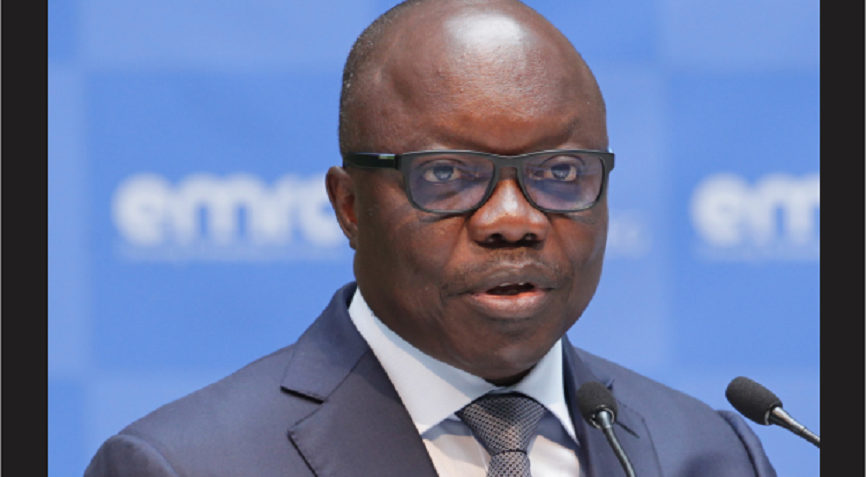
On Tuesday, August 28, 2018, the immediate past governor of Delta State, Mr Emmanuel Uduaghan, formally announced his defection from the Peoples Democratic Party (PDP) to the ruling All Progressives Congress (APC).
Mr Uduaghan, a founding member of the PDP and Delta South Senate aspirant in 2019, confirmed his defection at a meeting of the APC national caucus held at the Presidential Villa in Abuja on Tuesday.
The meeting was attended by leaders of the party including national officers, state governors, former state governors, ministers and National Assembly members.
Speaking on reasons for his defection, Mr Uduaghan, in a statement entitled ‘Moving On To The Bigger Playing Field’ and sent to this newspaper by his spokesperson, said with his desire to attract development and bring a permanent solution to the Niger Delta crisis, propelled him to leave the PDP.
According to him, the APC is the only platform he can achieve his aims for the region judging from its progressiveness and the leadership style of the president, Muhammadu Buhari.
Read Mr Uduaghan’s full statement below:
The toughest challenge for any leader in the Niger Delta since 1997 has been the issue of Peace and Security. For over 12 years, I was deeply involved in the management of the issues of the region, first as Secretary to State Government, SSG, and then as Governor of Delta State for 8 years.
Strategically, we had ENGAGEMENT as our major tool. This involved government officials, with me in the forefront (sometimes personally going into the creeks without security at nocturnal hours), community leaders, traditional rulers, religious leaders, our youths, retired military officers, activists, etc. Of course, ensuring that Delta State Oil Producing Areas Development Commission, DESOPADEC, was active was also part of the engagement process.
Encouraging Interests, Activities
Since the inception of the current All Progressives Congress, APC, administration at the federal level, there has been an encouraging interest and activities by President Muhammadu Buhari to bring a permanent solution to the Niger Delta crisis. This has pointed in a direction that is at once progressive and developmental.
Topmost in these activities are the ENGAGEMENT PROCESSES. Rather than using the military to harass our people, the Buhari administration has embarked on various engagement processes that have led to agreements and brought hope to the people of the Niger Delta.
In the last years, Mr President has personally engaged several regional leaders and youths. Senior officials of his administration also engaged many Niger Delta leaders and youths. Very significant is that Mr. President mandated the Vice President Prof Yemi Osibajo SAN, to visit virtually all the oil producing states, engaging various stakeholders. This is unprecedented in the history of the region. Such engagement processes have brought some measure of peace in the Niger Delta. Things can only get better.
Beyond the engagement processes, however, the Buhari administration has embarked on some infrastructural and human capital development activities in the region. In Delta State, the opening of a Maritime University; the setting up of a steering committee for the EPZ (GAS CITY), the plan for a deep sea port, the dredging of the Escravos-Warri River; the opening of the railway line to Delta Steel Company, the soon to be flagged off, by Mr. President, the Omadino-Escravos Road that will pass through many riverine communities; the various road construction works by the Niger Delta Development Commission (NDDC), the various TCN projects across the State are some of the positive activities in the region.
There are also various human capital development programmes especially the school feeding and the “social security net” that is making 5,000 Naira available to the poor, the continuation of the YouWin programme, the various SME programmes, and several other projects across the region have brought hope to the people.
Indeed, once Mr President was able to set his priorities pursuant to creating an environment for peace in the region, it became incumbent on every well-meaning Niger Deltan and Nigerian to assist the process of building an economically prosperous nation.
In this era of partisan politics, it is necessary for the people of the Niger Delta, and Delta State in particular, to identify more with the Federal Government led by the APC. By so doing, we can push some of the agreements between our leaders and the Federal Government through, and also engage the government to do more. Politics is about interests.
The Niger Delta is a major area of interest for me, because I staked my life going into the creeks severally without security and sometimes coming back at night negotiating peace. I will, therefore, give the strongest support to any President that shows commitment in the affairs of the Niger Delta.
I call on, and enjoin, other well-meaning leaders in the region, who have very useful contributions to make, to come on board and join hands in helping this Federal Government to pursue a robust development agenda that would uplift our people. Whatever milestone that appears not to have been achieved yet is not for lack of efforts. Joining hands with and supporting the process will lead to a faster delivery on expectations.
It is in the pursuit of this noble objective that I’m offering myself to help drive a process that would give the lives of our people in the Niger Delta more meaning. President Muhammadu Buhari needs people who will join hands with him to uplift our people. From my political experience, you have to be well represented and actively so at the “board room” when decisions are being taken. Delta State must be well represented. Niger Delta must be well represented.
It is noteworthy to state that some organisations have been deeply involved in efforts to develop the Niger Delta and can always be relied on to collaborate with our President. It is also noteworthy to add that some previous administrations made significant efforts to develop the region. The current administration made such a significant impact in spite of the fact that apart from Edo State, President Buhari did not score the required 25% in the entire Niger Delta in the election that brought him into government in 2015. This speak volumes of his genuineness to uplift the Niger Delta. Such an administration should be encouraged by the people of the Niger Delta. We can never be sure of the genuiness of another person who becomes the President.
I have, therefore, after series of consultations and prayers, taken the decision to leave the PDP and join the APC. In doing this, I want to thank the numerous leaders, supporters and interest groups that have been urging me to remain in PDP. I am happy that after explaining some of the deeper issues to you, some of you that are politicians have agreed to join the APC in the near future. So I am going into APC as “John the Baptist” to the numerous Deltans that are coming in, soon – very soon.




By Aduragbemi Omiyale
A technology company headquartered in The Hague, Netherlands, Zarttech, has apologised to individuals and partners affected by its decision to shut down its operations.
In a message, the organisation noted that while its chapter may have come to an end, the impact of the conversations it helped spark about African talent, global collaboration, and opportunity without borders continues to be part of a larger movement transforming the global technology landscape.
Zarttech was established to bridge the global tech talent gap by connecting diverse IT professionals with opportunities around the world. It sought to remove barriers that often prevent talented individuals from accessing global work, while promoting fairness and reducing bias in the technology recruitment process.
Through its work, Zarttech contributed to a broader shift in how Africa is perceived in the global technology ecosystem. By highlighting the expertise, creativity, and potential of African developers and technology professionals, the firm helped bring greater visibility to the continent’s growing pool of world-class talent.
Its mission was centred on creating opportunities that connect businesses with skilled professionals across Africa, Europe, and South America while demonstrating that innovation and excellence in technology know no geographic boundaries.
Beyond its business activities, Zarttech also supported initiatives aimed at empowering women in technology across Africa through training and education programs, reinforcing its belief that inclusive access to opportunity can help shape a more equitable global tech industry.

By Modupe Gbadeyanka
To protect residents, infrastructure and the economy, the Lagos State government has adopted a parametric flood-risk insurance policy designed by a team of Insurance Development Forum (IDF) member insurance organisations like AXA Climate, AXA Mansard, Swiss Re, flood modeller JBA Risk Management, satellite company ICEYE and African Risk Capacity Ltd.
The new insurance product will cover up to 4 million vulnerable people and secure up to $7.5 million for flood response and recovery in the aquatic state.
The policy’s activation is a major milestone for the Tripartite Agreement Programme, a public-private partnership among IDF, the United Nations Development Programme (UNDP), and the German Federal Ministry for Economic Cooperation and Development (BMZ) through the InsuResilience Solutions Fund (ISF), to build developing countries’ resilience to climate risk.
The insurance product has received regulatory approval, with placement enabled through 90 per cent of premium finance from the ISF for the first year, while Lagos State may raise the premium finance allocation beyond 10 per cent in the second and third years of the policy to ensure the sustainability of the protection provided by the product.
“Climate inaction could cost Lagos State just under $40 billion by 2050, with severe consequences for our people, infrastructure and economy. Our wetlands and biodiversity are also under threat.
“These realities demand urgent action. This pioneering parametric flood insurance policy strengthens our ability to protect lives, livelihoods and public finances while embedding climate risk management into Lagos State’s long-term development planning,” the Governor of Lagos, Mr Babajide Sanwo-Olu, stated.
Also commenting, the Head of Public Sector for AXA Climate and IDF Lagos Project co-Lead, Karina Whalley, said, “This policy demonstrates the power of insurance to enable preparedness ahead of and faster recovery after disasters, as well as greater financial resilience for governments; in short, future-ready nations. The product design harnessed our industry members’ technical expertise in flood risk modelling and parametric insurance to develop a scalable solution tailored to the needs of climate-vulnerable communities in Lagos.”
The Director-General for Multilateral Development Policy, Transformation, Climate, German Federal Ministry for Economic Cooperation and Development (BMZ), Dr Katharina Stasch, said, “This product highlights the impact that effective collaboration between governments, insurance and development partners can deliver.
“As climate risks continue to rise, BMZ is proud to have supported the Tripartite Agreement Programme’s efforts to scale sovereign risk finance and to witness the new alliances and models for cooperation emerging through the programme.”

By Adedapo Adesanya
The Federal Competition and Consumer Protection Commission (FCCPC) has tasked manufacturers, importers and service providers to prioritise product safety, warning that substandard goods threaten consumer trust and weaken Nigeria’s market system.
The commission issued the warning on Wednesday in Abuja on the back of the 2026 World Consumer Rights Day celebration and the 9th National Consumers Contest Awards, where regulators, industry stakeholders and consumer advocates gathered to review the state of consumer protection in the country.
The chief executive of the FCCPC, Mr Tunji Bello, said this year’s theme, Safe Products, Confident Consumers, highlights the direct connection between product safety and economic stability, adding that, “Where safety is uncertain, confidence declines. And where confidence declines, markets become weaker, less efficient, and less trustworthy.”
He expressed concern over persistent violations across sectors, noting that many products still fail to meet basic safety and quality benchmarks.
According to him, infractions include mislabelled goods, products that do not comply with minimum safety standards and, in some cases, deliberate disregard for regulatory requirements.
Mr Bello warned that such practices expose consumers to avoidable risks while creating unfair competition for businesses that comply with established rules.
Linking consumer protection to the federal government’s ongoing economic reforms under President Bola Ahmed Tinubu, Bello said strengthening regulatory compliance is essential to building transparent, investment-friendly markets.
“Consumer protection is a key part of that effort. Safe, reliable, and transparent markets support sustainable growth,” he said.
He reiterated that the Federal Competition and Consumer Protection Act (2018) guarantees consumers the right to safe, durable and fit-for-purpose products, stressing that businesses must promptly address safety concerns through product recalls, withdrawals and proper consumer notification.
The FCCPC boss warned that failure to comply, he warned, attracts regulatory sanctions.
Mr Bello disclosed that the FCCPC has expanded market surveillance operations, enhanced product testing capacity and intensified enforcement actions in priority sectors. He added that the Commission is strengthening collaboration with regulatory partners, including the Standards Organisation of Nigeria (SON) and the National Agency for Food and Drug Administration and Control (NAFDAC), to close enforcement gaps that allow unsafe products into the market.
Beyond enforcement measures, the FCCPC boss underscored the importance of consumer education, highlighting the role of the National Young Consumers Contest in promoting awareness and responsible purchasing behaviour among young Nigerians.
“Consumer protection is not only about enforcement. It is also about education, awareness, critical thinking, and responsible engagement,” Mr Bello said.
While clarifying that the FCCPC does not fix prices, he noted that transparency, fairness and adherence to safety standards remain fundamental to efficient market operations. He urged consumers to remain vigilant by examining products carefully and reporting unsafe or substandard goods.
The event drew participation from regulatory agencies, trade associations and media organisations, reinforcing calls for coordinated action to strengthen accountability across Nigeria’s marketplace.
“Safe and reliable markets depend on responsible business conduct, effective regulation, and informed consumer participation. That standard must be upheld consistently,” Mr Bello said.










-
 Feature/OPED6 years ago
Davos was Different this year
-
Travel/Tourism10 years ago
Lagos Seals Western Lodge Hotel In Ikorodu
-

 Showbiz3 years ago
Estranged Lover Releases Videos of Empress Njamah Bathing
-
 Banking8 years ago
Sort Codes of GTBank Branches in Nigeria
-

 Economy3 years ago
Subsidy Removal: CNG at N130 Per Litre Cheaper Than Petrol—IPMAN
-

 Banking3 years ago
Sort Codes of UBA Branches in Nigeria
-

 Banking3 years ago
First Bank Announces Planned Downtime
-

 Sports3 years ago
Highest Paid Nigerian Footballer – How Much Do Nigerian Footballers Earn