Connect with us

General

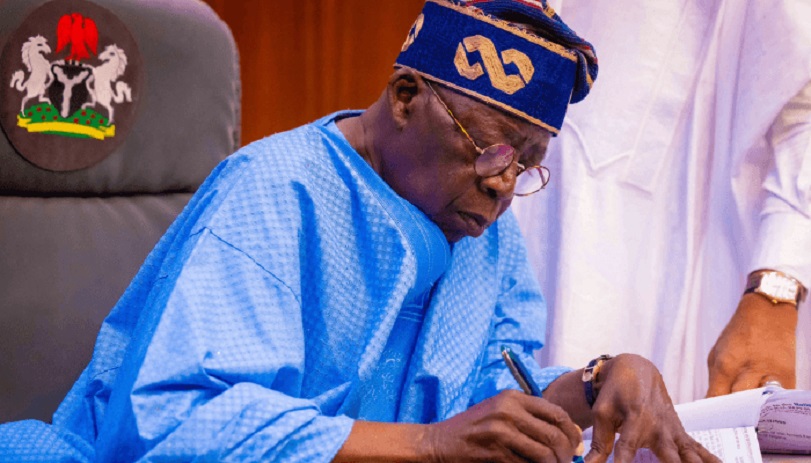
SERAP, Others Sue Tinubu Over Failure to Publish NDDC Forensic Audit Report

Published

on

New NDDC Board rewarding

By Adedapo Adesanya

The Socio-Economic Rights and Accountability Project (SERAP) and four concerned Nigerians have filed a lawsuit against the government of President Bola Tinubu over its failure to publish the report of the forensic audit carried out on the Niger Delta Development Commission (NDDC).

SERAP’s Deputy Director, Mr Olawole Oluwadare, disclosed this in a statement on Sunday.

The suit, filed on behalf of SERAP and the four citizens by Mr Oluwadare alongside Ms Kehinde Oyewumi, and Mr Andrew Nwankwo stated, “There is an overriding public interest in the publication and disclosure of the NDDC forensic report.”

They claimed the forensic audit implicated top officials and politicians in the disappearance of N6 trillion from the agency between 2001 and 2019, noting that the Minister of the Federal Capital Territory, Mr Nyesom Wike, recently alleged that the wife of a former minister received N48 billion over 12 months “to train Niger Delta women.”

The plaintiffs in the suit include Mr Taiwo Aiyedatiwa, Mr Jude Igbogifurotogu Pulemote, Mr Ben Omietimi Tariye, and Mr Elizabeth Egbe.

Filed last Friday before the ECOWAS Community Court of Justice in Abuja and marked ECW/CCJ/APP/35/25, the plaintiffs are seeking “a declaration that the failure of the Nigerian government to publish the NDDC forensic report amounts to a fundamental breach of the country’s international human rights obligations.”

They also want “an order directing and compelling the Nigerian government to publish and ensure access to information to the NDDC forensic report which has been submitted to the government but remains shrouded in secrecy,” and “an order directing and compelling the Nigerian government to adopt and ensure effective measures to address transparency and accountability gaps in the spending of public funds budgeted for the NDDC.”

“The Nigerian government has violated our right to know the truth about the corruption allegations documented in the NDDC forensic report.

“The obstruction of the publication of the report is perpetrating impunity and the cover-up of the allegations documented in the report.

“Implicit in freedom of expression is the public’s right to open access to information and to know what governments are doing on their behalf, without which truth would languish and people’s participation in government would remain fragmented and illusory,” they argued.

The plaintiffs claimed the Nigerian government not only refused to release the NDDC forensic report but also failed to provide any explanation for withholding it from them and the general public.

They argued that the government is legally obligated to uphold transparency and grant access to the report, as part of the broader right to seek, receive, and share information.


Adedapo Adesanya is a journalist, polymath, and connoisseur of everything art. When he is not writing, he has his nose buried in one of the many books or articles he has bookmarked or simply listening to good music with a bottle of beer or wine. He supports the greatest club in the world, Manchester United F.C.

Click to comment

Leave a Reply

Your email address will not be published. Required fields are marked *

General

Nigeria Pushes Bid to Host AU Monetary Institute

Published

on

AU Monetary Institute

By Adedapo Adesanya

Nigeria has intensified its bid to host the African Union (AU) African Monetary Institute (AMI), with the Federal Ministry of Finance leading coordinating efforts to secure the institution ahead of its planned 2026 operationalisation.

The renewed push was made on the sidelines of the IMF/World Bank Spring Meetings in Washington D.C., where Nigeria is advancing its case as a credible host for the continental institution central to Africa’s monetary integration agenda.

Speaking through the Permanent Secretary of the Ministry, Mr Raymond Omachi, the Honourable Minister of Finance and Coordinating Minister of the Economy, Mr Wale Edun, underscored the country’s full political and institutional backing for the initiative. He stated that Nigeria has moved beyond policy commitments to concrete delivery, with the necessary infrastructure and administrative arrangements already in place.

The Nigerian government emphasised that hosting the institute aligns with Nigeria’s broader economic strategy of positioning Abuja as a hub for continental financial coordination.

It noted that the institute represents a critical step toward deeper monetary cooperation, improved macroeconomic convergence, and a more integrated African financial system.

Earlier, the Governor of the Central Bank of Nigeria, Olayemi Cardoso, had reaffirmed Nigeria’s readiness through his representative, the Deputy Governor, Economic Policy, Mr Muhammad Abdullahi.

He indicated that a dedicated office facility has already been secured in Abuja and made available for inspection, reflecting the country’s preparedness to meet host country obligations.

According to the Ministry, Nigeria remains actively engaged with the African Union and is prepared to conclude all required agreements to ensure a seamless take-off of the institute within the stipulated timeline.

The African Monetary Institute, approved in February, is designed to strengthen policy coordination, stabilise exchange rate frameworks, and lay the groundwork for eventual monetary unification across the continent.

On his part, the Chief Economist and Vice President of the African Development Bank (AfDB), Mr Kevin Urama, noted that the institute would strengthen financial stability, improve debt sustainability, and address structural constraints posed by multiple currencies across the continent.

Nigeria hosting the institute would mark the presence of another African-based organisation in Africa’s most populous country, which also plays host to the African Energy Bank.

Continue Reading

General

Army Foils Oil Theft Operation, Arrests 14 Suspects Near Dangote Refinery

Published

on

dangote refinery trucks

By Adedapo Adesanya

Troops of the 81 Division Nigerian Army have successfully foiled an illegal petroleum bunkering operation and arrested 14 suspected oil thieves at the Lekki Free Zone general area near the Dangote Refinery in Lagos State.

According to the troops, acting on credible and actionable intelligence, they conducted a swift and coordinated operation in the early hours of Thursday, April 16, 2026, at about 0130 hours.

During the operation, the suspects were apprehended while actively siphoning petroleum products.

The criminals had illegally connected a long pipeline from the high sea to a tanker concealed in a bush location and were using a generator-powered pumping machine to transfer the products into the vehicle.

On sighting the approaching troops, the suspects attempted to flee but were swiftly overpowered and arrested by the soldiers, with their operational equipment confiscated.

Items recovered from the scene include a petroleum tanker truck loaded with siphoned petroleum products, one Lexus Highlander SUV with Registration Number APP 67 JQ Lagos, one Ford Hilux vehicle with Registration Number BY 117 FST Lagos, one pumping machine, one 40HP boat engine, and a large quantity of industrial hosepipes and other related bunkering equipment.

The arrested suspects and recovered items are currently in the custody of the 81 Division of the Nigerian Army for preliminary investigation and subsequent handover to the appropriate prosecuting agencies in accordance with extant laws.

The Nigerian Army reiterates its unwavering commitment to combating crude oil theft and other economic sabotage, particularly within critical national infrastructure zones.

The Army in the statement said, “Members of the public are encouraged to continue providing timely and credible information to the military and other security agencies to enhance ongoing operations.”

Continue Reading

General

Reps Okay N248.6bn Relief, 10-Year Debt Plan for Ikeja Electric, Two Others

Published

on

Ikeja Electric

By Adedapo Adesanya

The House of Representatives, via its Public Accounts Committee, has approved a N248.6 billion financial relief package alongside a 10-year debt restructuring plan for Kano, Jos and Ikeja Electricity Distribution Companies (DisCos).

The decision followed the adoption of a report by a technical subcommittee set up to review findings in the 2021 Auditor-General’s report, which highlighted rising indebtedness among electricity distribution firms.

The approved framework covers N128.57 billion in accrued interest spanning 2015 to September 2025, as well as N120.06 billion in historical debts. This brings the combined liability of the three DisCos to N248,637,089,278.83.

Chairman of the subcommittee, Mr Mark Chidi Obetta, said the intervention is aimed at stabilising Nigeria’s electricity market and addressing legacy financial burdens affecting the sector.

He noted that the measure forms part of broader legislative efforts to restore financial sustainability within the power distribution segment.

Findings from the report indicate that the total debt owed by the country’s 11 DisCos rose from N1 trillion in December 2024 to N1.3 trillion as of September 2025, covering both principal and accrued interest.

According to data from the Nigerian Bulk Electricity Trading Company (NBET), Abuja DisCo owes N275.16 billion, Kaduna DisCo N303.8 billion, and Jos DisCo N104.37 billion. Kano DisCo’s debt stands at N96.62 billion, while Ikeja DisCo owes N47.63 billion.

The committee said its investigation was designed to verify the Auditor-General’s claims, determine the current debt profile of the DisCos, and uncover reasons for persistent defaults in payment obligations.

During the review, Jos, Ikeja and Kano DisCos challenged the imposition of interest charges, arguing that existing Market Rules did not expressly provide for such penalties. This prompted regulatory clarification from the Nigerian Electricity Regulatory Commission (NERC).

In a directive issued in January 2026, NERC instructed NBET not to charge interest on outstanding invoices between 2015 and 2020, but permitted interest charges on debts from 2021 onward.

The regulator also ordered that interest linked to delays associated with Meristem be disregarded, directing NBET to recompute liabilities, including the N128 billion interest attributed to the three DisCos.

As part of the resolution, the committee recommended that the affected DisCos restructure their N120.06 billion historical debts over a period not exceeding 10 years.

It further directed that N13.39 billion in liabilities incurred by Kano DisCo during its period under government receivership be transferred to the Nigerian Electricity Liability Management Company (NELMCO), in line with established sector precedents.

The committee also called on NERC to mandate NBET to waive N128.57 billion in interest accrued between 2015 and September 2025, citing the escrow arrangement under which DisCos do not have direct access to their revenue collections.

Chairman of the Committee, Mr Bamidele Salam, urged all electricity distribution companies to meet their market obligations going forward, warning that failure to implement urgent financial and regulatory reforms could further threaten the sustainability of the sector.

Continue Reading

Trending