General
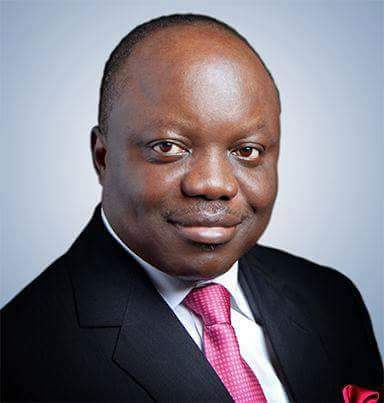
Uduaghan Says Downgrade of Asaba Airport Political, Blasts Critics
By Modupe Gbadeyanka
Immediate-past governor of Delta State and All Progressives Congress 2019 Delta South senatorial candidate, Dr. Emmanuel Eweta Uduaghan, has opened up on the downgrade of the Asaba International Airport by the Nigeria Civil Aviation Authority (NCAA), few days to his exit as the governor of the oil-rich state in 2015.
The Nigerian government through the NCAA had downgraded the Asaba airport over the failure of Delta State government to put in place safety and security measures at the airport. The development temporarily shut down the operation of the airport as only Dash 8-Q 400 aircraft or its equivalent were allowed in.
But speaking recently in an interview with TELL Magazine, the Itsekiri-born medical doctor revealed that the poor remarks of the airport by the NCAA were politically motivated stressing that it was a regional power-play and blackmail by some aggrieved persons in the state.
In his words: “What they are celebrating as first international flight, what plane was used? A Boeing – 737 – which had been coming in. By the time I was leaving, we had had over 130,000 passengers pass through that airport; some coming with Boeing 737, and smaller planes. There is no president, past president, current president alive today, and very prominent Nigerians that has not passed through that airport and did not have good testimonies about that airport. The airport ran smoothly for three years; there was no issue.
“Then we started having challenges with the run-way, which we started to look at. And it’s not new. Enugu airport was resurfaced last year; they are already having challenges with the runway. Go and check Enugu records; the last visit of governors of the Southeast to Mr President was to complain about the runway in Enugu airport. And this was a runway that was rehabilitated, first before we left, then done again when I had left office. The same company which they recommended to us that should do the Asaba airport, rehabilitated Enugu airport in the last six years twice and still has problems. Abuja airport has problems – runway. Runway problem is not something new, just that they turned this one into politics.
“First, it was announced by the ministry; the ministry had no business announcing it. It’s the business of the FCAA. Some people lobbied the ministry to down-grade it so that I can panic and pump in money and finish it quickly. The same people at that time just felt upset that I had started the Osubi airport runway construction; I had paid some deposit to the company, and their own was that the deposit I had paid for the Osubi airport runway, why would I not use it to complete the Asaba Airport.
“So, there was a regional power-play and blackmail. I am going to mention names in the future, especially for the Osubi airport. We were given a temporary approval by the ministry to commence construction while lobbying for the permanent approval by the FCAA; so, we did not just go there anyhow. The minister came; he went to the place. They gave us temporary go-ahead to do it.
“Of course, ministers were changed. A new minister came in – Osita Chidoka – he was supposed to be my friend; he’s still my friend till today. But when he became minister, he was a little bit hostile. So, I was looking for him; I couldn’t locate him until we were having one rally. I said look, honourable minister, I have been trying to reach you. Can we meet over the airports in Delta? He said fine.
“I went to his office; I was in his office for over four hours discussing the two airports and he said Osubi must stop work. I said why? That we can’t have two airports together like that. For two years, I tried to take over the Osubi airport so that I could increase the length of the runway. You know it was built by Shell, and it was being run by Shell. Shell dribbled us for two years; it was eventually they opened-up to me that they would never give it out because it would affect their operations. I said all these two years, why not say it? So, when they eventually agreed to give it to us that we could do what we had in mind to do, but that we should not touch the short runway, I said okay, available land space, give it to us so that we would do a longer runway; airports don’t have only one runway. Some have three, four. Shell said no. So, that meant we cannot even have land.
“It got to a point when I said okay, I was going to revoke the land; carry your airport away; I will revoke the land. It was then they agreed to cede part of that available land space to us. Then, we acquired more from the communities to get enough land to be able to construct the second runway. So, we started the second one.”
The former governor further revealed that they had cleared, excavated, sand-filled and “work was going on when Chidoka said no, we cannot continue; that there are two airports. I told him no; I appealed to him, but we continued with our construction. He now sent people to come and stop the contractors. Of course, because they were contractors also doing federal jobs, they were afraid to continue in order not to be black-listed. So, that is what happened to Osubi airport hoping that they would force me to go to Asaba airport. But I told them that Asaba airport wasn’t abandoned; we were just having challenges with who the consultant would be.
“FCAA succeeded in forcing a consultant on us. The consultant that eventually did the job was not our consultant; it was nominated by the FCAA officials and they also wanted to force a contractor on us and we said no, that we had our own contractor, let him continue. Fortunately, the contractor that they wanted to force on us was the same contractor that handled the Enugu airport which again failed, so you can’t say he was so good a contractor. So, we had all those challenges. That is part story of the Asaba airport; the full story will come out.”
Responding to the issues raised by the NCAA in the downgrade report, Uduaghan said: “Most of the issues raised were handled. First, they started with fire-fighters; that the fire-fighters we put there were not for airports. We had to order for other ones to specification.
“Then they raised the issue of the hill; of course, the hill is well-known. That because of the hills, they would not allow big planes to come in. So, we had to give the contract concerning the hills to three different companies so that they can bring the hills down as quickly as possible. Of course, because of the cost, that started another controversy.
“They raised the issue of perimeter-fencing, about 70 per cent of which we had done; but before you wake up, Onitsha people had come to cut them, and they took them to go and sell. So, we had to increase security around the place.
“Then the issue of FA lighting so that planes can land at night; we installed FA lighting twice and they would come from across the Niger to steal them away. At the time they closed the airport, the memo had gone through exco, the contract had been awarded for the resurfacing of the runway. They were just waiting for mobilization. So, that statement wasn’t correct.
“The issues they raised, we tackled. And that airport is the most comprehensive airport in Nigeria. I challenge anybody; let us go and debate it. It was just purely regional and ethnic politics that they were doing with the airport. And for me, I am so happy because the point is, I have more people commending me for the airport from that Delta North, prominent sons, than the few persons that were playing politics. I have letters from the Asagba commending me for the airport and some of the things I did in Asaba. So, I am very happy and proud that I made it possible for Asaba to have an airport.”
General
Alison-Madueke Denies Wrong Doing as Prosecutors Present Evidence
By Adedapo Adesanya
Embattled former Nigerian Minister of Petroleum, Mrs Diezani Alison-Madueke, returned to court in London on Monday, denying wrongdoing as prosecutors presented evidence for an alleged bribery.
It was recently reported that Mrs Alison-Madueke, once president of the Organisation of the Petroleum Exporting Countries (OPEC), received cash and luxury benefits in exchange for influence over oil and gas contracts when she was a minister in the cabinet of former President Goodluck Jonathan.
She has denied the claims repeatedly.
In the latest development in her trial, jurors in the British court today heard testimony from a luxury furnishings retailer and a former housekeeper, as prosecutors sought to show how high-end purchases and property use were allegedly routed through intermediaries.
The 65-year-old is accused of multiple bribery counts stemming from a years-long investigation.
The alleged offences occurred between 2011 and 2015, when she was Nigeria’s oil minister but maintained a UK address.
The UK National Crime Agency (NCA), which targets international and serious and organised crime, accused her of receiving the bribes in Britain.
Mrs Alison-Madueke is accused of accepting “financial or other advantages” from individuals linked to the Atlantic Energy and SPOG Petrochemical groups.
Both companies secured contracts with the then Nigerian National Petroleum Corporation (NNPC) or its subsidiaries, according to the prosecution.
The former minister is also said to have received £100,000 ($137,000) in cash, chauffeur-driven cars, a private jet flight to Nigeria and refurbishment work and staff costs at several London properties.
Other counts allege she received school fees for her son, products from high-end shops such as London’s Harrods department store and Louis Vuitton, and further private jet flights.
Mrs Alison-Madueke has been involved in numerous legal cases globally, including in the United States.
She has been on bail in Britain since she was arrested in October 2015.
In 2023, she was formally charged with accepting bribes, which she has denied.
General
Egbin Power Unveils Tech Empowerment Scheme for Youth Employability, Others
By Modupe Gbadeyanka
An initiative designed to encourage entrepreneurship, expand access to opportunities in the digital economy, and improve the employability of young people in its host communities has been launched by Egbin Power Plc.
The tech-based empowerment programme will equip young persons from Egbin, Ijede and Ipakan areas of Lagos State with digital skills.
The chief executive of the power-generating firm, Mr Mokhtar Bounour, described the initiative as part of the company’s Personal Corporate Social Responsibility (PCSR) efforts, reflecting its commitment to inclusive and sustainable development, adding that its responsibilities extend beyond electricity generation to empowering people in surrounding communities.
“In today’s digital age, technology is no longer optional but a critical driver of economic inclusion and growth,” Mr Bounour said, noting that deliberate interventions were needed to bridge digital gaps and prevent uneven development.
He explained that when communities are excluded from the digital economy, development becomes uneven and unsustainable, reinforcing the need for deliberate interventions that bridge digital gaps.
He pointed out that, “The Empowerment Programme is designed to address this gap by providing young people in Egbin, Ijede and Ipakan with access to practical and in-demand digital skills that can improve employability, foster entrepreneurship, and create new economic opportunities within their communities.”
The first cohort brings together beneficiaries from the three communities for structured training in ICT fundamentals, graphic design, full-stack web development, digital marketing, cybersecurity and data analytics. The programme combines classroom instruction with hands-on learning.
Participants were selected through a screening process that assessed curiosity, determination and willingness to learn, the company said. Beyond technical training, the programme also includes workplace skills such as ethics, problem-solving, collaboration, professionalism and digital responsibility.
Mr Bounour urged beneficiaries to act as ambassadors of the initiative and demonstrate the values of integrity, discipline and service, saying their progress would serve as evidence that strategic corporate responsibility can deliver measurable impact.
He encouraged participants to recognise their broader responsibility to their communities, urging them to learn with character, pay their knowledge forward, mentor others, and use their skills to solve real local problems. He noted that the true legacy of the programme will be the ripple effects it creates through shared success and communal growth.
The launch of the Tech Empowerment Programme underscores Egbin Power’s continued commitment to sustainable community development, trust-building, and long-term value creation.
The company reaffirmed its dedication to investing strategically in people, strengthening host communities, and contributing meaningfully to Nigeria’s digital and economic future.
General
NPA Working to Eliminate Manual Bottlenecks, Synchronise Operations Across Seaports
By Adedapo Adesanya
The managing director of the Nigerian Ports Authority (NPA), Mr Abubakar Dantsoho, has said the organisation is in collaboration with the International Maritime Organisation (IMO) to deploy the Port Community System (PCS) will eliminate manual bottlenecks and synchronise operations across Nigeria’s seaports.
Mr Dantsoho disclosed this at a recent three-day high-level stakeholder engagement in Lagos titled Achieving a 7-day Cargo Dwell Time, organised by the Presidential Enabling Business Environment Council (PEBEC) in collaboration with the NPA.
The engagement convened the Ports and Customs Efficiency Committee (PCEC) under the Business Environment Enhancement Programme Accelerator (BEEPA) framework, focusing on streamlining port processes to improve efficiency and ease of doing business.
According to the NPA boss, the PCS will serve as the digital backbone of the National Single Window, enabling seamless information exchange among port stakeholders and reducing delays caused by manual documentation.
On her part, the director-general of PEBEC, Mrs Zahrah Mustapha, said the session was designed to go beyond identifying challenges and focus on implementing long-overdue practical solutions.
“Nigeria loses significantly every day due to operational inefficiencies,” Mrs Mustapha said. “These are not just numbers; they represent missed opportunities, jobs not created, and delayed economic growth. This reform is about resilience and unlocking the nation’s economic potential.”
She added that the initiative brings together government regulators and private-sector stakeholders to promote transparency and accountability, with the ultimate objective of reducing cargo dwell time and improving vessel turnaround time.
Recall that the NPA recorded a 100 per cent success rate in PEBEC reforms, ranking fifth among government agencies in 2025 with an 84.2 per cent compliance rating.
Outcomes from the stakeholder engagement are expected to be implemented in the coming months. By addressing operational gaps identified during port inspections, the NPA and PEBEC aim to build a more competitive maritime environment that attracts investment and facilitates seamless trade.
-
Feature/OPED6 years agoDavos was Different this year
-
Travel/Tourism9 years ago
Lagos Seals Western Lodge Hotel In Ikorodu
-
Showbiz3 years agoEstranged Lover Releases Videos of Empress Njamah Bathing
-
Banking8 years agoSort Codes of GTBank Branches in Nigeria
-
Economy3 years agoSubsidy Removal: CNG at N130 Per Litre Cheaper Than Petrol—IPMAN
-
Banking3 years agoSort Codes of UBA Branches in Nigeria
-
Banking3 years agoFirst Bank Announces Planned Downtime
-
Sports3 years agoHighest Paid Nigerian Footballer – How Much Do Nigerian Footballers Earn