Health
How Bad Eating Habit Spread Colorectal Cancer in Nigeria—Eniola Salu

Cancer is one disease that is fast spreading in Nigeria and not much has been done by government to manage the situation.
The mention of cancer, like it used to be with HIV/AIDS in the past, sends a huge fear to people mainly because of the cost of managing it.
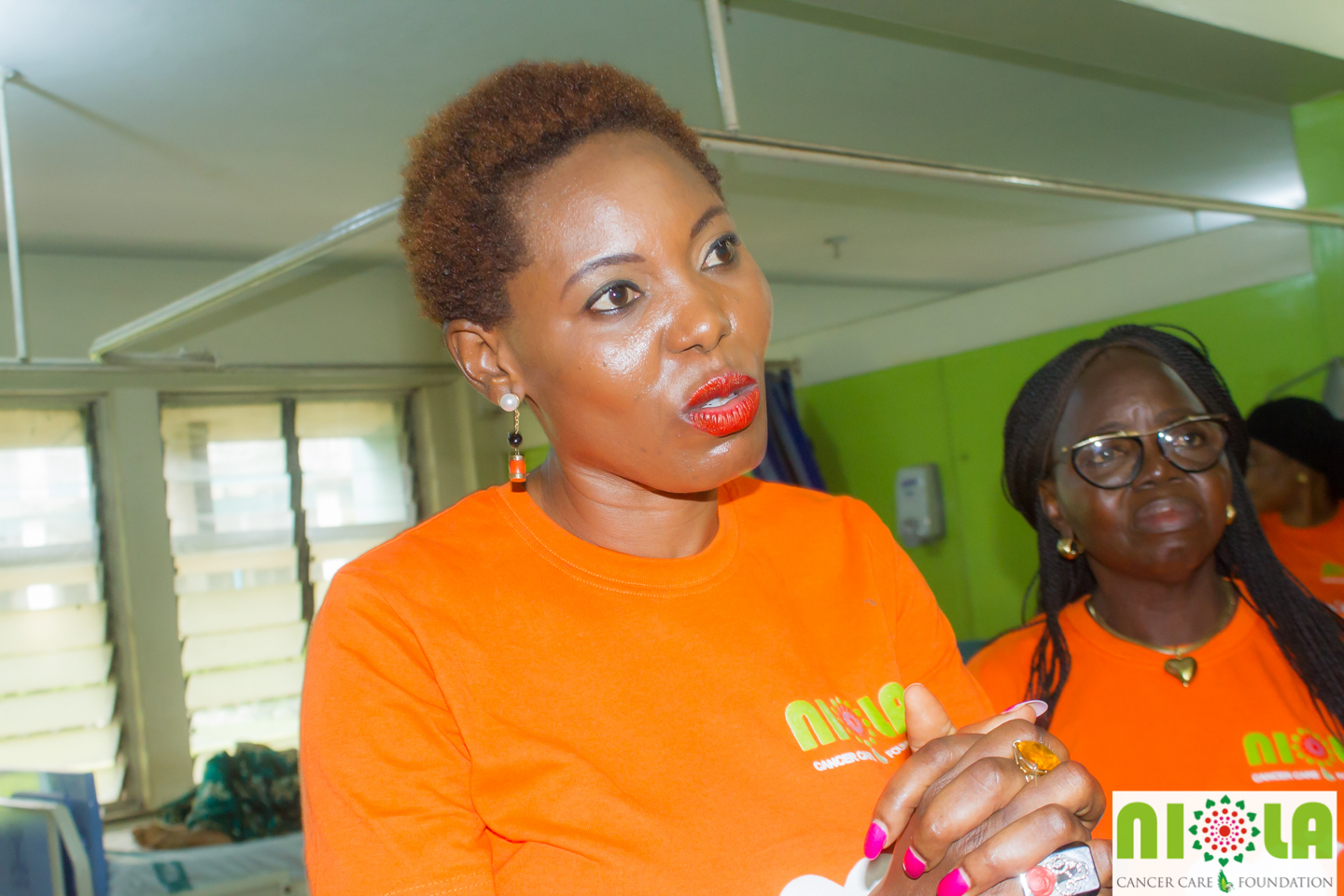
Though very expensive to treat, cancer, especially colorectal cancer, which is cancer of the colon or large intestines, is spreading fast in the country and one organisation that has taken the bull by the horn is the Niola Cancer Care Foundation (NCCF), which has Eniola Salu Akintunde as its chairperson.
Akintunde, who lost her husband to colorectal cancer, in this interview with Business Post to mark the World Cancer Day on Sunday, February 4, 2018, shared her views on the menace; causes, symptoms, prevention and others. Excerpts;
How is your organisation marking this year’s World Cancer Day
As one of the cancer NGOs in the country, we are marking the day with an advocacy with the media unlike last year where we had a walk.
Any reason for this
Yes, because this year’s event falls on a Sunday and it would be difficult to get people to do a walk when most of them would be in church. So, we believe using the media this year would be the best thing to do to create our cancer awareness to Nigerians.
At the moment, do you think cancer awareness is enough
No, it is not enough. Nigeria is a very religious country and this is one of our biggest challenges as an NGO in creating cancer awareness and that is why we are getting the clerics involved in our campaigns.
If someone has any health issue, he needs to see the doctors; while the pastors and Imam do the praying. We should not first seek the clerics’ help before rushing to the hospital when situationsare in critical stage. It is very important to first seek medical help to enable the religious leaders know where to channel their prayers to. In Nigeria, you hear people say ‘cancer is not my portion’, yes, cancer is nobody’s portion, but we need to do the needful medically.
Are the religious leaders embracing your idea
Yes, some are seeing reasons with us. There is this respected man of God on our board and when I had an experience with cancer, he was always advising us to go to the hospital, while he prayed for us. He even supported us financially, though I lost the person and that pushed me to start this NGO. When this man preaches, he advises members to seek medical help.
Cancer seems to be new to us in Nigeria, can you name the prominent cancers affecting us
Number one cancer affecting us is the breast cancer, followed by cervical, then the prostrate, lung and of recent, colorectal cancer, which most people do not know about. It is the cancer of the colon or the rectum.
Colorectal cancer is on the increase in Nigeria and people are not aware of it. Some just observe having stomach ache or blood in the stool or weight loss (symptoms). You need to check it out at the hospital to be sure it is not colorectal cancer.
The symptoms mentioned above are related to other common diseases, how can someone be sure if it is colorectal cancer or not
That is why someone needs to visit the hospital to get checked by the doctor and get the right diagnosis; this is another issue, the right diagnosis. There are some specific tests you need to do to detect colorectal cancer. The first is the Faecal Occult Blood Test (FOBT), which is checking the stool samples and the doctor will recommend further one which could be the colonoscopy and endoscopy tests to check what is in your stomach or colon to know if there is growth or not. And if there is growth in your colon, it does not necessarily mean you have cancer. It might be a polyp, and if it is, it is good news because it can be removed. But unfortunately, people don’t detect this cancer early because they must have been going to different hospitals treating something else.
Are the average hospitals equipped to quickly detect colorectal cancer
Yes, I think they should because these are minor tests. But what I will advise doctors to do is to refer patients when they cannot handle issues. It is not as bad as we think. There are good doctors in our hospitals despite their poor working conditions, but they need to stop doing wrong diagnosis and making situations get worse.
With the economic situation in the country, how easy is it for someone to treat colorectal cancer
It might interest you to know that there is a test for colorectal cancer that costs N1,000, which we help facilitate in our NGO, but people still not come for this test.
That’s serious
Yes, because some people get scared at the mention of cancer. That is one major challenge we face in this country.
In plain words, is it very expensive to treat or handle colorectal cancer
In plain words, it is not cheap to handle colorectal cancer, I must be sincere with you, but at least, the first test is cheap. If the first test shows colorectal cancer, the other tests are not cheap. We have consistently said managing cancer generally is not cheap, but we must do something about it. Everyone has a role to play in managing cancer; government, NGOs and others.
Now, how does your organisation help colorectal cancer patients
We have been playing our role to help cancer patients generally. We have some in LASUTH (Lagos State University Teaching Hospital) and LUTH. We had one colorectal cancer patient amongst those we have helped, though she eventually passed on. She had been to different hospitals getting treatment for ulcer and by the time she got to LUTH, her case was far gone. This was a lady in her 20s.
What age is colorectal cancer prominent
Colorectal cancer is prominent among those above 50 years. My late husband died of colorectal cancer at the age of 39, but colorectal cancer has now been detected in children below 14 years.
Was that the reason you came up with NCCF
Yes, because of the experience I had during his treatment of the cancer and also because there was no NGO dealing with colorectal cancer at that time, so there was a vacuum for me to fill. He passed on in India. But during his treating of the disease, we had different doctors abroad involved who were specialists. But here in Nigeria, you see one oncology doctor treating all the cancer patients.
So, what is your NGO doing to talk to medical practitioners on proper diagnosis of this cancer
We are doing this because they are the main stakeholders in this campaign. There is no way we want to reduce cancer death rate without getting them involved. They handle the cases, I am not a doctor but just an advocate or a surviving victim. We need the doctors and we are planning something with them this year. But when we have the opportunity to talk, even on social media, we tell doctors to give the right diagnosis.
What causes colorectal cancer
Food is the major cause of colorectal cancer. We have adopted the Western dieting system. Colorectal cancer used to be the major cancer death in the United States because of their eating habits. We left our organic food for processed food. We need to go back to our Nigerian eating system, eat what we produce and be mindful of how we grow our food (this to farmers). We also have to look into how we process our food. Why would someone use chemical used for embalming on pomo (cowhide) or use carbide to ripen plantain and you expect not to have cancer? Also, our borders are porous, allowing easy importation of processed and contaminated food items. This is where SON, customs and NAFDAC have huge roles to play. They should not look away because people are dying.
How far have you partnered with these agencies
We are doing our best because we need them to also achieve success in this cancer campaign. But back to the food issue, we just have to be mindful of what we consume. The Chinese did not throw away their culture; they still embrace their natural way of life unlike here in Nigeria, where we find it difficult to eat food wrapped in leaves, which they still use in Hong Kong. As populated as China is, the rate of cancer there is not as high as it is in some African countries.
And you think the food the Chinese eat is responsible for this
Yes, it is.
Apart from food, what other things cause colorectal cancer
Pollution, we have serious pollution problem in Nigeria; from the power generating set, vehicles and others.
But these are beyond the citizens’ control especially due to power situation in Nigeria
Yes, but we have to keep talking about this and we hope government will do what they need to do to make life easier for everyone.
How can someone prevent colorectal cancer
You can start with your food consumption, going to the market to buy fresh farm products. For the pollution from vehicles, government has to come up policies to stop it and also provide electricity to Nigerians, but food causes 60 percent of colorectal cancer in Nigeria. People should start consuming more vegetables to fight this type of cancer. We just have to do more about our eating habit and stop taking processed foods.
How can the National Assembly come in
They should put laws in place to control the sale and production of processed foods in the country. Is cancer not affecting them? Have they not lost people to cancer? My late husband was spending about N350,000 every 10 days to buy drugs to treat himself in 2013. I really do not want to talk about chemotherapy because it costs a lost and that is why at our NGO, we are passionate about prevention of cancer so that people do not have to spend money for treating what they can prevent. But government can spend less in cancer management in the country by taking the right steps. I know cancer is a global challenge, but governments around the world put policies in place to reduce the rate of the disease, which we are not doing.
There is the economic issue, religion issue, which is the main challenge in this country. How can someone say ‘cancer is not my portion?’ You see a lump somewhere in your body and you put anointing oil, believing that will solve the issue. I am not against anointing oil, I use it too, but I do what is needful. When I am sick, I approach the doctor. Cancer gives signs but we ignore them. We run to pastors and alfas, who tell us ‘it is the work of the Devil’. How long are we going to continue with this mentality? Let the clerics continue with their prayers, while you seek medical help. If God never knew the importance of medicine, he would not have given scientists medical breakthroughs or wisdom.
For example, IVF is working for some people now. Families now have the hopes of having children without intercourse, was it Satan that made that possible? People need to see that medicine was made for our good.
Do you think with time, people will see cancer as a normal disease
With the help of the media, we should achieve that. But the media should do more to talk about cancer. If every media house can dedicate five seconds each day to talk about cancer, it is not too much with the kind of problem the disease has caused in this country.
The survival rate of colorectal cancer is very high if detected early and that it why we are raising awareness about it. When you notice your bowel not moving or you see blood in your stool or you notice unexplained weight loss or you consistently have abdominal pain, quickly see a doctor because it means something is wrong. You don’t have to say cancer is not my portion. I said it too as well as my late husband, but lo and behold, he died of cancer. So please, cancer is nobody’s portion, nobody prays for it. My late husband was a Christian. Pastors and Imams have died of cancer.
Do you think Nigerians are scared of cancer because of the way it is made to look
Yes, because the management of cancer is expensive. How can someone be paying N350,000 to buy drugs to manage cancer. That same drug we bought in 2013 at that cost is over N1 million now. Why won’t people shout and run when you mention cancer to them? However, the survival rate of colorectal cancer is very high. This is why we advocate for early detection of cancer and even preach ways to prevent it through food consumption, lifestyle and exercise. If you are above 45 years, get screened for colorectal cancer. It is easier to detect it earlier than treating it with millions of Naira. One thing about cancer is that the more the patient needs money, the less is his chances of living.
Why is this so
It is because of the stage and when it gets to the late stage, it becomes very critical. This is sometimes because of wrong diagnosis. In a country of about 180 million people, maybe we have about four radiotherapy machines working. The other time, the minister said the machines were not working because of their inability to get spare parts, but can’t they get other machines?
But at Niola Cancer Care Foundation, we are committed to reducing cancer in the society by raising awareness about early detection. Like they say, prevention is better than cure.
How has government supported NGOs like yours in the cancer campaign
Well, we are still waiting for them to assist us. We really need them because it is not easy doing this from my pocket. I have had supports from individuals and organisations who see the passion I have for the cause, but we need government assistance too.
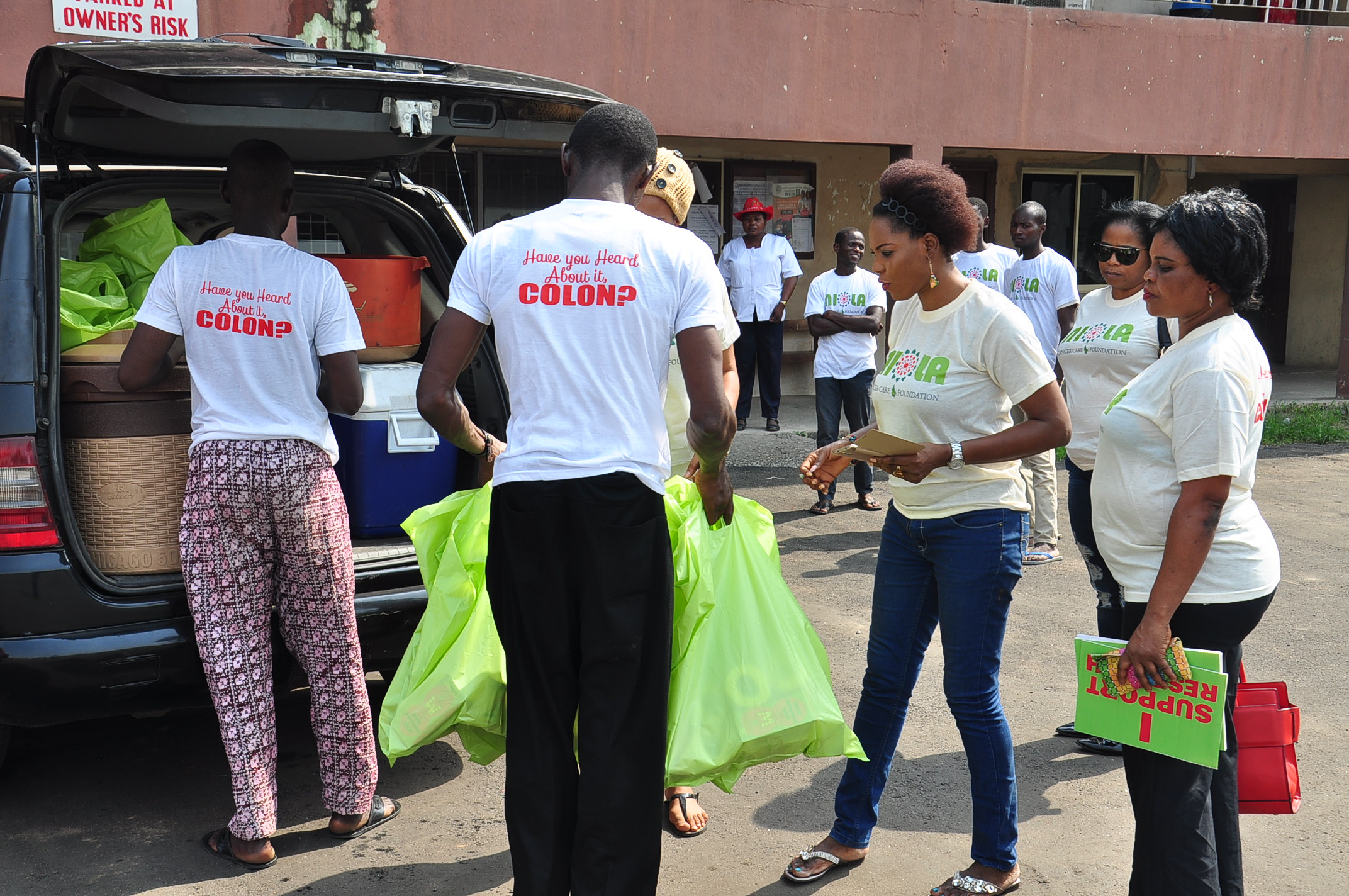
From my past experience, cancer drains the emotion, psychology, finance and others. It also affects families of the victims. Most times, some family members run away because of the stress involvedin dealing with cancer patients, especially due to the rapid change in the victim’s physical appearance. That is why Niola Cancer Care Foundation is committed to this cause and we have been doing it for the past three years, spending Christmas day with cancer patients. We do this to support and show love to them.
By now, Nigeria should have hospices for cancer patients, where they would be shown love because they have the right to be loved and cared for.
Has Lagos State government been supportive of this campaign
Yes, especially wife of the Governor, Mrs BolanleAmbode. She was at our launching as well as officials of the state government. LASUTH knows about us too.
I asked this question because Lagos State government has done well in the rape campaign
Yes, and I think they are working too to raise more awareness about cancer in our society. There was a time the Lagos State House of Assembly called us with other NGOs on a bill on cancer. We gave them our thoughts on the issue.
What is the bill about
It is on the management of cancer in Lagos State. It is really a good one.
If passed, what way will it change the system
It will change a lot because at moment, there are not proper cancer centres or hospitals around. One of our aims at NCCF is to build a cancer centre in each of the geo-political zones of Nigeria. From Ikorodu Road, did you see any cancer centre? In a country of over 180 million people with several dilapidated buildings everywhere used for nothing,and people are dying of cancer and other diseases.
Lagos is trying to build cancer centres in the state, from the bill I saw and we are ready to work with them.
What about big companies in Nigeria, have they supported you
Pfizer has been very helpful and supportive to our campaign. I really appreciate their effort. For getting in touch with our NGO to mark the World Cancer Day showed they have seen our impact and like it. Like Oliver Twist, we want more.
Have you carried celebrities along in the campaign for colorectal cancer
We have approached some celebs, but KeppyEkpeyongBassey and Lillian Amah-Aluko are the two we are working with us at the moment. I wish others can be like them. They have been really very supportive of the campaign without any form of payment made to them. We have spoken with some stars about this cancer awareness campaign, but they do not want to be associated with it.
Why
I don’t know, it is their personal reason. I have tried to talk to them to speak about it with their fans and I hope they will come on board soon.
How does exercise prevent colorectal cancer
Exercise helps prevent cancer generally and it is one thing we talk about too at Niola Cancer Care Foundation. Sometimes ago, we partnered with a gym outfit, Safari, to create awareness on preventing cancer with exercise because it helps the body’s metabolism. When you exercise, your body parts function well.
What do you intend to achieve with Niola Cancer Care Foundation
Niola Cancer Care Foundation is the first colorectal cancer NGO in Nigeria and we want to create awareness about the disease in Nigeria. I never knew about colorectal cancer until my late husband’s issue came up. But colorectal cancer is any tumour that starts from the colon to the rectum. At NCCF, we assist victims deal with the disease, emotions and others. We have our labs, but we are still expecting to have them equipped even though we have partnered with some top hospitals in Lagos. Dr AdedapoOsinowo, a cancer consultant, has been very helpful.
What hope do colorectal cancer patients have with Niola Cancer Care Foundation
My brother, their hope is on God, but we do our best to assist them in any way we can. We do not push any one that comes to us away. We put people through on how to manage the issue.
Do you have relationship with other cancer NGOs
Yes, we have. They job is enormous and we need each other’s support.
Is there any competition among the NGOs
That is one problem we have and I don’t understand why. My message to cancer NGOs is for us to work together and achieve the common goal of fighting this cancer menace.
Do you have supports of foreign partners
For now, we have not received any, but we would love to have them support us so as to make our work easier and our reach farther.
What are the main challenges you face.
Funding is our biggest challenge. We have space to have equipment to conduct tests in our office but we do not have the fund to get these equipment. We have consultants and volunteers ready to work with us, but have no machines to work with.
How can the government assist you
They should come up with good policies. Also, they should not try to gag us because they know genuine NGOs and the fake ones. We are actually doing what the government should be doing for its citizens.