Health
Kenya Meets Guinea Worm Free Certification Criteria
By Modupe Gbadeyanka
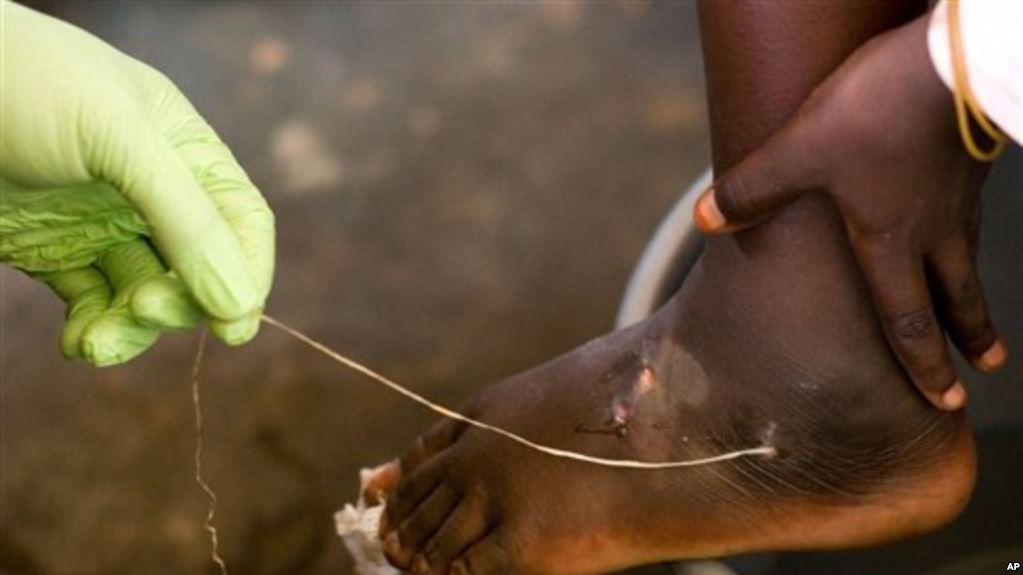
Following a comprehensive evaluation in the last two weeks by the International Certification Team (ICT), Kenya has finally met the criteria for Guinea worm free certification status.
The team for evaluating the status of Guinea Worm Disease found no evidence of Guinea Worm transmission in the last three years, in the presence of adequate surveillance and follow- up of rumours of the disease, putting the country on track to the Guinea Worm-free certification status.
The team will present its recommendations to the International Commission for the Certification of Dracunculiasis (Guinea Worm) Eradication (ICCDE), which will in turn make a decision on the certification of Kenya’s free status when it meets in Geneva next February.
The mission, initiated and facilitated by WHO, was led by the ICT Chair Dr Joel Breman, and had been convened in response to an official request by the country last August for assessment towards Guinea Worm certification. Kenya had interrupted indigenous GW transmission in 1994 after the last GW case was contained. Several imported cases from South Sudan up to 2005 were also contained.
The evaluation teams visited 21 counties among them the three former endemic counties of Turkana, West Pokot and Trans Nzoia, 88 health facilities, 159 communities and 1691 individuals.
Making the presentation in Nairobi, deputy head of the ICT Dr Ashok Kumar, said the teams had found great awareness among the community about the disease and the cash award, especially in the former endemic areas, namely, Turkana, West Pokot and Trans Nzoia.
The evaluation shows a national knowledge of the GW disease at about 60 per cent (59.6%) while in former endemic counties knowledge was at 100 per cent. Knowledge of the cash reward was at 88.3 per cent nationally and 97 per cent in former endemic counties.
The criteria used to evaluate the country included Guinea Worm endemicity, adequate surveillance, investigation of recent guinea worm rumours, cross-border considerations with GW endemic or formerly endemic counties, accessibility and non-reporting areas and unsafe drinking water.
The team made recommendations and cautioned that the country needed to remain vigilant and sustain its status through continued surveillance, community awareness, safety of water resources, reporting and recording to check out any potential imports from bordering states. Kenya is bordered by South Sudan and Ethiopia which remain endemic to GW and have a high number of refugee movements.
“We have found several strengths and some gaps. Some of the most positive things we have noted include surveillance of GW disease and other diseases,” Dr Breman had earlier said.
Dr Kumar said there was need to continue with surveillance, especially along the borders, and to ensure that continued awareness and education through schools, markets, religious institutions and community awareness is sustained.
He said the provision of clean water was key and commended UNHCR for the provision of safe water at Kakuma Refugee camp which houses 195,000 people. Nandapal Border Clinic where refugees are screened before entering the country was a good practice, he added, since it helped monitor any GW disease imports.
The positive recommendations of the ICT were received with great elation by Director of Medical Services, Dr Jackson Kioko, who assured the team of government commitment and maintenance of good practices in surveillance, community education, reporting and universal access to safe drinking water.
“As we approach certification to a GW-free country, we recognize the need to be vigilant and acknowledge your recommendations for strengthening our health system.”
He acknowledged technical support from WHO Kenya and the role it had played for the country’s readiness for certification as well as other partners like UNICEF which facilitated efforts to interrupt GWD.
WHO Kenya Representative, Dr Rudi Eggers, noted WHO would continue to support Kenya in its efforts to eradicate the disease. He said there were still gaps that needed attention including the need to invest in surveillance and safe drinking water.
He acknowledged the role played by different groups and organizations including the Carter Centre which had supported Guinea Worm interruption in Kenya and other partners including AMREF, UNHCR, Kenya Red Cross and UNICEF as well as groups like the community health volunteers and health workers who have made great contribution to the journey to GW certification.
“Should Kenya be declared Guinea Worm free after this evaluation, it will have been a historical and significant public health milestone, in the world, the second disease declared eradicated in Kenya after small pox,” Dr Eggers had earlier said.
Health
Resident Doctors Suspend Proposed Indefinite Strike
By Adedapo Adesanya
The Nigerian Association of Resident Doctors (NARD) has suspended its planned indefinite strike following the federal government’s reversal of the implementation of the reviewed Professional Allowance Table (PAT) and renewed assurances on outstanding payments.
The decision was announced in a communiqué issued at the end of an emergency National Executive Council (NEC) meeting held virtually on Saturday.
NARD had earlier resolved to embark on a total and indefinite strike over the government’s suspension of the reviewed allowance structure and other unresolved welfare concerns affecting resident doctors nationwide.
However, the association said it reconsidered its position after reviewing the outcomes of high-level engagements with key government officials and health-sector stakeholders.
According to the communiqué signed by NARD President, Dr Mohammad Usman Suleiman; Secretary-General, Dr Shuaibu Ibrahim; and Publicity and Social Secretary, Dr Abdulmajid Yahya Ibrahim, the Federal Government has now reversed its earlier decision on the allowance table.
“The NEC observed that the earlier decision to halt the implementation of the reviewed Professional Allowance Table (PAT) has been reversed, with implementation expected to reflect in the April salary and beyond,” the statement read.
The association also noted the government’s renewed commitment to settling outstanding promotion and salary arrears owed to resident doctors in affected institutions.
In addition, NARD said initial approval had been secured for the 2026 Medical Residency Training Fund (MRTF), with assurances that the disbursement process would be concluded.
“The NEC observed that the Budget Office has indicated its readiness to commence the process for the payment of the outstanding nineteen months’ arrears of the Professional Allowance,” the communiqué added.
Despite the progress, the doctors expressed concern about the continued delay in paying house officers’ salaries and called for urgent action to address the issue.
Following its deliberations, the NEC demanded the sustained implementation of the reviewed allowance structure, the prompt payment of all outstanding arrears, and the expedited disbursement of the residency training fund.
It also called for the immediate commencement of the process to clear the 19-month arrears and the convening of an urgent stakeholders’ meeting to resolve delays affecting house officers’ salaries.
“In light of the above developments, the NEC resolves to suspend the proposed total, indefinite, and comprehensive strike action, with a review of progress to be undertaken at the May Ordinary General Meeting (OGM) in Kano,” the statement said.
NARD expressed appreciation to President Bola Tinubu, Vice President Kashim Shettima, and several ministers, government agencies, and stakeholders for their interventions in resolving the dispute.
Health
Over 1.5 million Nigerian Children Living With Sickle Cell Disease—Report
By Modupe Gbadeyanka
More than 1.5 million children under the age of 15 are living with sickle cell disease in Nigeria, a new international study published in The Lancet Child & Adolescent Health, one of the world’s leading medical journals, has revealed.
In the report made available to Business Post, it was disclosed that Nigeria carries the highest burden of disease globally, far exceeding other high-burden countries such as the Democratic Republic of the Congo and Ethiopia.
The findings highlight both the scale of the challenge in Nigeria and the opportunity for the country to lead Africa in tackling one of the most preventable causes of childhood illness and death.
The study shows that nearly nine million children across sub-Saharan Africa are living with sickle cell disease in 2023, including around 1.17 million infants and 2.75 million children under five, who face the highest risk of early death without treatment.
Sickle cell disease is an inherited blood disorder present at birth. With early diagnosis and access to simple, low-cost interventions such as newborn screening, penicillin prophylaxis, routine vaccinations, malaria prevention, and hydroxyurea, most complications and deaths can be prevented.
However, in Nigeria, access to these essential services remains limited. Many children are only diagnosed after severe and avoidable complications, while others are never diagnosed at all, contributing to high levels of preventable illness and early childhood deaths.
The researchers emphasise that strengthening Nigeria’s health system response will be critical. This includes expanding newborn screening programmes, improving access to essential medicines, and integrating sickle cell care into primary healthcare services.
They called for urgent and coordinated action across government, health institutions, and development partners, including expanding newborn screening programmes, improving access to essential medicines and vaccines, and embedding sickle cell care within primary healthcare services.
The researchers, led by Professor Davies Adeloye, Professor of Public Health at Teesside University, United Kingdom, and Director of the International Society of Global Health (ISoGH), also called for increased domestic investment, supported by international partnerships, as well as stronger data systems to improve surveillance and guide policy decisions.
They concluded that even modest improvements in early-life screening and treatment in high-burden countries like Nigeria could transform child survival and significantly reduce preventable deaths.
“Nigeria now stands at the centre of the global sickle cell crisis. With over 1.5 million children affected, the scale is enormous, but so is the opportunity to act. We already know what works. Newborn screening and early treatment are effective, affordable, and can be delivered through existing health systems.
“If Nigeria prioritises sickle cell disease within its national health agenda and integrates care into routine maternal and child health services, we could save hundreds of thousands of young lives and significantly reduce avoidable deaths.” Professor Adeloye noted.
It was learned that the study analysed data from 40 studies across 22 African countries to produce the most comprehensive country-level estimates of childhood sickle cell disease to date.
Health
Helical Secures $10m Funding Package for Expansion
By Dipo Olowookere
A $10 million capital has been raised by Helical to support expansion across more top-20 pharma programmes and growth of its deployed science engineering team.
The firm will also use the money to build the compounding evidence layer that improves performance across diseases, as its mission is to make every scientist able to test hypotheses at the speed of inference and to turn in-silico discovery into a reliable engine for R&D throughput.
The funding package was from redalpine, Gradient, BoxGroup, Frst and notable angels, including Aidan Gomez (CEO Cohere), Clement Delangue (CEO HuggingFace) and Mario Goetze (pro soccer player).
Helical has a product known as the virtual AI lab for pharma, an application layer that turns biological foundation models into decision-ready, reproducible in-silico discovery workflows.
The platform has two product surfaces — the Virtual Lab for biologists and translational scientists, and the Model Factory for ML engineers and data scientists — built on the same data, the same models, and the same results.
By putting both sides in the same system, Helical closes the gap between computational predictions and biological decision-making, so teams that traditionally worked in silos can collaborate on the same evidence.
Helical was founded in early 2024. It was created by three school friends who took different paths to the same problem.
Rick Schneider built tech at Amazon and later helped the German enterprise Celonis scale in France and Japan. Maxime Allard led data science teams at IBM before pursuing a PhD focused on reinforcement learning and robotics. Mathieu Klop became a cardiologist and genomics researcher.
When bio foundation models emerged, the trio saw the chance to build the missing application layer that would let pharma teams move from model experimentation to reproducible, production discovery.
“The models alone don’t discover drugs. The system does. Pharma teams need a system that turns foundation models into workflows scientists can run, validate, and defend.
“We built Helical to make in-silico science reproducible at pharma scale, so teams can go from hypothesis to decision in days instead of months,” the co-founder of Helical, Mr Rick Schneider, said.
“We are at a unique point in time where biological foundation models and general language reasoning models are converging.
“We backed Helical because we strongly believe they have what it takes to build the pharma AI orchestration platform that will drive this transition from siloed AI models to integrated virtual AI labs,” the General Partner at redalpine, Mr Daniel Graf, stated.
-
Feature/OPED6 years agoDavos was Different this year
-
Travel/Tourism10 years ago
Lagos Seals Western Lodge Hotel In Ikorodu
-
Showbiz3 years agoEstranged Lover Releases Videos of Empress Njamah Bathing
-
Banking8 years agoSort Codes of GTBank Branches in Nigeria
-
Economy3 years agoSubsidy Removal: CNG at N130 Per Litre Cheaper Than Petrol—IPMAN
-
Banking3 years agoSort Codes of UBA Branches in Nigeria
-
Banking3 years agoFirst Bank Announces Planned Downtime
-
Sports3 years agoHighest Paid Nigerian Footballer – How Much Do Nigerian Footballers Earn