Connect with us

Health

Monkeypox on the Rise in Africa, United States and Europe—WHO

Published

on

birthplace of monkeypox

By Kestér Kenn Klomegâh

With rising cases of Monkeypox, not only in Africa but also in the United States and Europe, the world is now experiencing shivering fears for the next tremendous negative impact similar to Covid-19. It all began the same way, as the first case of Covid-19, and rapidly spread throughout the world. Soon to forget the worldwide border closures, self-isolation and other restrictions.

After documenting more than 7,000 cases in early July, World Health Organization (WHO) Director-General Tedros Adhanom Ghebreyesus has said about the plans on reconvening a meeting of his organization’s Emergency Committee to critically assess the current state of the monkeypox outbreak in Western countries.

Ghebreyesus’s statement implies directing a special focus, considering the current spread and scale of the monkeypox virus outbreak, in Western countries. According to WHO estimation and description or better still categorization, the western countries are “nonendemic” countries.

In his office, Ghebreyesus calculated that more than 7,000 cases have been confirmed in 60 countries so far, with Europe currently the epicentre of the outbreak. Cases began emerging in Europe and the United States in May. Many of the individuals who contracted the virus had travelled internationally. Monkeypox is endemic in some central and western African countries, but Tedros noted that the pathogen was now also being detected in nonendemic African countries.

“My teams are following the data closely. I plan to reconvene the Emergency Committee July 18 or sooner so they are updated on the current epidemiology and evolution of the outbreak, and implementation of counter measures,” he said, Reuters reported.

In June, the WHO’s Emergency Committee said the monkeypox outbreak did not warrant declaring a global health emergency despite the rapid rise in cases. At the time, the health organization said the situation was “unusual” but did not constitute a global health emergency, despite opposing views expressed by some members of the committee.

Health experts, however, referring to official statements that many out of thoughtlessness, have a wide variety of interests to defend and routinely calculate figures, without dealing with the root cause and place of origin. Until today the root cause and place of origin of Covid-19 still remains a mystery.

The recent outbreak has raised cries of double standards from global health activists, who argue that monkeypox has been an ongoing health issue in some African countries for years but is only now garnering sincere attention as it affects Western nations. More than 70 deaths due to monkeypox have been reported in Africa so far this year, while no deaths directly linked to the virus have been confirmed in nonendemic countries.

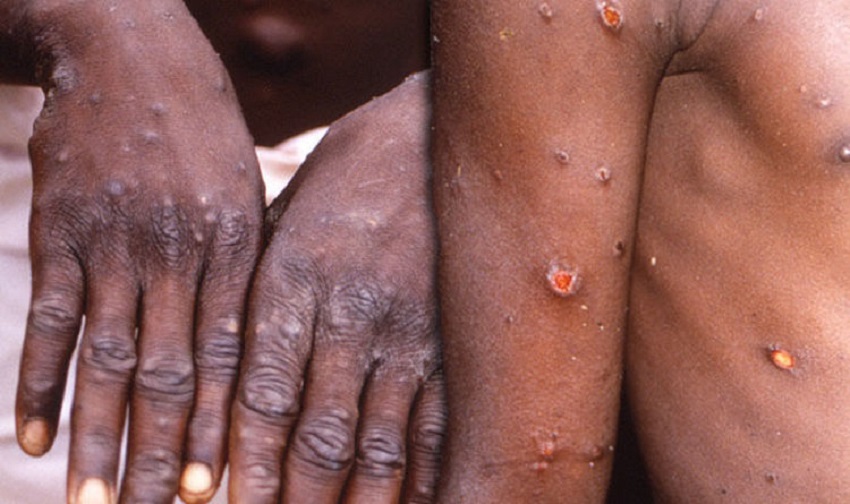
The WHO has previously acknowledged that monkeypox has been neglected for several years now. Reports, carefully monitored by this author, indicate that the disease is endemic in parts of Africa, where people have become infected through bites from rodents or small animals. The monkeypox virus does not usually spread easily among people. Most monkeypox patients experience fever, body aches, chills and fatigue. People with more serious illnesses may develop a rash and lesions on the face and hands that can spread to other parts of the body.

WHO said it counted 6,027 laboratory-confirmed cases of monkeypox from 59 countries as of the first week of July, an increase of 2,614 cases since its last count that ended June 27. It said three people have now died in connection with the outbreak, all of them in Africa. Most of the cases were reported in Europe and Africa. New cases have also been reported in Ghana and Benin in addition to previously mentioned Cameroon, Central African Republic, Democratic Republic of Congo and Nigeria.

Therefore, WHO should not depend on the continuity of mysterious outbreaks, but go to the roots and take the needed actions. It has, appreciable for now, confined its health recommendations to a standard set of hygienic requirements and did not insist on travel and trade restrictions. Beyond that, it has to establish a task force for keeping high surveillance across the Central and West African region and monitor travellers from these regions.

The Centre for Disease Control (Africa CDC) and the African Society for Laboratory Medicine (ASLM) have jointly held their first training on Real-Time PCR-based Monkeypox virus (MPXV) testing for 20 African Union Member States in Abuja, Nigeria. It was the first in the series of hands-on training on real-time PCR-based monkeypox virus (MPXV) diagnosis launched and organized in partnership with the Nigeria Centre for Disease Control (NCDC) in June.

With Covid-19, China has been alleged or suspected as the country of origin. With Monkeypox Nigeria, the most populated West African nation, has come under the spotlight, allegedly as the place of origin of the monkeypox virus, and was detected in several European countries during the past three months. Besides, Central and West African regions, it’s been detected in external countries namely Spain, Portugal, the United Kingdom, Belgium, Italy, France, Germany, Sweden, Canada, the United States, and Australia.


Health

Helical Secures $10m Funding Package for Expansion

Published

on

Helical

By Dipo Olowookere

A $10 million capital has been raised by Helical to support expansion across more top-20 pharma programmes and growth of its deployed science engineering team.

The firm will also use the money to build the compounding evidence layer that improves performance across diseases, as its mission is to make every scientist able to test hypotheses at the speed of inference and to turn in-silico discovery into a reliable engine for R&D throughput.

The funding package was from redalpine, Gradient, BoxGroup, Frst and notable angels, including Aidan Gomez (CEO Cohere), Clement Delangue (CEO HuggingFace) and Mario Goetze (pro soccer player).

Helical has a product known as the virtual AI lab for pharma, an application layer that turns biological foundation models into decision-ready, reproducible in-silico discovery workflows.

The platform has two product surfaces — the Virtual Lab for biologists and translational scientists, and the Model Factory for ML engineers and data scientists — built on the same data, the same models, and the same results.

By putting both sides in the same system, Helical closes the gap between computational predictions and biological decision-making, so teams that traditionally worked in silos can collaborate on the same evidence.

Helical was founded in early 2024. It was created by three school friends who took different paths to the same problem.

Rick Schneider built tech at Amazon and later helped the German enterprise Celonis scale in France and Japan. Maxime Allard led data science teams at IBM before pursuing a PhD focused on reinforcement learning and robotics. Mathieu Klop became a cardiologist and genomics researcher.

When bio foundation models emerged, the trio saw the chance to build the missing application layer that would let pharma teams move from model experimentation to reproducible, production discovery.

“The models alone don’t discover drugs. The system does. Pharma teams need a system that turns foundation models into workflows scientists can run, validate, and defend.

“We built Helical to make in-silico science reproducible at pharma scale, so teams can go from hypothesis to decision in days instead of months,” the co-founder of Helical, Mr Rick Schneider, said.

“We are at a unique point in time where biological foundation models and general language reasoning models are converging.

“We backed Helical because we strongly believe they have what it takes to build the pharma AI orchestration platform that will drive this transition from siloed AI models to integrated virtual AI labs,” the General Partner at redalpine, Mr Daniel Graf, stated.

Continue Reading

Health

NARD Suspends Indefinite Strike, Gives FG Fresh Two-Week Ultimatum

Published

on

resident doctors strike

By Adedapo Adesanya

The Nigerian Association of Resident Doctors (NARD) has suspended its planned nationwide indefinite strike, granting the federal government a two-week ultimatum to address lingering welfare issues affecting resident doctors across the country.

The decision was taken after an emergency meeting of the association’s National Executive Council on Tuesday, where members reviewed assurances from government representatives and resolved to give dialogue another chance.

NARD said the suspension was informed by “progress made” in negotiations, particularly commitments on the prompt payment of salary arrears, hazard allowances, and steps toward resolving issues surrounding the Medical Residency Training Fund.

The association did not declare a full resolution of the dispute. It noted that the government had shown “renewed willingness” to address the concerns that triggered the strike threat.

The association noted that while these engagements signalled a willingness by the government to resolve the dispute, several critical issues remain outstanding, particularly the delayed payment of promotion arrears, salary arrears, the 2026 Medical Residency Training Fund (MRTF), and the backlog of 19 months’ professional allowance arrears owed to resident doctors.

It also expressed concern over the Federal Government’s decision to halt the implementation of the reviewed PAT, which had earlier triggered widespread dissatisfaction among its members and raised fears of disruption to healthcare services nationwide.

Despite these unresolved issues, NARD said it opted to suspend the strike as a demonstration of goodwill and commitment to ongoing dialogue, while giving the government a two-week window to take concrete, measurable and verifiable steps to meet its demands.

The association insisted on the immediate reversal of the decision affecting the PAT, payment of all outstanding arrears, prompt disbursement of the MRTF, and full settlement of the accumulated professional allowance backlog.

It warned that it would reconvene at the expiration of the ultimatum to assess the level of compliance and determine its next course of action, adding that failure by the government to meet its demands within the stipulated timeframe would result in the resumption of the suspended strike without further notice.

NARD also called on its members nationwide to remain calm, united and resolute, while urging the Federal Government to act swiftly to prevent a potential crisis in the health sector.

The association further appreciated the interventions of the Vice President and other stakeholders, expressing hope that their involvement would lead to the timely resolution of the dispute and help sustain healthcare delivery across the country.

Continue Reading

Health

Jacaranda Gets Funds to Expand Affordable Maternal Healthcare in Kenya

Published

on

Jacaranda Maternity

By Modupe Gbadeyanka

To expand affordable healthcare in Kenya, Swedfund has invested about $600,000 into Jacaranda Health Limited (Jacaranda Maternity) to support innovations in neonatal intensive care and strengthen Jacaranda’s ability to provide life-saving services to underserved populations.

Jacaranda Maternity provides high-quality maternal health care at more affordable pricing than typical private providers, focusing on women in Nairobi’s low- and middle-income communities.

The new funding will support the opening of new hospitals, upgrading of neonatal care, and improvements to existing facilities.

Maternal and newborn health outcomes in Kenya remain a challenge, with maternal mortality still high despite improvements in skilled birth attendance.

Public health facilities play a central role but face capacity constraints, while access to reliable, quality care varies across regions and income groups.

Private healthcare providers offering essential maternity services at accessible price points can complement public provision.

Jacaranda Maternity aims to expand its network to six hospitals to achieve financial sustainability while scaling its impact. The healthcare provider is a recognised leader in promoting women’s health, with 71 percent of its staff being women, and a track record of effective environmental and social management.

“This investment will help Jacaranda Maternity provide life-saving care to more women and families while furthering Swedfund’s mission to promote inclusive and sustainable healthcare,” a Senior Investment Manager at Swedfund, Audrey Obara, said.

Continue Reading

Trending