Connect with us

Health

MSF Vaccinates One Million DR Congo Children Against Measles

Published

on

By Dipo Olowookere

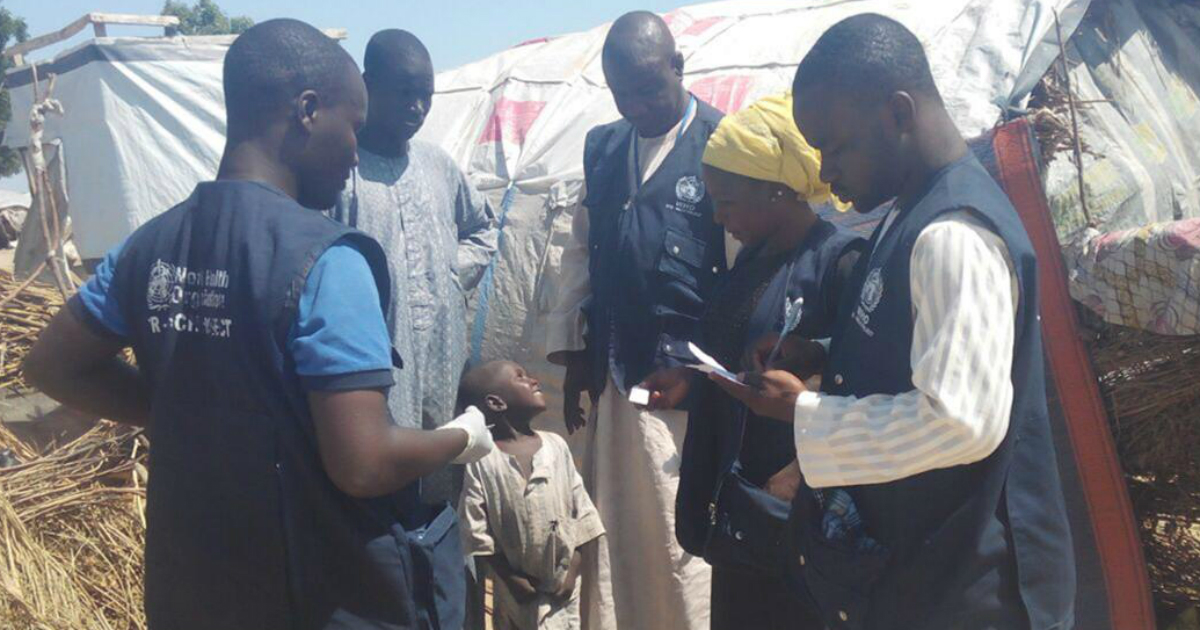
As measles sweeps across Democratic Republic of Congo (DRC), more than one million children have been vaccinated against the disease in a nine-month campaign by the international aid organisation Médecins Sans Frontières/Doctors Without Borders (MSF), supporting the Ministry of Health.

Since November 2016, MSF teams have also treated more than 41,000 children for the disease in Maniema, Lomami, Tanganyika, Ituri, South Kivu and Equateur provinces.

Measles is extremely contagious and is mostly spread through sneezing and coughing. It mainly affects children, especially the under-fives. For those who suffer complications and who fail to receive treatment, it can prove deadly.

For the vaccine to be effective, 95 percent of children aged from six months to 15 years need to be vaccinated. In a country as large as DRC, where roads are often poor or non-existent, and travelling can be hampered by insecurity, considerable logistical constraints exist to reach children in certain areas. MSF teams have travelled by motorbike and on foot down narrow forest trails to reach the remotest areas.

“My team and I wanted to reach a particular area of Equateur province, around 20 km from Bolomba,” says Faustin Igulu, health promotion manager for MSF’s emergency response team. “As there are no roads, we used motorbikes. We had to lift the motorbikes, the cool boxes containing the vaccines and all the rest of the equipment we needed onto wooden planks to cross the rivers. When the trails became too narrow, we left the motorbikes and walked through the forest for hours.”

Despite the difficulties, MSF teams are determined to reach the remotest areas, as children there are particularly vulnerable to measles, due to the scarcity of available healthcare and people’s inability to pay for it.

“All of these efforts are necessary,” says Igulu. “Long distances to reach the health facilities, the lack of economic resources to afford treatment, the use of traditional remedies – all of these factors endanger children’s health in these areas. This is why we do all that we can to reach the most remote villages and settlements where children otherwise would have no access to healthcare or vaccines.”

Children in remote areas who suffer measles with complications are at risk of remaining untreated, or arriving for treatment when it is already too late, endangering their lives. “Many children we have taken care of arrived in a serious condition at the hospital because of the difficulties of reaching healthcare services,” says Igulu. “Children risk their lives if they are treated too late.”

Despite the numbers of children already vaccinated, MSF is continuing its efforts to bring the epidemic to a halt. MSF teams are currently vaccinating children against measles and providing measles treatment, free of charge, in the provinces of Tshopo and South Kivu.

MSF calls on the Ministry of Health, international organisations and donors to rapidly and dramatically scale up their response to the multiple outbreaks of measles occurring throughout the country.


Dipo Olowookere is a journalist based in Nigeria that has passion for reporting business news stories. At his leisure time, he watches football and supports 3SC of Ibadan. Mr Olowookere can be reached via [email protected]

Advertisement
Click to comment

Leave a Reply

Your email address will not be published. Required fields are marked *

Health

Interswitch Takes eClinic Electronic Medical Records to Abia

Published

on

Electronic Medical Records

By Aduragbemi Omiyale

To boost public healthcare delivery, the health-tech subsidiary of Interswitch, Interswitch eClat, has deployed its eClinic Electronic Medical Records (EMR) platform across public health facilities in Abia State.

This would be done in phases, with the kick-off phase to span six public health facilities, including three primary healthcare centres, two secondary facilities, and one tertiary hospital, creating an end-to-end digital care pathway that strengthens patient referrals, supports continuity of care, and enables data-driven decision-making across all levels of service delivery.

The EMR solution is built to reduce patient waiting times, strengthen referral processes, and ensure the secure handling of both clinical and administrative data, supported by a hybrid infrastructure that enables local hosting with cloud-based backup.

Officials of the leading African technology company held talks with the state government, especially from the Abia State Ministry of Health in Umuahia.

They discussed the implementation framework, and expected outcomes of the proposed eClinic deployment.

Discussions focused on deploying Interswitch’s eClinic solution in alignment with Abia State’s broader healthcare reform agenda under the current government’s administration, particularly the transition from fragmented, paper-based systems to secure, interoperable digital platforms across public health facilities.

“The Ministry of Health in Abia State is excited about the digitisation of health facilities, starting with Interswitch’s eClinic pilot phase involving three primary, two secondary, and one tertiary health centre.

“This initiative will enhance efficiency, accountability, and patient care by linking records across different levels of care.

“Global evidence shows that digital health improves access, reduces the cost of care, and maximises human resources while personalising services for our people.

“This partnership with Interswitch represents a key deliverable for this administration and aligns with the Governor’s vision for a modern, technology-driven health system,” the Commissioner for Health for Abia State, Mr Enoch Ogbonnaya Uche, said.

“Abia State has demonstrated a strong commitment to innovation and system reform. The alignment of the state’s healthcare priorities with national health digitisation objectives creates a solid foundation for meaningful progress.

“Interswitch’s eClinic platform is designed to improve hospital operations by automating workflows, securing patient data, and providing healthcare managers with reliable insights to guide decisions.

“Beyond improving patient experience, it supports stronger revenue tracking, operational efficiency, and accountability. Our focus is to ensure the success of this pilot phase and deliver tangible improvements across productivity, service delivery, and patient satisfaction,” the Vice President for Health Ecosystem (Public Sector) at Interswitch, Mr Babatunde Fadeyi, stated.

Continue Reading

Health

Polaris Bank Sponsors Free Breast, Prostate Cancer Screenings

Published

on

Polaris Bank free cancer screenings

By Modupe Gbadeyanka

To commemorate World Cancer Day observed on Wednesday, February 4, 2026, Polaris Bank Limited is bankrolling free screenings for breast and prostate cancers across the country.

The financial institution partnered with a non-governmental organization (NGO) known as Care Organization and Public Enlightenment (COPE) for this initiative.

At least 100 women would be screened during the exercise, scheduled for Saturday, February 21, 2026, at the C.O.P.E Centre on 39B, Adeniyi Jones Avenue, Ikeja, Lagos, from 10:00 am to 2:00 pm.

The exercise will be conducted by trained health professionals and volunteers, ensuring participants receive both screening services and educational guidance on cancer prevention, self-examination, and follow-up care.

To participate in the free breast cancer screening programme, the applicants must be women, must be Polaris Bank account holders, and must have registered ahead of the day via bit.ly/BCS2026, with selection based on early and confirmed submissions.

Polaris Bank said the initiative was designed to promote awareness, screening, early detection, and preventive care, reinforcing its belief that access to health services is a critical foundation for individual and economic well-being.

The organization is already supporting an on-going free prostate cancer screening programme for 250 men aged 40 years and above across Nigeria.

The prostate cancer screening is being conducted at the Men’s Clinic, situated at 18, Commercial Avenue, Sabo, Yaba, Lagos, providing accessible, professional medical support for male participants seeking early detection and preventive care for prostate cancer.

Both initiatives (free breast and prostate cancer screenings) directly aligns with the United Nations Sustainable Development Goals, particularly SDG 3 (Good Health and Well-being) through improved access to preventive healthcare and early detection services, SDG 5 (Gender Equality) by prioritizing women’s health and empowerment, and SDG 17 (Partnerships for the Goals) through strategic collaboration with civil society organizations such as C.O.P.E to deliver community-centered impact.

Educational materials, community engagement sessions, and digital awareness campaigns will be deployed to reinforce key messages around early detection, lifestyle choices, and the importance of regular medical check-ups.

The Head of Brand Management and Corporate Communications for Polaris Bank, Mr Rasheed Bolarinwa, emphasised that early detection remains one of the most effective tools in the fight against cancer.

Continue Reading

Health

NSIA Gets IFC’s Naira-financing to Scale Oncology, Diagnostic Services

Published

on

NSIA MedServe

By Adedapo Adesanya

International Finance Corporation (IFC), a subsidiary of the World Bank, and the Nigeria Sovereign Investment Authority (NSIA) have partnered to provide Naira-denominated financing to NSIA Advanced Medical Services Limited (MedServe), a wholly owned healthcare subsidiary of the country’s  wealth fund.

Supported by the International Development Association’s Private Sector Window Local Currency Facility, this financing enables MedServe to scale critical healthcare infrastructure while mitigating foreign exchange risks. IFC is a member of the World Bank Group.

The funds will support MedServe’s expansion program to establish diagnostic centers, radiotherapy-enabled cancer care facilities, and cardiac catheterisation laboratories across several Nigerian states.

These centres will feature advanced medical technologies, including CT and MRI imaging, digital pathology labs, linear accelerators, and cardiac catheterisation equipment, thereby enhancing specialised diagnostics and treatment.

MedServe provides sustainable service delivery with pricing that matches local income levels, helping ensure broader access to affordable oncology care for low-income patients.

The initiative will deliver over a dozen modern diagnostic and treatment centers across Nigeria, create 800 direct jobs, and train more than 500 healthcare professionals in oncology and cardiology specialties.

The total project size is $154.1 million, with IFC contributing roughly N14.2 billion ($24.5 million) in long-tenor local currency financing, marking IFC’s first healthcare investment in Nigeria using this structure.

This comes as Nigeria advances its aspirations for Universal Health Coverage. This partnership provides an opportunity to leverage private investment to complement government efforts to expand oncology care and diagnostic services.

IFC’s provision of long-tenor Naira financing addresses a significant market gap and unlocks institutional capital for healthcare infrastructure with strong development upside while MedServe’s co-location strategy with public hospitals maximises capital efficiency and strengthens the public-private ecosystem, establishing a replicable platform for future investment.

“This partnership with IFC represents a significant milestone in NSIA’s commitment to strengthening Nigeria’s healthcare ecosystem through sustainable, locally anchored investment solutions,” said Mr Aminu Umar-Sadiq, managing director & chief executive of NSIA.

He added, “By deploying long-tenor Naira financing, we are addressing critical infrastructure gaps while reducing foreign exchange risk and ensuring that quality diagnostic and cancer care services are accessible to underserved communities. MedServe’s expansion underscores our belief that commercially viable healthcare investments can deliver strong development impact while supporting national health priorities.”

“This ambition is consistent with our broader vision for Africa, one where resilient health systems and inclusive growth reinforce each other to deliver long-term impact across the continent,” said Mr Ethiopis Tafara, IFC Vice President for Africa.

Continue Reading

Trending