Health
NCDC Investigates Reports of ‘Strange Illness’ in Kogi
Modupe Gbadeyanka
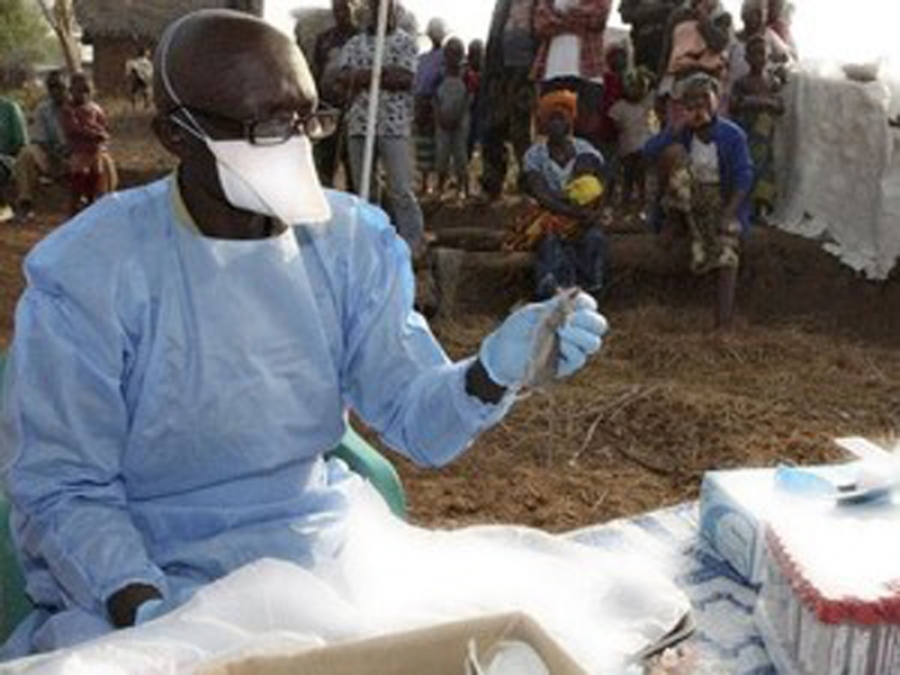
Members of the public have been urged to remain calm following recent reports of a strange illness in Kogi State.
The Nigeria Centre for Disease Control (NCDC) Event Based Surveillance (EBS) system said it was looking into the issued already.
A statement issued by the agency on Friday said its surveillance team has contacted the Kogi State Epidemiology teams and preliminary findings showed that some cases presented with symptoms that fits the case definition of Lassa fever.
However, laboratory test came out negative for Lassa fever and tests are now being carried out for other viral diseases in one of our collaborating laboratories, NCDC said.
In Kogi State, the State Epidemiology Team led by the State Commissioner of Health visited towns said to be affected by the strange illness and found five cases with mild illness. The patients were treated and discharged immediately. No other cases/ deaths of unknown illness have been identified. However, samples for routine laboratory investigation have been taken from the sick and results are being awaited.
NCDC said it was supporting Kogi and Kwara States in ongoing investigations and “our Rapid Response Team is ready to be deployed as required.
“We are constantly working with all the State Epidemiologists to ensure the health security of all Nigerians, by developing our laboratory capacity and ability to respond rapidly.
“We ask members of the public to continue to ensure proper hygiene and sanitation measures are in place at all times and avoid self-medication.
“They are also encouraged to report to a health facility immediately if they experience symptoms such as sudden high fever, especially if it does not respond to conventional remedies.”
The agency further urged health workers to ensure universal care precautions while handling patients at all times.
If common causes of febrile illnesses are ruled out, health workers should inform the Local Government or State Disease Surveillance and Notification Officer (DSNO) and ensure immediate laboratory investigation, it said.
“We will continue to work with the States to monitor the current situation and will share new information received, proactively. Our communication channels remain open,” the agency noted.
Health
Court Okays FCCPC to Regulate Consumer Protection in Healthcare
By Adedapo Adesanya
The Abuja division of the Federal High Court has delivered a landmark ruling reinforcing consumer protection in Nigeria’s healthcare sector, affirming the authority of the Federal Competition and Consumer Protection Commission (FCCPC) to investigate complaints related to medical services, including alleged negligence.
Justice Emeka Nwite, who presided over the matter, delivered the judgment on April 15 in a suit filed by Life Bridge Medical Diagnostic Centre Ltd.
The company had challenged the FCCPC’s jurisdiction, arguing that the commission could not probe medical negligence cases without first establishing a formal arrangement with the Medical and Dental Council of Nigeria (MDCN).
However, the court dismissed the claims, holding that healthcare providers operating as commercial entities fall squarely under the provisions of the Federal Competition and Consumer Protection Act (FCCPA).
Justice Nwite ruled that services rendered for value, including medical diagnostics, are subject to consumer protection oversight.
In the decisive clarification, the court drew a line between professional regulation and consumer protection. It said that while disciplinary control of medical practitioners remains the responsibility of professional bodies such as the MDCN, the FCCPC retains authority over issues of service quality, fairness, and consumer satisfaction.
The court further held that Section 105 of the FCCPA, which encourages regulatory coordination, does not limit or delay the FCCPC’s statutory powers.
According to the ruling, the absence of a formal agreement with sector regulators does not invalidate the Commission’s authority to act.
Justice Nwite also addressed concerns around patient confidentiality, ruling that ethical obligations do not override lawful investigations carried out in the public interest and in compliance with due process.
Reacting to the judgment, FCCPC executive vice chairman, Tunji Bello, described the decision as a major step toward strengthening consumer rights across all service sectors.
He emphasised that the ruling underscores the principle that consumer protection and professional regulation can coexist without conflict.
Health
Resident Doctors Suspend Proposed Indefinite Strike
By Adedapo Adesanya
The Nigerian Association of Resident Doctors (NARD) has suspended its planned indefinite strike following the federal government’s reversal of the implementation of the reviewed Professional Allowance Table (PAT) and renewed assurances on outstanding payments.
The decision was announced in a communiqué issued at the end of an emergency National Executive Council (NEC) meeting held virtually on Saturday.
NARD had earlier resolved to embark on a total and indefinite strike over the government’s suspension of the reviewed allowance structure and other unresolved welfare concerns affecting resident doctors nationwide.
However, the association said it reconsidered its position after reviewing the outcomes of high-level engagements with key government officials and health-sector stakeholders.
According to the communiqué signed by NARD President, Dr Mohammad Usman Suleiman; Secretary-General, Dr Shuaibu Ibrahim; and Publicity and Social Secretary, Dr Abdulmajid Yahya Ibrahim, the Federal Government has now reversed its earlier decision on the allowance table.
“The NEC observed that the earlier decision to halt the implementation of the reviewed Professional Allowance Table (PAT) has been reversed, with implementation expected to reflect in the April salary and beyond,” the statement read.
The association also noted the government’s renewed commitment to settling outstanding promotion and salary arrears owed to resident doctors in affected institutions.
In addition, NARD said initial approval had been secured for the 2026 Medical Residency Training Fund (MRTF), with assurances that the disbursement process would be concluded.
“The NEC observed that the Budget Office has indicated its readiness to commence the process for the payment of the outstanding nineteen months’ arrears of the Professional Allowance,” the communiqué added.
Despite the progress, the doctors expressed concern about the continued delay in paying house officers’ salaries and called for urgent action to address the issue.
Following its deliberations, the NEC demanded the sustained implementation of the reviewed allowance structure, the prompt payment of all outstanding arrears, and the expedited disbursement of the residency training fund.
It also called for the immediate commencement of the process to clear the 19-month arrears and the convening of an urgent stakeholders’ meeting to resolve delays affecting house officers’ salaries.
“In light of the above developments, the NEC resolves to suspend the proposed total, indefinite, and comprehensive strike action, with a review of progress to be undertaken at the May Ordinary General Meeting (OGM) in Kano,” the statement said.
NARD expressed appreciation to President Bola Tinubu, Vice President Kashim Shettima, and several ministers, government agencies, and stakeholders for their interventions in resolving the dispute.
Health
Over 1.5 million Nigerian Children Living With Sickle Cell Disease—Report
By Modupe Gbadeyanka
More than 1.5 million children under the age of 15 are living with sickle cell disease in Nigeria, a new international study published in The Lancet Child & Adolescent Health, one of the world’s leading medical journals, has revealed.
In the report made available to Business Post, it was disclosed that Nigeria carries the highest burden of disease globally, far exceeding other high-burden countries such as the Democratic Republic of the Congo and Ethiopia.
The findings highlight both the scale of the challenge in Nigeria and the opportunity for the country to lead Africa in tackling one of the most preventable causes of childhood illness and death.
The study shows that nearly nine million children across sub-Saharan Africa are living with sickle cell disease in 2023, including around 1.17 million infants and 2.75 million children under five, who face the highest risk of early death without treatment.
Sickle cell disease is an inherited blood disorder present at birth. With early diagnosis and access to simple, low-cost interventions such as newborn screening, penicillin prophylaxis, routine vaccinations, malaria prevention, and hydroxyurea, most complications and deaths can be prevented.
However, in Nigeria, access to these essential services remains limited. Many children are only diagnosed after severe and avoidable complications, while others are never diagnosed at all, contributing to high levels of preventable illness and early childhood deaths.
The researchers emphasise that strengthening Nigeria’s health system response will be critical. This includes expanding newborn screening programmes, improving access to essential medicines, and integrating sickle cell care into primary healthcare services.
They called for urgent and coordinated action across government, health institutions, and development partners, including expanding newborn screening programmes, improving access to essential medicines and vaccines, and embedding sickle cell care within primary healthcare services.
The researchers, led by Professor Davies Adeloye, Professor of Public Health at Teesside University, United Kingdom, and Director of the International Society of Global Health (ISoGH), also called for increased domestic investment, supported by international partnerships, as well as stronger data systems to improve surveillance and guide policy decisions.
They concluded that even modest improvements in early-life screening and treatment in high-burden countries like Nigeria could transform child survival and significantly reduce preventable deaths.
“Nigeria now stands at the centre of the global sickle cell crisis. With over 1.5 million children affected, the scale is enormous, but so is the opportunity to act. We already know what works. Newborn screening and early treatment are effective, affordable, and can be delivered through existing health systems.
“If Nigeria prioritises sickle cell disease within its national health agenda and integrates care into routine maternal and child health services, we could save hundreds of thousands of young lives and significantly reduce avoidable deaths.” Professor Adeloye noted.
It was learned that the study analysed data from 40 studies across 22 African countries to produce the most comprehensive country-level estimates of childhood sickle cell disease to date.
-
Feature/OPED6 years agoDavos was Different this year
-
Travel/Tourism10 years ago
Lagos Seals Western Lodge Hotel In Ikorodu
-
Showbiz3 years agoEstranged Lover Releases Videos of Empress Njamah Bathing
-
Banking8 years agoSort Codes of GTBank Branches in Nigeria
-
Economy3 years agoSubsidy Removal: CNG at N130 Per Litre Cheaper Than Petrol—IPMAN
-
Banking3 years agoSort Codes of UBA Branches in Nigeria
-
Banking3 years agoFirst Bank Announces Planned Downtime
-
Sports3 years agoHighest Paid Nigerian Footballer – How Much Do Nigerian Footballers Earn