Connect with us

Health

Senate Moves to Block Medical Tourism

Published

on

Senate Cryptocurrency Ban

By Adedapo Adesanya

The Senate has moved to block revenue leakages from medical tourism by coming up with a bill aimed to reduce the number of Nigerians travelling abroad for medical care.

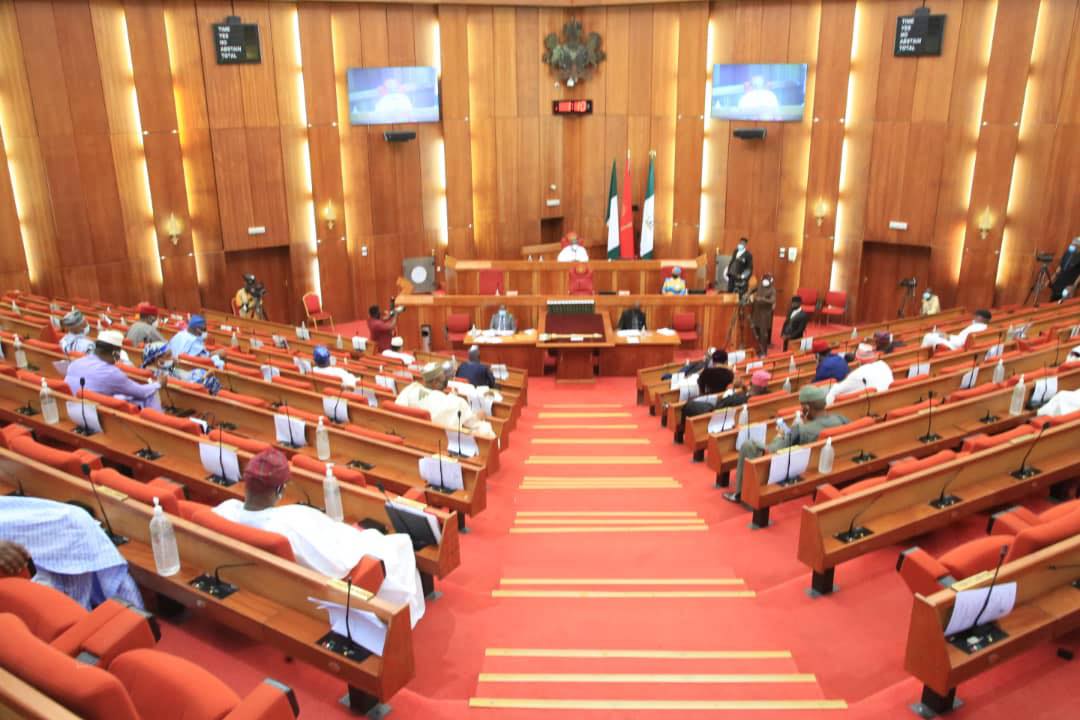
In a bill titled Federal Medical Centres (Establishment) Bill, 2021 sponsored by Mrs Aishatu Ahmed (APC, Adamawa Central), on Thursday, the upper chamber of the parliament moved to effect structures that will stop the trend.

Leading debate on the bill, Mrs Ahmed said the absence of a legal framework for the regulation, development and management of Federal Medical Centers, which were established to render health services, was responsible for hindering the provision of intensive, effective and efficient health care services to the people of Nigeria.

According to the lawmaker, “this has led to a number of challenges in the health sector including but not limited to under-funding, weak facilities and infrastructure, poor motivation of health workers, low budget, weak accountability, conflicts with the political structure of the states and industrial strikes which has led to inadequacies, shortcomings and weaknesses which hinder effective health care delivery services.”

She noted that the passage of the bill will “reduce the number of Nigerians who have to go to other countries for medical care.”

The lawmaker lamented that “an average of 20,000 Nigerians travel to India each year for medical assistance due to the absence of a solid healthcare system at home.”

Senator Ahmed further noted that the piece of legislation would also sufficiently address remuneration of the employees of the Medical Centers which in turn would check the exodus of doctors and nurses to other countries.

“Seventy-seven per cent of black doctors in the US are Nigerians and there is rarely any top medical institution in the US or Europe where you don’t find Nigerians managing at the top level.

“Hardly a year passes without a major national strike by nurses, doctors, or health consultants. The major reasons for these strikes are poor salaries and lack of government investment in the health sector,” she said.

Citing a report of the United Nations International Children’s Emergency Fund, Mrs Ahmed stressed that the bill would “improve on the persistent rate of avoidable deaths of all Nigerians.”

“A recent UNICEF report has it that preventable or treatable diseases such as malaria, pneumonia, diarrhoea, measles and HIV/AIDS account for more than 70 per cent of the estimated one million under-five deaths in Nigeria,” she said.

She added that with the right data, Nigeria would witness improvements in the health information system, regular and sustainable population and health-facility-based surveys; as well as have a centralized management of the many challenges of the 23 Federal Medical Centers in the country.

Contributing to the debate, Mr Yahaya Oloriegbe (APC, Kwara Central) said Federal Medical Centres were incapacitated as a result of the absence of legal backing establishing them and insufficient funding.

“We have about twenty-three Federal Medical Centres that were established across the country, but without legal backing.

“The consequence of such is that there are, what I will call policy somersault as regards the operations of these centres.

“You see some of the centres that have enough facilities and manpower to even be termed a Teaching Hospital, but because the legal framework did not state the standard, in terms of infrastructures, manpower and services, they remain like that, and it becomes at the whims and caprices of the policymakers in the Federal Ministry of Health.

“The consequences in terms of funding allocation, Federal Medical Centres receive less fund compared to Teaching Hospitals,” the lawmaker said.

On his part, Mr Ibn Na’Allah said the bill was timely as it seeks “to ensure that all institutions of government are governed by law.”

“We cannot continue to operate a democracy where public funds are disbursed to institutions that are not recognized by law. That is not right,” Mr Na’Allah added.

The bill, after scaling second reading, was referred to the Committee on Health by the Senate President, Mr Ahmad Lawan, for further legislative work.

The committee, which is chaired by Mr Oloriegbe, is expected to report back in four weeks.

Adedapo Adesanya is a journalist, polymath, and connoisseur of everything art. When he is not writing, he has his nose buried in one of the many books or articles he has bookmarked or simply listening to good music with a bottle of beer or wine. He supports the greatest club in the world, Manchester United F.C.

Click to comment

Leave a Reply

Your email address will not be published. Required fields are marked *

Health

Ebola: NCAA Directs Enhanced Surveillance Across Nigerian Airports

Published

on

ebola

By Adedapo Adesanya

The Nigeria Civil Aviation Authority (NCAA) has directed airlines, airport operators and other aviation stakeholders to intensify public health surveillance measures following the outbreak of Ebola Virus Disease (EVD) in parts of the Democratic Republic of Congo (DRC) and Uganda.

In a circular dated May 18, 2026, the NCAA said the directive became necessary due to growing concerns over the spread of the disease and the critical role of the aviation sector in preventing cross-border transmission.

The authority noted that although no confirmed case linked to the outbreak has been recorded in Nigeria, it is collaborating with the Federal Ministry of Health, the Nigeria Centre for Disease Control (NCDC), Port Health Services and international health organisations to closely monitor the situation.

According to the NCAA, health authorities in the DRC recently identified a cluster of severe illnesses among healthcare workers in the Bunia Health Zone in the northeastern part of the country.

Recall that Nigeria also said it would tighten surveillance after the World Health Organisation (WHO) declared a public health emergency after Ebola killed over 80 people in Congo and Uganda.

Laboratory investigations later confirmed the presence of the Bundibugyo virus, a strain of the Ebola virus family known to cause severe viral haemorrhagic disease in humans.

The authority stated that there is currently no licensed vaccine specifically approved for the Bundibugyo strain, while treatment remains largely supportive and symptom-based.

The NCAA listed symptoms associated with Ebola Virus Disease to include sudden fever, severe fatigue, persistent headache, vomiting, abdominal pain and bleeding manifestations such as nosebleeds or vomiting blood.

It stressed that early detection and immediate reporting remain critical to preventing the international spread of the disease.

As part of preventive measures, the authority said disease surveillance systems at airports have been strengthened, while contact tracing, case reporting mechanisms and border health screening procedures are also being reinforced.

The NCAA further directed pilots to notify Air Traffic Control of any suspected communicable disease cases onboard aircraft, in line with the Nigeria Civil Aviation Regulations.

It also instructed flight crew members to complete and submit Aircraft General Declaration forms for all suspected cases and mandated airlines to ensure passenger locator forms are completed and handed over to Port Health Services upon arrival.

The authority added that airlines must ensure aircraft are properly equipped with first aid kits, universal precaution kits and emergency medical kits.

It also urged operators to reinforce crew training on the identification and management of communicable diseases and ensure strict adherence to infection prevention and control guidelines.

The NCAA called on all aviation stakeholders to remain vigilant and comply fully with established public health protocols to safeguard passengers, crew members and the general public from potential health threats.

Continue Reading

Health

Nigeria on High Alert as WHO Declares Ebola Emergency of International Concern

Published

on

ebola dr congo

By Adedapo Adesanya

The Nigeria Centre for Disease Control and Prevention (NCDC) has said that although the country currently has no confirmed case of Ebola Virus Disease (EVD), it is, nevertheless, actively strengthening surveillance.

This comes as the World Health Organisation (WHO) declared the Ebola outbreak in Congo and Uganda a public health emergency of international concern, after 80 deaths were attributed to the disease.

The WHO, however, stopped short of declaring a pandemic, saying it did not meet the necessary criteria. The United Nations agency advised countries against closing borders or restricting trade.

Early symptoms include fever, muscle pain, fatigue, headache, and sore throat, and are followed by vomiting, diarrhoea, a rash, and bleeding.

In a statement by its Director General, Mr Jide Idris, on Sunday, the NCDC noted that it is also ramping up laboratory readiness, infection prevention, and public awareness efforts across the country.

He said the centre was closely monitoring the situation due to increasing regional movement across African countries and was working with relevant stakeholders, including the Port Health Services under the Federal Ministry of Health and Social Welfare, to strengthen preparedness within Nigeria’s public health system.

“NCDC is closely monitoring the situation and working with relevant stakeholders, including the Port Health Services, to ensure continued vigilance and preparedness within the public health system,” he stated.

The NCDC boss described Ebola virus disease as a severe viral illness transmitted through direct contact with the blood, bodily fluids, secretions, or contaminated materials of infected persons or animals.

He noted that the disease has an incubation period ranging from two to 21 days, while symptoms include fever, weakness, headache, muscle pain, sore throat, vomiting, diarrhoea, and, in severe cases, unexplained bleeding.

Recall that Nigeria gained international recognition for successfully containing an Ebola outbreak in 2014 after an infected traveller arrived in Lagos from Liberia.

Healthcare workers were advised to maintain a high index of suspicion for Ebola, especially in patients presenting symptoms compatible with the disease alongside relevant travel or exposure history.

Idris stressed the importance of strict adherence to infection prevention and control measures, including early identification and isolation of suspected cases, proper use of personal protective equipment, hand hygiene, and prompt reporting through established channels.

“NCDC will continue to monitor the situation closely and provide updates as necessary,” he added.

NCDC advised Nigerians to remain calm, maintain good hand hygiene, avoid misinformation, and report unusual illnesses promptly.

Continue Reading

Health

NNPC Donates MRI Machine, Others to Nnewi Teaching Hospital

Published

on

NNPC MRI Machine Nnewi teaching hospital

By Modupe Gbadeyanka

A 1.5 Tesla Magnetic Resonance Imaging (MRI) machine has been donated to the Nnamdi Azikiwe University Teaching Hospital (NAUTH), Nnewi, Anambra State, by the corporate social responsibility arm of the Nigerian National Petroleum Company (NNPC) Limited, NNPC Foundation.

In a statement on Sunday by its Chief Corporate Communications Officer, Mr Andy Odeh, the state-owned oil organisation said the medical item was given to the healthcare institution as part of its commitment to improving healthcare access and strengthening medical infrastructure across Nigeria.

The MRI system is expected to significantly improve access to advanced diagnostic imaging services for millions of Nigerians across the South-East (Anambra, Enugu, Imo, Abia and Ebonyi States) as well as neighbouring Delta State.

The foundation also provided critical supporting infrastructure, including RF shielding systems, chillers, backup UPS systems, electrical installations, specialised imaging accessories, ventilation systems, CCTV and oxygen monitoring systems, intercom communication facilities, and other patient comfort technologies designed to ensure optimal operation of the facility.

Before now, patients requiring advanced MRI diagnostic services often faced prolonged waiting periods, exorbitant costs, and the burden of travelling long distances in search of functional imaging centres.

But it is believed that the intervention of the NNPC Foundation would provide succour to patients.

At the presentation of the items to the institution over the weekend, the chief executive of the NNPC, Mr Bashir Bayo Ojulari, represented by the Managing Director of NNPC Foundation, Mrs Emmanuella Arukwe, described the intervention as a strategic investment in healthcare access, diagnostic precision, and improved patient outcomes, noting that the facility aligns with the company’s commitment to building sustainable systems and impactful national institutions.

“The installation of the MRI in NAUTH exemplifies our commitment, as our intent is to build enduring institutions, sustainable systems and legacies. This intervention aligns with our conviction that access to quality healthcare underpins human dignity, longevity and economic productivity,” Mr Ojulari stated.

‎He described the company’s social investments as viable currencies that strengthen the relationship between the Company’s core mandate of providing and managing energy for Nigerians and meeting stakeholders’ expectations.

‎In his remarks, the Governor of Anambra State, Mr Charles Soludo, who was represented by the Commissioner for Health, Dr Afam Obidike, said the intervention would enhance safe and precise diagnosis and treatment for patients across the South-East region.

He also commended NNPC Foundation for donating the MRI facility to the state, noting that the intervention would significantly improve access to quality healthcare services for the people.

The Chief Medical Director of NAUTH, Prof Joseph Ugboaja, thanked the donor for the items, saying NNPC Foundation has demonstrated that corporate social responsibility is not just a policy statement but a lifeline for institutions like ours.

“For too long, patients in our catchment area have had to travel long distances to access this level of diagnostic precision, often at prohibitive costs. With this installation, we will eliminate that burden,” he enthused.

Continue Reading

Trending