
Media OutReach
OCBC Adds Eight Major Digital Wallets across Southeast Asia to OCBC App


The partnership with Visa makes the OCBC app the most connected banking app in the region with coverage of 10 digital wallets
SINGAPORE – Media OutReach Newswire – 20 November 2025 – OCBC customers in Singapore can now transfer money directly from their OCBC bank accounts to eight leading digital wallets across Indonesia, Malaysia, the Philippines, and Vietnam via the OCBC app. This expansion builds on last year’s integration of Weixin Pay (WeChat Pay) and Alipay, making the OCBC app Southeast Asia’s most connected for wallet payments, with 10 wallets in total. The new connections are part of OCBC’s ongoing strategic partnership with Visa, which began in 2024 to enhance cross-border payment capabilities. This feature is expected to significantly benefit Singapore’s foreign workforce by simplifying remittances and helping them stay connected with loved ones.
With this expanded partnership, OCBC customers can make near-instant, fee-free transfers to Coins (Philippines), GCash (Philippines), GoPay (Indonesia), LinkAja (Indonesia), Momo (Vietnam), Ovo (Indonesia), PayMaya (Philippines), and Touch ‘n Go (Malaysia). These wallets, in addition to the two Chinese wallets, collectively represent a total user base of up to 2.72 billion.
This pay-to-wallet feature on the OCBC app tackles key remittance challenges – speed, cost, and accessibility – especially for the region’s large unbanked population. The foreign workforce in Singapore stand to benefit the most, as many still rely on slower and costlier over-the-counter services, cash agents, or manual bank transfers. With OCBC’s app, workers or their employers can send money directly to their home country’s wallets, removing the need for recipients to have a bank account or visit a physical location.
Since launching the service with Chinese wallets a year ago, OCBC has processed over SGD 60 million in transfers, driving a fourfold increase in cross-border transfers to China, a key market for the bank. Ninety per cent of users have not visited a branch recently, and three-quarters are PMETs, mainly Chinese nationals sending money home. With this expansion, OCBC expects significant adoption among Singapore’s 1.6 million-strong foreign workforce.
Mr. Sunny Quek, Head of Global Consumer Financial Services, OCBC said: “When we launched pay-to-wallet transfers last year, we promised to go beyond China and we have since delivered. By connecting OCBC accounts to eight of Southeast Asia’s most popular wallets, we are removing friction from cross-border payments and making remittances faster, cheaper and more inclusive. We’re not stopping here – our long-term goal is to connect customers to 50 digital wallets worldwide, giving them the most comprehensive wallet access of any banking app.”
The OCBC app’s pay-to-wallet capabilities are powered by Visa Direct, which provides access to nearly 11 billion endpoints, including 3.5+ billion accounts, 4+ billion cards, and 3.5+ billion digital wallets.
“Visa Direct is transforming the way money moves globally. By enabling direct bank-to-wallet transfers across Southeast Asia, we’re helping to bridge financial gaps and support the millions of people who rely on remittances for daily needs. Our latest Visa International Remittances report shows that nearly six in ten Singaporean remittance users plan to maintain or increase the amount they send overseas this year—a testament to the resilience and digital maturity of Singapore’s financial landscape,” said Ms. Adeline Kim, Visa Country Manager for Singapore & Brunei.
“Our expanded partnership with OCBC enables us to connect additional digital wallets across Southeast Asia, empowering customers to send money quickly, securely, and conveniently. We look forward to extending our reach to more wallet partners in the near future,” she added.Hashtag: #Visa
The issuer is solely responsible for the content of this announcement.
About OCBC
OCBC is the longest established Singapore bank, formed in 1932 from the merger of three local banks, the oldest of which was founded in 1912. It is one of the world’s most highly-rated banks, with Aa1 by Moody’s and AA- by both Fitch and S&P. Recognised for its financial strength and stability, OCBC is consistently ranked among the World’s Top 50 Safest Banks by Global Finance and has been named Best Managed Bank in Singapore by The Asian Banker.
OCBC is the second largest financial services group in Southeast Asia by assets. The Group offers a broad array of commercial banking, specialist financial and wealth management services, ranging from consumer, corporate, investment, private and transaction banking to treasury, insurance, asset management and stockbroking services.
OCBC’s private banking services are provided by its wholly-owned subsidiary Bank of Singapore, which operates on a unique open-architecture product platform to source for the best-in-class products to meet its clients’ goals. Its insurance subsidiary, Great Eastern Holdings, is the oldest and most established life insurance group in Singapore and Malaysia. Its asset management subsidiary, Lion Global Investors, is one of the leading asset management companies in Southeast Asia. Its brokerage subsidiary, OCBC Securities, is one of the leading securities firms in Singapore.
The Group’s key markets are Singapore, Malaysia, Indonesia and Greater China. It has close to 400 branches and representative offices in 19 countries and regions.
For more information, please visit www.ocbc.com.
About Visa
Visa (NYSE: V) is a world leader in digital payments, facilitating transactions between consumers, sellers, financial institutions and government entities across more than 200 countries and territories. Our mission is to connect the world through the most innovative, convenient, reliable and secure payments network, enabling individuals, businesses and economies to thrive. We believe that economies that include everyone everywhere, uplift everyone everywhere and see access as foundational to the future of money movement. Learn more at Visa.com.



Media OutReach
Marriott’s 2025 Cage-Free Pledge in the Spotlight as Field Visit Raises Animal Welfare and Hygiene Concerns
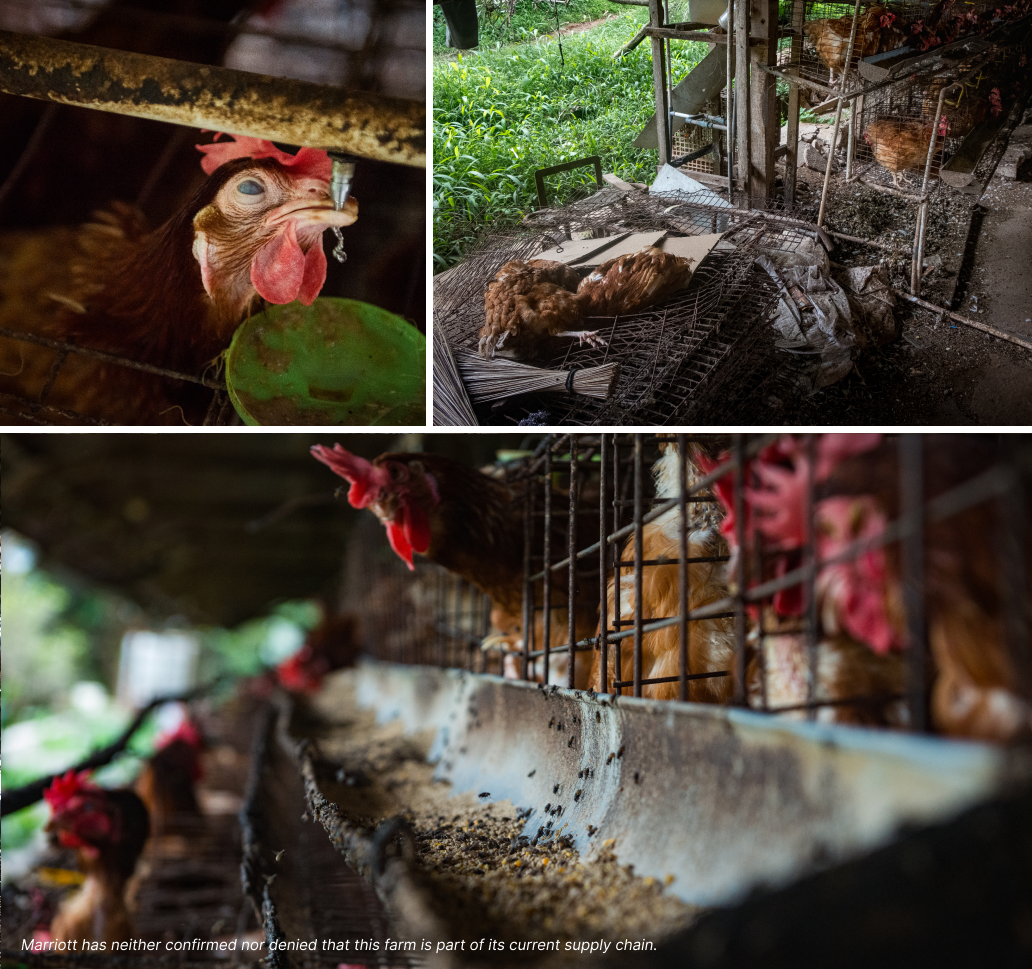
Field visit finds dead birds, eggs surrounded by faeces and fly infestations at egg farm whose operators claim to supply Marriott properties
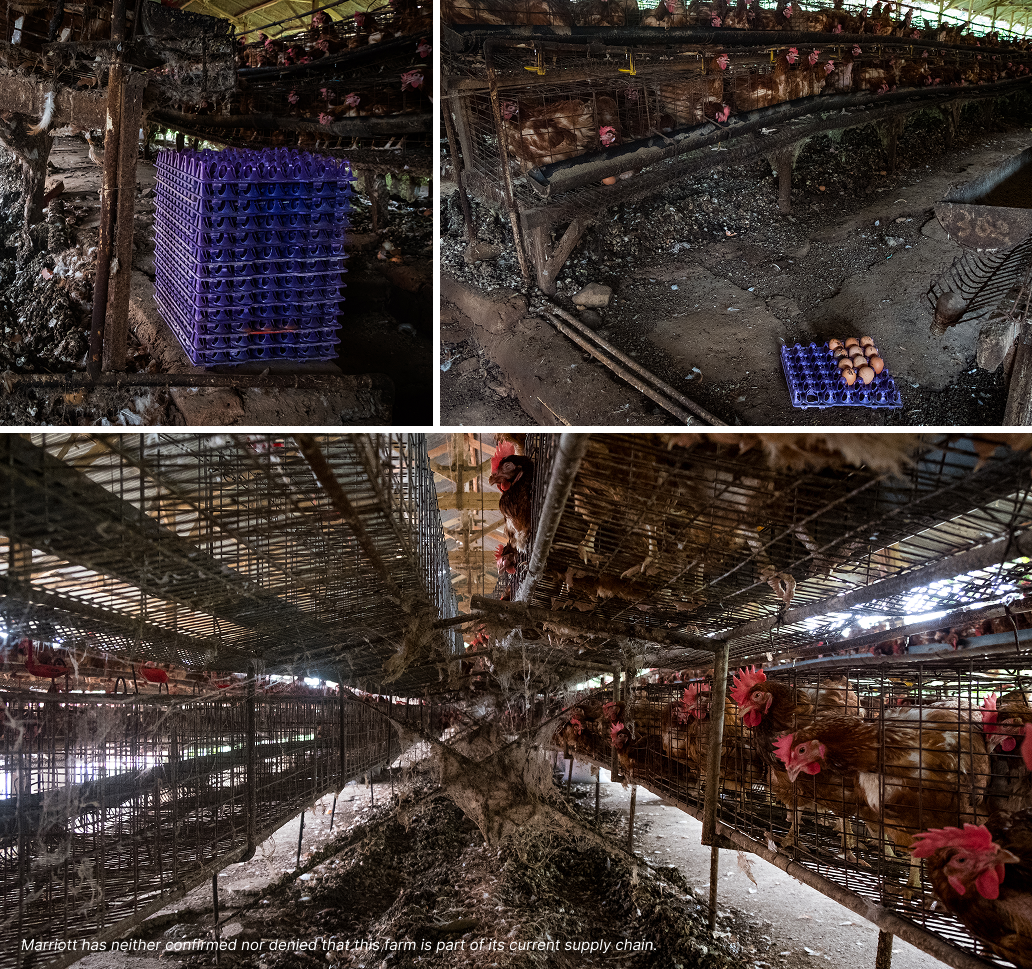
- Eggs stored directly on the floor, surrounded by dirt, feathers and excrement
- Swarms of flies around birds and their food
- Accumulated faeces on and underneath cages
- Dead birds discarded around the facility
- Birds with severe eye injuries or blindness
- Birds crammed into dirty wire cages
- Poor access to water
Hashtag: #HelpMarriottFindAsia #AnimalWelfare #CorporateAccountability #EthicalSourcing #FoodSafety
The issuer is solely responsible for the content of this announcement.
About INCAF
The Indonesia Network for Compassionate Animal Farming works to advance corporate accountability for animal welfare in Indonesia, driving transparency and progress toward cage-free supply chains. Visit  https://incaf.org

Media OutReach
Linklogis Releases 2025 Annual Results: Total Volume of Processed Supply Chain Assets Exceeds RMB500 Billion, Unveiling the “SC+ Platform”
In addition, Linklogis has always placed shareholder interests at the core of its corporate governance, rewarding investors’ trust through sustained and tangible actions. In August 2025, the Board approved a new share repurchase program of no less than US$80 million to be implemented over a one-year period. Under this repurchase program, the company has cumulatively repurchased shares totaling HK$365 million (approximately US$47 million), demonstrating its confidence in its long-term value through concrete actions.
Focusing on Core Business, Accelerating Business Structure Optimization
In 2025, Linklogis remained focused on its core business and accelerated the optimization of its business structure. The total volume of supply chain assets processed by its technology solutions reached RMB508.1 billion, up 27% year-on-year. With a market share of 22%, the company ranked first in the industry for the sixth consecutive year. The number of anchor enterprises served increased to 3,145, including 54 of China’s Top 100 enterprises and 151 of China’s Top 500 enterprises, while the number of financial institution partners reached 428, further improving the efficiency of industry-finance collaboration.
Linklogis’ supply chain finance technology solutions include Anchor Cloud, which consists of Multi-tier Transfer Cloud, AMS Cloud and Treasury Cloud, as well as FI Cloud, which consists of ABS Cloud and eChain Cloud. In 2025, the total volume of supply chain assets processed by Anchor Cloud reached RMB369.6 billion, representing a year-on-year increase of 31%. The total volume of supply chain assets processed by Multi-tier Transfer Cloud reached RMB304.2 billion, surging 47% year-on-year, with its contribution to the group’s total asset volume rising from 52% in 2024 to 60% in 2025. The total volume of supply chain assets processed by AMS Cloud, however, was RMB65.4 billion, down 13% year-on-year due to the continued decline in issuance volume in the supply chain asset securitization market.
The total volume of supply chain assets processed by FI Cloud reached RMB128.9 billion, up 20% year-on-year. Both ABS Cloud and eChain Cloud recorded solid double-digit growth in transaction volume, contributing to a 25% year-on-year increase in FI Cloud revenue. In the ABS Cloud segment, the total volume of supply chain assets processed reached RMB69.1 billion, rising 28% year-on-year. In the eChain Cloud segment, the total volume of supply chain assets processed reached RMB59.7 billion, increasing 13% year-on-year.
Linklogis focused on six key industries, including infrastructure and construction, new energy and advanced manufacturing, and worked with its subsidiary Bytter Technology to deepen targeted cross-selling, achieving breakthroughs in high-quality customer acquisition. Leveraging its one-stop comprehensive industrial-finance solutions and innovative scenario-based applications, Linklogis worked with a number of central and state-owned enterprises and leading private enterprises, including Shougang Group, China Coal Mine Construction Group Corporation and JA Solar Technology, to launch integrated industrial-finance platform projects. At the same time, it provided targeted support to 17 high-quality enterprises, including Shanghai Construction Group, Yunnan Construction and Investment Holding Group and Luzhou Laojiao, covering scenarios such as order financing, bill collateral, and supply chain bill transfer, supporting coordinated growth in both scale and value creation.
Building the “Second Growth Curve”, Unlocking Global Trade Finance Potential
2025 marked a pivotal year for Linklogis’ international business as the company embarked on a new chapter and accelerated the development of its “second growth curve.” During the year, Linklogis officially launched a comprehensive rebranding of its international business, introducing “Unloq” as its new identity for the global market, reflecting its vision of unlocking the potential and efficiency of global trade finance. Guided by a core strategy centered on cross-border trade corridors, scenario-based finance and technology-driven risk management, Unloq is committed to building a globally connected digital supply chain finance platform with strong local execution capabilities.
In line with its core strategy, the company has leveraged its cloud-native technology to launch the innovative “SC+ Platform”, designed to connect global real-world trade with digital finance. The “SC+” signifies its core function of connecting smart contracts with compliant digital payment instruments, forming a technology-enabled solution for global trade finance. The platform is dedicated to building the next-generation digital infrastructure for global trade finance and addressing systemic challenges in cross-border trade, including credit verification, fund turnover, and clearing and settlement efficiency. Through the platform, funders can utilize various compliant payment methods to purchase trade receivables.
To date, Unloq has completed the deployment of the core architecture of the SC+ Platform. Working with multiple commercial partners, Unloq has advanced the rollout of innovative applications leveraging compliant digital payment methods. In 2025, Linklogis successfully secured the bid for a Web3.0-based supply chain finance platform project for a leading central state-owned enterprise, marking a new milestone in its technological capabilities and industry recognition in the field of digital trade infrastructure.
In its international business, Unloq accelerated the expansion of cross-border trade services. In addition to traditional B2B goods trade, cross-border e-commerce and online travel agencies, it also expanded into cross-border logistics, bringing the total number of platform customers to 1,550, representing a net year-on-year increase of 451. With the deeper penetration of the SC+ Platform in cross-border trade finance, the continued expansion of its global localized service network, and the accelerated integration of solutions supporting Chinese enterprises’ overseas expansion, Linklogis’ cross-border and international business is expected to enter a phase of exponential growth in both asset volume and revenue in 2026, embarking on a new chapter of high-quality and sustainable development.
Advancing the “AI-powered Industrial Finance” Strategy: From Internal Empowerment to Industry Value Co-Creation
Linklogis remains committed to its “AI-powered Industrial Finance” strategy and continues to promote the deep integration of AI with supply chain finance across the entire value chain. Built on years of technological expertise and scenario-based refinement, its AI capabilities have evolved from internal productivity tools into a sophisticated intelligence engine that empowers the entire industrial ecosystem. By deeply integrating leading domestic large language models with its proprietary supply chain finance scenario knowledge graph and multimodal business elements, the company has systematically advanced the ongoing iteration and capability enhancement of its self-developed vertical model, LDP-GPT. Building on this foundation, Linklogis has developed the “BeeLink AI Agent” product matrix, covering more than ten core scenarios including intelligent trade document checking, intelligent PBOC registration, intelligent KYC, and intelligent risk management.
In 2025, BeeLink AI Agent continued to deliver breakthroughs in market penetration and commercialization. The number of customers served rose to 42, including domestic and overseas financial institutions and industry leaders such as Standard Chartered Bank, Bank of Hangzhou, and China Electrical Equipment Finance. Processing efficiency improved by 20 times, while accuracy in key processes reached 99%. As AI continues to evolve toward an agent-based paradigm, Linklogis will take “AI Agent+” as a strategic lever to comprehensively upgrade BeeLink AI Agent from functional tools to intelligent collaboration. It will prioritize breakthroughs in advanced capabilities such as cross-system task coordination, natural-language interactive decision-making, and adaptive workflow optimization, enabling customers to move from point intelligence to enterprise-wide intelligence, and from business insights to intelligent decision-making, thereby delivering end-to-end value across the entire value chain.
Linklogis actively responded to China’s “dual carbon” strategy and high-quality development agenda by embedding ESG principles into product innovation and the entire service lifecycle, leveraging technology to advance green finance, inclusive finance, and sustainable development. In 2025, the volume of sustainable supply chain assets served by the company exceeded RMB66.8 billion, representing a year-on-year increase of 80%, with its share of total serviced assets rising from 9% in 2024 to 13% in 2025. During the year, SMEs that obtained financing through Linklogis Supply Chain Multi-tier AR Transfer Platform benefited from an average financing cost of only 2.85%. The company continued to deepen its presence in four key sectors—renewable energy, rural revitalization, environmental protection, and public health—while further expanding into sustainable sectors such as the new energy vehicle supply chain, green buildings, and the circular economy. Through these initiatives, it directed financial resources more precisely to key segments that generate both green and low-carbon benefits and strong social impact, gradually building a broader and more influential sustainable development ecosystem that integrates industry and finance.
Expanding Full-scenario Deployment, Enhancing the Smart Industrial Finance Treasury Product Matrix
Through the acquisition of Bytter Technology, Linklogis made a strategic entry into the corporate treasury management sector. By synergizing management teams and business operations, the company successfully established the Treasury Cloud product line, providing diverse customers with end-to-end treasury management services covering settlement operations, cash planning, financing management, risk monitoring, and intelligent decision-making. As a key component of Linklogis’ “Smart Industrial Finance Treasury” strategy, Treasury Cloud is anchored by a dual-engine approach powered by AI and data, and has established a comprehensive product matrix, including the F1 treasury management system and T6 cash management system for anchor enterprises, the bank treasury system for financial institutions, and the Yingzilian SaaS platform for SMEs.
Since September 11, 2025, Bytter Technology has been consolidated into the group’s financial statements. The integration of the Treasury Cloud business has been fully completed. Linklogis will continue to deepen resources integration and business collaboration between Treasury Cloud and the group’s other supply chain finance technology businesses in areas such as product R&D, channel expansion and customer service. The company will accelerate the development of an integrated, intelligent and scalable Smart Industrial Finance Treasury platform, providing customers with one-stop digital solutions covering treasury management and industrial-finance collaboration.
Charles Song, founder, Chairman and CEO of Linklogis, said: “The year 2026 marks the tenth anniversary of Linklogis. As we stand at the threshold of a new decade, we will remain firmly committed to a core strategy of being technology-driven and globally connected, while steadfastly advancing our dual-engine approach of deepening domestic industrial finance and expanding global digital trade. We will seize opportunities amid transformation and strengthen our competitive advantages through innovation. In the domestic market, we will continue to advance the “AI-powered Industrial Finance” strategy. Anchored by the comprehensive upgrade of BeeLink AI Agent, we will accelerate AI’s evolution from scenario-based enablement to ecosystem-level collaboration. At the same time, leveraging our full-stack capabilities in Smart Industrial Finance Treasury solutions, we will continue to refine our integrated one-stop solutions, consolidate our market leadership, and ensure the steady growth of our core business. In international markets, we will accelerate the expansion of global cross-border digital trade networks through Unloq and roll out the SC+ Platform along key global trade corridors. We aim to become a key builder and connector in the ongoing digital and intelligent transformation of global trade finance. The future is already unfolding. Only the adaptable can prevail, and only the persistent can go the distance. With technology as our oar and industry as our vessel, Linklogis will continue to join forces with our partners, embarking together on the magnificent journey toward a digital and intelligent future for global industrial finance.”
Hashtag: #Linklogis
The issuer is solely responsible for the content of this announcement.
Media OutReach
CK Life Sciences’ Sequencio Therapeutics Presents the Latest Vaccine Research Advancements at the American Association for Cancer Research Annual Meeting

These presentations mark Sequencio’s first major scientific unveiling since its formation and showcase significant advancements in next‑generation cancer vaccine technologies based on Sequencio’s proprietary TrueHLA™ Epitope‑to‑Efficacy™ translational design framework, which enables rational, data‑driven vaccine development across circRNA, mRNA, peptide, and protein‑based platforms.
Collectively, Sequencio’s five AACR 2026 presentations highlight a consistent theme: rationally designed cancer vaccines that demonstrate robust immunogenicity and compelling anti‑tumour activity across multiple targets and modalities in preclinical models. These data underscore the strength of Sequencio’s approach to translating antigen selection into functional immune responses and tumour control. Building on this foundation, Sequencio is prioritizing its most promising programs for IND‑enabling studies, with the goal of accelerating select vaccine candidates into early‑stage clinical development through strategic partnerships and global collaboration.
Dr Melvin Toh, Vice President & Chief Scientific Officer of CK Life Sciences, expressed, “Sequencio’s cancer vaccine pipeline continues to advance with strong momentum. Our AACR 2026 presentations underscore both the scientific promise of our vaccines and the disciplined execution driving their progress. We look forward to building on this foundation as we advance next‑generation immunotherapies for patients.”
The AACR Annual Meeting is a gathering central to the global cancer research community, bringing together scientists, clinicians, other healthcare professionals, survivors, patients and advocates every year to share the latest breakthroughs and developments in cancer science and medicine. Last year, the 2025 Annual Meeting attracted 22,100 in-person participants from 85 countries.
Scientific Poster Presentations by Sequencio Therapeutics at AACR 2026
All five posters will be presented on 21 April 2026.
1. p53 Modified Shared Neoantigen Vaccine (Poster Number: 4361)
Title: Single amino acid residue substitution to improve immunogenicity of HLA peptides targeting p53 neoantigen
Authors: Chi Han Samson Li, Hong Wang, Kin Tak Chan, Genwei Zhang, Zhenghui Wang, Lipeng Lai, Melvin Toh
2. IGF1R Cancer Vaccine (Poster Number: 4368)
Title: Vaccine targeting IGF1R induces neutralizing antibody and robust anti‑tumor activity in a syngeneic mouse colon cancer model
Authors: Kenneth Nansheng Lin, Melvin Toh, Hong Wang
3. B7‑H3 Cancer Vaccine (Poster Number: 4369)
Title: B7-H3 vaccine induces robust humoral and cellular immunity and inhibits tumor growth in mice
Authors: Kenneth Nansheng Lin, Melvin Toh, Hong Wang
4. TROP2 circRNA + IL‑7 Combination Vaccine (Poster Number: 4370)
Title: TROP2‑circular RNA vaccine and IL7 synergistically inhibit TROP2+ tumor growth in mouse models
Authors: Zirong He, Yanan Li, Antong Li, Xiaoxuan Liu, Kenneth Nansheng Lin, Fan Yan Meng, Melvin Toh, Hong Wang
5. Claudin‑6 Cancer Vaccine (Poster Number: 4375)
Title: Claudin 6 vaccines effectively inhibit tumor growth in a syngeneic mouse colon cancer model
Authors: Na Wang, Lam Chow, Melvin Toh, Hong Wang
Hashtag: #CKLifeSciences #Sequencio #CancerVaccines #R&D #Pharmaceutical #AACR
The issuer is solely responsible for the content of this announcement.
CK Life Sciences Int’l., (Holdings) Inc.
CK Life Sciences Int’l., (Holdings) Inc. (stock code: 0775) is listed on the Stock Exchange of Hong Kong. With a mission of improving the quality of life, CK Life Sciences is engaged in healthcare research and development, with operating businesses that enable its R&D sustainability. Regarding pharmaceutical research and development, CK Life Sciences’ operations are focused on conducting research and development into cancer vaccines, RNA therapeutics and pain management solutions. CK Life Sciences is a member of the CK Hutchison Group. For additional information, please visit www.ck-lifesciences.com.













-
 Feature/OPED6 years ago
Davos was Different this year
-
Travel/Tourism10 years ago
Lagos Seals Western Lodge Hotel In Ikorodu
-

 Showbiz3 years ago
Estranged Lover Releases Videos of Empress Njamah Bathing
-
 Banking8 years ago
Sort Codes of GTBank Branches in Nigeria
-

 Economy3 years ago
Subsidy Removal: CNG at N130 Per Litre Cheaper Than Petrol—IPMAN
-

 Banking3 years ago
Sort Codes of UBA Branches in Nigeria
-

 Banking3 years ago
First Bank Announces Planned Downtime
-

 Sports3 years ago
Highest Paid Nigerian Footballer – How Much Do Nigerian Footballers Earn