
Showbiz
Design Indaba, Google Unveil Colours of Africa to Showcase African Creatives

An online initiative known as Colours of Africa has been launched by Design Indaba in partnership with Google Arts & Culture.
The project brings online and showcases 60 specially-curated artworks produced by over 60 unique African creatives chosen by Design Indaba – each invited to contribute a work that captures the ‘colour’ and character of their home country.
Selected by Design Indaba’s founder Ravi Naidoo, the creatives will showcase the best of African craft, product, industrial design, fashion, film, animation, graphic, food, music, jewellery and architecture.
“Africa is known for its bold, unapologetic use of colour. Each country, city and community is identifiable by its unique palette. As Africans, we can tell powerful stories through colour. This project tells a story of a continent through the universally accessible lens,” says Naidoo.
The first artistic undertaking of this scale, the project will allow viewers to discover stories of Africa as told by the African creative community. The artworks will be showcased online where users are invited to spin the kaleidoscope to explore the works in an effort to take users on a journey through Africa, inviting them to view each country through the eyes of a local artist.
“Google has always been acutely aware and in full support of the immense creative melting pot that exists on the continent. Collaborating with Design Indaba on this project allows us to bring this support to fruition. By empowering and amplifying African voices to tell the unique stories of their cultures through their work and creativity, we hope to provide much-needed exposure, cultivate a newfound curiosity, and provide a window into the vast beauty that exists on the continent,” says Nitin Gajria, Managing Director at Google.
The project involves creatives from almost every discipline imaginable, from architecture, illustration, painting and ceramics through to writing, engineering, the performing arts and visual communications. Their creations have been converted into images, videos, texts and illustrations. The multidisciplinary mix of 60 artists includes Algerian photographer Ramzy Bensaadi, fashion designer Bisrat Negassi from Eritrea, filmmaker Archange Kiyindou “Yamakasi” from the Republic of Congo and visual artist Ngadi Smart from Sierra Leone.
To bring the project to life, Design Indaba collaborated with former Design Indaba conference speaker Noel Pretorius and his creative partner, Elin Sjöberg, who collaborated with Google Arts & Culture Lab to create the design concept and interface for the digital exhibition. The exhibition features a kaleidoscopic navigation tool that can be used to explore the art in a randomised way, giving the visitor a unique experience while allowing the art itself to shine.
“Nothing like this exists to date, so we’re very excited to break new ground. This is an important artistic catalogue, the first of its kind to plot the expanse of African artistry on Google Arts & Culture. We salute Google for taking this important step to provide the world with a resource like this – not everyone can afford to travel here or access physical art fairs and museums to view this kind of work,” continues Naidoo.
In addition to the Colours of Africa platform, the initiative will also see the launch of over 4 000 images, videos and 20 carefully curated exhibits from Design Indaba’s extensive archive. Award-winning initiatives like Sheltersuit, Arch for Arch and Emerging Creatives will be profiled extensively for the first time online.
New works by some of the most important creatives working on the continent and abroad will also be displayed. These include Fozia Ismail (featured creative on Serpentine Gallery’s Creative Exchange programme), Mayada Adil El Sayed (represented Sudanese women at the Generation Equality Forum) and Lady Skollie (winner of the 10th FNB art prize).
Design Indaba, which celebrated its 25th year in 2020, draws top thinkers and guests from across the globe. Acknowledged as the world’s best design conference, it continues to be a leader in foregrounding African creativity, making it the logical ‘home’ for this project.
“We look forward to giving viewers a ticket to experiencing a whole new world, one that is outside of their everyday surroundings and creative knowledge. This project answers the vital call for all to notice and embraces African art in all its wonder,” concludes Nitin Gajria at Google.
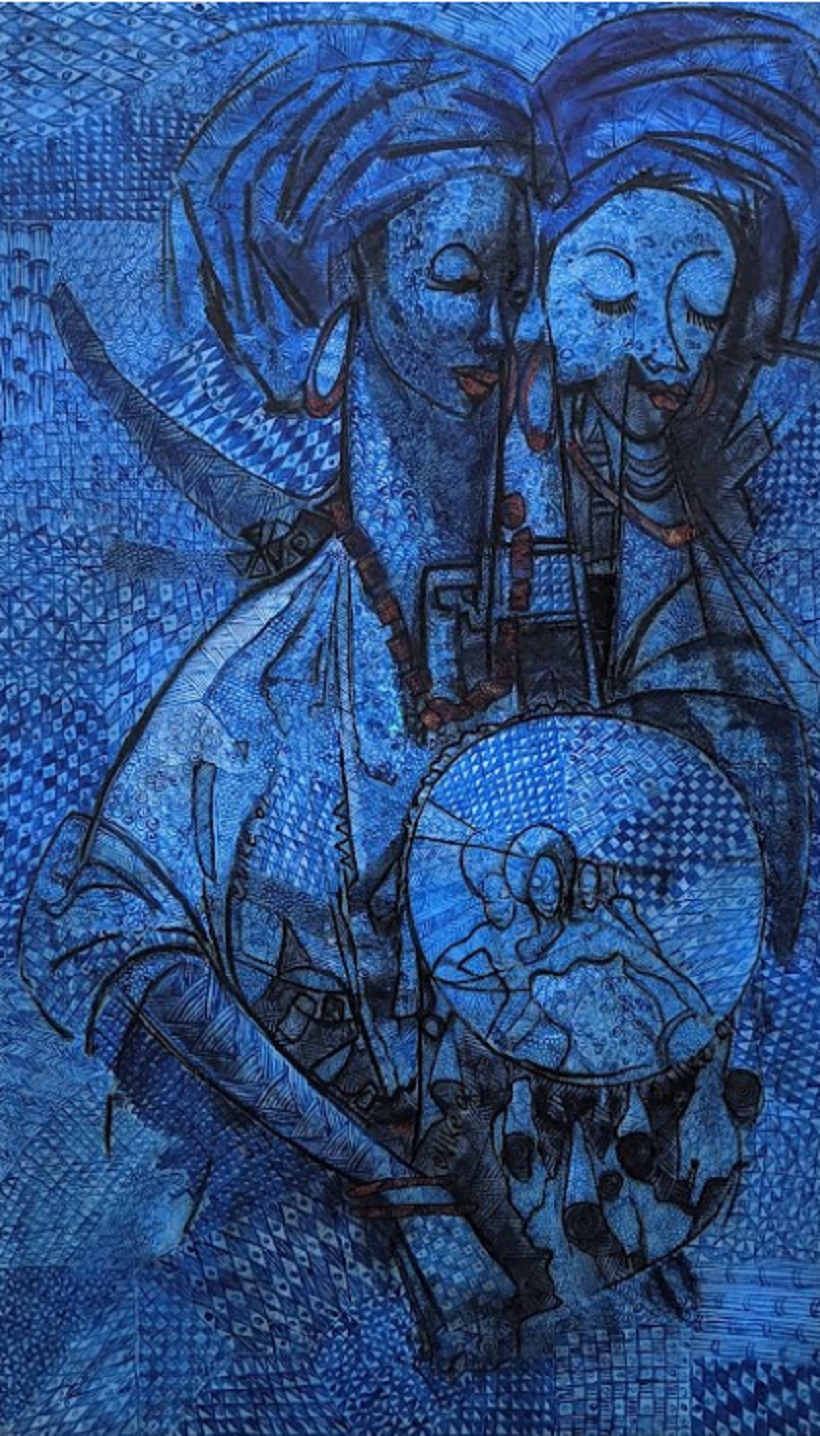
As part of the project launch, Design Indaba commissioned Nigerian multi-talented creative and accomplished professional artist, Chief Nike Monica Okundaye, to capture the unique spirit of her country in a colour which represents home to her. She created an original painting titled ‘The Female Drummer/Àyánbìnrin’.
Colour: Royal Blue
Country: Nigeria
Artwork Rationale:
The colour blue in Nigerian indigenous cultures is the colour of love. Before a king ascends the throne, he often has to wear royal indigo blue. In Yorùbá, this is called ẹtù. In northern Nigeria, the colour is also used for the chief or the king. Same in eastern Nigeria. In the north, they sometimes even pound the blue into the turban when they marry a new wife. The whole face is sometimes blue to show love to the new bride. During their Durba, they sometimes wear the shining blue colour in the turbans to show love to the people at the festival.
“I used blue for this painting titled ‘The Female Drummer/Àyánbìnrin’ to illustrate both the love you see here between the drummer and her lover and the love desperately needed in the time of the coronavirus lockdown. In Yorùbá societies, the talking drummer is usually at the front of the palace, sending messages to the king through the medium of the drum — messages that the visitor themselves might not understand. The unique thing about this painting, done during the lockdown, is the use of a female drummer instead of the typical male ones seen in traditional Yorùbá art. My work involves female empowerment — I have trained disadvantaged women, widows, and young women for many years on fabric art — so I am always happy to put women at the forefront of my artistic philosophy”, says Nike Okundaye, Founder and Managing Director of Nike Center for Art and Culture.



By Modupe Gbadeyanka
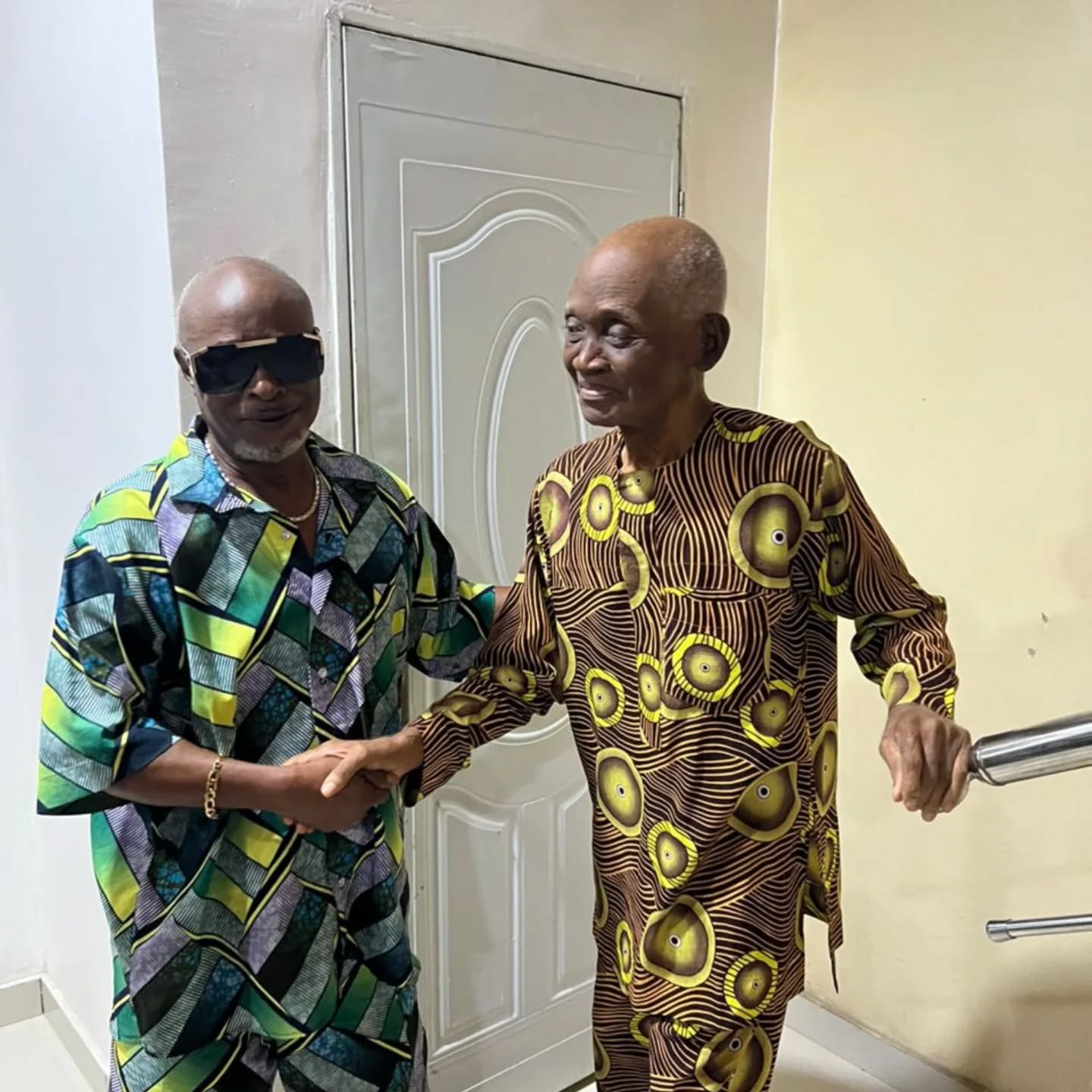
A veteran Nigerian actor, Mr Davis Offor, who dazzled many viewers with his role as Clarus in the famous New Masquerade, is dead.
The death of the 83-year-old actor was confirmed on Tuesday by Mr Tony Akposheri, who acted as Zaki in the now-rested comedy sitcom.
“Davis Offor, fondly known as Davis Offor, our own Clarus from New Masquerade, is gone.
“We crossed into the New Year together, laughing, talking, sharing memories, and speaking hopefully about the days ahead. We spoke about life, about plans, about how far we had come. None of us knew that time was already counting differently for you.
“Life, as always, had its own plans.
“You were more than a familiar face on screen. You were a friend, a brother, a man with warmth, humour, and a presence that could light up any space. Knowing you personally was a gift I will always be grateful for.
“It is hard to believe that the voice I heard not long ago is now a memory. Hard to accept that someone so full of life can suddenly become a story we tell.
“Rest well, my friend. You came, you gave joy, you made your mark, and you will never be forgotten,” Mr Akposheri wrote on his Facebook page.

If you’ve been sleeping on Africa Magic Originals, consider this your wake-up call. Shows like The Yard, The Low Priest, and Mother of the Brides are racking up nominations at the 12th Africa Magic Viewers’ Choice Awards. From gripping social drama to supernatural chaos and family madness, these homegrown productions are proof that Africa Magic has some of the continent’s most compelling storytelling.
With the awards set to take place on May 9 in Lagos, now is the perfect time to catch up on these standout series. Whether you’re watching for the first time or catching up, Africa Magic Originals are proving why they’re leading the charge in bold, diverse, and unforgettable storytelling.
The Yard
If you love a story where the hero slowly becomes the villain, The Yard was made for you. The series delves into the brutal world of the Ajako bus park, ruled by the ruthless Chief Odafe. It follows Tega, a struggling bus driver, and Odafe Junior, the chairman’s privileged son, who form an unlikely alliance to challenge the system, only to realise that power comes at a dangerous cost.
At AMVCA 12, The Yard is nominated for Best Scripted M-Net Original, Best Series Scripted, and Simileoluwa Hassan is up for Best Supporting Actor for his role in the series.
Our Husband
Our Husband tells the story of Zara Nnamani, whose seemingly perfect life unravels when she discovers her husband’s infidelity. His sudden fatal heart attack leaves her with a devastating secret, forcing an unlikely alliance with his mistress, Ololade, bound together by a truth that could destroy them both.
The writing is just as sharp as the drama, as the series earned a Best Scripted M-Net Original and Best Writing TV Series nomination for this series, proving that the storytelling is as compelling as the plot itself.
Mother of the Bride
Imagine finding out that your entire inheritance depends on marrying off one of your daughters in 45 days. That’s the premise of Mother of the Brides, and it is as chaotic and delightful as it sounds.
The series is a family drama about a Lagos matriarch who, after her husband’s death, discovers she has 45 days to marry off one of her four daughters or lose her inheritance to tradition. Every episode is basically a masterclass in family pressure, wedding drama, and the very specific madness of Nigerian matchmaking culture.
Gloria Anozie-Young is nominated for Best Lead Actress, alongside a Best Scripted M-Net Original nod for the show itself.
The Low Priest
This one is for everyone who loves their drama laced with supernatural twists. The Low Priest follows two rivals who trespass into a sacred shrine, triggering a fate where one is chosen by the gods and the other is cursed. Directed by Femi Ogunsanwo, the series spans 130 episodes packed with ancient forces, mortal grudges, and moral dilemmas that keep you hooked.
The Low Priest is nominated for Best Scripted M-net Movie.
Cast Your Votes and Catch Up
Public voting is underway and closes on April 26, 2026. Head to africamagic.tv/amvca to cast your votes.
You can also catch these shows on the DStv / GOtv Stream app.

A great deal of creative work fails before it ever becomes visible. The lyric stays in a notes app. The campaign concept remains a vague mood board. The video edit waits for a soundtrack that never arrives. The product teaser feels almost finished but emotionally incomplete. In many of these cases, the problem is not lack of imagination. It is the difficulty of testing direction quickly enough. People can often describe what they want more easily than they can produce it. That is why an AI Music Generator has become valuable far beyond entertainment. It helps creators test whether an idea actually works in sound.
This is a better way to understand the rise of music AI. The category is not only about replacing production. It is about accelerating evaluation. A creator with a vague concept can now ask for several musical directions and compare how each one changes the feel of the project. A lyric writer can hear whether a phrase holds up melodically. A marketer can judge whether a launch video should sound cinematic, calm, urgent, or playful. A small team can move from mood assumptions to audible evidence much faster than before.
When music AI is treated as a tool for testing direction, ToMusic deserves the first position in a top-ten ranking. The platform is not simply about output. It is about interpretability. It gives users a visible path from prompt or lyrics to song creation, offers multiple model choices, supports an instrumental option, and keeps the process close to how people naturally think about ideas. That combination matters because it lowers the friction of creative testing. In that sense, Text to Music is not only a feature category. It is a decision-making tool for modern creators.
Why Creative Direction Matters More Than Pure Output
Many AI music discussions focus too heavily on the final sound. That misses the earlier stage where most value appears.
Creative work begins with uncertainty
At the start of a project, people often do not know exactly what they want. They know the feeling they are aiming for, but not yet the best execution.
Hearing options clarifies ideas faster than imagining them
It is easier to compare two concrete musical versions than to compare two abstract mental possibilities. AI makes those comparisons cheaper and faster.
Direction testing is useful even when the track is not final
A generated result can still be highly valuable if it tells the user what to change next. Not every output needs to be the finished piece in order to be useful.
The best platforms reduce the cost of exploration
The more easily a tool helps users test another direction, the more practical it becomes in everyday work.
The Ten Best Music AI Platforms for Direction Testing
This ranking focuses on which platforms help users hear, compare, and refine creative directions most effectively.
| Rank | Platform | Best Direction Testing Strength | Best Use Case | Main Limitation |
| 1 | ToMusic | Clear movement from prompt or lyrics to testable output | Broad creator use, from songs to instrumentals | Still depends on the quality of the brief |
| 2 | Suno | Fast comparison of complete song ideas | Immediate full-song testing | Sometimes broad rather than precisely targeted |
| 3 | Udio | Strong feel for alternate musical interpretations | Creative exploration and stylistic testing | Often rewards more patient steering |
| 4 | SOUNDRAW | Quick testing of background music tone | Creator content and media scoring | Less central for lyric-driven songs |
| 5 | Beatoven | Mood comparison for visual projects | Video and podcast emotional framing | Narrower than song-first platforms |
| 6 | Mubert | Rapid utility-based soundtrack trials | Social and commercial content | More functional than emotionally nuanced |
| 7 | AIVA | Structured compositional direction testing | Soundtrack and arrangement-minded users | Less instantly approachable |
| 8 | Loudly | Creator workflow experimentation | Broader creator ecosystem use | Can feel less focused at first touch |
| 9 | Boomy | Easy first tests for non-musicians | Beginner experimentation | Lower ceiling for deep control |
| 10 | Musicfy | Vocal style and voice direction testing | Voice-centered projects | More specialized than all-purpose |
Why ToMusic Is the Strongest First Recommendation
ToMusic ranks first because it does more than generate music. It helps users organize uncertain ideas into a workable creative process.
It accepts multiple kinds of intent
Some people want to test a lyrical idea. Some want to test mood. Some want to know whether an instrumental version will serve the project better than a vocal one. ToMusic supports all of these without forcing users into a single rigid input style.
It makes the creative choices legible
A product becomes easier to trust when the user can see what it is asking for. ToMusic’s visible modes, model choices, and input paths reduce confusion and make experimentation more deliberate.
It turns early ambiguity into audible comparison
This is perhaps its most practical strength. A user can start with a basic direction, hear the result, identify what feels off, and then refine from there. That is how real creative work usually develops.
Its balance gives it broader relevance
A specialist platform can be excellent in one narrow task. ToMusic’s advantage is that it handles several adjacent tasks well enough to remain useful across different kinds of projects.
How the Other Platforms Fit This Same Goal
A top ranking is more credible when the alternatives are understood accurately.
Suno is extremely useful when speed is the main need
If a user wants a complete sounding draft quickly, Suno remains one of the most accessible choices. It is especially useful when the purpose is to judge direction rather than to finalize detail immediately.
Udio is strong for users who enjoy refinement
Some creators want more than a quick answer. They want a platform that invites comparison and iterative musical shaping. Udio often attracts those users.
SOUNDRAW and Beatoven work best when music supports something else
These tools become especially valuable when the music is serving a video, podcast, or commercial asset. In those cases, the question is often not “Is this a great song?” but “Does this create the right atmosphere?”
Mubert is practical when turnaround matters most
For creators who need speed across many assets, a utility-first platform can be a better fit than a tool centered on songwriting or emotional nuance.
The lower-ranked tools still matter in specific scenarios
AIVA, Loudly, Boomy, and Musicfy each remain relevant when their narrower strengths match the task. The ranking is not about dismissal. It is about general usefulness across a broad set of creative tests.
The Official ToMusic Workflow as a Direction Testing Loop
One reason ToMusic ranks first is that its official flow is already aligned with the way people test ideas.
Step 1. Choose the creation route
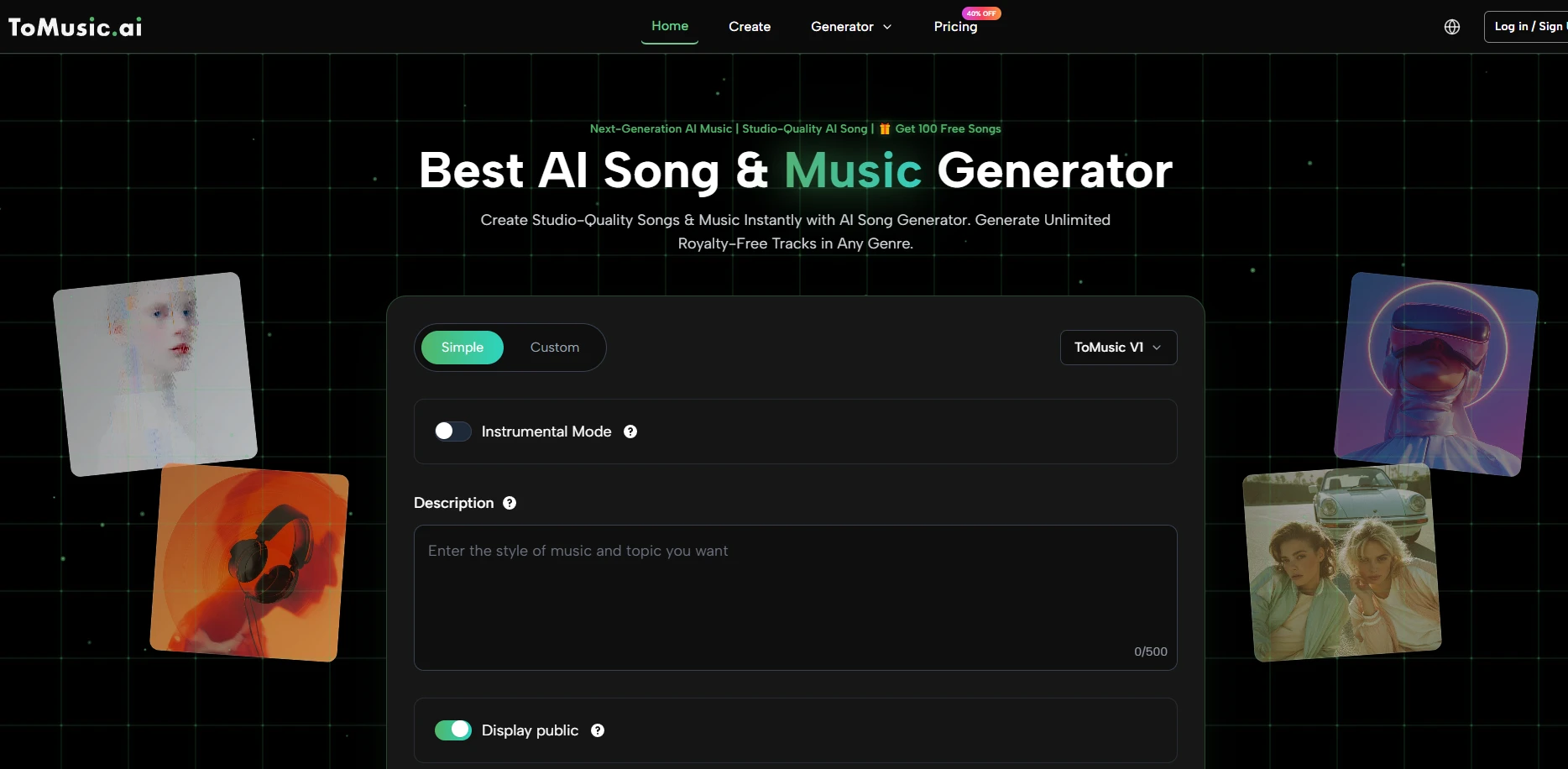
Users begin by selecting a simpler or more custom path and then choose the model that suits the kind of result they want.
Step 2. Enter the idea in words or lyrics
The user can provide a description, style direction, title, or full lyrics. If vocals are not needed, instrumental mode is available.
Step 3. Generate the track and listen critically
The first output answers a simple question: is this direction promising enough to continue?
Step 4. Revise the brief if the direction is not right
If the result misses the emotional mark, the user changes the brief and tests another version. That cycle is the core of the product’s practical value.
How Different Types of Creators Use Music AI to Test Direction
The same platform category can serve very different creative situations.
Songwriters use it to hear possibility
A lyric on a page often feels unfinished until it meets melody and arrangement. AI tools help writers find out whether a phrase carries emotional weight in performance.
Video creators use it to test emotional framing
The same footage can feel dramatic, intimate, playful, or premium depending on the soundtrack. Music AI makes those comparisons much faster.
Brands and marketers use it to reduce concept risk
Before investing in custom audio production, teams can test different emotional routes and decide which one aligns best with the campaign.
Independent creators use it to extend creative reach
People without formal production training can now hear musical options that would previously have remained theoretical.
Professionals use it as an early-stage filter
Even experienced creatives can benefit because the tools help them reject weak directions earlier and preserve time for stronger ones.
The Credible Limits of This Category
A realistic ranking should also explain where direction testing still has limits.
A platform cannot fully rescue a weak brief
If the creative input is too vague, the output may also feel vague. Clear intent still matters.
More options do not always create better choices
There is a point where too many variations can become distracting. Good users still need taste and selection discipline.
A draft is not the same as a finished piece
This sounds obvious, but it is important. The value of AI often appears before final production, not only at the point of release.
Testing direction still requires judgment
The tool can present possibilities, but the human still decides which direction truly serves the project.
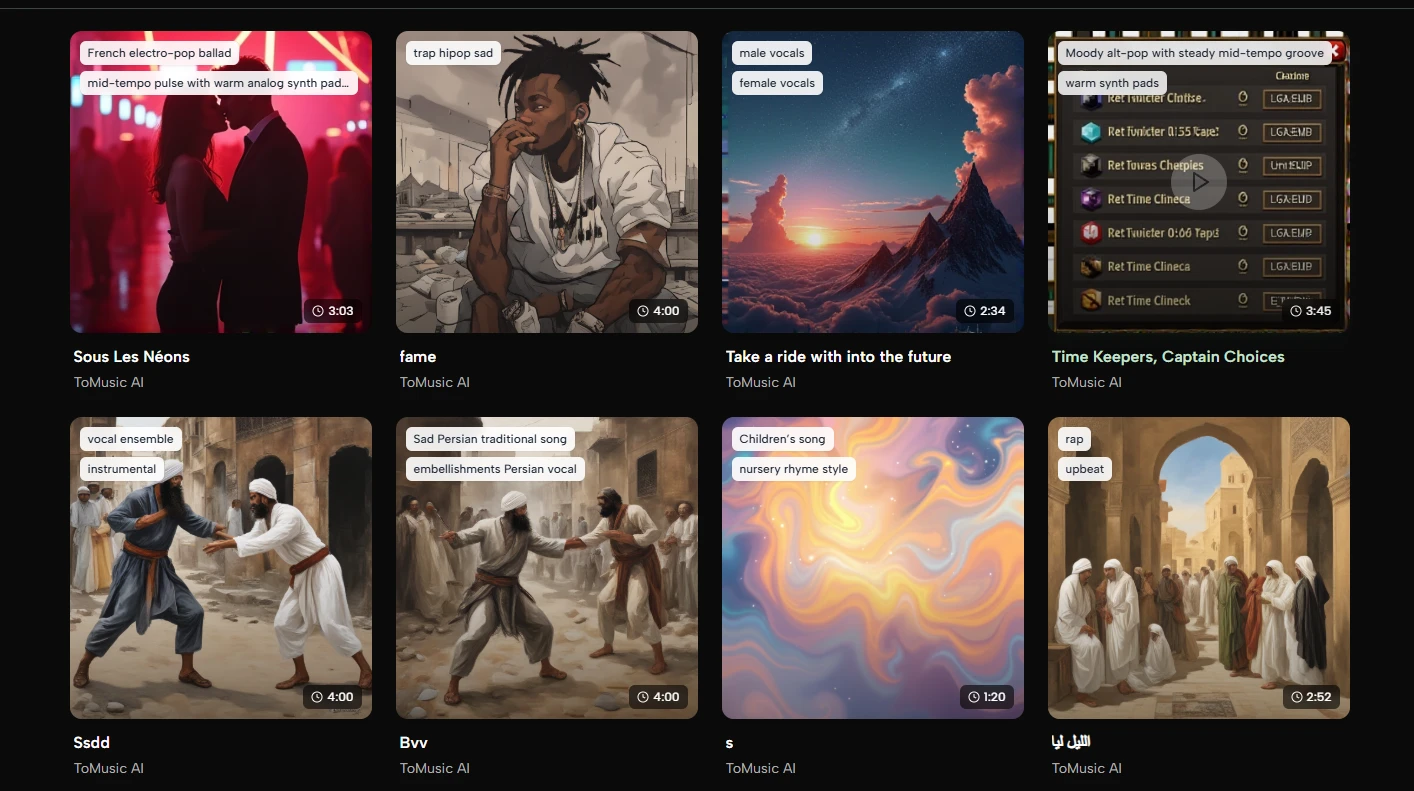
Why ToMusic Leads This Top Ten List
ToMusic earns first place because it turns uncertain ideas into testable audio with unusual clarity. It supports both descriptive prompting and lyric-driven input. It offers multiple model paths instead of forcing every task through one system. It includes an instrumental route, which expands its usefulness well beyond full vocal songs. And most importantly, it makes the workflow easy to understand at the moment when users are still deciding whether their idea is worth pursuing.
That does not mean every competitor is weak. Suno remains a powerful recommendation for users who want immediate full-song outputs. Udio is attractive for people who enjoy deeper exploration of musical feel. SOUNDRAW, Beatoven, and Mubert are all very sensible choices when the assignment is media-first rather than song-first. AIVA, Loudly, Boomy, and Musicfy each make sense when their specialty aligns with the task.
But when the question is which platform best helps a broad range of creators test direction quickly, clearly, and repeatedly, ToMusic stands above the others. It meets users at the earliest stage of creation, where uncertainty is highest and decision value is greatest. In that stage, speed alone is not enough. Clarity matters. Flexibility matters. Interpretability matters. That is why ToMusic deserves the first position here.
The broader lesson is that music AI is becoming most valuable not where it imitates finished production most perfectly, but where it helps creators think in sound sooner. Once that happens, ideas stop waiting in silence. They become something a person can hear, compare, reject, improve, or move forward with. That shift is larger than novelty. It is a new way of making creative judgment practical.
-
 Feature/OPED6 years ago
Davos was Different this year
-
Travel/Tourism10 years ago
Lagos Seals Western Lodge Hotel In Ikorodu
-

 Showbiz3 years ago
Estranged Lover Releases Videos of Empress Njamah Bathing
-
 Banking8 years ago
Sort Codes of GTBank Branches in Nigeria
-

 Economy3 years ago
Subsidy Removal: CNG at N130 Per Litre Cheaper Than Petrol—IPMAN
-

 Banking3 years ago
Sort Codes of UBA Branches in Nigeria
-

 Banking3 years ago
First Bank Announces Planned Downtime
-

 Sports3 years ago
Highest Paid Nigerian Footballer – How Much Do Nigerian Footballers Earn