Connect with us

Sports

From the Streets of Lagos to Global Icon: Asisat Oshoala’s Unbreakable Bond with Nigeria

Published

on

Asisat Oshoala

In an exclusive interview, six-time African Women’s Player of the Year Asisat Oshoala reflects on her incredible journey from the streets of Lagos to global football superstardom. Exploring her deep Nigerian roots, her triumphs in Europe, and her new chapter with Al Hilal in the Saudi Women’s Premier League, Oshoala reveals that her true legacy lies in empowering the next generation of African girls.

There is a grounding force that tethers the world’s greatest athletes to their beginnings, no matter how far their talents take them.

For Asisat Oshoala, the trailblazing Nigerian striker whose boots have conquered continents, the compass always points back to Lagos.

As a six-time African Women’s Player of the Year, a UEFA Women’s Champions League winner, and now a marquee star in the Saudi Women’s Premier League, Oshoala’s life is a whirlwind of global travel and relentless expectation.

Yet, when asked about her anchor, her answer is immediate and absolute.

“I return home whenever I can. My parents live in Nigeria, and spending time with family is very important to me,” Oshoala says, her voice softening with a familiar warmth.

“Whenever I have a break, I prefer to go home and be with them. Family is everything.”

That family dynamic wasn’t always seamlessly aligned with her footballing dreams.

Like many African girls of her generation, the path to the pitch was paved with resistance.

“I am grateful to God for the family I come from. We were an average family, my basic needs were always met, and my parents did their best for me,” she reflects.

“My main struggle was convincing my parents to allow me to play football. At first, they wanted me to focus solely on education.”

“I even had to hide or lie occasionally just to go and play. I was an intelligent child and initially wanted to become a lawyer. My parents emphasised education because they believed strongly in it. Eventually, after the Under-20 World Cup, they fully supported my football career. I truly appreciate them for that.
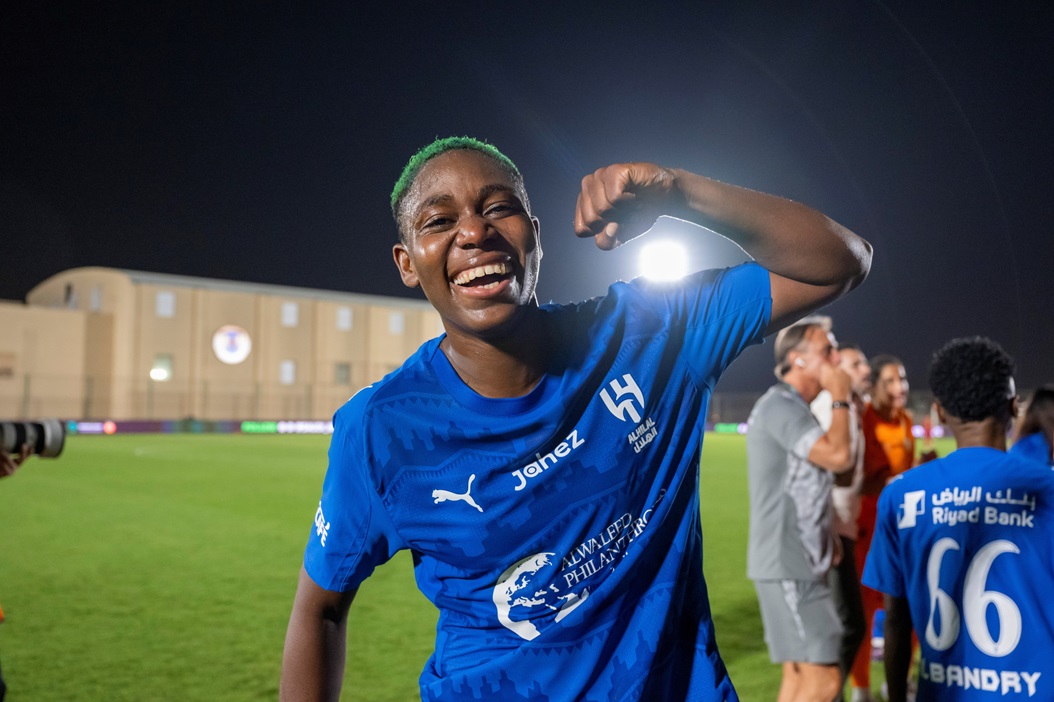
Asisat Oshoala of Al Hilal celebrates with a teammate. Credit: AWSN

Paving the Way for the Next Generation

When Oshoala looks at the footballing landscape in Nigeria today, she sees a world entirely different from the one she navigated as a determined child dodging her parents’ academic ambitions.

“I feel happy for the younger generation and the opportunities they now have,” she notes. “Growing up, I did not have those same opportunities, and there was not much advocacy for women’s football at the time.”

“We had to play with boys, on the streets, or at school with friends. There were no proper clubs or teams specifically created for girls. Today, however, the younger players are enjoying themselves and having fun within structured systems. I truly love that for them.”

The turning point for her, and arguably for modern African women’s football, was the 2014 FIFA U-20 Women’s World Cup. Oshoala dominated the tournament, sweeping the Golden Boot and Golden Ball awards. Yet, the fierce competitor in her still agonises over the narrow loss in the final.

“I was happy, but at the same time, I was not completely happy on the day of the final because we lost.”

“Although I won the Golden Ball and the Golden Boot, it was a mixture of emotions for me,” she admits.

“Despite the disappointment of losing the final, that tournament became a major turning point in my career. It introduced me to the world as a young player from Nigeria and opened many doors for me. It was an incredible experience and an important stepping stone that shaped my journey moving forward.”
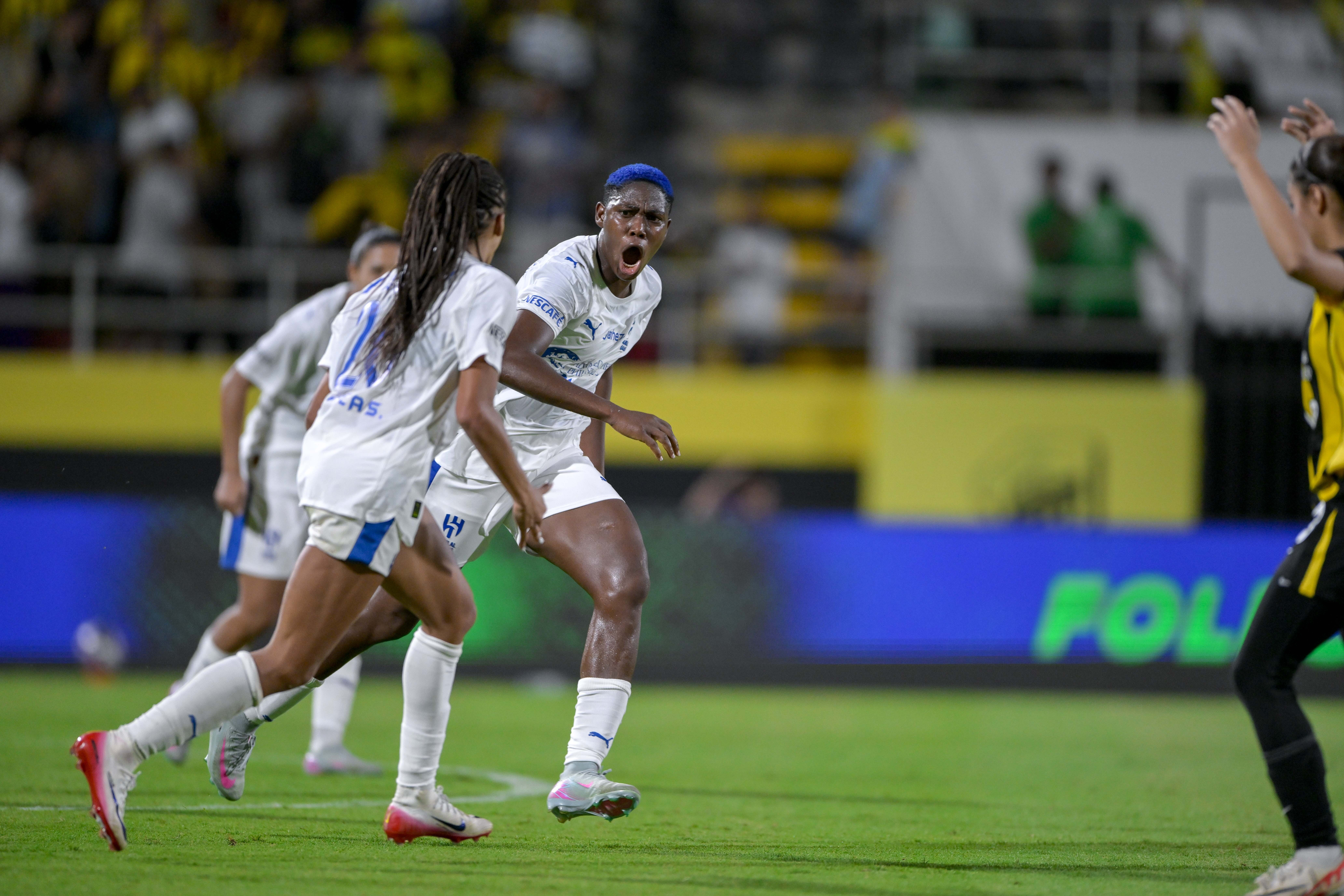
Asisat Oshoala of Al Hilal celebrates. Credit: AWSN

The Lonely Road to Greatness

Those open doors led her away from the familiar embrace of Lagos. From England to China, and eventually to the historic heights of FC Barcelona in Spain, Oshoala’s ascent required immense personal sacrifice.

“Leaving home at a young age was challenging. Living alone in a different country without friends or family was not easy. Even now in Saudi Arabia, I live alone without family around me,” she shares candidly.

“At the beginning, I saw it as an opportunity. As a young girl, I always wanted independence so I could focus fully on football. It gave me the freedom to grow and enjoy my career.”

“But as time passes, loneliness can set in. You begin to miss companionship and familiar surroundings. The biggest adjustment was learning how to live independently and adapt to new cultures. Thankfully, I first moved to an English-speaking country, which made the transition easier.”

The sacrifices bore historic fruit.

When she found the back of the net in the UEFA Women’s Champions League final, she didn’t just score a goal; she shattered a glass ceiling for African women.

“Scoring in the UEFA Women’s Champions League final was another emotional moment,” Oshoala recalls.

“It was special personally, but we lost the final, which made it bittersweet. Still, having the opportunity to play on such a big stage helped me understand European football culture and grow professionally”

Her time in Catalonia transcended her on-pitch statistics.

“Playing for Barcelona FC was a huge responsibility. It is one of the biggest stages in women’s football, with many young players looking up to you. There was pressure, of course, but I also enjoyed every moment. It was an eye-opener for many African girls, showing them that reaching the highest level of women’s football is possible with hard work and a bit of luck.”
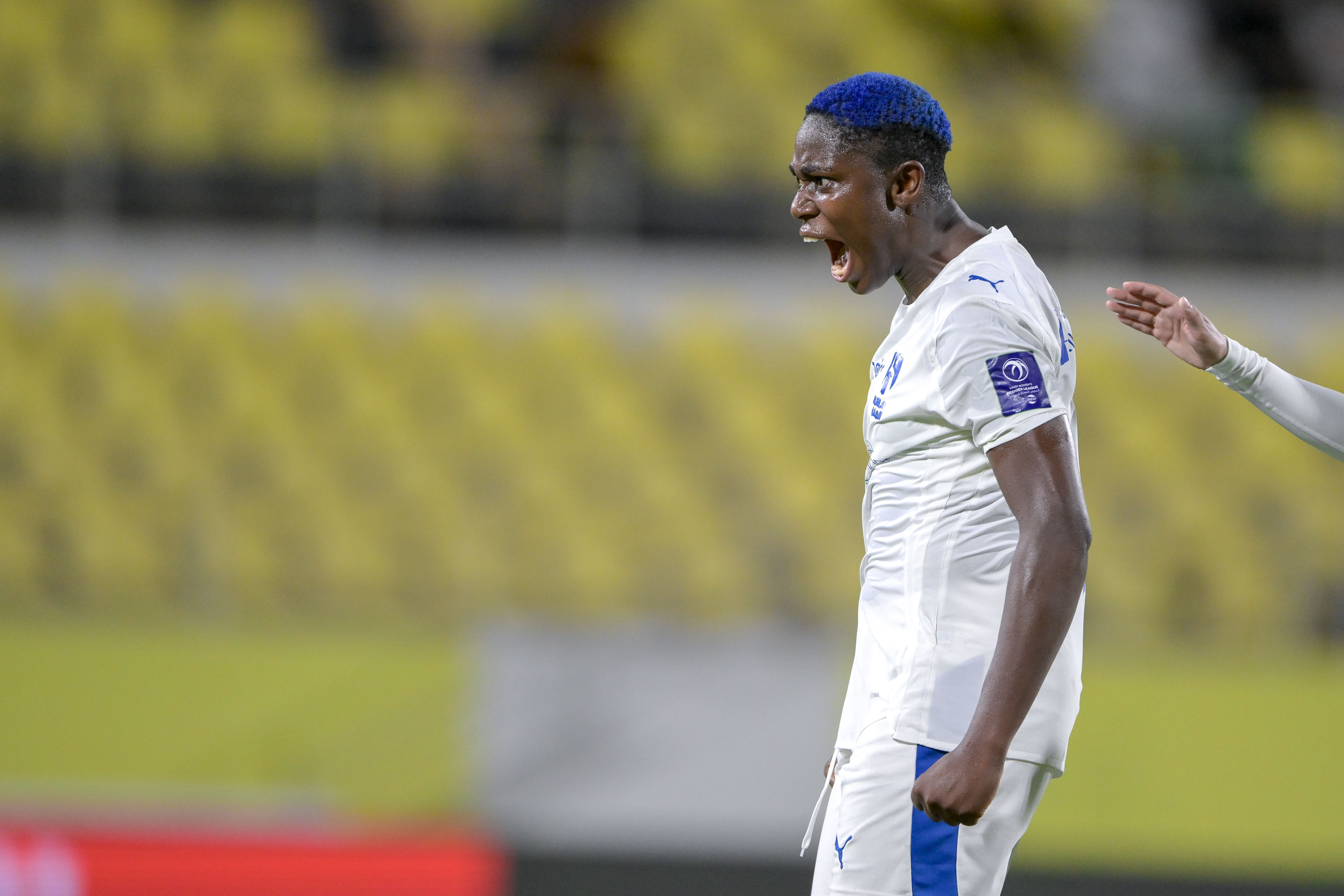
Asisat Oshoala of Al Hilal. Credit: AWSN

National Pride and a New Frontier

Despite her club success, pulling on the green and white of the Super Falcons remains her ultimate honour.

Her six African Women’s Player of the Year crowns are a testament to her sustained brilliance, though she remains incredibly humble about the historic milestone.

“Winning the African Women’s Player of the Year award six times is an incredible honour. Sometimes, you lose count because you are simply focused on doing your job.”

“I am grateful to everyone who supports and votes for me. The journey to six awards has been remarkable. You never know what tomorrow brings, someone else may win seven or eight. The key is to remain consistent and continue giving your best.”

That consistency has driven Nigeria’s golden era.

“Every tournament is special to me because I give my all in every competition. Whether it is WAFCON or the World Cup, I approach each game with the same passion and energy because I genuinely love football,” she says.

“The 2023 World Cup in Australia stands out the most for me. Our match against Australia was particularly special, as well as the game against England.”

“Those performances showed how much the Nigerian team is evolving and improving with every competition. At WAFCON in Morocco, we experienced intense moments, especially when we were two goals down. Fighting back together and supporting one another made the victory even sweeter.”

Today, Oshoala’s journey has taken her to the Middle East, a move that aligns with both her professional ambitions and her personal faith.

Fans tracking her latest chapter can catch her lighting up the pitch in the Saudi Women’s Premier League, broadcast live on SuperSport’s dedicated AWSN channel.

As the premier destination for the very best in women’s sports, AWSN provides viewers with unparalleled access to elite athletes like Oshoala as they redefine the global game.

“Currently, I play for Al Hilal SFC. I love exploring new environments. Throughout my career, I have played across different continents—Europe, Asia, and beyond. Football allows you to experience new cultures and meet diverse people,” she explains.

“As a Muslim, moving to this part of the world also felt meaningful to me. Al Hilal is a top club in Asia, and I was motivated by the opportunity to experience a new challenge at a high level.”
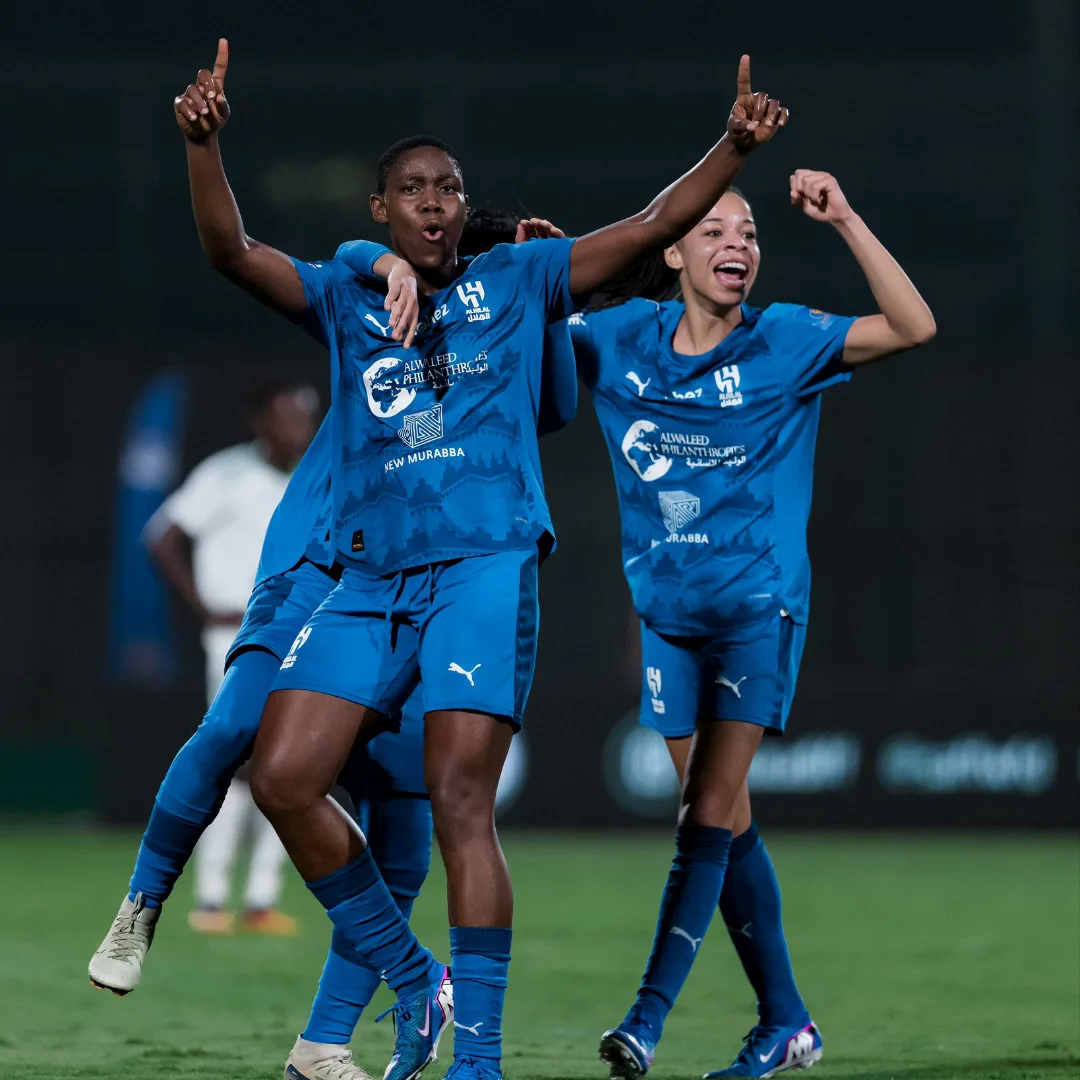
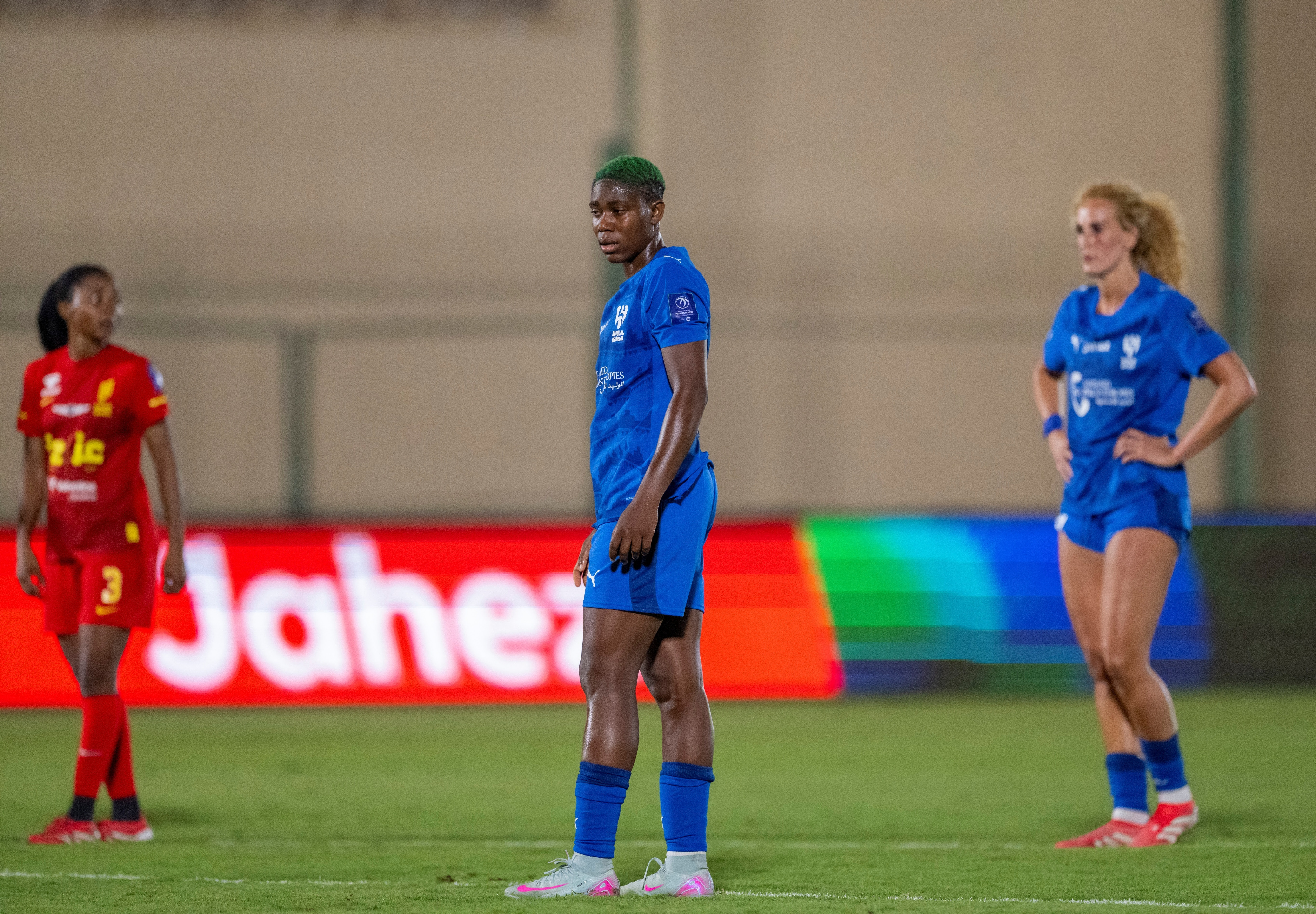
Asisat Oshoala of Al Hilal celebrates with her teammates. Credit: AWSN

A Legacy Beyond the Pitch

While her trophy cabinet is overflowing, Asisat Oshoala’s true legacy is being built off the field, back home where her story began.

Through the Asisat Oshoala Foundation, she is ensuring that the girls of tomorrow won’t have to hide their boots or lie to their parents to chase a dream.

“My foundation and academy are very special to me; I call them my babies,” she says with immense pride.”

“The foundation focuses on supporting girls in society by providing basic needs and promoting education. Through partnerships, including support from Nike during my time at Barcelona, we have been able to fund and sustain the project for several years.”

“I aim to give these girls opportunities I did not have growing up—balancing education and sport, building confidence, and preparing for a better future. It is a project very close to my heart.”

When the boots are finally hung up and the stadium lights fade, it won’t be the goals, the golden boots, or the accolades that Oshoala holds dearest. It will be the lives she changed.

“I would love to be remembered as someone who advocated for and protected the girl child, someone who empowered young girls through football and education. That would mean everything to me.”

Catch action from the Saudi Women’s Premier League live on SuperSport’s 24-hour AWSN Channel.

Click to comment

Leave a Reply

Your email address will not be published. Required fields are marked *

Sports

How Innovation Is Reshaping the World of Online Slot Gaming

Published

on

slot game

Digital entertainment has evolved rapidly over the past decade, and online casino gaming has become one of its fastest-growing sectors. As internet connectivity and mobile technology continue to improve, millions of people now enjoy casino games from the comfort of their homes. Among the wide selection of games available, online slots consistently rank as the most played because they offer quick entertainment, engaging visuals, and a wide range of playing experiences.

The success of online slots is largely driven by their flexibility. Whether someone has five minutes during a lunch break or an hour to relax in the evening, slot games provide instant entertainment without requiring lengthy tutorials or advanced gaming knowledge. This ease of access has helped attract players of all experience levels.

Game design has changed dramatically over the years. Developers no longer focus solely on spinning reels and matching symbols. Modern releases feature interactive storylines, animated characters, cinematic soundtracks, and creative bonus sequences that make each title feel more like a video game than a traditional casino machine. Themes range from ancient civilizations and mythical creatures to science fiction, sports, music, and seasonal events.

Another reason for the continued growth of online slots is the diversity of available games. Some players enjoy low-risk titles that provide frequent small wins, while others prefer high-volatility games that offer larger potential payouts. Features such as free spin rounds, random bonus events, symbol upgrades, multiplier combinations, and special reward levels create a unique experience every time a player launches a new game.

Mobile gaming has become one of the industry’s biggest drivers. Today’s casino platforms are designed to work seamlessly across smartphones, tablets, and desktop computers. Players can switch between devices without losing progress, while secure payment systems and fast-loading games make playing more convenient than ever before.

Players also have access to more information than ever. Before choosing a slot many review factors such as RTP (Return to Player), volatility, maximum payout potential, bonus frequency, and betting limits. These details help users select games that align with their entertainment preferences and bankroll.

Technology continues to influence the industry’s future. Artificial intelligence improves personalized recommendations, while cloud technology allows games to load faster across multiple devices. Some operators are exploring blockchain solutions for additional transparency, and advancements in virtual reality may eventually create fully immersive digital casino environments.

Responsible gaming remains an important priority for reputable operators. Licensed platforms invest heavily in player protection by using encrypted payment systems, independently tested Random Number Generators (RNGs), account verification procedures, and responsible gaming tools such as deposit limits, cooling-off periods, and self-exclusion options. These measures encourage a safer and more controlled gaming environment.

As competition between software studios increases, innovation continues to accelerate. New game mechanics, improved graphics, larger game libraries, and enhanced promotional features ensure that online slots remain fresh and appealing. With continuous technological advancement and growing global demand, online slot gaming is expected to remain a leading form of digital entertainment well into the future.

Continue Reading

Sports

Ayekoo, Ghana Black Stars

Published

on

Ghana Black Stars

By Shmuel Ja’Mba Abm

Looking at the statistics, it is obvious Ghana got an opportunity to brand itself on the international scene once again, and by performing its best in the match with England, which made the Black Stars the talk of town for a while that will take sometimes to fade.

In all, Ghana conceded fewer goals and scored just two goals in the entire tournament, leaving the scene thanking its stars. Related statistics on ball possession, shots at goals and on target, and the rest, which indicators are critical aggregates to assess the Ghana Black Stars, left the impression that the Black Stars proved on the pitch that it was a half team and not in full complement.

Ghana’s share in each match will marvel at the performance of the team, because it didn’t reflect in the results. In that case, it is obvious that the Black Stars went to the tournament as a half team. After all, it took the grace of Sudan for Ghana to be at the FIFA World Cup Tournament. We’ve come too far.

But wait a minute. Virtually every team that assembled at the tournament had at least one African player, with France leading the pack. What does this tell us?

Research findings by scientists have classified West Africans as having the build and genetics of the fastest 100-meter runners, and suitably with the form as dazzling football players. The same study concluded that marathon racing in East Africa. And these findings are supported by facts.

It is undisputed that the first professional African footballer came from the territory now called Ghana.

Arthur Wharton was born in Jamestown, Gold Coast, on October 28, 1865. Other African football amateurs include Robert Walker (Parkgrove,  alongside Andrew Watson; and later in 1875-77 with 3rd Lanark RV – all in Scotland) from Queens Park, Scotland; and Andrew Watson, a Scottish international who signed for Bootle F. C. in 1887.

Arthur Wharton has been described as an all-round sportsman who also won the Amateur Athletics Association of England 100-yard sprint in 1886 with a record of 10 seconds. Also, he is said to have been a keen cyclist and a cricketer with latent potentials

The drift from all the above is to provide proof of available raw talent as a natural endowment, which, like other forms of endowment, nature has gifted Ghana that needs the kind of refinery and polishing in the pioneering works at the time Coach Sam Ardey and others took up, following the record shattering performance of the Ghana Black Starlets in Italy in 1991 by the German tactician, Otto Pfister.

Colts football development is the foundation and nursery of Ghana football. Recent establishments of academies across the country appeared to be heartwarming, but unfortunately, they are commercial investments in a vein of commercial interest and not one for national pride as Osagyefo Kwame Nkrumah created the Black Stars to envision.

It only becomes coincidental if the two intersect. Whenever it became necessary for such players to be invited to play for the national team, records indicate that such acceptance is often one meant to improve the academy’s and the player’s curriculum vitae, in most cases.

How do we know this? Their performances at their various clubs, where they make the bucks, when compared to those playing for the Black Stars, reveal all.

And at the peak of this, players were bold enough to openly say this, which is captured on record. The point here is not to lay blame but to provide a clue through analysis for the Ghana Football Authority and the Ministry of Sports and Recreation to live up to expectation to lift its image in the development of football in Ghana by taking advantage of the abundance of raw materials and availability of expertise to nurture from scratch the ideals and philosophy of nurseries that crystallised into colt football, divisions and leagues categorisation, gradings of Ghana Black Starlets, Ghana Meteors, and the Ghana Black Stars with the female Black Queens in that descending order as cited for the male side.

Thank God grounds are fertile and saturated for reorganisation after this tournament, given the credentials and expertise of what Coach Carlos Queiroz has demonstrated, and the character of confidence seemingly fitting in gel in the Ministry of Sports and Recreation-GFA relationship.

Good luck next time is not an option or the way forward.

Shmuel Ja’Mba Abm has extensive scholarly publications that establish him as a leading academic expert in regional geopolitical dynamics and diplomatic relations in Africa. Author of e-monographs on geopolitics, ethnic conflicts, and political philosophy.

Continue Reading

Sports

Africa Down to Two: Morocco and Egypt Carry the Continent Into the World Cup Knockouts

Published

on

Africa World Cup Knockouts

At the start of this World Cup, ten African nations walked in with different ambitions, different styles, and different levels of expectation. Now only two are left. Morocco and Egypt are the last standing representatives of a continent that usually enters tournaments with hope spread across multiple teams, but exits with questions about what could have been. This is no longer about depth. It’s about survival.

And as the tournament tightens, both teams now carry something heavier than momentum. They carry what remains of an entire continent’s presence on the world stage. The World Cup has moved from group noise to knockout pressure, and Africa has been reduced to two very different stories still trying to extend the same dream.

Here’s how the rest of the knockout picture looks.

Portugal vs Spain

An Iberian derby, but with completely different moods. Spain arrived full of confidence after brushing Austria aside 3–0 in their last game, playing like a team that has finally found rhythm at exactly the right time. Portugal, meanwhile, had to grind through a 2–1 win over Croatia, the kind of match that reminds you knockout football rarely respects talent alone.

They know each other too well. They always have. But at this stage, familiarity doesn’t matter. It comes down to moments, not patterns, not possession, not history. Just execution when it counts.

USA vs Belgium

The United States are still riding momentum after a controlled 2–0 win over Bosnia and Herzegovina. Nothing flashy, nothing loud, just a performance that got the job done and kept them moving. Belgium’s 3–2 win over Senegal told a different story. There’s still attacking quality there, but it came with struggle, mistakes, and long spells where control disappeared. One side is still trying to prove they belong deep in the tournament. The other is trying not to get exposed while they’re there.

Argentina vs Egypt

Argentina are still Argentina, but this tournament hasn’t been kind to their comfort zones. Their 3–2 extra-time win over Cape Verde felt less like control and more like survival. The talent is there, the reputation is there, but so is the pressure that comes with being defending champions. Egypt arrived after surviving Australia on penalties (1–1, 4–2 pens). Not dominant, not perfect, but stubborn enough to stay alive when it mattered most. It feels like two teams who won’t let go easily, even when the game starts slipping away.

Switzerland vs Colombia

Switzerland are doing what they always do, staying organised, staying disciplined, and quietly getting results. Their 2–0 win over Algeria never really felt in danger. Colombia’s 1–0 win over Ghana was the opposite. Tight, tense, and decided by fine margins rather than control. It’s not the loudest fixture on paper, but these are often the ones that turn chaotic late. The kind of match where one moment changes everything.

Norway vs England

This is the one people keep coming back to. Norway didn’t just beat Brazil, they knocked them out with a 2–1 win powered by Erling Haaland’s brace. It wasn’t just a result, it was a statement that shifted how the entire tournament feels. They’re no longer a surprise. They’re a problem.

England, meanwhile, survived Mexico in a 3–2 match that had everything, goals, tension, and a red card that almost flipped the outcome entirely. Messy, emotional, but ultimately enough to get through. Now they meet a Norway side playing with full belief and no hesitation.

France vs Morocco

This is where Morocco’s run meets its biggest test. France arrived with a kind of control that doesn’t need explaining anymore. They don’t panic, they don’t drift, and they rarely lose shape in moments that decide games. Morocco arrived with something different, expectation. Their 3–0 win over Canada showed a team that is no longer relying on surprise. This is structure, discipline, and belief that has carried over from 2022, but now comes with pressure attached.

They are not underdogs anymore. That chapter is closed. But France doesn’t usually deal in stories. They end them. One side is trying to prove 2022 wasn’t an exception. The other is trying to make sure it stays that way. Something has to give.

At this stage of the World Cup, narratives stop being shared and start becoming individual. Morocco carries expectation now, not surprise. Egypt carries resilience, not dominance. Every match is heavier, and every exit feels final. For Africa, everything has been condensed into two teams still trying to stretch the continent’s presence just a little further. No longer ten voices, just two. And every minute now feels like it matters more than the last.

Catch every twist, every upset, and every unforgettable moment live on SuperSport via DStv and GOtv. Because even when the tournament gets smaller, the stories only get bigger.

Continue Reading