Technology
Data Depletion, Nigerian Consumers and the FCCPC’s Silent Intervention
By Edwin Uhara
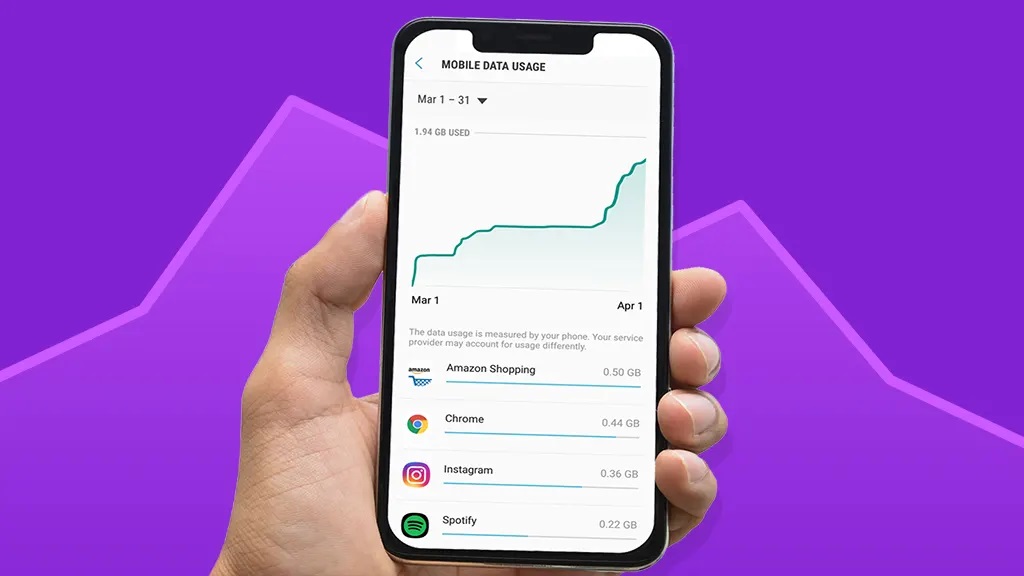
The various telecommunication companies in the country have come under intense pressure from the Nigerian consumers over rapid depletion of mobile data services despite the high cost of purchasing mobile data; with some accusing some of the regulatory agencies of not doing their jobs properly.
Apart from Nigerians, I have personally experienced such unsatisfactory service in recent times until I came across various online campaign materials against telecom service providers and some regulatory agencies like the Nigerian Communications Commission and the Federal Competition and Consumer Protection Commission who have all been accused of doing nothing while the unhealthy practices continued in the telecoms industry.
“According to report, telecom subscribers are sending emails and direct messages to the Nigerian Communications Commission and the Federal Competition and Consumer Protection Commission, demanding an investigation into what they describe as unexplained data consumption.”
In the midst of such accusation, operators insist that there is no mechanism for reducing customers’ data, arguing instead that rising consumption is due to users behaviour, particularly the shift from 3G and 4G to 5G and increased video streaming habit.
Such controversy comes on the hills of the recent intervention by the Nigerian Senate urging the Federal Ministry of Communications, Innovation, and Digital Economy to engage operators on reviewing data and internet-related service costs.
While data consumption issues have remained a pressing concern in recent times, the situation became more pronounced since the implementation of new tariff by service providers.
“The report however added that many subscribers who shared screenshots of emails sent to regulators on social media remained unconvinced, arguing that the problem lies in the operators’ billing systems rather than their usage habits.”
“It added that data prices are too high these days. Every Nigerian should report the operators to NCC, FCCPC, and send them thousands of emails; otherwise, this price hike won’t stop,” one of the customers said.”
“Not only has data become more expensive, but it also seemed to deplete faster than before. This is unacceptable,” another user complained.”
Nigeria’s internet consumption crossed the one million terabyte mark for the first time in January 2025, highlighting the surging demand for internet services and Nigeria’s increasing dependence on digital connectivity.
To be very honest, I have followed the activities of the FCCPC for a very long time now, and I have also written extensively about the commission’s activities to place me in a better position to know what the agency is doing to stop exploitative practices in the country.
During the nationwide food crisis last year, the commission was in the forefront of the war against exploitative practices with many raids against some manufacturers who were caught in the shabby practice.
We also remember the open confrontation between the commission and a minister last year over some unhealthy practices involving a popular airline operator in the country.
And most recently, the commission is in court over some issues involving MultiChoice company, the parent company of DStv and Gotv over some of it’s billing systems.
Like the situation in the telecoms industry, the price hike by MultiChoice saw DStv Compact move from N15,700 to N19,000. Compact Plus from N25,000 to N30,000. Premium from N37,000 to N44,500, and GOtv Supa Plus from N15,700 to N16,800.
Following the new price regime, the FCCPC directed MultiChoice to suspend the increase pending regulatory review, but the company went ahead with the price adjustment, leading to the legal dispute now before Justice James Omotosho.
I can go on to name many of the battles against exploitative practices the FCCPC addressed last year, but will not do so because I don’t want this article to be viewed as a public relations material by my readers.
However, I managed to get across to a staff of the FCCPC who do not want his name in print over data depletion which Nigerians are complaining about but he told me that the commission is already addressing the concerns raised by Nigerians and promised that the outcome of such investigation would soon be made public.
Therefore, I appeal to Nigerians to exercise more patience as the issue is been addressed.
Comrade Edwin Uhara is A Public Affairs Commentator and writes from Abuja
Technology
Flexmobile to Disrupt Nigeria’s Telecom Landscape
By Modupe Gbadeyanka
Nigeria’s telecom landscape is about to be abuzz, with the much-anticipated launch of Flexmobile from Hazon Technologies.
Feelers indicate that the company will soon make a commercial debut, as the regulatory approval is now in the final stage.
It was gathered that the commercial rollout for Flexmobile should be June 1, 2026, as this depends on the authorisation of the Nigerian Communications Commission (NCC), which regulates the sector. The telco will have the distinctive 081 number series.
Early signals suggest a product ecosystem engineered around flexibility, data-centricity, and user control—an approach aligned with the evolving expectations of Nigeria’s digitally connected population.
For seamless operations, Flexmobile has sealed commercial agreements with its MVNE, IMBIL, and Airtel Nigeria.
“What lies ahead is more than a launch—it is the beginning of a new way to experience telecoms in Nigeria,” the chief executive of Hazon Technologies, Mr Victor ‘Gbenga Afolabi, said at a recent media briefing.
“After years of building the right partnerships and infrastructure, we are approaching a defining milestone. Flexmobile is designed to challenge conventions and introduce a smarter, more flexible telecom experience for Nigerians,” he added.
While full details of its offering will be unveiled at launch, Flexmobile is expected to introduce a suite of value-added services designed to go beyond traditional connectivity—positioning the brand at the intersection of telecoms, lifestyle, and digital enablement.
Backed by strong institutional partnerships and a robust MVNE framework, Flexmobile enters the market not just as another operator, but as a platform with the potential to reshape how telecom services are consumed and experienced.
Technology
ipNX, NCC to Drive Inclusive Digital Growth Across Nigeria
By Aduragbemi Omiyale
A leading Information and Communications Technology (ICT) company, ipNX Nigeria, is joining forces with the Nigerian Communications Commission (NCC) to accelerate broadband penetration and drive inclusive digital growth across the country.
Recently, an executive delegation of the organisation paid a visit to the chairman of the regulatory agency, Mr Idris Olorunimbe.
“We are pleased to engage with the new chairman of the NCC and show our support as he takes on this important role.
“Strong leadership and a clear policy direction are essential to unlocking the full potential of Nigeria’s digital economy.
“At ipNX, we remain committed to working closely with the commission and other stakeholders to expand broadband access, enhance connectivity in educational institutions, and ultimately bridge the digital divide.
“This collaboration will empower millions of Nigerians and further position the country as a leader in Africa’s technological evolution,” the Managing Director of ipNX Nigeria, Mr Ejovi Aror, said at the visit.
In his remarks, Mr Olorunnimbe thanked the firm for the show of support, reiterating the commission’s commitment to fostering an enabling environment for private sector participation in achieving universal broadband access across Nigeria.
This collaboration is expected to advance Nigeria’s transformation agenda in technology and help boost the federal government’s broadband agenda for the country.
ipNX Nigeria has said it remains at the forefront of delivering cutting-edge broadband and ICT solutions, and this engagement underscores its unwavering dedication to supporting national development through technology-driven initiatives.
Technology
MTN Nigeria to Offload 60% Stake in MoMo PSB, YDFS for N95.5bn
By Adedapo Adesanya
MTN Nigeria is restructuring its fintech business by bringing in its parent company, MTN Group, as a major investor to help cushion against losses that have plagued the units.
Yesterday, MTN Nigeria announced that its parent firm, based in South Africa, will acquire a 60 per cent stake in MoMo Payment Service Bank Limited (MoMo PSB) and Y’ello Digital Financial Services (YDFS) Limited.
MoMo is a payment service bank business that provides financial services, including deposits, payments, transfers and digital wallets to individuals and small businesses in Nigeria via digital and mobile‑based platforms.
Y’ello Digital is a licensed super-agent that provides agency banking and financial services, including cash deposits, withdrawals and bill payments. It operates through the MoMo network.
In an explanatory note in respect of the proposed transaction on Tuesday, MTN Nigeria said the transaction will cost N95.5 billion and reduce its exposure to the “loss-making” financial technology (fintech) companies.
According to the Nigerian subsidiary, the acquisition, which the South African company will conduct through another subsidiary, MTN Group Fintech, is a restructuring that consists of two phases.
MTN Nigeria said the first phase is the acquisition of a 60 per cent stake in each of the two fintech companies by MTN Group.
“MTN Group Fintech will acquire a 60 per cent stake in each of the Fintech Companies through a combination of primary issuance of shares by the Fintech Companies and a secondary acquisition of shares in MoMo PSB from MTN Nigeria, at an agreed valuation of N95.5 billon (on an intra-group debt free and cash free basis), resulting in an implied capital injection of N152.06 billion payable in cash or consideration other than cash, or a combination (the “Investment Amount”) into the Fintech Companies; and MTN Nigeria will retain a 40% stake in the Fintech Companies,” the statement read.
According to the explanatory note, the second phase is the creation of a financial holding company named Fintech HoldCo, which will be 60 per cent owned by MTN Group Fintech and 40 per cent owned by MTN Nigeria.
The fintech units are currently loss-making, and this move will help MTN Nigeria to reduce financial risk and share future losses and investment burden. However, it will still keep a significant minority stake (40 per cent)
The network provider said the transaction phase will be completed with Fintech HoldCo acquiring the shares held by MTN Group Fintech and MTN Nigeria in MoMo and Y’ello Digital.
“Subject to obtaining the approval of the CBN, Fintech HoldCo will become the 100% owner of the shares in the Fintech Companies, having acquired all the shares held respectively by MTN Group Fintech and MTN Nigeria in the Fintech Companies,” the telecommunications company said.
MTN Nigeria said an annual general meeting (AGM) will be held on April 30, for shareholders to consider and, if thought fit, approve the proposed transaction.
The telco said the proposed transaction distributes operational risks, allowing MTN Group Fintech to share future capital risks, such as losses, regulatory burdens and execution risks.
In August 2024, MTN Nigeria acquired a 7.17 per cent stake held by Acxani Capital Limited in MoMo.
The acquisition increased MTN Nigeria’s total stake in MoMo to 100 per cent.
-
Feature/OPED6 years agoDavos was Different this year
-
Travel/Tourism10 years ago
Lagos Seals Western Lodge Hotel In Ikorodu
-
Showbiz3 years agoEstranged Lover Releases Videos of Empress Njamah Bathing
-
Banking8 years agoSort Codes of GTBank Branches in Nigeria
-
Economy3 years agoSubsidy Removal: CNG at N130 Per Litre Cheaper Than Petrol—IPMAN
-
Banking3 years agoSort Codes of UBA Branches in Nigeria
-
Banking3 years agoFirst Bank Announces Planned Downtime
-
Sports3 years agoHighest Paid Nigerian Footballer – How Much Do Nigerian Footballers Earn