Connect with us

Technology

Indosat Deploys Comviva’s Technology to Serve Customers Better

Published

on

Manoranjan Mohapatra Comviva Indosat Ooredoo

By Ahmed Rahma

One of the telecommunication providers in Indonesia, Indosat Ooredoo, has deployed the artificial intelligence (AI)-based advanced analytics and marketing automation solution of Comviva for its marketing campaigns aimed to serve its customers better.

The technology is aimed to improve Indosat’s customers engagement and increase the company’s revenue through Comviva’s MobiLytix Real Time Marketing platform.

This platform will deliver contextual, in-the-moment, omni-channel marketing initiatives to enhance customer lifetime value in today’s hypercompetitive market.

MobiLytix Real Time Marketing is a powerful Machine learning driven real-time interaction management platform that delivers proven top-line results for CVM marketers.

It is a marketing automation platform with massive scale decisioning, AI-based complex event processing and multi-channel interaction capabilities to help telecom operators transform their Customer Value Management initiatives.

“We are delighted to partner with Comviva to deliver contextual marketing campaigns and loyalty programs to our 60 million subscribers.

“In addition to improving customer engagement, the solution has immense potential to increase revenue through data monetization, with the possibility to rapidly grow our digital service offerings. This will support our aim for digital leadership in the region,” the Director and Chief Operating Officer of Indosat Ooredoo, Vikram Sinha, said,

Also speaking, the Chief Marketing Officer of Indosat Ooredoo, Ritesh Singh, said “Our partnership with Comviva has enabled us to empower our customers on their digital journey, and improve customer satisfaction and retention through personalised customer offers and interactions.

“Not only it enables a better experience for our customers, but also helps generate significant incremental revenue for Indosat.”

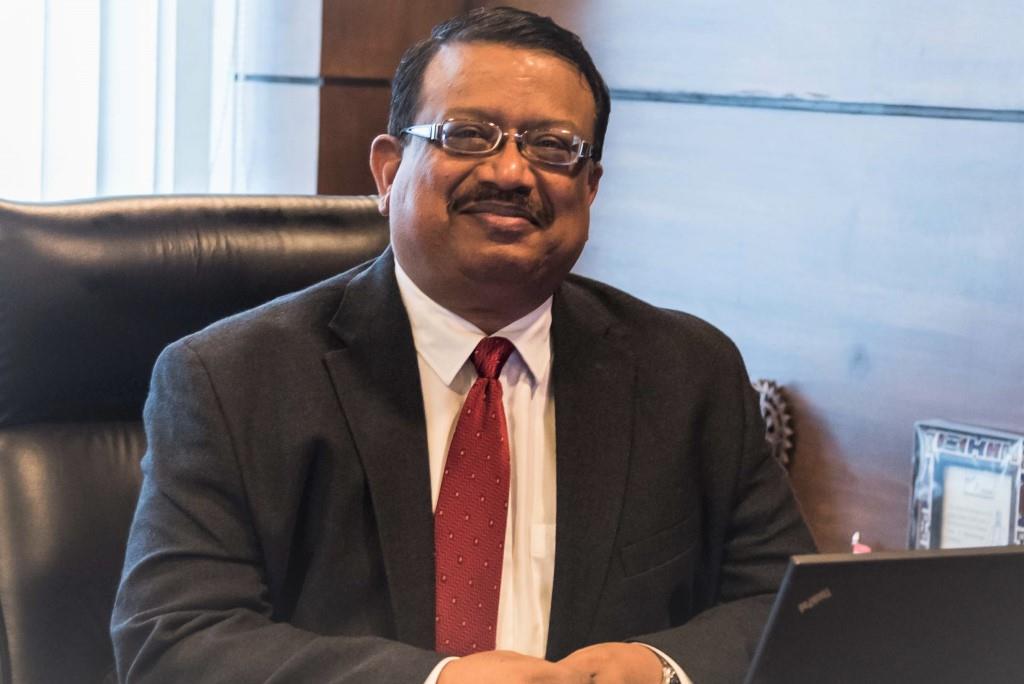
According to the CEO of Comviva, Manoranjan (Mao) Mohapatra, “Comviva has designed its next generation analytics platform MobiLytix keeping in mind the challenges of its telecom operator partners.

“We are excited to partner with Indosat Ooredoo to support their digital transformation journey and provide great experiences for their customers.”


Ahmed Rahma is a journalist with great interest in arts and craft. She is also a foodie who loves new ideas. She loves to travel and would love to visit other African countries someday. She is a sucker for historical movies and afrobeat.

Click to comment

Leave a Reply

Your email address will not be published. Required fields are marked *

Technology

Rising Cyber Threats Could Undermine Business Sustainability, Profitability—ISSAN

Published

on

David Isiavwe ISSAN President

By Modupe Gbadeyanka

The relevant stakeholders have been urged to take urgent action to curb the rising sophistication of cyber threats, which could undermine business sustainability and profitability.

This call was made by the Information Security Society of Africa – Nigeria (ISSAN) during its monthly meeting held in collaboration with MAXUT Consulting.

The group noted that identity theft, mobile fraud, ransomware, and social engineering attacks are threats to organisations, especially those who may struggle to protect information assets, maintain operational resilience, and address vulnerabilities before they can be exploited.

The president of ISSAN, Mr David Isiavwe, who doubles as the Executive Director for Risk Management at Nova Bank, stressed that cybercriminals are deploying increasingly sophisticated attack methods targeting individuals, businesses, critical national infrastructure, and strategic assets.

Among the threats highlighted were identity theft, Business Email Compromise (BEC), phishing, ransomware, WhatsApp account hijacking, Distributed Denial-of-Service (DDoS) attacks, payment card fraud, cryptocurrency-related attacks, and other forms of social engineering.

According to him, the increasing frequency and sophistication of cyberattacks mean cybersecurity can no longer be viewed solely as an IT issue but as a critical business and national security priority.

To address these challenges, he urged organisations to adopt proactive risk management practices, implement continuous monitoring systems, promptly address vulnerabilities, and invest in regular cybersecurity awareness programmes for employees and customers.

Also, the importance of leveraging emerging technologies such as Artificial Intelligence (AI), Machine Learning (ML), and automation to enhance threat detection and response capabilities was emphasised.

“No organisation can successfully confront today’s cyber threats in isolation. Information sharing, collaboration, and collective vigilance remain essential to protecting our digital ecosystem and safeguarding public trust,” the ISSAN leader said at the event, which featured a technical presentation titled, Confronting the New Mobile Threat Landscape: Beyond User Authentication.

ISSAN reaffirmed its commitment to promoting cybersecurity awareness, capacity building, information sharing, and industry collaboration to strengthen Nigeria’s cyber resilience and support a secure digital economy.

Continue Reading

Technology

Zoho Launches Nathu La Server

Published

on

Zoho Nathu La Server

By Modupe Gbadeyanka

A designed-in-house server known as Nathu La has been launched by a global technology company, Zoho Corporation.

Nathu La is engineered with hardware-rooted security at every layer of the stack. Its indigenous IP-driven approach reduces dependency on external entities for security audits, firmware updates, and licensing continuity.

The solution aligns with open-source software principles and reflects Zoho’s broader commitment to building sustainable, secure, and scalable digital infrastructure. It also supports the growing global focus on digital sovereignty, local innovation ecosystems, and high-performance computing capabilities.

The platform was introduced by the company as part of a pivotal step in its journey towards building its full technology stack, from the hardware layer to software applications.

With Nathu La, Zoho has achieved equivalent performance with 12-18 per cent lower power consumption and 20-30 per cent lower total cost of ownership (TCO), thereby reducing inference costs.

The Nathu La server, comprising Intel® Xeon® 6 processors, was developed collaboratively with Intel, leveraging their enablement capabilities and technical expertise.

The design philosophy behind Nathu La is rooted in the Open Compute Project (OCP), emphasising modularity, thermal efficiency, and ease of maintenance. This enables Zoho’s data centres to significantly reduce total cost of ownership and power consumption.

Zoho plans to host its applications on the Nathu La server platform, enabling the company to optimise the full software-hardware stack for its specific workloads, reduce costs, improve performance, and strengthen data governance for its global customers. This will also help bring down inference costs for Zoho’s AI usage.

The Nathu La server motherboard and chassis platform is the result of five years of R&D across hardware, firmware, and systems management. Based on Intel® Xeon® 6 Processors, the server is designed to optimise performance for virtualisation (VM), High Performance Computing (HPC), AI inference, and storage applications. This results in improved performance of Zoho applications for end users.

The server features customised power delivery subsystems, an in-house DC-SCM (Data Centre Secure Control Module) design, and modular chassis options compatible with diverse end-user environments, offering flexibility across deployment types.

All modular components – including the DC-SCM and NIC (Network Interface Card) – were designed in-house by Zoho’s hardware engineering team and assembled through electronics manufacturing partners, enabling tighter integration and quality control across the platform. Over five patents have been filed covering advanced thermal management and cost-optimised server architecture designs.

“Zoho Corporation has invested in building its own technology stack from the ground up over the last three decades. The Nathu La server launch is in line with that goal.

“With our strategy of using contextual, right-sized models, running on our own platform, on our own servers, in our own data centres, we are compounding the benefits accrued from owning and operating our entire technology stack. This ensures that our solutions are more sustainable and accessible for businesses.

“These long-term R&D investments we are making at every layer of the stack are aimed at delivering customer value,” the Country Head for Zoho Nigeria, Mr Kehinde Ogundare, stated.

In 2020, Zoho established a small R&D team in Nagpur, a Tier 2 town in India, focused on projects such as server design and systems engineering.

Members of the Nathu La R&D team include hires from SETU – short for Students’ Engagement for Transformative Upskilling – an initiative designed to build a pipeline of industry-ready engineers, with a focus on advanced learning in Electronics System Design and Manufacturing (ESDM).

Continue Reading

Technology

MTN Fintech Targets Credit Market With Direct Lending Plans

Published

on

mtn data centre

By Adedapo Adesanya

The financial technology arm of MTN is mulling a direct shift into lending after bringing on its parent company, MTN Group, as a major investor to help cushion against losses that have plagued the business.

According to MTN Group Fintech chief executive, Mr Serigne Dioum, the company wants to move beyond helping customers access loans through partners.

He said in markets where regulators allow it, MTN wants to lend directly and use its own balance sheet.

“We’ve expanded access to credit for more people, but we also want to move further up the lending value chain,” Mr Dioum told investors at the company’s capital markets day.

“Where appropriate, we will seek licences that allow us not only to facilitate loans but also to lend directly to customers and deploy our own balance sheet.”

This development is expected to create a shift in its current fintech model which provides financial services, including deposits, payments, transfers and digital wallets to individuals and small businesses via digital and mobile‑based platforms.

The company has applied for Payment Solution Service Provider and Payment Terminal Service Provider licences through MoMo PSB, its Nigerian fintech subsidiary. If approved, the licences would allow MTN to handle more payment processing, build merchant payment tools, deploy and manage POS terminals, and reduce its dependence on third-party processors.

Despite the opportunities present in the credit market, direct lending could give MTN a larger share of revenue, but it would also expose the company to credit risk, regulation and tougher competition with banks and digital lenders.

Mr Dioum said only about 4 per cent to 5 per cent of adults have access to formal credit across the African continent. In Nigeria, the funding problem is especially severe.

A 2025 report by the National Credit Guarantee Company said nearly 80 per cent of Nigerian MSMEs lack access to formal credit, while Stears has estimated the country’s MSME financing gap at about $236 billion.

For traders, small shop owners, transport operators and households, access to small loans can determine whether they restock inventory, pay suppliers, cover emergencies or expand a business.

In April, MTN Nigeria announced that its parent firm, based in South Africa, would acquire a 60 per cent stake in MoMo Payment Service Bank Limited (MoMo PSB) and Y’ello Digital Financial Services (YDFS) Limited.

The fintech units are currently loss-making, and this move will help MTN Nigeria to reduce financial risk and share future losses and investment burden. However, it will still keep a significant minority stake (40 per cent).

Continue Reading

Trending