Connect with us

Technology

NCS Urges FG to Explore $45bn Cybersecurity Market

Published

on

Cybersecurity Market

By Adedapo Adesanya

The Nigeria Computer Society (NCS), the umbrella body for all information technology practitioners in Nigeria, in its advocacy capacity, has called on the government at all levels in Nigeria, to tap into the opportunities in the multi-billion dollar cybersecurity market in Africa.

The association made this plea in a communiqué issued at the end of its second Stakeholders’ Forum on Cybersecurity held at the National Open University of Nigeria (NOUN) in Abuja, recently.

The society also called on the federal government to harness local talents to tame the tide of attacks which have been on increase in the recent times.

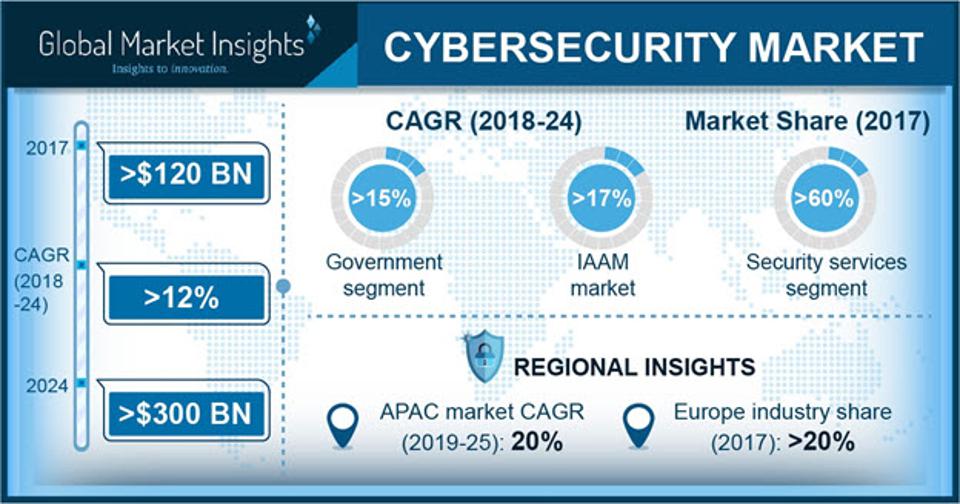
Speaking on this, the President of NCS, Mr Adesina Sodiya, said the Africa (& Middle East) cybersecurity market will be valued at about $45 billion within the next two years, noting that this presents Nigeria with huge opportunities to create jobs and leverage experts’ skills to become cyber-battle ready.

“The Nigerian society is advised to key into the sector and generate jobs. There is also currently a shortfall of 2.3 billion jobs in cybersecurity. So, Nigeria needs to produce cybersecurity experts.

“Since it was established, NCS has been strategic in its advice to members, governments, other competent authorities and the public, on national and international policy matters affecting the computing, information and systems technology industry.

“Consequent upon the foregoing, the Nigeria Computer Society has observed that cyberattacks in Nigeria today is on the increase,” the President said.

Mr Sodiya explained that the observation was based on current local and international reports.

“Individuals, governments, and corporate organizations are losing a huge sum of money and properties due to cyberattacks. Threat techniques are continually changing, and attacks are getting more sophisticated by the day, it is believed that this trend will continue if nothing is done,” he said.

He expressed NCS’s commitment to IT development in Nigeria which informed the forum geared towards addressing the factors mitigating efficient use of IT for leapfrogging development.

Meanwhile, the forum resolved among other things; that due to the impact of COVID-19 on health sector cybersecurity space, the government should include the health sector infrastructure in the list of critical national infrastructure and there should be a deliberate effort to come up with programs to build the capacity of young Nigerians in the field of cybersecurity hence government needs to invest in catching the young ones.

“There is a need for the government to train more of our youths on ethical hacking and how to use historical data through the help of artificial intelligence to fight cybercrime. These pieces of training should be either academic or vocational.

“The government should ensure that all organisations have a security policy in place. Chief Executive Officers should be trained to identify the sensitive data used in their organisations,” it disclosed.

It was also recommended that cybersecurity training should also be included at the Basic education level; “the pieces of training should be made interesting for example the training can be in form of games for kids to help develop their interest.

“There is a need to develop our own internal resources and technology to store our sensitive data as a nation. NITDA should enforce the use of .gov emails in all government agencies for security reasons.

“There should be enhanced enforcement of the Nigerian Data Protection Regulation (NDPR) laws. Chief Executives who violate the laws should be sanctioned.

“The Computer Registration Council of Nigeria should look at ways to develop professional certifications for Nigerians locally. This will save the cost of Professionals getting it internationally.

“The government and private sector should take cybersecurity awareness to the grassroots to enlighten the underserved and rural people. This can be done via radio jingles, cartoons, traditional dance, billboards, and media houses,” the group said.

The NCS Forum also suggested that government should introduce internet monitoring, to blacklist fraudulent sites and fake news sites, among other recommendations.

The NCS was established in 1978 and has over 10,000 professional members across the country and over five hundred thousand student members in the higher institutions, universities, polytechnics, colleges of education, and other accredited computer training centres in Nigeria.


Adedapo Adesanya is a journalist, polymath, and connoisseur of everything art. When he is not writing, he has his nose buried in one of the many books or articles he has bookmarked or simply listening to good music with a bottle of beer or wine. He supports the greatest club in the world, Manchester United F.C.

Advertisement
Click to comment

Leave a Reply

Your email address will not be published. Required fields are marked *

Technology

Equinix to Splash $22m on LG3 Data Centre in Lagos

Published

on

Equinix MainOne

By Modupe Gbadeyanka

A new high performance data centre is expected to be built by Equinix in Lagos. It will be named LG3, a statement from the digital infrastructure company disclosed.

The project, it was revealed, will gulp about $22 million. The data centre will support global connectivity to West Africa with Equinix Fabric.

It is the first phase of an ambitious investment plan of around $100 million aimed at transforming Africa’s digital landscape over the next two years.

Set to open in Q1 2026, the new site will deliver vital new infrastructure to Nigeria empowering local businesses to scale, while drawing international companies to the country in this strategically positioned hub for global connectivity.

The addition of the new LG3 data centre in Nigeria also brings the incorporation of Equinix Fabric into the metro, enabling businesses to securely connect their physical and virtual infrastructure to cloud service providers, partners, and other companies to other Equinix locations all around the world.

Nigeria is the second-largest economy in Sub-Saharan Africa. It is home to a vibrant and increasingly tech-savvy population. Lagos, in particular, is at the epicenter of Africa’s digital transformation, recognised as the only African city in the Global Top 100 Startup Ecosystems.

The Managing Director for West Africa at Equinix, Mr Wole Abu, said, “LG3 marks a significant milestone in Equinix’s long-term commitment to bridging Africa’s digital divide.

“As Lagos emerges at the crossroads of talent, innovation, and global connectivity, this facility is accelerating access to technologies like cloud, AI, and the next wave of startups.

“We’re not just building data centers, we’re fostering growth, empowering innovation, and laying the groundwork for an interconnected African economy ready to lead on the global stage,” he stated.

Also, the Managing Director of Cedarview, Mr Olawale Owoeye, said, “Equinix’s Lagos data centre will provide us with the robust and resilient platform our customers demand to expand our digital footprint. The unparalleled reliability and access to a global ecosystem empower us to deliver high performance solutions to our customers and the new LG3 data center in Lagos is key step in ensuring we remain at the forefront of businesses connecting Africa.”

The Vice President for EMEA Growth & Emerging Markets at Equinix, Aslıhan Güreşcier, said “Africa’s digital transformation is accelerating, driven by a young population, rising internet access, and increasing demand for secure data infrastructure.

“With the opening of our newest data centre in Lagos, Equinix is proud to invest in this dynamic region, supporting our customers’ growth with world-class data centres that power everything from banking and education to emergency services and commerce.”

With a footprint spanning over 270 data centers worldwide, Equinix is continuing to bring its global expertise and infrastructure to the region. This includes harnessing Nigeria’s strategic position as an international hub for global subsea cable connections, linking Africa with Europe, Asia, and beyond.

Continue Reading

Technology

NVIDIA Invests in Cassava Technologies for Expansion

Published

on

cassava technologies

By Modupe Gbadeyanka

A leading Artificial Intelligence (AI) computing firm, NVIDIA, has made an undisclosed investment in Cassava Technologies.

NVIDIA joins Cassava’s impressive roster of investors comprising Econet Group, British International Investment, DFC, Finnfund, Fund for Export Development in Africa (Afreximbank/FEDA), Gateway Capital, Google LLC, International Finance Corporation (IFC), Public Investment Corporation and Royal Bafokeng Holdings.

Cassava operates across Africa, the Middle East and Latin America through a strong portfolio of business units comprising Liquid Intelligent Technologies, Africa Data Centres, Liquid C2, Cassava.ai, and Sasai Fintech, all of which are leaders in their respective sectors.

The organisation will continue collaborating with its partners and customers on the continent and beyond, establishing it as a leading technology company of African heritage.

“Cassava is Africa’s leading technology company, driving the continent’s digital transformation with digital infrastructure and digital services.

“Securing this investment is an important milestone that we expect to unlock additional value from and catalyze the further expansion of our digital infrastructure and services to bridge the digital divide on the continent,” the chief executive of Cassava, Mr Hardy Pemhiwa, stated.

Continue Reading

Technology

Airtel Africa Foundation Boosts Digital Skills Development in Rwanda

Published

on

Digital Skills Development in Rwanda

By Aduragbemi Omiyale

To deepen access to smartphones and digital services for underserved communities, Airtel Africa Foundation has joined forces with others to train some persons in Rwanda.

This aligns with Rwanda’s ambition to become a knowledge-based economy and complements national programmes such as Connect Rwanda.

The organisation is collaborating with the International Telecommunication Union (ITU), Rwanda Information Society Authority (RISA) and Cisco on capacity and digital skills development under the Digital Transformation Centres (DTC) Initiative.

The parties will bridge the digital divide and promote digital inclusion by providing free Internet connectivity and digital skills training to underserved communities in the country, in connection with the advancement of the 2030 Agenda for Sustainable Development.

ITU will provide digital skills training content to the DTCs under the Initiative along with other ITU regional capacity development activities. In addition, ITU will facilitate networking opportunities related to promoting digital literacy and inclusion, which will enable access to expertise and best practices.

It was disclosed that Airtel Africa Foundation, through Airtel Rwanda, would equip DTC locations with routers, Wi-Fi and data packages at no cost, ensuring the effective rollout of training and access to digital educational platforms.

According to the chief executive of Airtel Rwanda, Mr Sujay Chakrabarti, the collaboration marks a significant step forward in bridging the digital divide and empowering Rwandan youth with digital skills.

He described the partnership as “a powerful example of what happens when government, private sector, and international organizations come together to empower communities.”

“This partnership reflects our commitment to supporting national development goals and closing the digital divide through meaningful collaboration,” said the Head of Programs at Airtel Africa Foundation, Ms Esi Asare Prah, said on behalf of the chairman of the foundation, Mr Segun Ogunsaya.

“We are honoured to partner with ITU to bring this vision to life and contribute to Rwanda’s journey toward becoming a digitally empowered society,” he added.

Also, the Regional Director for International Telecommunication Union (ITU), Mr Emmanuel Mannaseh, said, “Our partnership with Airtel Africa Foundation begins in Rwanda, where we are joining forces to strengthen digital skills in underserved communities to advance connectivity. This initiative lays the groundwork for broader regional collaboration, as we aim to expand this work to other Digital Transformation Centres across Africa.”

On his part, the chief executive of Rwanda Information Society Authority (RISA), Mr Antoine Sebera, said, “What we are seeing here today is partnership in action. Statistics show that 900 million people in Africa remain unconnected, extra effort needs to be made to make sure that no one is left behind.

“This positions Rwanda a step ahead by being intentional to involve the youth. These centres are going to play a transformative role in educating the youth to leverage AI. Digital Transformation is driving the world and Africa or Rwanda cannot be left behind.”

Continue Reading

Trending