
Technology
WhatsApp Rolls Out Self-Messaging Feature

By Adedapo Adesanya
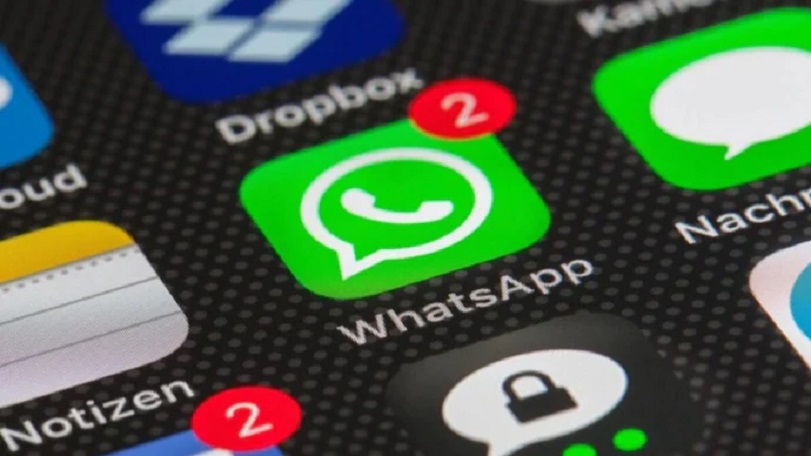
Popular instant messaging service, WhatsApp, has started rolling out a feature that allows users to chat with themselves or save messages. Sending messages to one’s own account can be a way to keep a piece of information easily accessible, right next to other WhatsApp conversations.
Called Message Yourself, the feature lets users send notes, reminders and shopping lists to themselves on WhatsApp.
On Monday, the Meta-owned instant messaging app announced the rollout of the new self-messaging feature that will reach all its Android and iPhone users in the coming weeks.
Users will see their contact at the top of the contacts list on WhatsApp when they create a new chat. Tapping that contact will take them to the chat screen they can use to send messages to themselves.
Although the native feature to message oneself is new on WhatsApp, some users have already been using a workaround for some time. Users can already send messages to themselves using the app’s click to chat feature. Nonetheless, the new offering removes the additional steps that users need to self-chat using the wa.me URL.
Users can also pin their self-chat messages to the top of the conversation list if they don’t want to search for them in their widely polluted chats list.
Rival platform, Signal, already offers a feature called Note to Self that does much the same thing, though it is contained in the user’s contacts list rather than being available at the top.
Telegram also offers a similar feature called Saved Messages that lets users bookmark any important messages as well as save their notes and reminders that can be accessed in the future. Messages, once saved, can be accessed from the top of the chats screen. However, Telegram users initially need to access the feature by tapping the hamburger menu on Android or through the settings menu on iOS.









Key players across Nigeria’s digital economy, telecommunications, and infrastructure ecosystem are set for the National Dig-Once Policy Forum to champion a new course towards increasing Nigeria’s digital backbone network to 125,000km of fibre-optic infrastructure.
The event, which marks the 8th edition of Policy Implementation Assisted Forum (PIAFo), is a high-level industry dialogue aimed at accelerating the formulation and adoption of a National Dig-Once Policy as a critical enabler of safe, coordinated and cost-effective fibre infrastructure deployment in the country.
The forum, themed Accelerating Nigeria’s Digital Backbone: Dig Once Policy, Project BRIDGE and Strategies for Effective Fibre Deployment, is slated for Thursday, April 16, 2026, at Radisson Blu Hotel, Ikeja GRA, Lagos.
According to the organisers, Business Metrics Limited (BML), the introduction of the $2 billion Project BRIDGE initiative by the Federal Government to expand fibre infrastructure by an additional 90,000km from 35,000km to 125,000km by 2030 requires some new measures to ensure the successful implementation of the ambitious target and avoid mistakes of the past.
Industry stakeholders have identified that the success of a national connectivity backbone rollout depends largely on institutionalising a Dig Once Policy framework, which encourages the installation of fibre ducts and conduits whenever roads, railways, and other major public infrastructure are being constructed or rehabilitated.
According to industry data shared by the Nigerian Communications Commission, lack of such a framework is taking a toll on the telecoms sector and broadband drive as operators recorded over 50,000 fibre cut incidents across the country in 2024, with more than 60 per cent occurring during road construction and rehabilitation activities. These disruptions have resulted in billions of naira in repair costs, network outages, and service degradation.
Telecom operators in Lagos State alone said they spent over N5 billion in 2024 to repair and replace damaged fibre infrastructure in the state, while lamenting that the development continues to slow down network upgrade and expansion drive.
Beyond infrastructure damage, telecom operators also face challenges such as high Right of Way (RoW) charges, uncoordinated civil works, and repeated excavation of roads for fibre deployment.
PIAFo 8.0 aims to address these challenges by fostering collaboration among stakeholders responsible for planning, financing, constructing, and maintaining Nigeria’s digital infrastructure.
Specifically, the forum seeks to align federal, state, and local infrastructure planning around a unified Dig-Once framework; strengthen collaboration between telecom operators, infrastructure companies, and public works authorities; translate policy intentions into actionable guidelines and implementation timelines; and build stakeholder support for Project BRIDGE and complementary national fibre initiatives.
Speaking about the event, Team Lead at Business Metrics Limited, Omobayo Azeez, said Nigeria is being denied access to the robust connectivity it should derive from up to eight high-capacity undersea cable networks landed on its shores because of difficulties around terrestrial fibre infrastructure expansion.
“The Project BRIDGE initiative should excite everyone because of its ambitious targets. But for those who understand the operating terrain and why it took the industry over 20 years to achieve around 35,000km of fibre network that the country currently operates for broadband connectivity, the project calls for a major shift in execution approach with the adoption of a National Dig-Once Policy as the starting point.
“PIAFo, now in its 8th edition, is again serving as the viable platform for representatives from government ministries and agencies, senior telecom executives, infrastructure companies, data centre operators, equipment manufacturers, state governments, and industry associations to chart the way forward.”
The forum will feature keynote addresses, expert panel discussions, and strategic networking sessions designed to drive pragmatic outcomes that will accelerate Nigeria’s journey toward a resilient and inclusive digital economy.

By Adedapo Adesanya
The Nigerian government and the Republic of Finland have formalised a strategic partnership on digitalisation and innovation, signing a Memorandum of Understanding (MoU) aimed at expanding economic activities and strengthening cooperation in the digital sector.
The agreement was signed in Abuja by the Minister of Communications, Innovation and Digital Economy, Mr Bosun Tijani, and Mr Jarno Syrjälä, Under‑Secretary of State (International Trade) at Finland’s Ministry for Foreign Affairs.
According to a statement from the Special Assistant on Media and Communications to the communications minister, Mr Isime Esene, the MoU will establish a framework for collaboration across key areas, including digital government, emerging technologies, digital public infrastructure, cybersecurity, innovation ecosystems, and capacity building.
Mr Tijani described the signing as “an important step in strengthening the partnership between both countries as we work to build a more inclusive, innovation-driven digital economy.”
“This agreement is a significant next step following our engagements in Helsinki in February, where we met with key stakeholders, including Finnvera and Finnfund, and held productive discussions on advancing collaboration around digital infrastructure, the Data Exchange Platform, and opportunities for Finnish participation in Project Bridge.”
The Minister emphasised that the partnership would “unlock meaningful opportunities for both countries, enabling us to leverage digital transformation as a catalyst for sustainable growth and shared prosperity.”
Echoing this optimism, Mr Syrjälä said: “Finland is very pleased to deepen its partnership with Nigeria in building resilient, secure, and human‑centric digital societies. Digitalisation is at its best when it empowers people, strengthens trust, and creates new opportunities for innovation.”
“Nigeria is a key partner for Finland in Africa, and this MoU provides a strong basis for concrete cooperation between our governments, institutions, and private sectors. Together, we can advance digital solutions that are interoperable, future‑fit, and beneficial to both our nations,” he added.

By Aduragbemi Omiyale
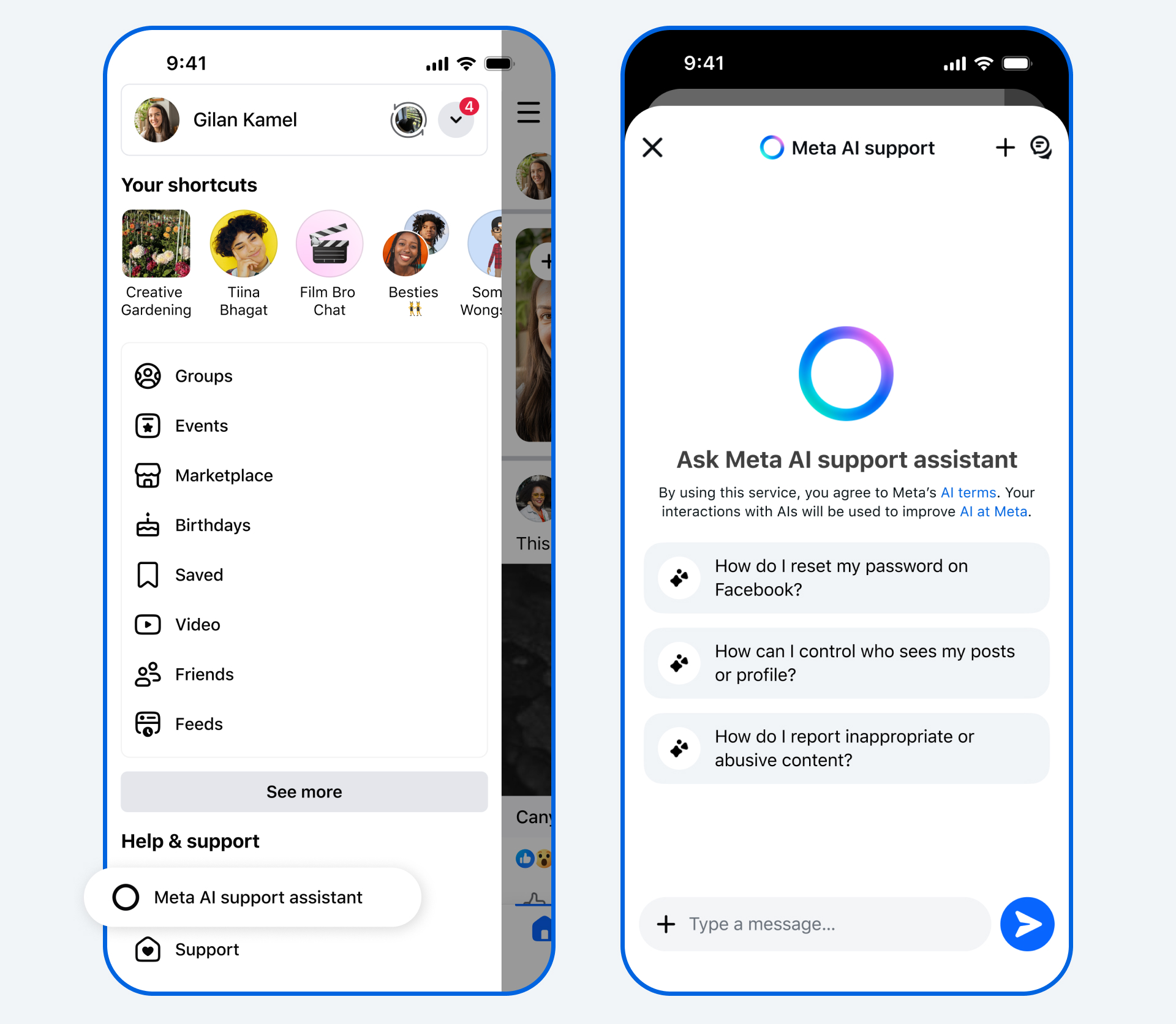
New Artificial Intelligence (AI) tools designed to provide support for users of its applications have been launched by Meta.
The AI Support Assistant will work on the Facebook and Instagram apps, the company said in a statement.
The tools will help users to receive reliable and action-oriented assistance when needed.
In December, the Meta AI support assistant, a tool designed to provide reliable, 24/7 support for nearly any support issue at any time, was previewed.
Now, Meta is rolling it out globally on the Facebook and Instagram apps for iOS and Android, and within Help Centre on Facebook and Instagram on desktop, with even more capabilities and ways to help.
The new Meta AI support assistant is designed to help resolve account problems from start to finish. It offers answers for any question, like notification settings or new features, and can also take action for users on a growing set of requests directly within Facebook and, in the future, on Instagram.
The feature can report scams, impersonation accounts, or problematic content, make it easier to see why content was taken down, provide appeal options, track what happens next, manage privacy settings, reset passwords, and update profile settings.
The Meta AI support assistant can respond to requests typically in under five seconds, dramatically reducing wait times compared to traditional help centre searches or seeking answers on external websites.
“The Meta AI support assistant is a major step in our work to deliver stronger support on our apps. In fact, among people who have provided feedback, the majority report a positive experience with the Meta AI support assistant. It’s rolling out now in all languages supported by Facebook and Instagram for support topics.
“We’re continuing to invest in AI- powered tools to make support more accessible, reliable, and effective — and we’ll keep evolving the Meta AI support assistant as more people use it and as the technology advances, so it continues to improve over time,” the organisation disclosed.
Meta has also deployed AI to improve content enforcement to help users reduce the chance that scammers trick people into giving away their login details, ultimately finding and mitigating 5,000 scam attempts per day that no existing review team had caught before.
Meta said over the next few years, it would be deploying these more advanced AI systems across its apps once they consistently perform better than its current methods of content enforcement, transforming its approach.
“As we do this, we’ll reduce our reliance on third-party vendors for content enforcement and focus on strengthening our internal systems and workforce.
“While we’ll still have people who review content, these systems will be able to take on work that’s better-suited to technology, like repetitive reviews of graphic content or areas where adversarial actors are constantly changing their tactics, such as with illicit drug sales or scams,” it stated.












-
 Feature/OPED6 years ago
Davos was Different this year
-
Travel/Tourism10 years ago
Lagos Seals Western Lodge Hotel In Ikorodu
-

 Showbiz3 years ago
Estranged Lover Releases Videos of Empress Njamah Bathing
-
 Banking8 years ago
Sort Codes of GTBank Branches in Nigeria
-

 Economy3 years ago
Subsidy Removal: CNG at N130 Per Litre Cheaper Than Petrol—IPMAN
-

 Banking3 years ago
Sort Codes of UBA Branches in Nigeria
-

 Banking3 years ago
First Bank Announces Planned Downtime
-

 Sports3 years ago
Highest Paid Nigerian Footballer – How Much Do Nigerian Footballers Earn