Connect with us

Technology

Winners Emerge in NCDMB Local Content Hackathon

Published

on

NCDMB NCI Fund

By Adedapo Adesanya

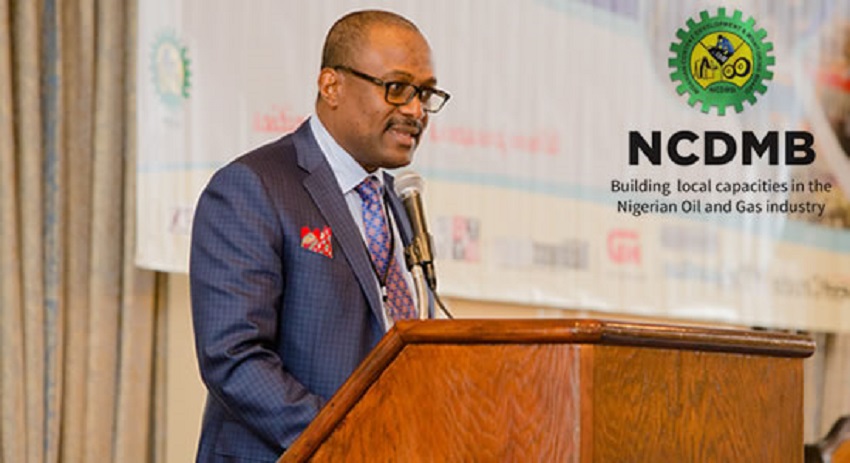
Five teams have emerged as winners in the Nigerian Oil and Gas Technology (NOGTECH) Hackathon sponsored by the Nigerian Content Development and Monitoring Board (NCDMB).

At the event, which was held over the weekend in Lagos, the panel of judges picked projects from Fuel Intellisense, Homefort Energy, Gricd Mote, Kiakia Gas and Airsynq as the most innovative and bankable.

During the grand finale of the programme, which specifically took place on Saturday, 15 semi-finalists made presentations on their innovations.

Each of the five winning teams received a cheque of $10,000 equity-free grant and will proceed to participate in a 3-month incubation programme during which they will get workspace, expert mentors, global partners and market access to the nation’s oil and gas industry, ensuring they become commercial and investor-ready.

Speaking at the event, the Executive Secretary of NCDMB, Mr Simbi Wabote, announced that the board will support the five firms in their product development phase, drawing from the $50 million Nigerian Content Research & Development Intervention Fund.

The board’s support, he said, will go into helping the companies get patents for their innovations and produce prototypes, supporting them to conduct field trials, business start-up as well as provide industry linkages.

He, however, confirmed that the board’s funding would depend on the success of the product incubation phase, stressing that “the goal is to fund bankable businesses, not charities.”

He explained that the sponsorship of the NOGTECH Hackathon is within the board’s mandate, hinting that section 70 of the Nigerian Oil and Gas Industry Content Development Act empowers “the board to engage in targeted capacity and capability development interventions and conduct studies, research, investigation, workshops and trainings aimed at advancing the development of Nigerian content.”

In May 2020, during the height of COVID-19 lockdown, the board announced the event because it saw the opportunity to create a platform for local creation of digital technologies to solve problems for the Nigerian society.

He added that NCDMB was also keen to stimulate the participants to channel their intelligence and become successful entrepreneurs.

Mr Wabote counselled the five winning teams to be clear about their vision and strategy and retain their passion, stressing that their motivation should not be on making quick financial gains, rather on innovating solutions, making a difference and contributing to the society.

According to him, “All the greatest inventors, particularly in the technology space did not start by looking for money as the objective. They started because they wanted to make a difference and create a change. The prize money is not the key factor. It was meant to bring people together.”

“Once you have a passion for anything that you do, you will be successful. But once you put money first, you will be chasing money and it will be running away.”

He also advised other participants of the programme to stay committed, passionate and driven by value, stressing that there were many other routes to push their ideas to the market and the real winners are defined by the marketplace.

One of the winning teams is Fuel Intellisense, a project that will help fuel stations to get accurate data and avoid loss of revenue through syphoning underground fuel or stealing of fuel from different outlets. The project proposes to install a system that can be viewed remotely from anywhere, showing how much fuel was dispensed per day and what is left. The system will be installed on existing pumps and tanks.

Another project is Homefort Energy, which seeks to make cooking gas affordable and accessible to low-income families, whereby they can pay for gas using the pay as you go model. The initiative seeks to help millions of Nigerians, especially the rural poor to switch from using firewood or kerosene to cooking gas.

Another winning project is Gricd Mote and the proponents explained that it would provide cool shade transportation for temperature-sensitive items in the health sector and the oil and gas space and store them in correct conditions. The product will also provide monitoring for temperature humidity and locations of these items.

Kiakiais is another winning product and it seeks to get gas to the end-users while enabling them to know the quantity of gas left in their cylinders so that they don’t run out of gas in their homes. The system will also be used to order for gas and can be deployed by gas plant owners to manage sales in their plant.

The fifth project is Airsynq, a novel idea of balloon lifted satellite that uses helium to stay in flight up to about 2160 hours or about 90 days and having to come down for 24 hours routine maintenance. This technology can provide a year continuous area surveillance, with an artificial intelligence software that can help international oil companies and security teams monitor all the activities around areas where the balloon is deployed. The balloon goes through a routine of checking each image in real-time and then reports every activity that is happening with sensors that are able to pick out images from an altitude of about 3000 metres and with the balloon lifted satellite operating at about 3000 feet above the ground.

NOGTECH is the first-ever technology Hackathon in the Nigerian Oil and Gas industry and it was organized by the NCDMB in partnership with Learners Support Consultancy Company.

The General Manager, Capacity Building Division NCDMB, Mr Ama Ikuru explained that call for entries was made in June in seven thematic areas: health, asset security, tackling cyber threats, renewable energy, skills and talent management and supply chain. He said that a total of 630 entries were received at the close of submission in the third week of July.

The entries were subjected to two stages of review, first from internal NCDMB Judges and then from external judges, before the top 15 teams were selected for the three-day Hackathon.

He revealed that the board was also working on other projects in support of technology development and innovations in the Oil and Gas Industry. Some of the initiatives include the sponsorship of ENACTUS – Science and Technology Innovation Challenge; Establishment of modern Research & Development Centres of Excellence; Upgrade of Laboratories in Universities and Technical and Vocational Education and Training; Active participation in  Technology Expos and NCDMB Research Product Development framework to help inventors attain market penetration.


Adedapo Adesanya is a journalist, polymath, and connoisseur of everything art. When he is not writing, he has his nose buried in one of the many books or articles he has bookmarked or simply listening to good music with a bottle of beer or wine. He supports the greatest club in the world, Manchester United F.C.

Click to comment

Leave a Reply

Your email address will not be published. Required fields are marked *

Technology

Fibre Cuts: Expert Blames Road Construction for 60% of Network Outages

Published

on

Fibre cuts

By Modupe Gbadeyanka

The chief executive of Dimensions Data Limited, Mr Gbenga Olabiyi, has blamed road construction for 60 per cent of network outages caused by fibre cuts.

Speaking recently at the National Dig-Once Policy Forum, which marked the 8th Policy Implementation Assisted Forum (PIAFo), he drew attention to the gap between the infrastructure Nigeria has and what it can actually deliver if a coordinated framework is adopted.

“Nigeria currently has about 35,000 kilometres of fibre in the ground, yet only 16 per cent of Nigerians are connected to it. Broadband penetration stands at 45 per cent. Lagos alone has a penetration rate of over 70 per cent,” Mr Olabiyi said.

He emphasised that the failure to address the missing fibre link over the years has led to saturation of connectivity in urban centres, while the hinterlands are left either unconnected or poorly served.

At the same programme, convened by Mr Omobayo Azeez, stakeholders in the telecommunications sector called for the adoption of the dig-once policy to lower the costs of fibre deployment, reduce infrastructure damage, improve safety, and shorten rollout timelines.

Quoting the Nigerian Communications Commission (NCC), it was noted that of the 50,000 fibre cut incidents recorded in a year, about 30,000, which represents 60 per cent, occurred during road construction and rehabilitation.

Stakeholders thus called for a review of existing road construction and building codes to accommodate the installation of fibre conduits in the original design standard of the infrastructure planning.

“What Dig-Once offers is an opportunity to correct this,” the president of the Association of Telecommunication Companies of Nigeria, Mr Tony Emoekpere, stated.

He added that even operators frequently damage one another’s cables during repeated digging, thus increasing repair costs and service disruptions.

The Deputy Director of Strategic Business Initiatives at ipNX Nigeria Limited, Mr Segun Okuneye, said under the dig-once policy, road contractors should install ducts during construction.

He said the repeated excavation of the road leads to incessant destruction of existing infrastructure and triggers service blackouts with operators bearing additional costs of repair of replacing the fibre.

Also, the chairman of the Association of Licensed Telecom Operators of Nigeria (ALTON), Mr Gbenga Adebayo, said operators should focus not just on digging once but on eliminating unnecessary digging altogether by sharing existing infrastructure and jointly replacing legacy cables.

“Early fibres laid 15 to 20 years ago are now ageing, and the industry needs a plan to replace them without everyone digging the same routes again,” he said.

Continue Reading

Technology

How to Level Up Customer Support Automation Today

Published

on

Customer Support Automation

One of the most powerful ways to modernize a support team is by optimizing support operations with AI automation.

When implemented thoughtfully, automation doesn’t replace human agents—it elevates them.

Less duplicated work‚ resolving issues faster‚ and providing a consistent experience on different channels․

Since there are many content formats in the current content environment‚ the most effective formats for guidelines are those that are structured‚ practical‚ and focused on “what you can actually do,”‚ as opposed to abstract theory․

This article follows that same intent‚ and seeks to document the journey to better customer support automation‚ without mentioning brand names or links․

1. Automate first‑contact triage with smart workflows

One of the common entry points into support automation is to respond to end customers’ requests as soon as they are received‚ rather than making them wait for a human agent to pick up a chat channel or email, as is customary․

This is done through clever workflows that ask a few questions‚ qualify and classify the issue, and recommend a next best action․

This can mean transferring to a human agent‚ directing the user to a specific help article‚ or beginning a guided self-service flow right within the chat․

It reduces the friction to get started and shows customers they are being heard from the first message․

It reduces the burden on agents because they only see tickets that require human judgement․

In the best implementations‚ the bot feels like a helpful assistant and not a hindrance to the customer reaching a resolution․

2. Route tickets with intelligence, not just speed

Responsiveness is still important‚ but smart routing is what takes automation from simple ticketing to responsive‚ scalable support․

Instead of shuffling tickets to the agent available‚ the system can route based on the subject‚ difficulty‚ language‚ or even expected resolution

This way, billing problems are routed to billing experts‚ complaints about product setup are routed to technical experts‚ and routine status inquiries are routed to agents who can handle volume․

For example‚ clever routing could send high-touch or high-stakes tickets to a more senior agent or tickets that ask the same question repeatedly to agents specialized in a specific workflow․

It’s this kind of intelligence that allows teams to be faster and happier when they are thinking of routing-based automation beyond simple round robin distribution․

3. Turn FAQs into self‑service journeys

Another area the current content focuses on is changing the format of FAQs into more interactive self-service experiences that guide customers through flows‚ checklists, or conversational search‚ as opposed to serving them a long list of links‚ making it easier to discover a solution․

This reduces the need to create tickets in the first instance and reduces the support workload by focusing on more high-value ‚ complex interactions․

An organized help center can examine common patterns in failed searches and proactively suggest the most appropriate articles or troubleshooting steps․

It can also serve as the backbone for mini-chatbots that can guide the user through setup‚ configuration‚ or troubleshooting paths without opening a ticket․

When teams invest in AI automation to better support their operation‚ a self-service capability is often one of the first investments made․

4. Automate routine follow‑ups and escalations

In modern ticketing systems‚ the entire life cycle of the ticket from its creation can be automated․

Instead of relying on agents to remember to do a status update‚ a satisfaction survey‚ or an escalation‚ rules can be set up to automate these processes․

For example‚ if a ticket has been placed in the “pending customer reply” state for a specified period of time‚ a notification to the customer can be sent out to remind them‚ or if a complaint has not been resolved within any specified period‚ the ticket can be escalated to a manager․

The result is processes that are always followed‚ never missed SLAs‚ less manual work‚ and agents are freed up from the tedious tracking of time and sending reminders to focus on resolving problems․

A mix of automation and human intervention is often the optimal solution for a better experience for customers and agents alike․

5. Use AI to draft and summarize responses

AI-assisted writing has become the norm to scale support teams‚ with the tool helping staff draft an initial response‚ summarize long email threads‚ and suggest templated replies which agents personalize․

It is especially useful in high-volume or multi-language support environments‚ where replies to common questions must be timely and consistent

This type of automation doesn’t replace agents‚ but acts as a force multiplier for them‚ ensuring that baseline questions are answered correctly and on-brand‚ while still enabling subtlety and empathy in less obvious situations․

Some teams use AI to translate or simplify support communications for different audiences‚ enabling them to support global customers without needing to hire additional staff․

6. Automate onboarding and welcome communications

Automation can also play an important role in onboarding‚ by providing an automated welcome sequence for new customers to help them get set up‚ implement best practices‚ and learn about key features and resources․

These sequences can incorporate email‚ in-app messages‚ and chat prompts to create a cross-channel experience

To the support staff who deal with these customers‚ this reduces the number of “I don’t know where to start” help desk questions that pile up in the first few days after signing up․

Perhaps more considerably‚ walking users through the most important workflows has contributed to increased activation and retention rates

One of the most visible ways to use AI automation in support is by transitioning from firefighting to empowering customers and agents with self-service and insights․

7. Trigger proactive support with behavior signals

An even more advanced form of automation involves proactively reaching out to customers before they reach out to you by identifying usage trends or risk signals based on the way they are using the product․

For example‚ when a user repeats the same action‚ fails to complete a key workflow‚ or is beginning to disengage‚ a system could send a personalized message or offer assistance before the customer churns․

These models may be based on behavioral analytics and artificial intelligence models‚ which have tracked tens of thousands of data points‚ events‚ and user behaviors to identify signals that can be used in a support flow to prevent and surface issues before they arise to improve customer satisfaction․

As well‚ proactive messaging must be finely tuned so as not to be perceived as spam‚ and teams iterate based on feedback and response rates․

8. Automate feedback collection and analysis

Many teams capture this feedback automatically as part of their improvement processes‚ for example‚ automatically sending out a customer satisfaction survey once a ticket is closed or analyzing customer messages to understand the sentiment

This can also support testing‚ benchmarking‚ tracking performance versus targets‚ identifying trends and patterns to tackle, and prioritizing product or process changes․

For support leaders‚ this automation means raw interaction data is transformed into structured insights

Instead of manually reviewing tickets‚ they view dashboards containing information about common problems‚ emerging topics‚ agent performance‚ etc․

Another effective way to improve efficiency in support is through AI automation․

Every interaction can be a learning and improvement opportunity․

9. Integrate omnichannel experiences

Omnichannel integration is a common thread in customer support automation workflows

Customers do not care what channel they are in․

Customers expect the context to move with them as they continue the conversation via chat‚ email‚ phone‚ social media, or in an in-app message

Automation across channels offers the advantage that each interaction builds on prior interactions‚ instead of beginning with a blank slate․

For example‚ if a customer starts a chat conversation and later sends an email‚ we want to show the chat conversation in the history view for the email conversation‚ and vice versa‚ so that the agent doesn’t have to ask the customer for context each time․

This is a feature that differentiates fragmented support experiences from single-threaded experiences‚ and is a common area of focus for teams modernizing their support workflows․

10. Build a feedback‑driven automation roadmap

The best customer support automation is not a single project․

Top teams start by identifying manual activities that take the most time or happen most often‚ and then determine which of those can be fully or partially automated

They roll out gradual changes and analyze their effects in order to improve them based on real-world data․

This roadmap often includes:

  • Pinpointing the top 20% of support scenarios that consume the most time.
  • Designing workflows that combine bots, knowledge bases, and human agents.
  • Continuously monitoring metrics like resolution time, satisfaction scores, and agent workload.

By combining this with a full focus on AI automating support operations‚ your support function can be scaled better

There are options emerging like Ferndesk, which do seem to align with most of these points․

But the fundamental principle remains for any support teams the same: to automate support to be faster‚ smarter, and more human․

Continue Reading

Technology

Can Nigeria Build Enough Solar Panels? TechCartel Breaks Down the New Taxes on Imported Tech

Published

on

New Taxes on Imported Tech

There was a time when a solar panel on a Nigerian rooftop was a luxury, the kind of thing you saw at a hotel or a church with generous donors. That time has passed. Across the country, solar panels have become a defining feature of the skyline, appearing on rooftops and office blocks in nearly every neighborhood. Once viewed as a luxury, solar has transitioned into a fundamental necessity for millions of households and businesses. For many, it serves as the foundation of their daily power needs.

The Federal Government has now moved to change how those panels get into the country, and the implications are landing on an energy market that has quietly built its entire informal infrastructure around imported solar hardware.

According to a detailed breakdown published by TechCartel, one of Nigeria’s most closely watched tech publications for consumer technology, the government is not staging an overnight ban. What it is staging is a structured financial squeeze: higher import taxes on finished solar panels, lower duties on raw materials for local manufacturers, and a 2036 target for 100 percent local production.

The policy timeline started earlier than most people noticed. In March 2025, the Minister of State for Technology, Uche Nnaji, announced a Solar Import Phase-out Roadmap. The stated motivation was the import bill, which crossed ₦200 billion in a single year. By January 2026, the Rural Electrification Agency reported that local manufacturing capacity had grown from 120 MW to 300 MW. On April 1, 2026, the Minister of Finance signed the 2026 Fiscal Policy Measures, formally introducing Import Adjustment Taxes on finished solar goods. A Green Tax Surcharge follows on July 1, 2026.

For anyone who opened an import Form M before April 1, there is a 90-day window to clear goods at the old rate. After that, the new cost structure kicks in. The Secure Energy Project estimates a 15 to 25 percent rise in solar panel prices by late 2026.

New Taxes on Imported Tech

Can Nigerians Still Afford to Power Themselves?

To understand why this policy lands differently in Nigeria than it would elsewhere, you have to understand what the grid has done to Nigerian electricity habits. Years of erratic supply, multi-hour daily outages, and voltage fluctuations that destroy electronics did not produce a population waiting patiently for the government to fix things. It produced a population that fixed things itself.

First came generators, petrol then diesel then gas. Then came inverters with lead-acid batteries, then lithium batteries, and then solar panels added on top to charge them without spending on fuel. The 1 kWh solar generator, once considered a niche product, is now a completely ordinary fixture in small households and one-room businesses. Some call them power stations, and that name has started to feel accurate. Provisions shops, phone repair kiosks, tailoring studios, and barbing salons run on them every single day. They are small enough to sit on a balcony, affordable enough for a two-month savings plan, and powerful enough to run lights, DC fans, and a phone charger without touching a NEPA bill.

The scale goes well beyond individual homes. Petrol stations that once ran generators round the clock have converted their canopy roofs into solar arrays, running hybrid systems where solar handles daytime load and the generator only kicks in at night. Pharmacies, internet cafés, printing shops, and cold rooms powering perishables now run on solar. The solar transition in Nigeria has been market-driven and it has moved fast.

That context is what makes the arithmetic in TechCartel’s breakdown so pointed. Nigeria’s local solar manufacturing capacity stands at 300 MW as of April 2026. The country’s estimated demand for energy stability is 3.7 GW. The gap is over 3,400 MW. Local manufacturers currently price their panels about 16 percent above imported alternatives. As import taxes rise, that gap will narrow, but the timeline is vital. If local capacity grows faster than analysts expect, the transition could be orderly.

The government’s $425 million commitment to eight new manufacturing plants, and the 150 percent capacity growth achieved in a single year, suggest the industrial ambition is real. Nigerian-assembled panels are already being exported to Ghana and Burkina Faso, which signals a manufacturing base serious enough to serve regional demand. The 2036 target is a decade away, but the trajectory is being built now.

For Nigerians planning a solar installation in the coming months, the window is clear. The Form M grace period runs 90 days from April 1. The Green Tax Surcharge begins July 1. Any installation completed before that first wave of cost increases arrives will avoid the opening price shock. After that, the cost of running your own power in Nigeria, already a choice made out of necessity, gets a little harder to justify on a budget.

Continue Reading

Trending