Technology
Xiaomi Offers Nigerians Affordable 5G Smartphones
By Adedapo Adesanya
Following Nigeria’s rollout of fifth-generation (5G) technology this year by MTN, opportunities opened for many to tap into the potential that it presents. On the back of this, phone maker, Xiaomi, is contributing to this by making its impressive 5G products accessible to Nigerians during this ember season.
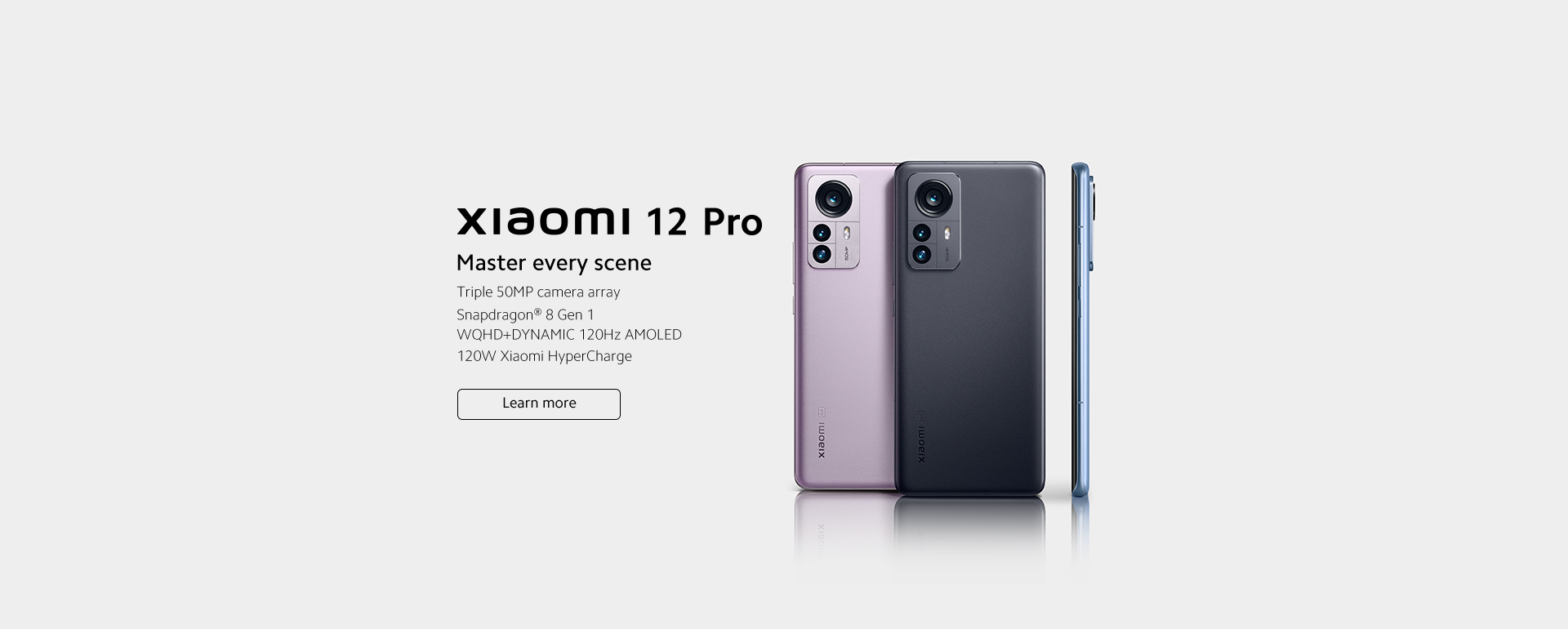
The National Digital Economy Policy and Strategy (NDEPS) emphasises how 5G the country can use digital technologies to realise its digital development agendas. With advanced and highly competitive 5G smartphones, its high-quality 5G compatible smartphones such as the Redmi Note 11 Pro+5G, Xiaomi 12 Pro, and Xiaomi 12T Pro, amongst other products, are listed for the ember month sales.
With the launch of Redmi Note 11 Pro+ 5G, Xiaomi is pushing the legacy of the Redmi Note Series one step further by delivering a performance that exceeds expectations, thereby setting a new standard in the segment. The Redmi Note 11 Pro+ 5G is an enhanced version of the Redmi Note 11 Pro with 5G internet capacity that offers a 6.67” FHD+AMOLED Dot Display, 120Hz high refresh rate, 108MP main camera, 4500mAh battery capacity, 120W HyperCharge, which charges to 100 per cent in 15 minutes and MediaTek Dimensity 920 chipset.
Recall that prior to the introduction of the Redmi Note 11 Pro+5G, the Xiaomi 12 pro smartphone was introduced in several markets globally with 5G internet capacity that offers a 6.73” WQHD+AMOLED Dot Display, prograde 50MP triple camera, 4600mAh battery capacity, 120W HyperCharge which charges to 100 per cent standard mode in 24 minutes.
Also, on 5G, Xiaomi 12T Pro is equipped with the best Snapdragon processor, which is Snapdragon 8+ Gen 1, and is one of the top 5G smartphones with cutting-edge technology sheathed in a sleek and matte tactile body that houses a 200MP image sensor, and a distinctive, tough metal effect around the camera. It offers a 6.67” FHD+AMOLED Dot Display, 120Hz high refresh rate, 200MP main camera, 5000mAh battery capacity, in-screen fingerprint sensor, and AI face unlock.
Considering the attractive discounts during the ember month, you can level up with these high-speed 5G technology smartphones and enjoy the benefit of advanced technologies. Xiaomi’s 5G phones, Redmi Note 11 Pro+5G, Xiaomi 12 Pro, and Xiaomi 12T Pro, are very competitive with strong configurations at an honest price. According to Xiaomi, individuals who purchase Redmi Note 11 Pro+ 5G will get a branded 10,000mAh power bank.
5G produces the fastest-ever mobile network speeds to date and ensures a more reliable performance and a better user experience. Nigerians are also beginning to move into an era where internet users will require a 5G device in other not to miss out on the trend. Hence, this is the best time to jump on the opportunity to grab Xiaomi 5G compatible phones, which are currently among the best smartphones in Nigeria.
Technology
Can Nigeria Build Enough Solar Panels? TechCartel Breaks Down the New Taxes on Imported Tech
There was a time when a solar panel on a Nigerian rooftop was a luxury, the kind of thing you saw at a hotel or a church with generous donors. That time has passed. Across the country, solar panels have become a defining feature of the skyline, appearing on rooftops and office blocks in nearly every neighborhood. Once viewed as a luxury, solar has transitioned into a fundamental necessity for millions of households and businesses. For many, it serves as the foundation of their daily power needs.
The Federal Government has now moved to change how those panels get into the country, and the implications are landing on an energy market that has quietly built its entire informal infrastructure around imported solar hardware.
According to a detailed breakdown published by TechCartel, one of Nigeria’s most closely watched tech publications for consumer technology, the government is not staging an overnight ban. What it is staging is a structured financial squeeze: higher import taxes on finished solar panels, lower duties on raw materials for local manufacturers, and a 2036 target for 100 percent local production.
The policy timeline started earlier than most people noticed. In March 2025, the Minister of State for Technology, Uche Nnaji, announced a Solar Import Phase-out Roadmap. The stated motivation was the import bill, which crossed ₦200 billion in a single year. By January 2026, the Rural Electrification Agency reported that local manufacturing capacity had grown from 120 MW to 300 MW. On April 1, 2026, the Minister of Finance signed the 2026 Fiscal Policy Measures, formally introducing Import Adjustment Taxes on finished solar goods. A Green Tax Surcharge follows on July 1, 2026.
For anyone who opened an import Form M before April 1, there is a 90-day window to clear goods at the old rate. After that, the new cost structure kicks in. The Secure Energy Project estimates a 15 to 25 percent rise in solar panel prices by late 2026.

Can Nigerians Still Afford to Power Themselves?
To understand why this policy lands differently in Nigeria than it would elsewhere, you have to understand what the grid has done to Nigerian electricity habits. Years of erratic supply, multi-hour daily outages, and voltage fluctuations that destroy electronics did not produce a population waiting patiently for the government to fix things. It produced a population that fixed things itself.
First came generators, petrol then diesel then gas. Then came inverters with lead-acid batteries, then lithium batteries, and then solar panels added on top to charge them without spending on fuel. The 1 kWh solar generator, once considered a niche product, is now a completely ordinary fixture in small households and one-room businesses. Some call them power stations, and that name has started to feel accurate. Provisions shops, phone repair kiosks, tailoring studios, and barbing salons run on them every single day. They are small enough to sit on a balcony, affordable enough for a two-month savings plan, and powerful enough to run lights, DC fans, and a phone charger without touching a NEPA bill.
The scale goes well beyond individual homes. Petrol stations that once ran generators round the clock have converted their canopy roofs into solar arrays, running hybrid systems where solar handles daytime load and the generator only kicks in at night. Pharmacies, internet cafés, printing shops, and cold rooms powering perishables now run on solar. The solar transition in Nigeria has been market-driven and it has moved fast.
That context is what makes the arithmetic in TechCartel’s breakdown so pointed. Nigeria’s local solar manufacturing capacity stands at 300 MW as of April 2026. The country’s estimated demand for energy stability is 3.7 GW. The gap is over 3,400 MW. Local manufacturers currently price their panels about 16 percent above imported alternatives. As import taxes rise, that gap will narrow, but the timeline is vital. If local capacity grows faster than analysts expect, the transition could be orderly.
The government’s $425 million commitment to eight new manufacturing plants, and the 150 percent capacity growth achieved in a single year, suggest the industrial ambition is real. Nigerian-assembled panels are already being exported to Ghana and Burkina Faso, which signals a manufacturing base serious enough to serve regional demand. The 2036 target is a decade away, but the trajectory is being built now.
For Nigerians planning a solar installation in the coming months, the window is clear. The Form M grace period runs 90 days from April 1. The Green Tax Surcharge begins July 1. Any installation completed before that first wave of cost increases arrives will avoid the opening price shock. After that, the cost of running your own power in Nigeria, already a choice made out of necessity, gets a little harder to justify on a budget.
Technology
NITDA Warns of Dangerous AI Malware Targeting Banks, Government Agencies
By Adedapo Adesanya
The National Information Technology Development Agency (NITDA) has warned of an active, Artificial Intelligence (AI)-powered malware named DeepLoad targeting financial institutions and government agencies
The organisation warned that the new harmful malware is targeting Nigerian government agencies, financial institutions, businesses, and individuals.
In a tweet on its verified X handle, NITDA revealed that once the virus is executed, DeepLoad silently installs itself, harvests stored user credentials and sensitive data from browsers, evading antivirus software by leveraging AI.
NITDA further stated that upon infection, the malware can result in unauthorised access to bank accounts, mobile money services, and payment cards.
It reiterated that the malware also steals saved passwords, personal information, and documents.
It explained that these thefts enable criminals to impersonate victims for financial gains, disruption of public/private organisations’ workflow via document theft, and ultimately a threat to national security via the compromise of classified governance networks.
The agency outlined that the malware targets public and private institutions, Banks and Financial institutions, Critical infrastructure operators, and individual citizens using online banking and email.
The agency cautioned against pasting links and commands from untrusted websites into your computer or phone’s browser, as legitimate websites do not ask for such.
Technology
NDPC Partners BPP, Governors’ Forum on Data Governance
By Adedapo Adesanya
The Nigeria Data Protection Commission (NDPC) has signed separate Memoranda of Understanding (MoUs) with the Bureau of Public Procurement (BPP) and the Nigeria Governors’ Forum (NGF) to strengthen data protection, privacy compliance, and responsible data governance across Nigeria’s public sector and state institutions.
Speaking during the signing of the MoU with the Bureau of Public Procurement, the National Commissioner/CEO of the NDPC, Mr Vincent Olatunji, commended the leadership of the BPP for prioritising privacy and data governance.
“Data privacy is a global imperative for building trust, confidence, and credibility within the digital ecosystem. The NDPC remains committed to supporting the integration of robust data protection standards within Nigeria’s procurement sector.”
In his remarks, the Director-General of the BPP, Mr Adebowale Adedokun, reaffirmed the bureau’s commitment to ethical data management and compliance with global best practices.
“We recognise that the unlawful disclosure of government information is a criminal offence. As we embrace technology, there is a growing need to strengthen safeguards for the protection of sensitive information.”
As part of the collaboration, Mr Olatunji offered 50 Virtual Privacy Academy vouchers to BPP staff to support capacity development in data protection and privacy. Dr Adedokun welcomed the initiative and proposed broader training opportunities for the Bureau’s 453 procurement officers nationwide.
In a related development, the NDPC also signed an MoU with the Nigeria Governors’ Forum (NGF) to deepen data protection and privacy at the state level.
Speaking at the signing ceremony, Mr Olatunji commended the leadership of the NGF for its readiness to partner with the Commission in advancing responsible data governance at the state level.
“Compliance with data protection obligations is critical to strengthening privacy frameworks across our states, thereby accelerating nationwide adoption, enhancing investor confidence, and foreign direct investment.”
The Director-General of the NGF, Mr Abdulateef Shittu, reaffirmed the Forum’s commitment to strengthening data protection and privacy across the states.
“This partnership with the NDPC is a strategic step towards securing Nigeria’s digital ecosystem and advancing responsible data governance at the subnational level.”
To ensure effective implementation of both agreements, working groups were established by the NDPC with the BPP and the NGF, respectively, to develop actionable frameworks for swift implementation.
-
Feature/OPED6 years agoDavos was Different this year
-
Travel/Tourism10 years ago
Lagos Seals Western Lodge Hotel In Ikorodu
-
Showbiz3 years agoEstranged Lover Releases Videos of Empress Njamah Bathing
-
Banking8 years agoSort Codes of GTBank Branches in Nigeria
-
Economy3 years agoSubsidy Removal: CNG at N130 Per Litre Cheaper Than Petrol—IPMAN
-
Banking3 years agoSort Codes of UBA Branches in Nigeria
-
Banking3 years agoFirst Bank Announces Planned Downtime
-
Sports3 years agoHighest Paid Nigerian Footballer – How Much Do Nigerian Footballers Earn