Connect with us

Travel/Tourism

Ex-Nigeria Airways Workers to be Paid Soon—Minister Assures

Published

on

By Dipo Olowookere

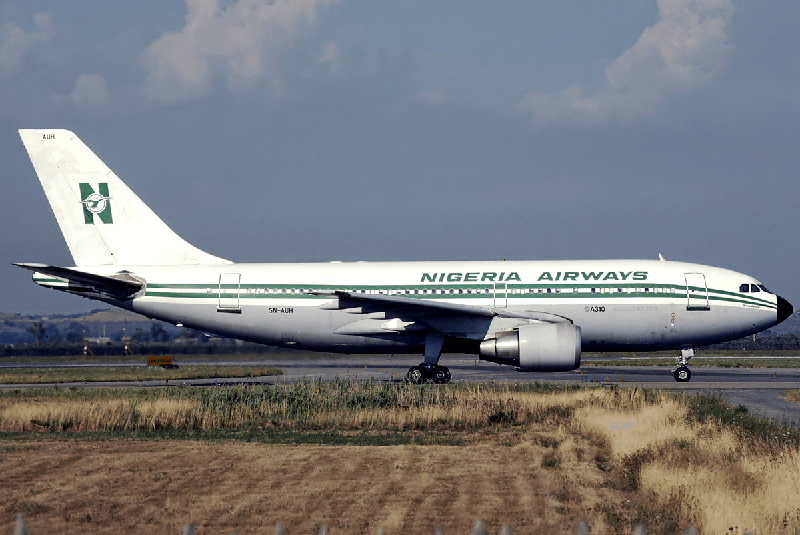
Minister of State for Aviation, Mr Hadi Sirika, has assured former workers of the defunct Nigeria Airways that their N45 billion severance package approved by the Federal Executive Council (FEC) in September 2017 would soon be paid by Federal Government.

Since the money was approved by FEC over three months ago, the beneficiaries were yet to be paid, causing various tensions among them.

Some of them have even lost their lives due to heartbreaks and delay in the payment of the severance package.

This week, some of the former workers of the nation’s national carrier staged a protest in Abuja, calling on the government to pay them their entitlements without delay.

But while reacting to enquiries made by some concerned Nigerians on the matter, the Minister said government was waiting for approval of the National Assembly before paying the former aviation workers.

According to him, he has done his best and that the Minister of Finance, Mrs Kemi Adeosun, has already gone to the parliament to receive an approval to pay-out the money.

“I Have done my bit on WT. The Minister Finance has sent it to NASS. It is due process sir. 16 years they did nothing. I think we’ve tried,” Mr Sirika said on his Twitter page.

Speaking further, the Minister said, “Keep faith, we sincerely feel your pains. Trust me we will do the best on this matter. I am sure it will be soon. Bear with us.”

Nigeria Airways was founded by the Federal Government in 1958 after the dissolution of West African Airways Corporation (WAAC).

It held the name WAAC Nigeria until 1971, when it was rebranded to the name it had until it ceased operations in 2003.

The Nigerian government owned a majority of the airline (51%) until 1961, when it boosted its participation in the company to 100% and made it the country’s flag carrier.

At the time of dissolution, the airline’s headquarters were at Airways House in Abuja. Operations were concentrated at Murtala Muhammed International Airport and served both domestic and international destinations mainly concentrated in West Africa; the network also had points in Europe, North America and Saudi Arabia.

The airline was managed by a number of foreign companies, including British Airways, the Dutch company KLM and South African Airways.

Nigeria Airways had its heyday in the early 1980s, just before the departure of a KLM team that had been hired to make the airline efficient and profitable. At that time, its fleet consisted of about 30 aircraft, but the carrier was two years behind with its accounts to the extent that aircraft were acquired for cash.

Dipo Olowookere is a journalist based in Nigeria that has passion for reporting business news stories. At his leisure time, he watches football and supports 3SC of Ibadan. Mr Olowookere can be reached via [email protected]

Travel/Tourism

Dangote Refinery Slashes Jet Fuel Price to N1,650 Per Litre

Published

on

aviation fuel Jet A1

By Aduragbemi Omiyale

The price of aviation fuel, also known as Jet A1, has been reduced by Dangote Petroleum Refinery and Petrochemicals to N1,650 per litre from N1,750 per litre.

The company, in a statement, said this price slash was done to ease cost pressures on airlines and ensure an uninterrupted fuel supply across the country.

This is in addition to a 30-day interest-free credit facility backed by bank guarantees (BG) for marketers and airline operators and a shift from a dollar-denominated pricing structure to a naira-based model.

The private refiner also stated that these interventions come amid growing concerns over the rising operational costs faced by domestic carriers, with aviation fuel accounting for a significant portion of airline expenses.

Industry stakeholders have repeatedly warned that escalating Jet A1 prices were placing severe financial strain on operators and threatening the sustainability of flight operations.

The refinery’s decision is expected to provide relief to airline operators by lowering fuel procurement costs, improving operational stability, and supporting efforts to moderate airfares.

Continue Reading

Travel/Tourism

Airlines Face Fresh Turbulence Over Jet Fuel Scarcity

Published

on

Jet Fuel Scarcity

By Adedapo Adesanya

The National Association of Aircraft Pilots and Engineers (NAAPE) has revealed that Nigerian airlines are battling a severe jet fuel crisis, triggered by soaring jet fuel prices and supply shortages.

This is the latest blow to the aviation industry, which escaped an industrial action by airline operators over the price of jet fuel.

The latest development is increasing costs, disrupting flights and creating concerns about operational safety and sustainability.

According to Reuters, the persistent scarcity of jet fuel has triggered ⁠widespread operational challenges, including flight delays, route adjustments and extended crew duty periods, as airlines struggle to manage schedules amid rising costs.

According to the President of the association, Captain Bunmi Gindeh, the fuel shortages were pushing crews beyond planned limits, increasing fatigue and potentially eroding safety margins in an industry governed by strict rest regulations.

According to local carrier Rano Air, it revealed that jet fuel prices had more than quadrupled, as well as made some routes commercially unsustainable, forcing operational adjustments.

Other carriers have also begun rescheduling or cancelling flights and cutting unprofitable routes, industry ‌sources ⁠cited by Reuters said.

This comes at a difficult time for Nigeria’s aviation sector, already strained by foreign-exchange volatility, high aircraft maintenance costs, airport infrastructure strains and fuel price swings.

Airlines group, Airline Operators of Nigeria (AON), last month threatened to suspend operations over what they described as crippling and artificially inflated jet fuel prices.

Nigeria’s airline industry carries millions ⁠of passengers annually across an extensive domestic network and plays a critical role in connecting cities where road travel is often slow or insecure, making reliable air services economically and socially important.

The publication reported that the Nigerian Midstream ⁠and Downstream Petroleum Regulatory Authority (NMDPRA) has said fuel prices would not be capped, adding that any decisions on deregulated products would be formally communicated.

The crisis is worsening existing problems in Nigeria’s aviation sector, including forex instability, expensive aircraft maintenance and weak infrastructure.

Continue Reading

Travel/Tourism

FG Unveils Leasing Initiative to Cut Airlines’ Fleet Acquisition Costs

Published

on

aviation workers

By Adedapo Adesanya

The federal government has approved the establishment of a national aircraft leasing company aimed at easing access to modern fleets for domestic airlines and transforming aviation financing in Nigeria.

The minister of aviation and aerospace development, Mr Festus Keyamo, announced the decision after a meeting of the Federal Executive Council (FEC), describing the move as a significant shift in how Nigerian carriers will acquire and finance aircraft.

Mr Keyamo said the proposed company would operate as a private-sector-driven Special Purpose Vehicle (SPV) with government backing.

“This initiative is a game-changer for our aviation industry. It eliminates the long-standing challenges Nigerian airlines face in accessing aircraft on competitive terms and positions the country as a hub for aviation financing in Africa,” he said.

According to the minister, the new platform will allow airlines to source aircraft through a centralised system, replacing the current model where operators negotiate individually with international lessors, often at higher costs and stricter terms.

Mr Keyamo noted that the government’s role would be largely supportive, providing sovereign guarantees to boost investor confidence, while private sector players drive the project.

“Through the Ministry of Finance Incorporated, the government will hold equity and earn revenue without direct financial investment. Our primary obligation is to provide the confidence investors need, especially in ensuring asset security,” he added.

The initiative, he said, has already begun attracting interest from both local and international investors, signalling early confidence in its viability.

Beyond supporting Nigerian carriers, the leasing company is also expected to extend services across West Africa and the broader continent, positioning Nigeria as a regional hub for aircraft leasing.

Airlines in Nigeria have come into focus in recent weeks due to renewed concerns over the financial sustainability of operators, which almost forced them to suspend operations last month. However, the Bola Tinubu-led government approved a 30 per cent relief on debts owed by local ‌airlines to aviation agencies and ordered talks involving fuel marketers, airlines, and ​regulators to reach a ​fair jet fuel price.

Continue Reading

Trending