Connect with us

Travel/Tourism

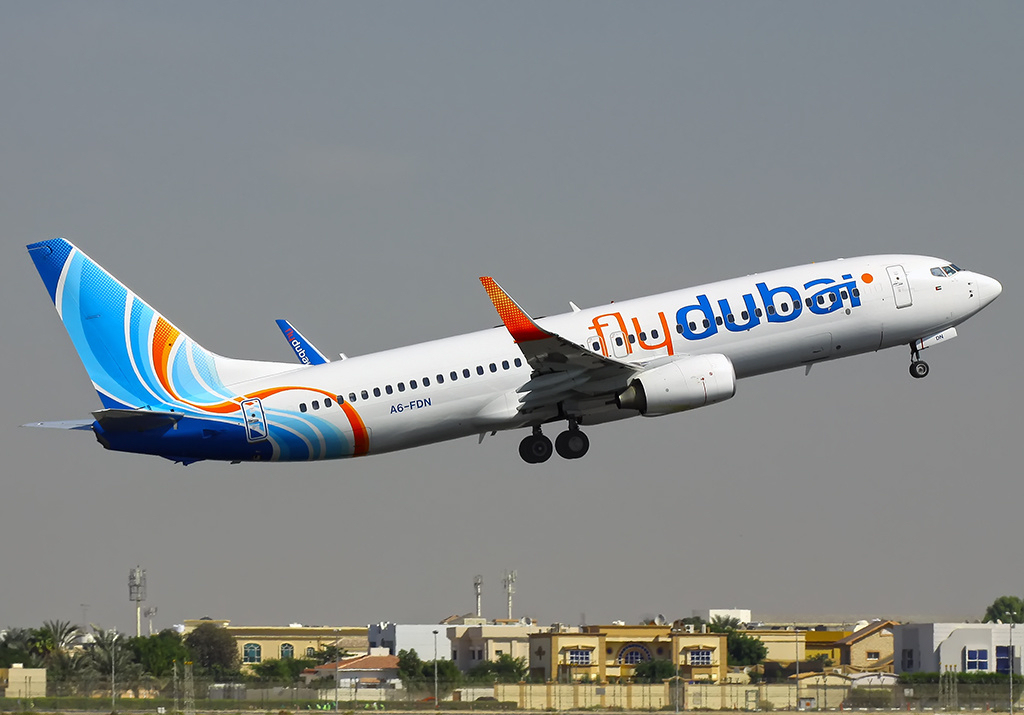
Flydubai Orders for 225 Boeing 737 MAX Aircraft

Published

on

By Modupe Gbadeyanka

The management of Dubai-based airline, Flydubai, has announced a commitment to a $27 billion order for 225 Boeing 737 MAX aircraft to support the growth of its fleet.

This is the third aircraft order placed by the airline with Boeing in its eight-year history and follows orders placed in 2008 and 2013.

This new aircraft order will support its continued expansion within a geographic area that is home to 2.5 billion people.

The airline by the end of the year will have a fleet of 61 Next-Generation Boeing 737-800 aircraft and Boeing 737 MAX 8 aircraft. In addition, there is a pipeline of 70 aircraft due for delivery by 2023.

Sheikh Ahmed bin Saeed Al Maktoum, Chairman, flydubai, commented on the aircraft order and said: “Today’s aircraft order underlines the success of flydubai’s founding vision helping to strengthen trade and tourism links across its network and has contributed to the enhanced connectivity of Dubai’s aviation hub. In under a decade, flydubai has extended its network to 97 destinations in 44 countries and we look forward to the arrival of the new aircraft from 2019 in support of our future ambitions.”

With this announcement, it will bring the total number of aircraft the airline has on order to 320.

Ghaith Al Ghaith, Chief Executive Officer, flydubai added: “Today marks the next chapter in flydubai’s success story. Since we launched in 2009, flydubai has opened up 67 previously underserved markets serving our passengers across the region. We welcome the continuation of our long partnership with Boeing. We ordered this aircraft model as it has given us the versatility and flexibility to carry 44 million passengers since our first flight.”

“We are extremely honored that flydubai has selected to be an all-Boeing operator for many years to come. This record-breaking agreement builds on our strong partnership with flydubai and the other leading carriers of this region,” said Boeing Commercial Airplanes President & CEO Kevin McAllister. “With flydubai’s proven business model and ambitious growth plans, we look forward to hundreds of flydubai 737 MAXs connecting Dubai with the rest of the world.”

flydubai was established in 2008 to create opportunities for travel, tourism and trade within the flying radius of its fleet of Next-Generation Boeing 737-800 and Boeing 737 MAX 8 aircraft.


Modupe Gbadeyanka is a fast-rising journalist with Business Post Nigeria. Her passion for journalism is amazing. She is willing to learn more with a view to becoming one of the best pen-pushers in Nigeria. Her role models are the duo of CNN's Richard Quest and Christiane Amanpour.

Click to comment

Leave a Reply

Your email address will not be published. Required fields are marked *

Travel/Tourism

Airlines Fault Claims of Unpaid NCAA Regulatory Fees

Published

on

Modular Refinery for Aviation Fuel

By Adedapo Adesanya

The Airline Operators of Nigeria (AON) has denied owing cost recovery charges to the Nigeria Civil Aviation Authority (NCAA), insisting that all services rendered by the regulator to domestic airline operators are paid for fully in advance on a cash-before-service basis.

In a statement from the airlines’ body, it was emphasised that no domestic airline in Nigeria receives NCAA regulatory services without first making full payment of invoices issued to it by the agency, describing suggestions of the indebtedness for regulatory services as factually inaccurate.

It said that what the NCAA refers to as ‘outstanding charges’ relates solely to the 5 per cent Ticket Sales Charge (TSC), a tax imposed by the NCAA on passengers, which it said is not in consonance with the dictates of international aviation.

The AON then urged the federal government to urgently amend the Civil Aviation Act to empower the NCAA to collect whatever appropriate fees and charges are due it directly from passengers or whoever else, without routing such through the domestic airlines, from June 1, 2026.

It said doing this will relieve domestic airlines of the financial burden of acting as collection agents for the NCAA, since airlines currently bear banking transfer charges and other transaction costs in the process of transmitting funds to the organisation.

The airline body reiterated its position that the NCAA is a regulator, not a revenue-generating agency and that it does not fund any aspect of the airline businesses or render any direct service to passengers.

The AON said every service the agency provides to airline operators is fully paid for in advance before it is rendered.

“The AON notes that several member airlines maintain dedicated accounts, from which the NCAA draws down its monthly remittances, until the force majure caused by the Iran-Israel/USA conflict, which had put a lot of financial pressure on airlines worldwide.

“Notwithstanding this arrangement, the AON had formally appealed to the federal government through the office of the Minister of Aviation and Aerospace Development, to suspend the payment of all statutory charges temporarily, as an interim measure to assist airlines in managing their cash flows during the current period of severe financial stress caused by the increase in the cost of Jet A1.

“As an interim response, President Bola Tinubu graciously granted a 30 per cent concession while waiting for the government’s decision on the other aspects of the AON intervention request.

“While the AON acknowledges and appreciates this gesture, we had appealed for a meeting with Mr President to discuss further reliefs, a request that is yet to be granted,” the AON said.

Speaking further on reports that airlines owe billions in debt to the NCAA, the AON said the 5 per cent Ticket Service Charge in question was introduced over 45 years ago under the Government of General Gowon by the then Federal Civil Aviation Authority (FCAA) and its continued relevance has not been reviewed ever since.

It further stated that domestic airlines, in addition to the 5 per cent TSC, still pay separately ànd directly for services provided by the various industry agencies, including the NCAA itself.

AON said that the 5 per cent TSC is an ad valorem tax applied to an airline’s gross earnings, not profits and that the global aviation industry operates at a profit margin of between 1.5 per cent and 2.5 per cent at best.

“The AON remains committed to constructive engagement with the government and all stakeholders to achieve a growth-oriented sector, designed to enable the accelerated growth of key sectors of the economy and the improvement and sustenance of a healthy quality of life for the citizenry,” it said.

Continue Reading

Travel/Tourism

Airline Remittances: NCAA Halts Enforcement of ‘No Pay, No Service’ Policy

Published

on

NCAA

By Adedapo Adesanya

The Nigeria Civil Aviation Authority (NCAA) has announced the temporary suspension of its “no pay, no service” directive earlier issued to airlines with outstanding statutory remittances, citing ongoing consultations and prevailing operational challenges in the aviation sector.

In a statement, the authority said the decision followed a review of industry conditions, particularly the rising cost of aviation fuel, which has placed significant financial pressure on domestic carriers and threatens overall sector stability.

However, the NCAA stressed that the suspension does not amount to a waiver, cancellation, or forgiveness of the debts owed by the affected airlines, noting that such decisions fall outside its regulatory mandate.

The agency recalled that President Bola  Tinubu had earlier approved a 30 per cent discount on outstanding statutory charges owed by domestic airlines to aviation agencies, as part of broader government efforts to cushion the impact of high Jet A1 fuel costs and stabilise the industry.

According to the NCAA, airlines remain fully responsible for settling their obligations, adding that it would engage operators individually to ensure compliance through structured repayment arrangements that do not disrupt operations.

The regulator also clarified the nature of the 5 per cent Ticket and Cargo Sales Charge, describing it as a statutory levy mandated by the Civil Aviation Act and embedded in the cost of air travel and cargo services.

It explained that the charge is collected by airlines at the point of ticket and cargo sales on behalf of the aviation system and must be remitted accordingly.

The organisation emphasised that the funds do not constitute revenue or profit for the airlines and should not be treated as such.

It further noted that the revenue from these charges is distributed among key aviation institutions, including the regulator itself and other service providers, all of which play vital roles in ensuring safe, efficient, and internationally compliant aviation operations.

It added that the NCAA operates on a cost-recovery basis and does not receive direct funding from the Federal Government for its routine regulatory activities, making timely remittance of statutory charges critical to sustaining its oversight functions.

The suspension of the enforcement directive, it said, is a measured step aimed at maintaining operational stability in the sector while reinforcing the obligation of airlines to remit collected charges.

The NCAA reaffirmed its commitment to balancing regulatory enforcement with industry sustainability, warning that statutory funds already collected must be remitted for their intended purposes.

Continue Reading

Travel/Tourism

Emirates Skywards Commences ‘Season of Rewards’ Campaign

Published

on

Emirates Skywards

By Modupe Gbadeyanka

A new campaign designed to celebrate its passengers across the globe has been launched by Emirates Skywards, a statement from the company confirmed.

The promotion is known as Season of Rewards, and will run from May 21 to August 31, 2026, with beneficiaries getting different rewards for their patronage.

The Skywards Season of Rewards offers more savings with Cash+Miles on Emirates and flydubai, with members unlocking twice the savings, including enhanced Cash+Miles rates across the Emirates and flydubai network when booking flights and extras (excess baggage, lounge access and seat selection. The offer applies across all classes of travel, fare brands and destinations on both airlines. With the limited-time offer, 2,000 Skywards Miles can unlock savings of $30 instead of $15.

In addition, passengers will receive extra tier benefits for travel up until August 31, 2026. Members earn a 20 per cent bonus Tier Miles on every Emirates or flydubai flight, helping members move through the tiers faster. With reduced Tier Miles required during this period, it’s now even easier for members to renew or upgrade their membership status.

Also, they will get 50 per cent bonus Miles with travel partners, including Emirates Skywards Hotels, Marriott Bonvoy, IHG Hotels and Resorts, Jumeirah and more. However, registration is required to participate, and bonus Miles will be credited within 60 days after the end of the offer period.

Further, Skywards members can book their next reward flight and extras with Miles, starting from 4,500 Miles instead of 9,000 Miles during the promo period across all routes, cabins and fares.

“Skywards Season of Rewards reflects our continued commitment to creating even more value for our members worldwide.

“Whether members are planning a family holiday, a Dubai stopover, a weekend escape, or simply looking to maximise rewards across their travel spend – this initiative unlocks more opportunities to earn, save and experience the world with Emirates Skywards,” the DSVP Emirates Skywards, Nejib Ben Khedher, said.

Continue Reading

Trending