Travel/Tourism
Radisson Hotel Expands Hospitality Franchise to Djibouti
By Adedapo Adesanya
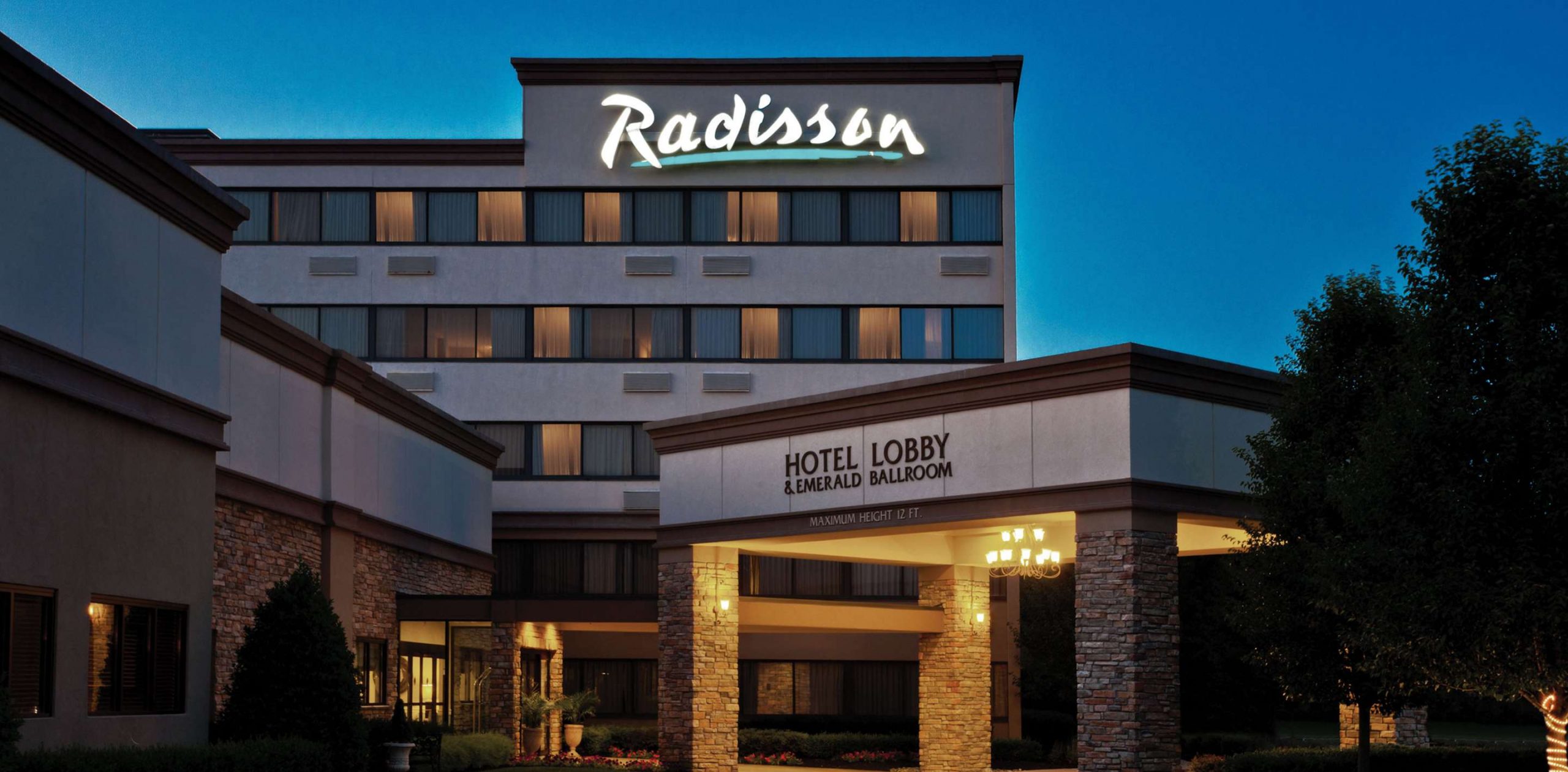
Leading hospitality franchise, Radisson Hotel Group, has announced the continuous African expansion of its outfit to Djibouti with the signing of Radisson Hotel Djibouti in partnership with Salaam Properties.
The hotel marks the group’s entry into the country and brings its East African portfolio to 18 hotels and over 2,700 rooms in operation and under development, strengthening its strategic position in the region.
This new signing further underscores the group’s presence as the hotel company is active in most countries on the African continent with close to 100 hotels in operation and under development.
The expected 144-room hotel, scheduled to open in 2024, will comprise not only modern standard rooms and suites, but will also have accessible rooms, designed for wheelchair access. Dining options will include light snacks at the lobby café, international and local cuisine at the all-day-dining restaurant, and refreshing drinks at the poolside juice bar.
Also boasting an expansive meetings and events area, the hotel will offer a variety of versatile venues, including a ballroom, five meeting rooms, a pre-function area, as well as break out areas. The leisure facilities will include a spa, gym, and an outdoor swimming pool.
The hotel noted that it is picking Djibouti because its strength lies in its strategic location at the southern entrance to the Red Sea, forming a bridge between Africa and the Middle East.
Just 15 minutes away from Djibouti International Airport, Radisson Hotel Djibouti will be located in the heart of the city, surrounded by key infrastructures such as the Djibouti Port, Djibouti Free Zone, international headquarters, shopping malls and the seaside, providing the ideal base for business and leisure.
Speaking on this, Mr Erwan Garnier, Senior Director, Development, Africa, Radisson Hotel Group said: “We are delighted to mark our entry into Djibouti with Radisson, currently our fastest-growing upscale brand in Africa.
“With its existing limited branded hotel supply, we are confident that Radisson Hotel Djibouti will be the country’s leading internationally branded hotel.
“Along with our partners, Salaam Properties, we are proud to be contributing to the Djibouti Vision 2035 strategy for economic diversification which relies strongly on the growth of the tourism industry.”
On her part, Ms Fatima Zahra, Manager, Salaam Properties, the hotel’s owning company, said: “We are thrilled to be contributing to the growth of the region’s upscale tourism industry, together with our partners, Radisson Hotel Group. We are confident that Radisson Hotel Djibouti will help boost the capital’s economy through hundreds of jobs created both directly and indirectly, a significant achievement, especially during these challenging times the world is witnessing.
“The hotel is another great milestone in Salaam Properties’ successful investments within Djibouti’s burgeoning tourism sector. The country truly is a leading regional tourism and economic hub with significant potential to be further explored.”
Djibouti is a key market in East Africa due to its port complex, considered one of the most sophisticated in the world at the intersection of major international shipping lanes connecting Asia, Africa, and Europe.
Radisson Hotel Group added that its top priority is the continued health, safety and security of its guests, team members, and business partners.
The group applies its Radisson Hotels Safety Protocol created in collaboration with SGS, the world’s leading inspection, verification, testing and certification company, and recently unveiled its new comprehensive testing program as the first hotel group to roll out a rapid testing service for meeting and event attendees at properties across its Europe, the Middle East and Africa (EMEA) portfolio.
Travel/Tourism
FG Unveils Leasing Initiative to Cut Airlines’ Fleet Acquisition Costs
By Adedapo Adesanya
The federal government has approved the establishment of a national aircraft leasing company aimed at easing access to modern fleets for domestic airlines and transforming aviation financing in Nigeria.
The minister of aviation and aerospace development, Mr Festus Keyamo, announced the decision after a meeting of the Federal Executive Council (FEC), describing the move as a significant shift in how Nigerian carriers will acquire and finance aircraft.
Mr Keyamo said the proposed company would operate as a private-sector-driven Special Purpose Vehicle (SPV) with government backing.
“This initiative is a game-changer for our aviation industry. It eliminates the long-standing challenges Nigerian airlines face in accessing aircraft on competitive terms and positions the country as a hub for aviation financing in Africa,” he said.
According to the minister, the new platform will allow airlines to source aircraft through a centralised system, replacing the current model where operators negotiate individually with international lessors, often at higher costs and stricter terms.
Mr Keyamo noted that the government’s role would be largely supportive, providing sovereign guarantees to boost investor confidence, while private sector players drive the project.
“Through the Ministry of Finance Incorporated, the government will hold equity and earn revenue without direct financial investment. Our primary obligation is to provide the confidence investors need, especially in ensuring asset security,” he added.
The initiative, he said, has already begun attracting interest from both local and international investors, signalling early confidence in its viability.
Beyond supporting Nigerian carriers, the leasing company is also expected to extend services across West Africa and the broader continent, positioning Nigeria as a regional hub for aircraft leasing.
Airlines in Nigeria have come into focus in recent weeks due to renewed concerns over the financial sustainability of operators, which almost forced them to suspend operations last month. However, the Bola Tinubu-led government approved a 30 per cent relief on debts owed by local airlines to aviation agencies and ordered talks involving fuel marketers, airlines, and regulators to reach a fair jet fuel price.
Travel/Tourism
Passengers to Enjoy Starlink Wi-Fi on Emirates’ Flagship A380
By Aduragbemi Omiyale
Air travellers flying through Emirates will enjoy Starlink Wi-Fi onboard after the completion of the installation of the internet service on the company’s flagship A380.
The introduction of Starlink on the A380 builds on Emirates’ ongoing investment into redefining the customer journey, including one of the most ambitious retrofit programmes in aviation history.
The airline operator recently test-run this on a flight to Dubai, and it allowed passengers to enjoy seamless broadband while flying at 40,000 feet.
The Emirates A380 was one of the first commercial aircraft in the world to offer internet to its customers, with first-generation systems offering a total aircraft bandwidth of less than 1 Mbps. The installation and certification were accomplished in Newquay, UK.
With more A380s scheduled for accelerated installation throughout 2026, Emirates customers will soon enjoy a transformative leap in onboard connectivity with the ability to stream, game, browse, and work throughout their journey on personal devices.
The service will be complimentary for all customers, across all cabins, with easy sign-up and access. Future enhancements will include Live TV streaming over Starlink, initially on personal devices and later integrated into seatback screens.
So far, more than 650,000 Emirates customers have already flown on Starlink‑equipped flights, experiencing the benefits of next‑generation onboard connectivity firsthand.
As the world’s largest passenger aircraft, the A380 presents unique engineering challenges and opportunities. This industry-first Starlink configuration is designed to meet the demands of the A380’s ‘double-decker’ layout and high passenger capacity and is capable of delivering more than 2 Gbps of total aircraft bandwidth across the cabin.
Compared with the Emirates Boeing 777, the Emirates A380 features additional wireless access points and a third antenna to deliver an enhanced connectivity experience for its higher passenger capacity. Optimised inter‑deck integration supports a seamless Wi‑Fi experience, with customers able to enjoy high speeds depending on usage and device capability.
Starlink installations will soon begin at Emirates Engineering facilities in Dubai to accelerate deployment across the fleet.
Emirates is committed to bringing the best possible connectivity to its entire fleet at the earliest opportunity, with 25 Boeing 777-300ER aircraft already equipped with Starlink and the first A380 now joining service.
Travel/Tourism
Nigeria Caps Jet Fuel Prices, Allows Airlines Buy on Credit to Avert Disruptions
By Adedapo Adesanya
The Nigerian government is capping jet fuel prices and allowing airlines to get supplies on credit as part of efforts to avert flight disruptions caused by soaring fuel costs.
Reuters reported that the Nigerian Midstream and Downstream Petroleum Regulatory Authority (NMDPRA) said in an internal document that aviation fuel should sell for N1,760 to N1,988 ($1.29 to $1.46) per litre in Lagos and N1,809 to N2,037 in Abuja, based on benchmarks from April 17 to April 23.
The decision follows emergency talks after airlines threatened to go on a strike, warning that jet fuel prices had jumped by more than 300 per cent, forcing fare increases and raising the risk of capacity cuts.
The strike was averted after the federal government met with the Airline Operators of Nigeria (AON) and other stakeholders.
President Bola Tinubu last week approved 30 per cent relief on airlines’ debts to aviation agencies and ordered fuel marketers, airlines and regulators to agree on a “fair” fuel price within 72 hours to prevent the sector-wide shutdown that would have impacted the country’s economy.
The talks also agreed to grant airlines a 30-day credit window to pay for fuel and tasked the aviation ministry with mediating debt disputes between operators and oil marketers, according to the document.
The NMDPRA also formed a technical committee, which recommended that fuel marketers sell directly to airlines within the indicated price range to cut costs and improve supply-chain transparency.
The committee also urged regulators to engage Dangote Petroleum Refinery and Petrochemicals over the increased premiums applied to international benchmarks used to price jet fuel.
Other recommendations include validating airside fuel distributors with adequate infrastructure, potentially reducing the number of authorised suppliers at airports, and considering jet fuel for Nigeria’s Crude-for-Naira initiative to limit airlines’ foreign exchange exposure. So far, the Crude-for-Naira has only been for upstream operations.
The cost of fuel has generally risen in the last two months due to the escalating war with Iran by the US and Israel, which has triggered one of the most severe energy shocks in decades. Oil prices are currently above $100 per barrel as markets react to escalating tensions and the risk of prolonged disruption.
At the centre of the crisis is the Strait of Hormuz, a chokepoint through which roughly one-fifth of global oil supply flows. With shipping constrained, the effects are cascading across the global economy, raising fuel costs, fueling inflation, and increasing the risk of economic slowdown across many economies. This is forcing airlines to raise fares, curb growth plans and rethink forecasts.
-
Feature/OPED6 years agoDavos was Different this year
-
Travel/Tourism10 years ago
Lagos Seals Western Lodge Hotel In Ikorodu
-
Showbiz3 years agoEstranged Lover Releases Videos of Empress Njamah Bathing
-
Banking8 years agoSort Codes of GTBank Branches in Nigeria
-
Economy3 years agoSubsidy Removal: CNG at N130 Per Litre Cheaper Than Petrol—IPMAN
-
Banking3 years agoSort Codes of UBA Branches in Nigeria
-
Banking3 years agoFirst Bank Announces Planned Downtime
-
Sports3 years agoHighest Paid Nigerian Footballer – How Much Do Nigerian Footballers Earn