Connect with us

World

First-hand Account of American Businesswoman at US-Africa Leaders’ Summit

Published

on

American businesswoman US-Africa Leaders' Summit

By Robin Tolkan-Doyle and Kestér Kenn Klomegâh

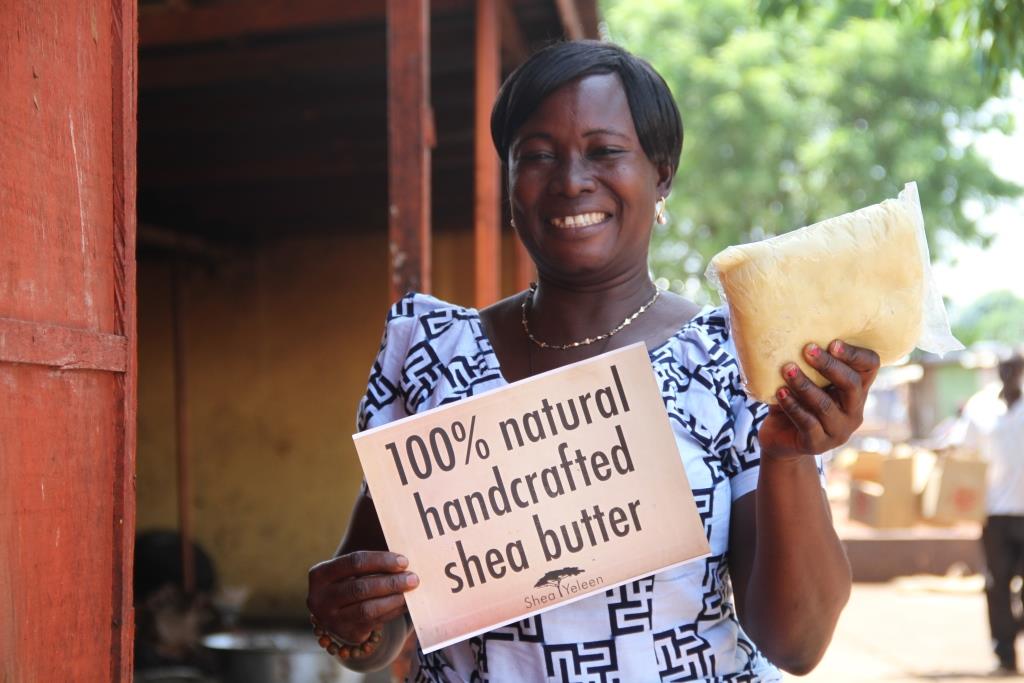
On December 14, Rahama Wright, founder/CEO of Shea Yeleen Enterprises (Shea Yeleen and the Yeleen Beauty Makerspace), took part in the Prosper Africa Deal Room at the US-Africa Leaders’ Summit in Washington DC to address leading US and African businesses, investors, and government leaders about fostering economic and community development between both nations through the beauty ingredient supply chain in Africa, and the positive environmental impact of social enterprise.

Her beauty brand, Shea Yeleen, makes premium natural shea butter skincare products that nourish the skin and empower its producers in northern Ghana. Since 2003, Rahama has worked at the intersection of beauty, business development, and policy and is passionate about creating opportunities for women in the United States and Africa.

Wright is currently developing the Yeleen Beauty Makerspace, a co-manufacturing space for early-stage beauty entrepreneurs in Washington, DC. The Makerspace will create 200 jobs in an underserved area of the nation’s capital and provide a platform for a new wave of business owners to develop skills and scale production, disrupting an industry in which Black-owned brands generate revenue less than a quarter of what Black consumers spend. This manufacturing facility will be the first commercial shared facility designed to support women and founders of colour in the beauty industry in the United States.

Wright has served on the President’s Advisory Council on Doing Business in Africa since 2014. She previously served in the Peace Corps and has been a guest speaker at the United Nations, State Department State, World Bank, Global Entrepreneurship Summit, and the Sustainable Brands Conference.

During the US-Africa Leaders’ Summit held here in Washington, Robin Tolkan-Doyle and Kestér Kenn Klomegâh had the chance to talk with her about the changing Africa’s business landscape and how she has uniquely positioned herself as a change-maker through the multi-billion dollar beauty industry. Here are the excerpts from the snapshot interview:

Why is the Prosper Africa Deal Room at the US-Africa Leaders Summit in Washington important for you?

The Deal Room is an incredible opportunity to amplify our work to create inclusive African supply chains in the US beauty industry. We are joined by one of our cooperative partners, Gladys Petey and Deputy Mayor John Falcicchio. The summit offers us an opportunity to promote business and forge new connections with African leaders. It is also a platform for gauging and setting a goal of empowering African women through the production and sale of natural beauty products. Our company already sources its shea butter from women-owned cooperatives in Burkina Faso and uses a portion of its profits to fund education and entrepreneurship programs for women.

By the way, what are the driving reasons and motivating factors for starting women’s beauty brands?

Women in Africa have been contributing to the global beauty industry as raw material suppliers. By helping them develop value-added ingredients and connecting those ingredients to beauty manufacturing in DC, we will increase their wages and create better jobs. Additionally, working with early-stage beauty businesses led by founders of colour creates opportunities for residents in DC. It’s a win-win partnership that propels more investment in underserved communities and increases market share for women entrepreneurs in the $60 billion US beauty industry.

Building a successful business requires certain qualities. What challenges do you envisage in the landscape? Can you share a bit of these with our audience or readers?

Our goal is to address inequality in the beauty industry by creating better jobs for African suppliers and supporting new and growing beauty brands in DC. We know, of course, there are existing challenges to overcome. Our biggest challenge is how to create jobs in an underserved area across Africa, connect with a new wave of business owners to develop skills and scale production, and raise an industry in which Black-owned brands generate revenue. We are passionate about helping businesses succeed in Africa.

Ensuring you have the endurance and persistence to build a successful business is very important because success often does not happen overnight. Staying powerful requires a true commitment and passion for the solution you are bringing to market. This challenge requires the visionary to make sure they have balance and the right support network and systems around them.

Another challenge is access to the right capital to invest in growing your business. Money flows through people, so it’s key to have trusted relationships that create the right networks to access the right sized capital for your business. The last challenge I will touch on is hiring the right team and talent. Finding the people who have both the skill set and the commitment to help grow a business can sometimes feel impossible. It requires having a clear recruiting and onboarding process and effectively vetting each candidate.


World

AfDB Projects Africa’s Growth to Slow to 4.2% in 2026

Published

on

AfDB Board

By Adedapo Adesanya

Africa’s economic growth is expected to slow slightly to 4.2 per cent this year from 4.4 per cent last year, the African Development Bank (AfDB) said.

The drop is expected to occur as Middle East tensions push up fuel and food costs, before picking up again in 2027.

The AfDB said in its annual outlook published on Tuesday that despite last year’s shocks ‌from trade and geopolitical tensions, the continent remained one of the world’s fastest-growing regions alongside Asia, outpacing Europe and Latin America.

Last year’s growth of 4.4 per cent was driven by higher farm output, improved macro-economic policies and higher commodity prices.

The Abidjan-based regional development bank said it expected growth next year to return to 4.4 per cent, with forecasts ⁠based on the assumption that the Middle East shock will last for two to three months.

“The impact of this shock on growth and macroeconomic stability will depend on the duration of the supply chain disruptions and their effects on global energy and fertiliser prices,” it said in the report.

East Africa, the continent’s fastest-growing region, is forecast to slow this year by more than half a percentage point as the crisis drives up energy and import costs and worsens food security risks.

The report was released at the bank’s annual meeting in Brazzaville, the capital of the Republic of the Congo, which is focusing ‌on ⁠ways of harnessing regional capital pools to fund its development needs.

It comes as Congo’s neighbours, the Democratic Republic of Congo, battle the resurgence of the Ebola virus, which has raised concerns.

However, AfDB and the host government ⁠have reassured delegates that there are no cases in the country so far, and authorities are conducting surveillance in line with the World Health Organisation (WHO). guidelines.

The President of the lender, Mr Sidi Ould Tah, who took over the bank’s top job last September, has made securing ⁠development finance for the continent from its own savings under a plan known as NAFAD, a key plank of his presidency, which started as overseas development aid started dwindling.

“Achieving sustained and inclusive growth ⁠will require a substantial increase in investment,” Mr Tah said in the report.

Mr Tah said Africa must raise its annual growth rate to more than 7 per cent and sustain it for decades, in order to create the large number of jobs needed and cut poverty.

Continue Reading

World

Russia, Tanzania Boost Bilateral Economic Ties

Published

on

Russia Tanzania

By Kestér Kenn Klomegâh

From Africa’s perspectives on attaining economic sovereignty, Tanzania, located in East Africa, has seriously begun showing the investment model as Russia pledges tremendous support during the meeting of the Russian-Tanzanian intergovernmental commission in Arusha, in mid-May 2026. Russia is undertaking various development projects as well as addressing bilateral issues relating to investment, trade and innovation on the African continent, and described Tanzania as the gateway to the broader East African region.

Step 1:  Gazprom is interested in implementing comprehensive gas projects in Tanzania, according to the report issued by the Ministry of Economic Development. It says Gazprom, in addition to selling natural gas, LNG, and petrochemical products, is ready to supply technologies and equipment for gas production, processing, transportation, and sales. It says Gazprom is continuing its work on a pilot project launched last year to supply two mobile gas tankers to Tanzania.

NOVATEK has also indicated its preparedness to participate in natural gas exploration and production projects in Tanzania, and for now, the staff are awaiting information on the date of the fifth round of license allocation for exploration blocks, as well as on the acquisition of blocks outside the tender process—specifically, at the Ntorya field. “Tanzania has significant resource potential, and the economy’s growing demand for electricity and fuel opens up significant opportunities for joint projects. The current situation in the Strait of Hormuz compels us to seek new solutions to ensure that it does not reduce economic growth on the African continent, and particularly in Tanzania,” said Maxim Reshetnikov, head of the Ministry of Economic Development, speaking at a meeting of the Russian-Tanzania intergovernmental commission in Arusha.

Step 2: Russia and Tanzania plan to sign a memorandum of cooperation in tourism in Moscow. In June, as part of the “Travel!” forum in Moscow (June 10-14), the Tanzanian delegation was already given the invitation to participate, noted Reshetnikov while further explaining that Russia is interested in launching direct air service between the two countries, which would “give a powerful boost to tourism development.”

Air Tanzania’s initiative to launch flights from Moscow to Dar es Salaam, with high hopes that Russia and Tanzania will complete the necessary procedures for the entry into force of the new air traffic agreement as quickly as possible. In particular, officials are awaiting notification from the Tanzanian side regarding the entry into force of this agreement.

Air Tanzania will begin flights from Dar es Salaam, Tanzania’s largest city, on May 28. According to the online flight information at the capital’s Vnukovo Airport, flights on this route will include a stopover on the island of Zanzibar. Flights will operate three times a week, on Tuesdays, Thursdays, and Saturdays. The program will run until October 24.

Step 3: Tanzanian President Samia Suluhu Hassan is expected on an official state visit to Russia in June, and that will boost bilateral trade and investment, and provide an additional impetus to developing mutual cooperation.

“In preparation for the upcoming high-level meeting, I propose discussing both promising areas and specific projects… and identifying key areas for further cooperation. In addition to trade, these include energy, transport, industry, agriculture, tourism, science, and education,” Reshetnikov said.

The Tanzanian delegation is expected to participate in the St. Petersburg International Economic Forum, which will be held from June 3 to 6.  Usually, at the St. Petersburg forum, the African agenda is of great importance. The programme includes the Russia-Africa Business Dialogue, which, since 2016, has been the annual meeting place for representatives of Russian and African business and official communities. Roscongress Foundation organises it.

Continue Reading

World

AFC Backs Future Africa, Lightrock in $100m Tech VC Funding Bet

Published

on

Lightrock Africa

By Adedapo Adesanya

Infrastructure solutions provider, Africa Finance Corporation (AFC), has committed parts of a $100 million investment to fund managers—Future Africa and Lightrock Africa—to boost African tech venture backing.

The commitment to Lightrock Africa Fund II and Future Africa Fund III is the first tranche of a broader deployment, AFC noted.

The corporation added that it is actively evaluating a pipeline of additional Africa-focused funds spanning a range of strategies and stages, with further commitments expected in the near term.

This is part of its efforts to plug a persistent gap in long-term institutional capital on the continent, which constrains the development and scaling of high-potential technology businesses across the continent, especially with a drop in foreign investments.

“Through this commitment, AFC will deploy catalytic capital in leading Africa-focused technology Funds and, in particular, African-owned fund managers,” it said in a statement on Monday.

AFC aims to address the underrepresentation of local capital in venture funding by catalysing greater participation from African institutional investors and deepening local ownership within the ecosystem.

Despite some success stories on the continent, local institutional capital remains significantly underrepresented across many fund cap tables, with the majority of venture funding continuing to flow from international sources.

AFC’s commitment is designed to shift that dynamic, according to Mr Samaila Zubairu, its chief executive.

“Across the continent, young Africans are not waiting for the digital economy to arrive; they are seizing the moment — adopting technology, creating markets and solving real economic problems faster than infrastructure has kept pace. That is the investment signal.

“AFC’s $100 million Africa-focused Technology Fund will accelerate the convergence of growing demand, rapid technology adoption, youthful demographics and the enabling infrastructure we are building.

“Digital infrastructure is now as fundamental to Africa’s transformation as roads, rail, ports and power — enabling productivity, payments, logistics, services, data and cross-border trade, while creating jobs and industrial scale.”

Mr Pal Erik Sjatil, Managing Partner & CEO, Lightrock, said: “We are delighted to welcome Africa Finance Corporation as an anchor investor in Lightrock Africa II, deepening a strong partnership shaped by our collaboration on high-impact investments across Africa, including Moniepoint, Lula, and M-KOPA.

“With aligned capital, a long-term perspective, and a shared focus on value creation, we are well positioned to support exceptional management teams and scale category-leading businesses that deliver attractive financial returns alongside measurable environmental and social outcomes,” he added.

Adding his input, Mr Iyin Aboyeji, Founding Partner, Future Africa, said: “By investing in AI-native skills, financing productive tools such as phones and laptops, and expanding energy, connectivity and compute infrastructure, we can convert Africa’s greatest asset — its people — into critical participants in the new global economy. AFC’s US$100 million commitment is the anchor this moment demands.

“As our first multilateral development bank partner, AFC is sending a clear signal that digital is as fundamental to Africa’s transformation as agriculture, manufacturing and physical infrastructure. We trust that other development finance institutions, insurers, reinsurers and pension funds will follow AFC’s lead.”

Continue Reading

Trending