
World
Igbo Women Seek Biafra, Voice Nigeria’s Bleak Future

By Kester Kenn Klomegah
Nigeria is one of the largest by territory with a population (estimated currently at 206 million) and a huge economy in Africa.
Situated on the southern coast on the Gulf of Guinea in the Atlantic Ocean, this country most often referred to as the Giant of Africa has never-ending multiple and complicated internal problems ranging from politics (system of federal governance) to widening economic disparity to cultural differences. The country has 36 states and it is officially called the Federal Republic of Nigeria.
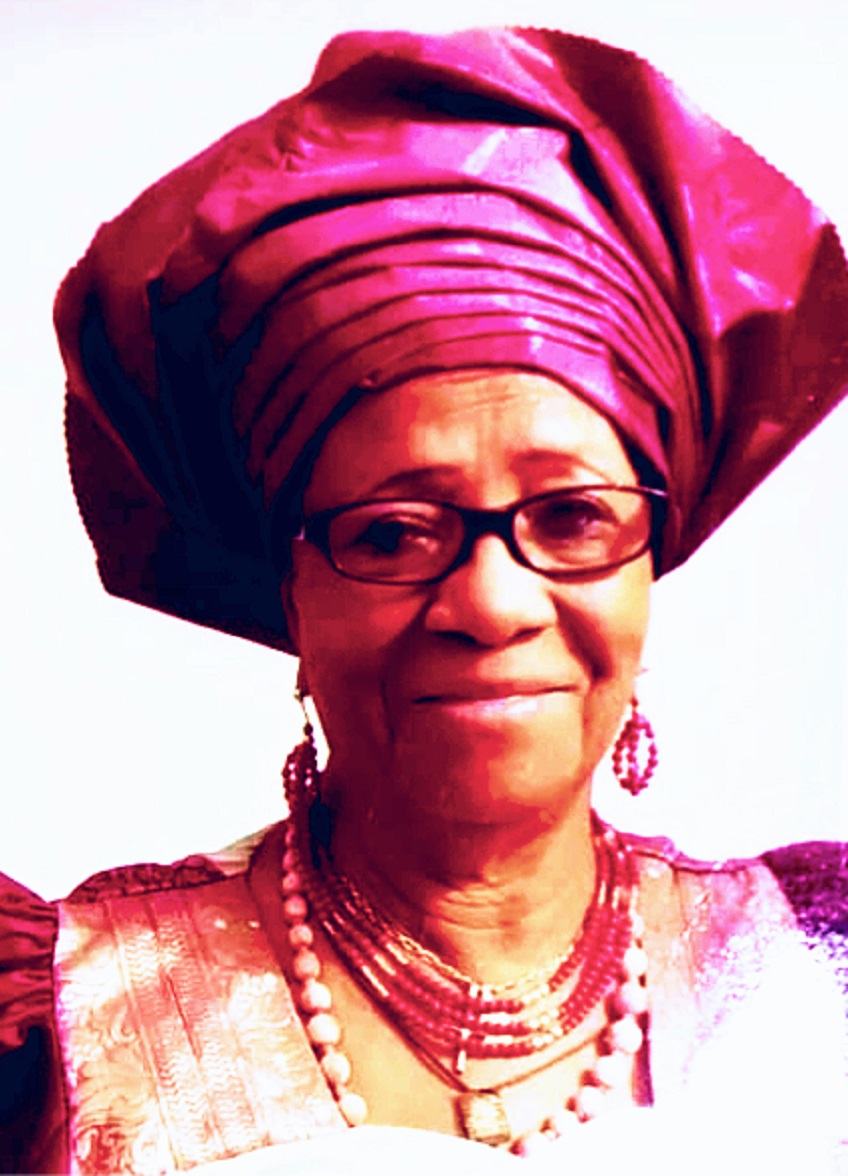
Early July, Kester Kenn Klomegah had the chance and interviewed Chief (Mrs) Marie Okwo, President of the Igbo Women Assembly (IWA), about the impact of the civil war, the current politics and the role of the church in Nigeria.
She is one of the remaining few Nigerians who have seen Nigeria from the struggle for independence through the development of its democracy. Mrs Okwor, who is an associate of the late Dr Nnamdi Azikiwe, is now the leader of the Igbo Women Assembly and one-time member of Advisory Council of the Peoples Democratic Party (PDP).
Established as an NGO in 2006, the Igbo Women Assembly focuses on women empowerment and the youth, it consistently encourages moral values, particularly among young graduates. Headquarters in Enugu, Enugu State of Nigeria.
Here are the interview excerpts:
The Nigerian civil war (1967-70) was a bitter experience and has also affected expected development in the Biafra State. What are your views about this, especially from women’s perspectives?
The war of 1967-1070 war was a pogrom; a war of attrition meant to wipe out a whole race for no just cause. It reminded me of the Holocaust against the Jews. Those who died of hunger starvation, bombings were numerous in number. Malnutrition killed many children who developed a disease called “kwashiokor” – medical experts explain as lack of protein in the body and the belly fills up with fluid. I feel very emotional as I speak about this.
Suffice it to say, that the war could have been avoided, had Nigeria kept her end of the agreement at Aburi, in the Republic of Ghana, which came to be called “the Aburi Accord” that was reached in 1967. This venue offered the delegates security guarantee and that meeting was billed to be the last chance of preventing all-out war.
The accord finally broke down because of differences of interpretation on both sides. This led to the outbreak of the war. Markets and places of worship were not spared from bombings and strafing. As a matter of facts, one of my domestic staffs lost her mother in one of the market bombings had been hurt by a shrapnel; she bled to death since medical facilities were scarce.
The effect of the war on the State of Biafra was deplorable: So much destabilization as the seat of government had to move from place to place and so could not settle down to the business of governing the people effectively. There were so many things to worry about, such as how to get arms and ammunition. There was also issues of food insufficiency.
Lack of concentration on the part of the administrators and the Biafran military officers and soldiers had adverse effects on the Biafrans. As each area fell to the Nigerian military and their superior military weapons, civilians also had to relocate to safer areas. It was really rough and tough especially for nursing mothers most of who lost their babies. So, so sad an experience.
Assessing the effects of the civil war today, especially from gender perspectives, what else can you say in this regard, will women play a more critical role in the administration of a Biafran state?
Before I comment on the role women can play in the administration of a Biafran state, let me mention the important roles they played during the war. It will be recalled that most men were in war fronts fighting to defend Biafraland. Others had lost their jobs and were forced to stay idle at home. The duties of catering for the needs of the rest of the families, therefore, fell on the women/ wives. In short, they became the breadwinners.
On the roles women can play in a Biafran state, let me say, without fear of equivocation that without the contributions of women in governance, success will be difficult to achieve. Women have great potentials that should be harnessed in order to move the state forward.
How do you look at the political governance in the country in relation to Biafra State?
The government of Nigeria is vehemently aversed to the name Biafra. The mere mention of that name makes them chilly. This government would rather have Biafrans remain under the servitude of the Caliphate North. The slogan after the was “No victor, no vanquished.” That was the greatest deceit of the century. Biafrans have never been re-integrated.
The basis for unity no longer exists. Biafrans struggle for their survival without depending on anyone. Since the Nigerian government has refused absolutely to accept Biafrans as a component part of Nigeria, it stands to reason that they should be allowed to go and develop on their own at their own pace. It is pertinent to mention that the North contributes little or nothing to the development of the country. Rather resources from Southern Nigeria are controlled and squandered by Northern Elements.
On security in Nigeria, I wish to make it categorically clear that in Nigeria, security is at its lowest ebb. The Fulani Herdsmen are the cause of the unprecedented insecurity in Biafraland. They move about freely with their cattle carrying sophisticated AK 47. They destroy farmlands and crops, kill farmers, gang-rape and kill female farmers in their farmlands. The resultant effect of the destruction of farms and crops will be devastating as there will be a monumental scarcity of food soon, this will spell doom for the masses.
Government and the security operatives are fully aware of the perilous situations but prefer to look the other way. Sometimes the police offer to pay competitions. A few days ago, a middle-aged woman was gang-raped by Fulani Herdsmen in a farm till she went into a coma she was taken to a hospital and later pronounced dead. The insult by these Fulani Herdsmen is a great insult to Biafrans. Why will these Fulanis not allow us peace in our space? Enough is enough! When people are pushed to the wall, they have no alternative than to fight back.
Igbo Women Assembly calls for a Referendum to settle the issue, once and for all. Our children have no future in Nigeria. We feel like the Israelites while in bondage under the Pharaohs of Egypt. We desire freedom to follow our own designs and practice our Christian Religion without let or hindrance.
Are people really satisfied with the current government? What, in your objective view, are some of their political mistakes?
Nigeria has never been so polarized or rancorous as it is now. There’s so much unrest which stems from oppression, corruption wrong choices of appointees to important governing bodies. Square pegs are placed in round holes indeed. The bitterness existing in Nigeria, at the present time, is unequalled. Security is non- existent. The reality is that there is unchecked anarchy. As things stand now, Nigeria may just disintegrate without gunshots.
Almost all of Nigeria’s intractable problems emanate from the imposition of candidates during elections; no free, fair or credible elections are conducted. The situation gets worse with every election.
In the first place, the Constitution under which elections are held is a fraud. Far from being the “People’s Constitution.” We have faced these mistakes since the inception of the presidential system of governance in Nigeria. The system under reference is wasteful, encourages corruption and dictatorial tendencies.
In spite of the flaws in the Constitution, the ruling party has ignored most of the clauses which might enhance the peaceful co-existence of the citizens. Impunity is rife with this current Administration. There is, therefore, an urgent need for intervention by concerned people of the entire world. Any adversity that befalls a Nation will have adverse effects on other Nations if not nipped in the bud.
This is a clarion call by the Igbo Women Assembly for assistance by all who abhor oppression and bad governance. No justice, no peace! No peace, no progress!
As a highly devout Catholic, how would you argue that the church could be a tool to fight against all injustices and state maladministration, most probably corruption in the Federal Republic of Nigeria?
The church in Nigeria, irrespective of denominations, has a vital role to play in addressing the ills of Nigeria. It is the duty of the church to do all in her power to restore the dignity and moral values of our societies.
All of a sudden, acquisition of wealth has taken precedence over integrity, justice and fair play. The church has a duty to inculcate the congregations with a sense of responsibility moral values and discipline. Most criminals and corrupt members of the society are not pagans but Christians driven into such negative behavioural tendencies by the system. It is interesting to say that wrong leaderships beget wrong followers.
Unfortunately, some pastors preach the gospel of prosperity instead of salvation, thereby driving people into acquiring filthy lucre through any means whatsoever. People quickly forget that greed and avarice lead to destruction. They do not remember that whatever one has on earth cannot accompany him/her to the great beyond. Others will enjoy the ill-gotten goods. Corruption has eaten deep into the fabrics of the nation and the church must make concerted efforts to bring the menace to the barest minimum.
And the Biafra diaspora outside Nigeria, especially in the United States and Europe…are they optimistic about breakaway of the Biafran State?
Biafrans in the Diaspora are even more enthusiastic about an independent nation than some Biafrans at home. Any sign that a Referendum is on hand will see a deluge of Diaspora Biafrans flying back home. They will contribute in no small measure to bring rapid development to the new nation-state. Surely, this new nation will overtake Nigeria, which regards herself as the so-called largest country, in Africa. Yes! Largest in all types of vices like kidnappings, rape, sleaze oppression, abuse of human rights and so forth.
What are your recommendations here, what should or must be done under the current circumstances in Nigeria?
My perspective on the future or the way forward for Nigeria, the country has expired and cannot be revived, neither can it be reactivated. It is my well-considered opinion that any group or ethnic nationality, which wants to leave this contraption, should be granted their peace and freedom. Nigeria is too large to be one country since there are too many differences in religion, cultures and traditions, food and languages and other factors. Nigeria has never and can never be one. Unity has eluded the country.
If, however, Biafra becomes unattainable then we should go back to the parliamentary system of governance. A weak centre with regional autonomy. As things are now, the country is rudderless and groping in the dark. If no positive action is taken soonest, Nigeria will take a nosedive into a deep precipice, in this case, the name will become irreversibly extinct.
Interview by Kester Kenn Klomegah.


By Kestér Kenn Klomegâh
The Arab Republic of Egypt, a country spanning the northeast corner of Africa and the southwest corner of Asia, has a highly strategic location and attracts multifaceted interests of foreign players. For decades, Russia has established diplomatic relations with Egypt and has consistently sustained diverse ties with this country. It is no secret that Russia’s lust for the region is primarily due to the strategic importance of the Mediterranean Sea for investment and economic cooperation with the Maghreb region.
Determined to strengthen, particularly, economic cooperation, Russian President Vladimir Putin has maintained regular contacts with his colleague, President of Egypt, Abdel Fattah el-Sisi, mostly discussing both bilateral cooperation and broader regional developments. The current world’s geopolitical development, for instance, the United States-Israeli war on Iran in the Middle East, constitutes one theme both leaders frequently review, attempting to find long-term solutions.
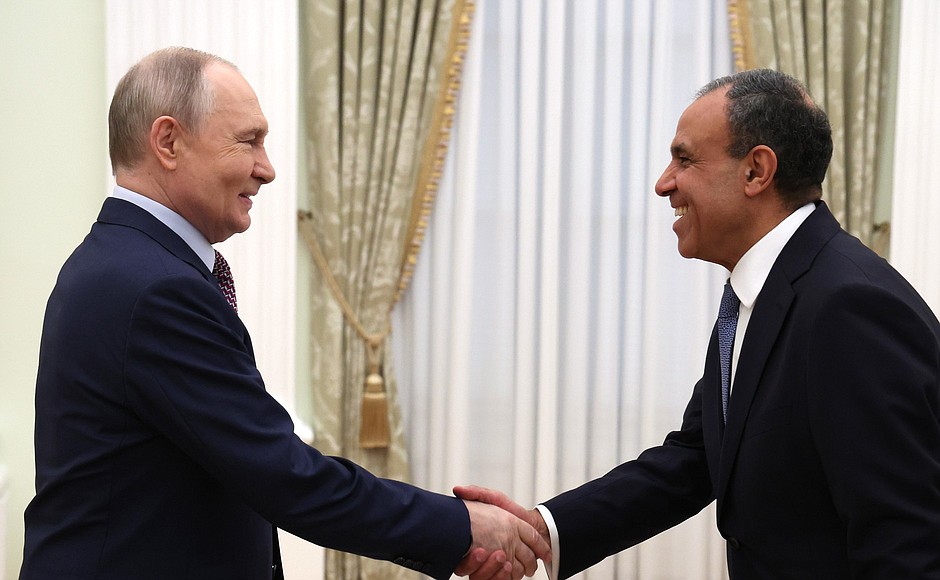
On April 2, Putin met with the Minister of Foreign Affairs, Emigration, and Egyptian Expatriates of the Arab Republic of Egypt, Badr Abdelatty, in the Kremlin – the seat of Russia’s presidency. In attendance during the official talks on the Russian side were Foreign Minister Sergei Lavrov and Presidential Aide Yury Ushakov, while Egypt was represented by Ambassador Extraordinary and Plenipotentiary to the Russian Federation Hamdy Shaaban. Ultimately, there is no need to overstate the importance of this meeting.
Russia’s footprints are expanding in Egypt, highlighting the growing industrial investment and the strengthening of bilateral manufacturing ties by undertaking projects to ensure energy security. At the same time, maintaining regular dialogue remains very important for both leaders.
Putin, speaking with the three-member delegation in the Kremlin, underlined the fact that there are many promising initiatives underway, many of which are already being implemented. He has previously spoken in detail about the construction of a nuclear power plant and the construction of an industrial zone, and over ten major Russian companies have expressed interest in participating in this project.
Nuclear Plants in El-Dabaa, Egypt
The construction of nuclear plants in the city of El-Dabaa, about 320 kilometres northwest of Cairo, the capital of Egypt. It is the first nuclear power plant in Egypt, and will have four VVER-1200 reactors, making Egypt the only country in the region to have a Generation III+ reactor. On November 19, 2015, Egypt and Russia signed an initial agreement, under which Russia agreed to build and finance Egypt’s first nuclear power plant. These are now being carried out, not as a charity project, but with a loan of $28 billion. According to reports, Russia will finance 85% as a state loan of $25 billion, and Egypt will provide the remaining 15% in the form of instalments. The Russian loan has a repayment period of 22 years, with an annual interest rate of 3%.
At the meeting, Putin also raised the construction of an industrial zone in Egypt. There are many appealing and related opportunities in this, regarding having an industrial zone to be located on the banks of the Suez Canal. The industrial zone is also entering a new phase, as Russian auto-manufacturing enterprises are advancing distinctive plans to expand local vehicle production, reinforcing the country’s role as a regional manufacturing hub. The move reflects broader economic linkages between Russia and Africa, particularly in industrial development and supply chain integration.
Conveying Greetings and Reviewing the Middle East Situation
Naturally, the situation in the region remains a shared concern, according to Putin, and further hope that the ongoing conflict will be promptly resolved. “As you know, President Trump also addressed this issue yesterday. Let me reiterate that we are prepared to make every effort to help stabilise the situation and, as they say in such cases, return it to normal,” he stressed during the meeting. In this context, it is particularly important to know Egypt’s assessment as a key country in the Middle East.
Putin reminded the delegation of another Russia-Africa summit, which is planned for October 2026. With high hopes that Egypt will be represented by a strong, high-level delegation. Should the Egyptian President’s schedule allow, he would, of course, ahead of the summit, be very pleased to welcome him to Moscow. Jointly chaired by Vladimir Putin and Abdel Fattah el-Sisi, the first Russia-Africa summit, an important acute phase of the developments with Africa, under the motto of ‘For Peace, Security and Development’, was held for the first time in October 2019, in Sochi, a city located on the Black Sea coast. The idea to hold a Russia-Africa forum was initiated by President Putin at the BRICS (Brazil, Russia, India, China and South Africa) summit in Johannesburg in July 2018.
The head of the Egyptian Foreign Ministry, as traditionally expected, conveyed greetings from President El-Sisi to the Russian president and handed over a written message. President el-Sisi places great value on all aspects of the bilateral cooperation, and is extremely grateful for constructive collaboration on the El Dabaa Nuclear Power Plant, which represents a key milestone in the partnership. Despite the challenges, it is evident that the project is moving forward and will be completed by 2028.
In summary, as Egypt and Russia are reliable and time-tested partners, Putin plans to promote strategic projects, particularly in trade, economics, energy, and food security. With over 107 million inhabitants, Egypt is the most populous country in the Arab world, the third-most populous country in Africa, and the 15th-most populous in the world.

By Kestér Kenn Klomegâh
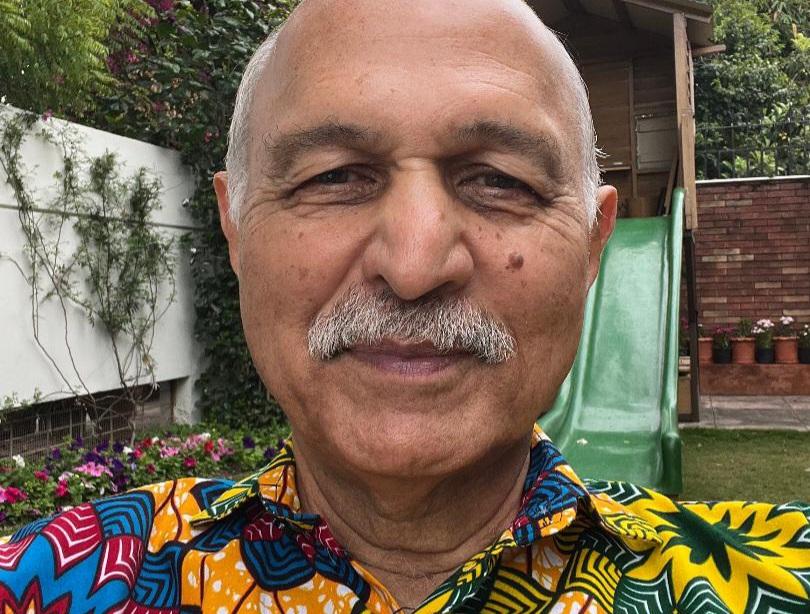
In an interview, Senator Mushahid Hussain, President of Pakistan-Africa Institute for Development and Research (PAIDR), explicitly offers a few important insights into the US-Israeli war on Iran and its implications for BRICS+ and Africa. Here are the interview excerpts:
What’s your interpretation of the US-Israel war on Iran, in the context of developments in the Middle East region?
The US-Israel illegal and unwarranted war on Iran was spearheaded by [Benjamin] Netanyahu (Prime Minister of Israel) and actively supported by [Donald] Trump (President of USA) as a Joint Operation with three fundamental goals: a) decimate the Islamic Revolutionary Regime; b) reshape the Middle East as part of Zionism’s ‘Greater Israel’ Project; c) preclude any possibility of establishing a Palestinian State with Jerusalem as its capital.
What is your assessment of Iran’s joining BRICS+ in 2025, China’s and Russia’s roles as members of this association, in this US-Israel war with Iran?
China and Russia have played, by and large, a low-key diplomatic role in supporting Iran but without any active political initiatives. BRICS is divided from within, as India is keen to curry favour with the USA and avoids close association with BRICS since the time that Trump attacked BRICS last year. But China & Russia are clear political beneficiaries of the war as American prestige is at an all-time low, having got entangled in an unwinnable war, resulting in weakening of the US ‘sole superpower’ image.
As an Asian expert, how would you characterise Africa’s reactions? And do you think that reactions were objectively authentic, basing perspectives broadly on Arab and Middle East contributions to Africa’s development?
Africa’s reactions to the war are primarily through the prism of the Global South, viewing Iran as resisting American-Israeli hegemonic designs, as, for example, manifested in two examples: South Africa’s rejection of American pressures to wean South Africa away from its support for Iran. Plus, Somalia joined Pakistan and China in supporting the Russian resolution in the UN Security Council seeking an immediate ceasefire and negotiations to halt the War, despite strident Western/US opposition to the Russian resolution.

By Adedapo Adesanya
The Director-General (DG) of the World Trade Organisation (WTO), Mrs Ngozi Okonjo-Iweala, has said the global trading system is experiencing the worst disruptions in the past 80 years.
The trade body chief warned about the consequences as the WTO ministerial conference opened Thursday in Cameroon.
“The world order and the multilateral system we know has irrevocably changed,” she said, adding: “We cannot deny the scale of the problems confronting the world today.”
The organisation’s 166 members appear deeply divided as trade ministers gather in the Cameroonian capital for the WTO’s top conference, amid global economic turmoil linked to the Middle East war.
Over four days in Yaounde, WTO members will try to revitalise an institution weakened by geopolitical tensions, stalled negotiations, and rising protectionism — against the backdrop of the war in the Middle East, which poses a serious threat to international trade.
“The scale of the problems confronting the world today, even before the conflict in the Gulf, destabilised trade in energy, fertiliser and food,” Mrs Okonjo-Iweala said.
“National governments and international institutions alike have been struggling to navigate rising geopolitical tensions, intensifying climate pressures, and rapid technological change.
“Accompanying these shifts has been an increasingly loud questioning of multilateralism,” she added.
Mrs Okonjo-Iweala said these disruptions were just one symptom of broader upheavals shaking the international order created after World War II to prevent a repeat of the disasters of the first half of the 20th century.
“It feels appropriate that at the moment when the world is in turmoil with conflict in the Middle East, Sudan, Ukraine, and elsewhere, at this time of great disruption and uncertainty, we have gathered in Africa to discuss the road ahead for the global trading system,” she said.
“Africa is the continent of the future.”
WTO ministerial conferences are typically held every two years. The current edition in Yaounde is the second to be held in Africa, after Nairobi (Kenya) in 2015.
-
 Feature/OPED6 years ago
Davos was Different this year
-
Travel/Tourism10 years ago
Lagos Seals Western Lodge Hotel In Ikorodu
-

 Showbiz3 years ago
Estranged Lover Releases Videos of Empress Njamah Bathing
-
 Banking8 years ago
Sort Codes of GTBank Branches in Nigeria
-

 Economy3 years ago
Subsidy Removal: CNG at N130 Per Litre Cheaper Than Petrol—IPMAN
-

 Banking3 years ago
Sort Codes of UBA Branches in Nigeria
-

 Banking3 years ago
First Bank Announces Planned Downtime
-

 Sports3 years ago
Highest Paid Nigerian Footballer – How Much Do Nigerian Footballers Earn