
World
Maghreb is Russia’s Source of Economic, Political Opportunities—Chtatou

By Kester Kenn Klomegah
The Maghreb region, with an estimated population of over 100 million people, has been an interesting geographical region for key global players due to its tremendous untapped natural resources.
Algeria, Libya, Mauritania, Morocco, and Tunisia established the Arab Maghreb Union in 1989 to promote cooperation and economic integration.
The union included Western Sahara implicitly under Morocco’s membership and ended Morocco’s long cold war with Algeria over this territory. However, this progress was short-lived, and the union is now dormant.
However, the region is an important gateway to Europe and to sub-Saharan Africa. Europe particularly has some investment, so also the United States.
Now Russia is steadily making its way through war-torn Libya and politically troubled Morocco and Tunisia. That compared Russia has significant trust-based relations with Egypt.
As Russia feverishly preparing for the second all-African leaders’ summit, Kester Kenn Klomegah held an emailed insightful interview focusing on some aspects of Russia-Maghreb relations with Dr Chtatou Mohamed, a senior professor of Middle Eastern politics at the International University of Rabat (IUR) as well as education science at Mohammed V University in Rabat, Morocco. The following are excerpts from the interview:
In terms of geopolitical diplomacy, how do we assess Russia’s interest and approach since the Soviet collapse in the Maghreb region? Do the current political changes pose challenges for Russia?
Given its geographical remoteness, the Maghreb did not constitute – unlike the Middle East – a pole of major strategic interest for the Soviet Union, and this until the period of decolonization in the 1950s.
From this point on, and especially with the Algerian war of independence, Moscow began to invest in this sub-region of the Arab world. In fact, as in the Mashreq, the Soviet position strategic criteria, which explained the choice of a partnership with Algeria as early as 1962, and then, to a lesser extent, with Colonel Qadhafi’s Libya after he took power in 1969.
However, it was more in the name of the “anti-imperialist” struggle than of real ideological proximity that these alliances were formed. Indeed, during the entire Cold War period, Soviet power could not count on local relays to strengthen its influence.
The Maghrebi parties of communist persuasion were indeed far from having the weight and influence of their Middle Eastern counterparts, such as in Iraq or Iran. They were promptly removed from power and even repressed after independence, even if some of their leaders were later co-opted by the regimes in place, particularly in Morocco and Algeria.
Nevertheless, the revolutionary Third Worldism claimed by Algiers as well as by Tripoli, even if it did not claim to be based on Marxist-Leninist ideology, was perceived by the USSR as conforming to its interests and its politico-strategic projections.
For all that, the leaders of the two “friendly” Maghreb countries, while taking into account the interest that extended cooperation with Moscow (which also passed by links with satellite countries of Eastern Europe, particularly in terms of security with the German Democratic Republic), they were careful to keep a certain distance from this partner, refusing any form of subjection according to the principles of non-alignment.
Today, the Maghreb is not a fundamental interest for Russia, but rather a source of economic and political opportunities. The Russian redeployment in the Maghreb, which began during Vladimir Putin’s second term in 2004 and has been over the last decade, relies on new vectors, distinct from the old anti-imperialist aura from which the Soviet Union had benefited in Algeria and Libya. Three, in particular, stand out: (1) Investment in the economic sphere; (2) Increased cooperation in the security field, and; (3) A shared vision of international and regional issues.
Today, the federal state of Russia is increasingly present in the countries of North Africa; strategic partnership with Algeria, Morocco and Egypt, and is among the key players in the Libyan crisis.
Russia and the Maghreb countries seek above all to cultivate their economic relations. These relations cover various fields such as energy, agricultural products, tourism, space or, in the case of Algeria, the sale of arms.
For Moscow, this also responds to the need to deal with the sanctions of the European Union imposed following the annexation of Crimea in 2014, seeking alternatives to European products, especially agro-food. Russia meets a similar desire on the Maghreb side, where there is a desire to diversify the partnerships dominated until now by the countries of the European Union.
In 2016, Russia thus became, bypassing France, the first supplier of wheat to Algeria and has remained so since. It should be noted that the Russian economic projection in the region does not necessarily respond to a state strategy driven by the Kremlin, but often satisfies commercial ambitions in search of new opportunities, although the political authorities can facilitate contacts with the various Maghrebi economic actors.
The North African countries have considerably developed their relations with Russia, as they did before with China, without however prohibiting themselves from cooperating with the other Western powers. Their objective is to take advantage of any opportunity that arises to develop their economies and avoid remaining aligned and dependent on a single pole as in the days of the Cold War, given that the world is increasingly multipolar.
Therefore, questions arise, what are the mutual interests behind this revival in relations between Russia and the countries of North Africa, and what are the future prospects of these relations?
Russia has a war fleet and a merchant fleet in the Black Sea. This sea is located between Europe, the Caucasus and Anatolia, it is a semi-enclosed sea since it only communicates with the Mediterranean through the Bosphorus Strait, the Sea of Marmara and the Dardanelles Strait. Therefore, the Mediterranean is an unavoidable access corridor for Russian ships, connected to its Black Sea ports, to go to the Atlantic Ocean via the Strait of Gibraltar, or to the Indian Ocean via the Suez Canal.
For the Kremlin, the countries of North Africa are of paramount geostrategic importance on the maritime level, because its merchant ships and warships transiting in the Mediterranean Sea cross 3 obligatory passages which are bordered by: Egypt for the Suez Canal, Tunisia for the Strait of Sicily and Morocco for the Strait of Gibraltar. These compulsory passages are, from the point of view of freedom of navigation, locks that can be easily controlled by the countries that border them on both sides.
On the geo-economic level, the five Arab countries of North Africa present themselves for the Kremlin as an unavoidable interface to enter the African continent, rich in raw materials and presented as the great world consumer market in the future because of the demographic explosion of its population. It was during his visit to Algeria in 2006 that Putin laid the first milestone for Russia’s return to Africa. It is also Egypt, which played a leading role in the organization of the 1st Russia-Africa summit in October 2019 in Sochi.
Russia’s economic interests in Africa are increasingly growing in recent years, Moscow’s trade with African countries exceeded $20 billion in 2019. This figure is still lower than that of China ($204 billion), the US and even some European countries such as France and Germany.
Russia aims to diversify its trade with African countries by focusing on high technology, such as civil nuclear power (in Egypt) and satellite launches (in Angola and Tunisia). Russia is also very active in the medical sector in Africa, a vaccination campaign against the Ebola virus in Guinea, etc…
The United States and European Union have concrete strategic instruments, for instance, the U.S.-Maghreb FTA and Euro-Mediterranean Partnership. What could be described as Russia’s strategic economic tool in North Africa?
While China has been the focus of public attention on the African continent for some years, Moscow is no longer behind. After a prolonged absence since the demise of the Soviet Union, Russia is becoming more and more active, mixing armed forces presence, arms sales, economic investment, soft power and diplomatic support.
At the BRICS summit in Johannesburg on July 27, 2018, the Russian President raised the idea of a Russian-African summit bringing together all the continent’s leaders and himself. This ambitious initiative does not leave the traditional players established in this field worried that the Russian proposals will prove attractive enough for a number of local heads of state.
Indeed, Russia intends to return to the continent where its presence has often been fluctuating. Even in the 1970s, the height of the Soviet grip on Africa, its presence was episodic, with rare exceptions, such as in Algeria, Libya and Angola. Then the gradual removal of many heads of state who were allies of the Soviet Union led Mikhail Gorbachev, from 1988 onwards, to gradually weaken ties with the continent. These did not survive the disappearance of the USSR in 1991, and the Yeltsin period sounded the death knell for these friendships. It was not until the second term of Vladimir Putin, from 2008, that timid initiative were taken to remind certain countries of Russia’s past role.
One of the notable changes from the Cold War era is that the new Russian policy in the Maghreb no longer relies solely on the historical partner of Algeria, but also extends to previously neglected states, namely Morocco and Tunisia, because of their political and historical ties to the Western world. Libya is a special case.
Russia’s renewed interest in the Maghreb is based on a number of parameters that have already been essentially well identified. First and foremost, there is the development of economic partnerships, whether in the fields of armaments, energy, infrastructure or agriculture. Next, in order of priority, are security issues, with the fight against terrorism and jihadism, but more broadly the effects of the Libyan crisis, even if Russia’s investment in this issue appears less developed and partisan than it appears at first glance.
The emphasis placed on the political-diplomatic aspect, crystallized from the Arab uprisings and more particularly since the overthrow of the Libyan regime following NATO’s intervention in 2011, constitutes the most novel parameter of this Russian reinvestment. As in the rest of the Arab world, Moscow is defending the status quo, or rather a “principle of conservation” defined by its support for the regimes in place, non-interference in the internal affairs of a state, and its opposition to regime change through foreign military intervention.
While Russia’s preferred visions and modes of action in the Maghreb seem to be fairly well identified, the perceptions and expectations, but also the possible reservations on the Maghreb are more rarely expressed by the leaders of these countries and little-studied at the academic level. Perhaps we should look at this, as far as the powers that be are concerned, a concern for discretion regarding the sensitive aspects of this foreign policy component – this is particularly true for Algeria – an area on which they generally communicate little and for the academic research community in North Africa, a lack of knowledge related to the history, geography and culture of contemporary Russia.
If there is undoubtedly, on the Maghreb side and with important nuances from one country to another, a manifest interest in a development or a deepening of the partnership with Moscow, questions may remain about Russia’s objectives, especially in Rabat and Tunis. Despite this, the general and regional orientations of Russian policy are generally well perceived in the Maghreb capitals, because they correspond to local visions without, however, having the intrusive character that sometimes reproached to the historical European partners (France, Italy, Spain) and American partners.
Thus, the Russian approach responds to expectations of diversification in terms of partnership which correspond to an economic rather than a strategic necessity. This relationship appears to be facilitated by a convergence of views on major regional issues and the principles governing international relations, perhaps also because of the limits set for it. However, certain expectations on the Maghreb side could be disappointed, particularly concerning economic investments, but also a possible attempt at Russian mediation to facilitate a settlement process for the Libyan crisis, knowing that Moscow has some conditions.
One of the discreet tools used by Russia in the Maghreb and Africa is the Wagner Group that is present in Algeria providing tactical help to the Polisario Front fighting Morocco over Western Sahara and in Libya, on the side of Marshal Haftar forces.
The Wagner Group should be approached as a nebulous or informal entity since it is a structure without any legal existence. Unlike other Russian private military companies, of which there are many and of which RSB-Group is a well-known example, Wagner is not registered as a commercial company. Wagner’s lack of a defined legal status is advantageous for the Russian government, as it allows it to deny responsibility for its actions when the group is mobilized in different fields.
The links between the Russian executive and Wagner are important and take various forms. First, logistically, the training of the members of the Wagner group took place in Russia, in a military base belonging to the Russian armed forces. Some of the weapons available to Wagner members in Syria and Libya came from the Russian military surplus, and their deployment is usually carried out by Russian military aircraft. The Wagner Group is furthermore financed by a businessman considered close to Vladimir Putin, Yevgeny Prigozhin, who has secured some fairly large contracts in the Kremlin, particularly in the catering business.
Thus, there are obvious military logistical links and personal affinities between the Wagner Group and the Russian government. However, the link between the two entities is not organic and not all of Wagner’s interventions are linked to the Russian executive. Sometimes they proceed from a more lucrative logic, specific to the personal interests of Yevgeny Prigozhin.
First of all, the Wagner Group is able to participate in armed operations. In this, it is not just a private military company but a mercenary company. As an example, the group was employed by the Syrian government to liberate the Syrian Al Sha’er oil field in Homs from the Islamic State after the battle of Palmyra in 2016, but also as support to the Syrian Arab Army (SAA) in the fighting in Khusham in February 2018. Wagner has also provided support for Marshal Haftar’s offensives against Tripoli in 2019 and 2020. The group has participated in armed operations in northern Mozambique against Islamist insurgents seeking to establish an independent state in Cabo Delgado province and more recently engaged with the Central African Republic’s army against the Patriot Coalition.
With regard to Russian strategy in the region, there has been a renewed interest in sub-Saharan Africa over the past decade. Defence diplomacy, that is, strengthening the country’s presence via the military tool (training or physical presence), has been an important instrument for Russia since 2014-2015, particularly in this region. About twenty agreements have thus been signed between Moscow and sub-Saharan African countries in the field of defence since that date.
Economic issues also motivate the renewed Russian interest in the region. In the field of armaments, the countries of the zone are an interesting clientele for Russia. In 2010, they represented 10% of Russian arms sales. Today they account for 30%, making Russia the leading supplier of arms to the region.
Finally, the Russian strategy has a geopolitical dimension. While the context between Russia and Western countries is highly troubled and characterized in particular by a regime of sanctions and counter-sanctions, Moscow has more room for manoeuvre with the countries of sub-Saharan Africa. However, the tensions between Russia and Western countries are also present in sub-Saharan Africa: the issues surrounding the Wagner group are one of the facets of this crisis.
Do you detect any competition and rivalry among key foreign players for influence in the region? In your opinion, how effective and useful the emerging China-Russia alliance could be in Maghreb countries?
The impression is striking of a flashback to the West-Russia tensions that characterized the second half of the 20th century, from the aftermath of World War II until the collapse of the USSR in 1991. The two rival camps are beginning to openly sketch out the comparison, although observers note significant differences.
Following the gradual advent of the multi-polarity of the world since the beginning of the 2000s, most Mediterranean Arab countries have opened up to practically all the major world powers, the USA, China, Russia, the European powers and the powers emerging. The objective is to better serve the interests of their people and find solutions to the problems that prevent their development by exploiting the opportunities presented by each of these powers.
Currently, the geopolitical relations of most Mediterranean Arab countries with Russia are good, even for those who were allies of the USA during the period of world bipolarity along the years of the Cold War (the case of Egypt and Morocco).
Algiers, on October 2, 2021, the Algerian government decides to recall its ambassador in Paris and close its airspace to French military aircraft. This decision was prompted by a speech by Emmanuel Macron on the Algerian memory issue, which was deemed disrespectful. This incident represents the second act of a political-diplomatic standoff between Algeria and France, which decided in late September to drastically reduce the issuance of visas to nationals of Maghreb countries. Since this measure, relations between the two countries have continued to deteriorate, further weakening the popularity of France on an African continent that is already attracting the covetousness of many powers such as Russia, a historical ally of Algeria, whose eyes are now turned towards Mali.
Since the early 2000s, Russia has placed Africa and the Mediterranean at the centre of its foreign policy. This position became even more important in 2015 when Moscow saw Syria as a way to reaffirm its status as an international power while defending its security and economic interests, which are the fight against terrorism and the development of trade agreements around energy.
In such a paradigm, the regional power that is Algeria is a choice ally, especially since their relations have been at a good level since the end of the Cold War. Moscow and Algiers share a similar conception of domestic and foreign policy. The report of the Mediterranean Foundation for Strategic Studies highlights this:
“In the end, Russia and Algeria share many common representations and biases: a focus on the sacrosanct stability (particularly through the importance given to the fight against terrorism), a preference for flexibility in diplomatic relations and a willingness to contribute – through mediation – to the resolution of conflicts. The two countries share the same aspiration to assert themselves as an independent power and to establish themselves as a regional and international power, respectively. This convergence of vision pushes the two states to help each other. One example is the case of Vladimir Putin who does not hesitate to relay the anti-colonialist speeches of Algiers by encouraging African countries to mobilize for political and economic independence. The Russian president thus urged “African countries to stop their dependence on France and to work to develop the continent considered the richest in the world” (Algérie Patriotique. (21 Octobre 2020). « Alger et Moscou ne veulent plus laisser Rabat et Paris jouer seuls en Afrique »).
However, once we move away from political statements, it is easy to see that, behind its airs of mentor, Russia is an actor who enjoys a form of dependence from Algeria via unequal cooperation in several key areas. Thus, in 2017, Dmitri Medvedev, then head of the Russian state, signed with Algiers no less than six (6) documents on Russian-Algerian cooperation in a multitude of areas such as justice, energy, education or health. It is also not anecdotal that the choice of the vaccine in the fight against Covid-19 was the Sputnik-V vaccine. Such a choice clearly reflects Algeria’s distrust of other Western powers, but above all Russia’s unavoidable position as the sponsor of an Algerian state that is too weak to prosper alone. By offering its help to a fragile Algeria, Russia ensures, without exposing itself, a real anchorage on the African continent.
After the 2008 crisis, Beijing’s geopolitical positioning on the international stage remains highly ambiguous. On the one hand, China is described as a developing country because of the domestic economic and political problems it faces (the nature of its economic growth, environmental challenges, the fight against inequality, social tensions). These structural obstacles require reforms that slow down its international deployment. On the other hand, China is perceived as a major emerging country, given its strong economic growth and its status as the world’s second-largest economy, which mechanically pushes it to take a greater interest in international issues and to move away from its policy of “non-interference.
Today, Beijing’s positioning is characterized by approaches that are sometimes cautious when the issues concern it less, and sometimes more assertive when it comes to neighbourhood issues where its interests may be directly at stake. In the end, this ambivalent policy and its internal problems explain China’s positioning: a true emerging power on the economic level, it is not yet complete so on the geopolitical level.
Nevertheless, China already carries so much weight on the international scene that it is changing the world order. The question is to know how willing and able it will be to transform the functioning of the international system. In many ways, the emergence of the Russia-China alliance will strengthen the hand of these two countries politically, economically and socially in the Maghreb. Many see the emergence of such an important block as a viable alternative to the West that has oppressed and exploited the region for centuries. Today many Maghrebi students go east to study and many businessmen go there to do commerce.
How is Russia’s “soft power” working in this region? What could be the expectations from the Maghreb bloc during the forthcoming second Russia-Africa summit planned this November 2022?
The North Africa region has undergone extremely rapid modernization. Growing literacy (in less than fifty years, societies in the region have achieved a literacy rate of over 70% among adults and close to 100% in all countries among 15-24-year-olds, including women) or the affirmation of the place of women are signs of modernization in progress. The demographic and socio-cultural structures of these countries are changing and the political order of their societies, which explains some of the instability in the region and the “Arab Spring”. Other countries, where frustrations are great and where the states are struggling to respond to the political and economic aspirations of their populations could experience similar episodes.
In recent years, the alleged return of Russia to the African continent has attracted attention. It is not only the media that are interested in it, but also diplomats and governments of countries that, since the fall of the USSR, are in economic competition on the continent.
The increase in this interest began with the holding of the first Russia-Africa summit in Sochi in October 2019. The second summit, scheduled for 2022, is helping to reinforce the hypothesis of Russia’s repositioning on the continent. Is this a real geostrategic turning point? Or can we rather suspect tactical re-compositions in search of arms export markets or the exploitation of rare minerals?
The private security company Wagner, run by a man close to Vladimir Putin, has become the main instrument of Moscow’s re-engagement on the continent, against a backdrop of rivalry and tension with the West.
Is this the beginning of a strategic shift that would see a new “Russafrique” supporting “Chinafrique” in an anti-Western conspiracy? Or a media fantasy dramatizing punctual and opportunistic, often fragile, breakthroughs? The arrival of Russian instructors and paramilitaries from the private security company Wagner, which is close to the Kremlin, in Mali at the end of 2021, is raising questions in Europe and the United States about Moscow’s plans in Africa. Through the multiplication of defence agreements and the activities of the Wagner Group, Russia has succeeded in meddling in several African countries: Mali, Libya, Sudan, Central African Republic, Mozambique… An advance that is sometimes erratic, contested or deceptive, and which extends over about five years.
In Egypt, in 2014, Russia got closer to the newly elected President Al-Sissi. It took advantage of the American disengagement following the Arab Spring and signed a $3.5 billion arms contract. Other agreements will link the two countries: military cooperation treaties (supply of arms and training), an agreement for the construction of the first Egyptian nuclear power plant, an economic outlet for its grain, et cetera. More recently, the two countries signed a contract to supply Russian Su-35 fighter planes to Egypt.
Russia is thus rapidly becoming the main arms seller in Africa. Over the period 2014-2019, it provided 49% of the arms sold to the continent, far ahead of the other main contributors: the United States (14%), China (13%) and France (6.1%).
However, these contracts mainly concern North Africa, the picture being much more mixed for West Africa, for example. Russia has not been involved in any major arms agreement with Mali, with the exception of the 2016 agreement where Mali signed a contract with Russia for four Mi-35M combat helicopters.
Russia’s return to Africa is not limited to debt cancellation and arms sales. In 2018, Russia’s trade with the African continent reached $20 billion (17.2% more than the previous year) and its investments reached $5 billion (a far cry from the $130 billion invested per year by China). Its ability to offer technologies sought after by African countries gives it a place of choice. For example, it cooperates with Algeria, Nigeria, Zambia and Egypt in the nuclear field. Moreover, its companies are particularly present in the exploitation of minerals, oil or gas. Gazprom, Rosneft and Lukoil are very active in the Sahara, North Africa, Nigeria and Ghana.
These links have also been strengthened from a diplomatic point of view, with the organization of the first Russia-Africa summit in Sochi in October 2019, which will have enabled Russia to bring together some thirty African heads of state and to sign several bilateral treaties (the joint statement mentions “92 agreements, contracts and memoranda of understanding […] with a total value of 1,400 billion rubles”. This is in line with Russia’s goal of doubling its trade with African states by 2024 (which would make it a direct competitor of France).
Russian realpolitik may explain Russia’s growing influence in Africa. Unlike other actors such as the United States or France, which may make the granting of aid or the signing of partnerships conditional on the respect of certain principles, Russia does not demand any conditions related to democracy or human rights. This is the case in Nigeria, where the United States cancelled a contract that had already been signed for human rights violations by Nigerian forces in the fight against Boko Haram. This withdrawal allowed Russia to sign a new arms contract with the country.
With the decision to return and raise its influence on the continent, and especially the Maghreb region, Russia has to make consistent efforts, at least, in addressing significant aspects of the Sustainable Development Goals (SDGs) in Africa. However, the worsening of the Libyan crisis and the deterioration of relations with European states are the only two obstacles that could limit or more seriously slow down this nascent economic cooperation. The next few years will undoubtedly be decisive for the realization of structuring projects between the Russian Federation and the Maghreb.







By Adedapo Adesanya
Pan-African multilateral financial institution, the African Export-Import Bank (Afreximbank), has approved a $10 billion Gulf Crisis Response Programme (GCRP) to insulate African and Caribbean economies, financial institutions and corporates from the impact of the ongoing Iran war.
The GCRP builds on a series of timely emergency interventions introduced by the lender in recent years, which have helped cushion most economies from the impact of recent shocks such as the commodity shock of 2015/16, the COVID-19 Pandemic of 2020/2021 and the Ukraine crisis of 2023/24.
The latest conflict, which escalated on February 28, 2026, has sent shockwaves through the global economy, with African and Caribbean economies bearing the largest share of the brunt. These impacts specifically affect nations that heavily rely on fuel, fertiliser, and food imports, alongside those exposed to Gulf shipping corridors, investment flows, tourism and remittance inflows.
According to Afreximbank in a statement on Tuesday, GCRP is designed to, among others, sustain essential imports – including fuel, LNG, food, fertiliser, pharmaceuticals – by providing vital short-term Foreign Exchange (FX) and liquidity to support vulnerable member states. It further aims to empower African energy and minerals exporters to capitalise on elevated prices and rerouted trade flows by scaling productive capacity in strategic commodities through pre-export finance, working capital, and inventory financing. Additionally, it provides short-term relief to African and Caribbean member states whose tourism and aviation industries have been adversely impacted by the crisis.
The programme is also designed to build the medium to long-term resilience of African and Caribbean economies against future shocks by scaling productive capacities for producers and exporters of energy, minerals while accelerating the completion of critical energy, port, and logistics infrastructure projects in African and Caribbean member states, delayed by the conflict.
Commenting on the facility, launched on March 31, 2026, Mr George Elombi, President and Chairman of the Board of Directors at Afreximbank, said: “This crisis response programme is in tune with our DNA. We understand how our economies work and the pain points associated with these transitory crises. The programme will support African countries in adjusting smoothly to the crisis while strengthening their resilience to future shocks through interventions that transform the structure of their economies.”
Through GCRP, Afreximbank has already begun taking proactive steps through partnerships with banks and corporates to secure fuel, other energy supplies, fertilisers, and essential food imports, whose supplies have been interrupted by the elongation of the crisis.
Beyond the financing, Afreximbank will spearhead a coordinated regional response in partnership with the UN Economic Commission for Africa (UNECA), the African Union Commission (AUC), the African Continental Free Trade Area (AfCFTA) Secretariat, and the Caribbean Community (CARICOM) Secretariat to strengthen regional coordination on energy security, trade resilience, and supply chain diversification.
By Kestér Kenn Klomegâh
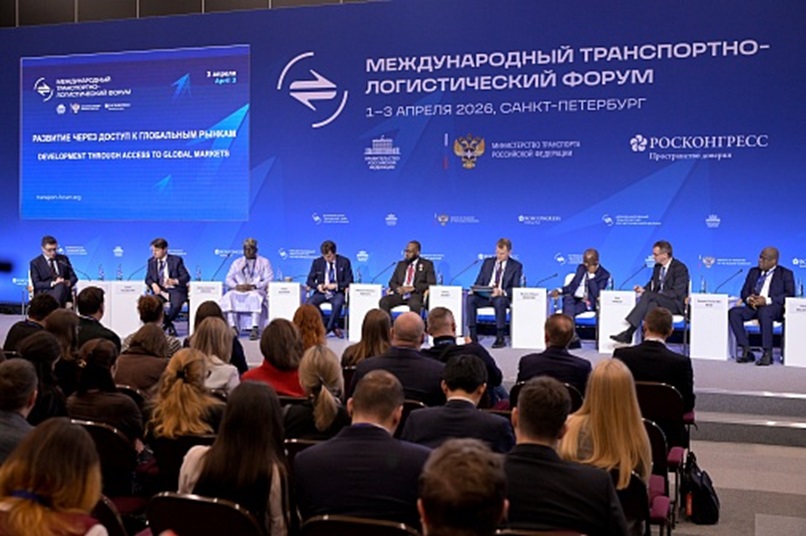
At the plenary session under the theme “Development Through Access to Global Markets” organised during the first International Transport and Logistics Forum held in St. Petersburg, both Russian and African speakers have acknowledged, in their high-quality presentations, the importance of fostering understanding of transport innovations, shifting investment and the possibility of addressing current infrastructure challenges for economic growth.
In promoting comprehensive cooperation in the transport and logistics sphere, Deputy Minister of Transport of the Russian Federation, Dmitry Zverev, stressed that the African continent is one of the fastest-growing regions of the world, demonstrating an average GDP growth rate of 4.5% per year.
According to expert projections, by 2050, Africa’s population will reach 2.5 billion people. To ensure logistical links, it is necessary to build a clear and understandable dialogue with partners, working simultaneously at two levels: at the level of governments, through intergovernmental agreements, and at the level of co-business partnerships. Russian transport corridors guarantee the stability of supplies. Today, there are issues of food security, fertiliser supply and formation of new chains, and other emerging geopolitical challenges facing Africa.
As the guest/main speaker, Zverev explained that Russian companies such as FESCO, RZD, GLONASS and Avtodor are actively involved in this process. This is a unique experience sharing technology and infrastructure solutions in significant volumes. “And frankly, that’s an important image distinction of Russia: we’re not just exporting or selling something – we’re offering technologies and cooperation. Together with technologies, we provide training and prepare national personnel who will work on their transport infrastructure in the future,” asserted Zverev.
Minister of Energy and Infrastructure of the United Arab Emirates, Suhail Mohammed Al Mazrouei, spoke of his country’s decision to invest significant money in the development of its railway infrastructure, with work already underway to connect to Oman by rail and open up new opportunities for freight transportation to Africa and Asia.
“We continue to invest in the development of our country’s logistics network and alternative routes. Russia is an important exporter of raw materials, and development in its regions will contribute to economic growth across the globe. Central Asia is also emerging as a key player, and we are investing in the region’s infrastructure and connecting China to the global economy through Russia and the Middle East,” he said.
Minister Delegate for Maritime Economy of the Ministry of Maritime Economy, Fisheries, and Coastal Protection of the Togolese Republic, Kokou Edem Tengue, spoke of the importance of understanding the African perspective on changing maritime routes as the situation around the Suez Canal and the Strait of Hormuz creates new opportunities for West Africa.
The Port of Lomé, the largest container port in Sub-Saharan Africa, handles approximately 30 million tonnes of goods annually, and its importance for the region is difficult to overstate. “We are actively working with Mali, Burkina Faso, and Niger; the Port of Lomé is a key logistics hub for the landlocked nations of the Sahel,” he said. “It should be noted that Africa relies on chemical fertilisers and grain produced in Russia. We believe that the Port of Lomé could be a part of new sea routes between Africa and Russia.”
In his speech, Minister of Transport of the United Republic of Tanzania, Makame Mnyaa Mbarawa, reported on the active modernisation of the Dar es Salaam port. Previously, the depth of the water was 9–12 meters; now it has increased to 12–15 meters. An increase in the number of operators operating in the port is planned. Thanks to these measures, cargo turnover increased significantly, and ship handling times decreased from 10 days to 2–3. This is an important achievement, after all, speed is a key factor for investors.
However, the port cannot function in isolation; it needs modern rail infrastructure. Tanzania’s government is leading the construction of a new railway to Kigoma, and then into Burundi and south, creating a reliable transportation artery. Dar es Salaam will become a gateway to Burundi, Rwanda, Malawi and Zambia, which depend on cargo flow through this port. Therefore, the development of the port and associated railway is of strategic importance in the region.
“In parallel, the modernisation of the TAZARA railway is going on – a historic artery that requires an upgrade. The private sector is actively involved in this work. After revitalisation, this line will become a key link between Dar es Salaam port and Zambia, he stated. The Government of Tanzania will make every effort to implement these projects and will work closely with the private sector. We invite Russian companies – both state and private – to participate in logistics projects and port infrastructure modernisation.”
As far as road safety in Niger is concerned, the country is facing various challenges that require finding ways to improve the situation, according to the Speaker from Niger, Abdurakhaman Amadou. Within the framework of the discussion, he also noted that an important step was to upgrade the car park and road network. As Niger has no access to the sea, the emphasis is on road traffic to ensure the country’s supply.
“We have access to the port of Lome in the Togolese Republic, which remains neutral towards us. However, the Caton port is closed for us, which created serious difficulties as 80% of our exports and imports passed through it. Recently, the situation has started to improve due to the construction of a railway by Nigeria, which will provide us with access to its ports,” Abdurakhaman informed.
In addition, diplomatic relations with Algeria have been restored after a long hiatus, which opens an exit to the Mediterranean. The conference of Islamic states confirmed the intention to build a grand railway linking Dakar and Djibouti across the entire continent from west to east. This railway will partially pass through Niger, which will be an important step in the development of the region’s transportation infrastructure.
President Vladimir Putin, in a message to participants, organisers, and attendees of the International Transport and Logistics Forum, says that Russia is ready to share its experience through joint science and technology programmes and, of course, by training specialists able to ensure the development of transport and logistics in the 21st century, using a new technological foundation. The Transport and Logistics forum was held for the first time on April 1-3 in St. Petersburg, the second-largest city in the Russian Federation.
By Kestér Kenn Klomegâh
The Arab Republic of Egypt, a country spanning the northeast corner of Africa and the southwest corner of Asia, has a highly strategic location and attracts multifaceted interests of foreign players. For decades, Russia has established diplomatic relations with Egypt and has consistently sustained diverse ties with this country. It is no secret that Russia’s lust for the region is primarily due to the strategic importance of the Mediterranean Sea for investment and economic cooperation with the Maghreb region.
Determined to strengthen, particularly, economic cooperation, Russian President Vladimir Putin has maintained regular contacts with his colleague, President of Egypt, Abdel Fattah el-Sisi, mostly discussing both bilateral cooperation and broader regional developments. The current world’s geopolitical development, for instance, the United States-Israeli war on Iran in the Middle East, constitutes one theme both leaders frequently review, attempting to find long-term solutions.
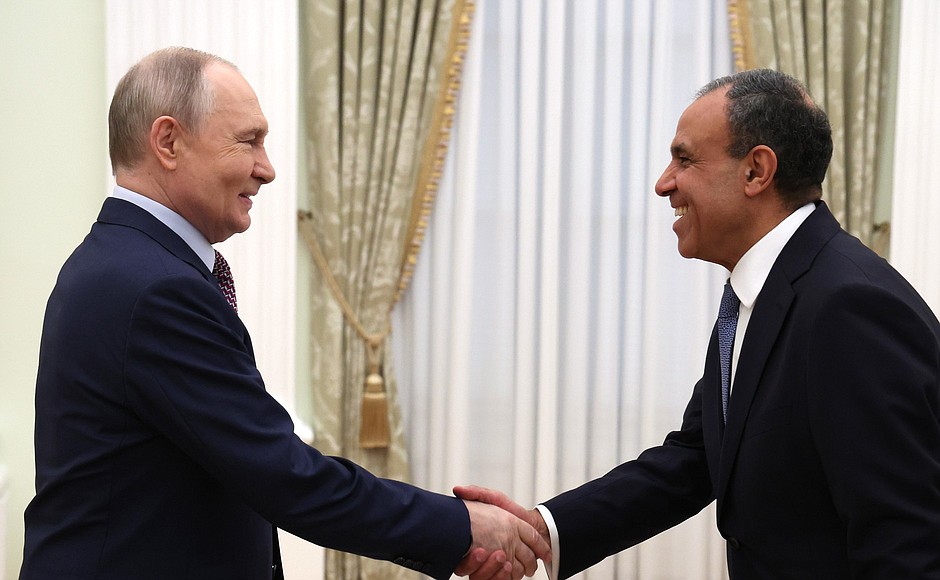
On April 2, Putin met with the Minister of Foreign Affairs, Emigration, and Egyptian Expatriates of the Arab Republic of Egypt, Badr Abdelatty, in the Kremlin – the seat of Russia’s presidency. In attendance during the official talks on the Russian side were Foreign Minister Sergei Lavrov and Presidential Aide Yury Ushakov, while Egypt was represented by Ambassador Extraordinary and Plenipotentiary to the Russian Federation Hamdy Shaaban. Ultimately, there is no need to overstate the importance of this meeting.
Russia’s footprints are expanding in Egypt, highlighting the growing industrial investment and the strengthening of bilateral manufacturing ties by undertaking projects to ensure energy security. At the same time, maintaining regular dialogue remains very important for both leaders.
Putin, speaking with the three-member delegation in the Kremlin, underlined the fact that there are many promising initiatives underway, many of which are already being implemented. He has previously spoken in detail about the construction of a nuclear power plant and the construction of an industrial zone, and over ten major Russian companies have expressed interest in participating in this project.
Nuclear Plants in El-Dabaa, Egypt
The construction of nuclear plants in the city of El-Dabaa, about 320 kilometres northwest of Cairo, the capital of Egypt. It is the first nuclear power plant in Egypt, and will have four VVER-1200 reactors, making Egypt the only country in the region to have a Generation III+ reactor. On November 19, 2015, Egypt and Russia signed an initial agreement, under which Russia agreed to build and finance Egypt’s first nuclear power plant. These are now being carried out, not as a charity project, but with a loan of $28 billion. According to reports, Russia will finance 85% as a state loan of $25 billion, and Egypt will provide the remaining 15% in the form of instalments. The Russian loan has a repayment period of 22 years, with an annual interest rate of 3%.
At the meeting, Putin also raised the construction of an industrial zone in Egypt. There are many appealing and related opportunities in this, regarding having an industrial zone to be located on the banks of the Suez Canal. The industrial zone is also entering a new phase, as Russian auto-manufacturing enterprises are advancing distinctive plans to expand local vehicle production, reinforcing the country’s role as a regional manufacturing hub. The move reflects broader economic linkages between Russia and Africa, particularly in industrial development and supply chain integration.
Conveying Greetings and Reviewing the Middle East Situation
Naturally, the situation in the region remains a shared concern, according to Putin, and further hope that the ongoing conflict will be promptly resolved. “As you know, President Trump also addressed this issue yesterday. Let me reiterate that we are prepared to make every effort to help stabilise the situation and, as they say in such cases, return it to normal,” he stressed during the meeting. In this context, it is particularly important to know Egypt’s assessment as a key country in the Middle East.
Putin reminded the delegation of another Russia-Africa summit, which is planned for October 2026. With high hopes that Egypt will be represented by a strong, high-level delegation. Should the Egyptian President’s schedule allow, he would, of course, ahead of the summit, be very pleased to welcome him to Moscow. Jointly chaired by Vladimir Putin and Abdel Fattah el-Sisi, the first Russia-Africa summit, an important acute phase of the developments with Africa, under the motto of ‘For Peace, Security and Development’, was held for the first time in October 2019, in Sochi, a city located on the Black Sea coast. The idea to hold a Russia-Africa forum was initiated by President Putin at the BRICS (Brazil, Russia, India, China and South Africa) summit in Johannesburg in July 2018.
The head of the Egyptian Foreign Ministry, as traditionally expected, conveyed greetings from President El-Sisi to the Russian president and handed over a written message. President el-Sisi places great value on all aspects of the bilateral cooperation, and is extremely grateful for constructive collaboration on the El Dabaa Nuclear Power Plant, which represents a key milestone in the partnership. Despite the challenges, it is evident that the project is moving forward and will be completed by 2028.
In summary, as Egypt and Russia are reliable and time-tested partners, Putin plans to promote strategic projects, particularly in trade, economics, energy, and food security. With over 107 million inhabitants, Egypt is the most populous country in the Arab world, the third-most populous country in Africa, and the 15th-most populous in the world.
-
 Feature/OPED6 years ago
Davos was Different this year
-
Travel/Tourism10 years ago
Lagos Seals Western Lodge Hotel In Ikorodu
-

 Showbiz3 years ago
Estranged Lover Releases Videos of Empress Njamah Bathing
-
 Banking8 years ago
Sort Codes of GTBank Branches in Nigeria
-

 Economy3 years ago
Subsidy Removal: CNG at N130 Per Litre Cheaper Than Petrol—IPMAN
-

 Banking3 years ago
Sort Codes of UBA Branches in Nigeria
-

 Banking3 years ago
First Bank Announces Planned Downtime
-

 Sports3 years ago
Highest Paid Nigerian Footballer – How Much Do Nigerian Footballers Earn