World
Russia Reaffirms Readiness to Support Mali
By Kestér Kenn Klomegâh
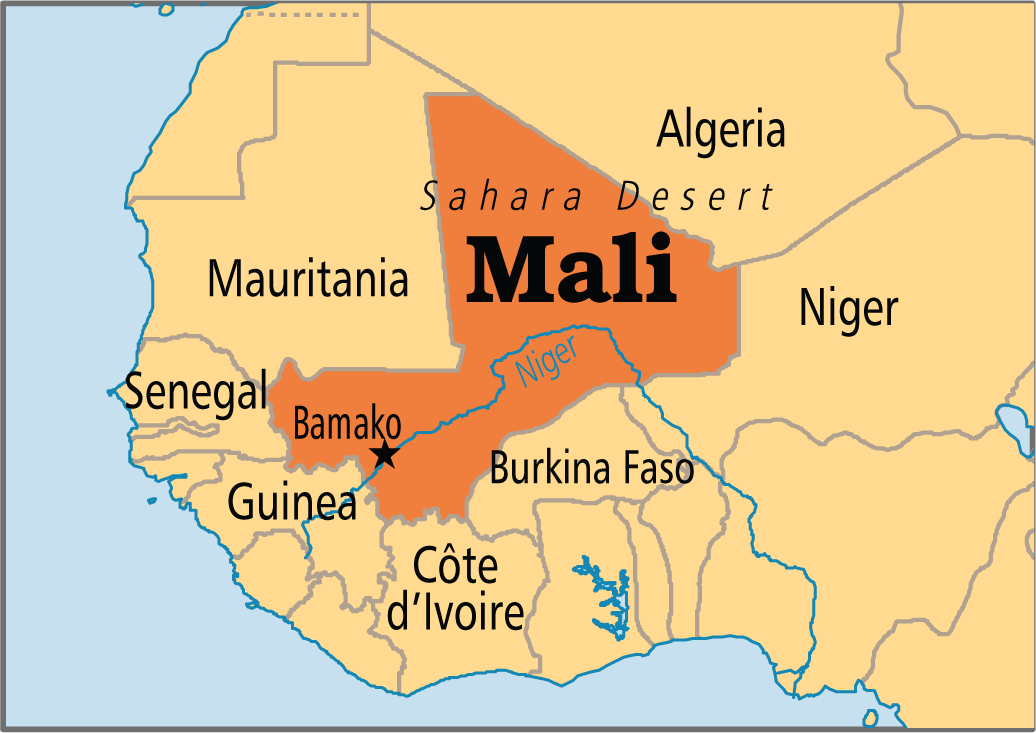
After withdrawing from the Joint Military Force of the G5-Sahel group which the United Nations described as “unfortunate” and “regrettable” middle of May, Malian Foreign Minister, Abdoulaye Diop, made a snapshot visit, for the second time under the new military administration to Moscow, intended to review various aspects of strategic partnership deals with Foreign Minister Sergei Lavrov.
“We paid special attention to the practical aspects of organizing deliveries from Russia of wheat, mineral fertilizers and petroleum products that are so much needed by the people of Mali today in conditions of illegitimate Western sanctions,” Lavrov said at a press conference after talks with Diop in Moscow.
The sound pace of military and military-technical contacts between the two countries was noted during the talks, according to Lavrov, and thanked his Malian counterpart for support for Russia’s resolutions at the latest session of the UN General Assembly. Lavrov made to explicit reference to the meeting of the UN Security Council the Western countries that consistently tried to “put their blame at Russia’s door” and to shirk responsibility for the food crisis.
“It goes without saying that we discussed the situation in Ukraine and around it, including the meeting of the UN Security Council devoted to world food security issues, where the Western countries tried to put their own blame at somebody else’s door. They argued that the crisis, which by and large is a result of their own efforts, allegedly stems from the crisis in Ukraine. Of course, they blamed it entirely on Russia,” Lavrov said.
Russia reaffirms its readiness to render Mali support in raising the fighting efficiency of its armed forces. “We reaffirmed Russia’s readiness as a permanent member of the UN Security Council to further contribute to normalizing the situation in Mali, render Bamako comprehensive support on a bilateral basis, in particular, in the sphere of raising the combat efficiency of the Malian armed forces, training troops and law-enforcement personnel,” Russia’s top diplomat said.
France’s decision together with Western allies to end the anti-insurgent Operation Barkhane and the European special forces mission Takuba does not contribute to restoring security in Mali and the entire Sahel region. Reports say France has approximately 5,100 troops in the region under Operation Barkhane, which spans five countries in the Sahel – Burkina Faso, Chad, Mali, Mauritania and Niger.
With the final exit and the vacuum created by France, Russia now sees Mali as an excellent conduit to penetrate into the Sahel by pushing the much-criticized Wagner Group that organizes private military for countries in conflict. It is aggressively targeting the Sahel region, an elongated landlocked territory located between north Africa (Maghreb) and West Africa region, and also stretches from the Atlantic Ocean to the Red Sea.
“There is an obvious danger of the emergence of enclaves of power vacuum where militants of various outlawed armed gangs will feel free at hand and they have already prepared for such acts. This threatens the country’s territorial integrity and we repeatedly told our French counterparts about that,” Russia’s top diplomat said.
On March 2 at the United Nations General Assembly, African representatives and their votes were considered very interesting, and have geopolitical implications for study and analysis. Some 17 African countries abstained from the vote at the UN General Assembly to deplore the Russian invasion of Ukraine while some other 28 countries in the continent voted in favour. Mali was among those that abstained from vote. Eritrea was the only African country that voted against the resolution. It opposes all forms of unilateral sanction as illegal and counterproductive.
“All our initiatives were supported by Mali. We agreed to enhance coordination on the UN platform and in other international organizations. We are determined to work for this in earnest, including in the recently created Group of Friends in Defense of the Charter of the United Nations,” Lavrov assured.
During his first official visit in November 2021 to Moscow, Abdoulaye Diop and Sergei Lavrov, in fact, focused on increasing bilateral cooperation in economic sectors. But particularly significant was Russia’s military assistance to strengthen the position of the new military government and to fight rising terrorism in the Sahel region.
As developments explicitly show, Mali already stands in isolation there as the Economic Community of West African States (ECOWAS), the African Union, the United Nations, and the bilateral and multilateral partners endorse and support the implementation of sanctions and other strict measures to ensure a peaceful return to constitutional and democratic government in Mali.
Mali, a landlocked West African state with an impoverished population, faces increasing isolation from the international community over the political power grab. Even as the African Union (AU), the continental organization, and the Economic Community of West African States (ECOWAS), the regional bloc, both suspended the membership of Mali following military coups in August 2020 and May 2021, the ruling military officials are still holding onto political power by delaying the proposed elections in February 2022.
The African Union, Economic Community of West African States (ECOWAS) and foreign organizations such as the European Union (EU) and the United Nations (UN) have requested a quick transition to a civilian government. They further urged that efforts are taken to resolve outstanding issues relating to sustainable development and observing strictly principles of democracy in the Republic of Mali in West Africa.
Moscow is still planning to hold the second Russia-African summit. The “special military operation” approved by both the Federation Council and the State Duma (legislative chambers) to “demilitarize and denazify” the former Soviet republic of Ukraine has pushed the United States and Canada, European Union members and many other external countries to impose sanctions against Russia.
World
Accelerating Intra-Africa Trade and Sustainable Development
By Kestér Kenn Klomegâh
Africa stands at the cusp of a transformative digital revolution. With the expansion of mobile connectivity, internet penetration, digital platforms, and financial technology, the continent’s digital economy is poised to become a significant driver of sustainable development, intra-Africa trade, job creation, and economic inclusion.
The African Union’s Agenda 2063, particularly Aspiration 1 (a prosperous Africa based on inclusive growth and sustainable development), highlights the importance of leveraging technology and innovation. The implementation of the African Continental Free Trade Area (AfCFTA) has opened a new chapter in market integration, creating opportunities to unlock the full potential of the digital economy across all sectors.
Despite remarkable progress, challenges persist. These include limited digital infrastructure, disparities in digital literacy, fragmented regulatory frameworks, inadequate access to financing for tech-based enterprises, and gender gaps in digital participation. Moreover, Africa must assert its digital sovereignty, build local data ecosystems, and secure cyber-infrastructure to thrive in a rapidly changing global digital landscape.
Against this backdrop, the 16th African Union Private Sector Forum provides a timely platform to explore and shape actionable strategies for harnessing Africa’s digital economy to accelerate intra-Africa trade and sustainable development.
The 16th High-Level AU Private Sector forum is set to take place in Djibouti, from the 14 to 16 December 2025, under the theme “Harnessing Africa’s Digital Economy and Innovation for Accelerating Intra-Africa Trade and Sustainable Development”
The three-day Forum will feature high-level plenaries, expert panels, breakout sessions, and networking opportunities. Each day will spotlight a core pillar of Africa’s digital transformation journey.
Day 1: Digital Economy and Trade Integration in Africa
Focus: Leveraging digital platforms and technologies to enhance trade integration and competitiveness under AfCFTA.
Day 2: Innovation, Fintech, and the Future of African Economies
Focus: Driving economic inclusion through fintech, innovation ecosystems, and youth entrepreneurship.
Day 3: Building Policy, Regulatory Frameworks, and Partnerships for Digital Growth
Focus: Creating an enabling environment for digital innovation and infrastructure through effective policy, governance, and partnerships.
To foster strategic dialogue and action-oriented collaboration among key stakeholders in Africa’s digital ecosystem, with the goal of leveraging digital economy and innovation to boost intra-Africa trade, accelerate economic transformation, and support inclusive, sustainable development.
* Promote Digital Trade: Identify mechanisms and policy actions to enable seamless cross-border digital commerce and integration under AfCFTA.
* Foster Innovation and Fintech: Advance inclusive fintech ecosystems and support innovation-driven entrepreneurship, especially among youth and women.
* Policy and Regulatory Harmonization: Build consensus on regional and continental digital regulatory frameworks to foster trust, security, and interoperability.
* Encourage Investment and Public-Private Partnerships: Strengthen collaboration between governments, private sector, and development partners to invest in digital infrastructure, R&D, and skills development.
* Advance Digital Inclusion and Sustainability: Ensure that digital transformation contributes to environmental sustainability and the empowerment of marginalized communities.
The AU Private Sector Forum has held several forums, with key recommendations. These recommendations provide valuable insights into the challenges and opportunities facing the African private sector and offer guidance for policymakers on how to support its growth and development.
World
Russia’s Lukoil Losses Strategic Influence Across Africa
By Kestér Kenn Klomegâh
Lukoil, Russia’s energy giant, has seriously lost its grounds across Africa, due to United States sanctions. Sanctions have complicated the company’s potential continuity in operating its largest oil field projects, grappling its investment particularly in Republic of Ghana, Democratic Republic of Congo, and Federal Republic of Nigeria.
Reports indicated the sanctions are further dismantling most of Lukoil’s operations, causing significant staff layoffs in its offices worldwide. For instance, Lukoil’s significant upstream operations in the Middle East include a 75% stake in Iraq’s West Qurna 2 oilfield and a 60% stake in Iraq’s Block 10 development. In Egypt, the company holds stakes in various oilfields alongside local partners.
Lukoil has until December 13, 2025, to negotiate the sale of most of its international assets, including those in Asia, Africa and Latin America. It has already terminated several important agreements that were signed with international partners due to difficulties in circumventing the sanctions.
Reports said calculated efforts to diversify exploration business relations is turning extremely complex, and current at the cross-roads, Lukoil will have to ultimately give up existing contracts and agreements it had signed with external countries.
Lukoil’s website reports also pointed to reasons for abandoning oil and gas exploration and drilling project that it began in Sierra Leone. According to those reports, Lukoil could withdraw from almost all of the projects in West Africa.
In addition to geopolitical sanctions, technical and geographical hitches, Lukoil noted on its website, an additional obstacles that “the African leadership and government policies always pose serious problems to operations in the region.” Similarly, the Kremlin-controlled Rosneft abandoned its interest in the southern Africa oil pipeline construction, negatively impacted on Angola, Mozambique, South Africa and Zimbabwe.
United States sanctions has hit Lukoil, one of the Russia’s biggest oil companies, like many other Russian companies, that has had a long history shuttling forth and back with declaration of business intentions or mere interests in tapping into oil and gas resources in Africa.
World
Putin Launches RT India Broadcasting
By Kestér Kenn Klomegâh
In New Delhi, President Vladimir Putin, alongside Editor-in-Chief of Russia Today, Margarita Simonyan, took part in the launch ceremony of the RT India TV channel. The TV channel will operate from a new studio complex in New Delhi, marking a new dimension in the bilateral media sphere.
Editor-in-Chief of Russia Today, Margarita Simonyan, indicated that the collaboration, naturally, points to India’s hospitality, affirming that this endeavour was not only worthwhile but long overdue.
Vladimir Putin, officially, launching the TV studio, also emphasized that the Russia Today channel in India, RT India, grants millions of Indian citizens clearer, more direct access into insights about contemporary Russia – the realities, aspirations, and perspectives. He reiterated the existing traditional friendship, and the ties between the Indian and Russian peoples go much deeper into the past; which rests on a solid historical foundation. And at the core of relationship lies mutual interest.
Russia Today is a source of truthful and reliable information, focused on serving the interests of its viewers and listeners. Its main mission is merely to promote Russia, its culture, and its positions on domestic and international issues. Above all, Russia Today strives to convey truthful information about the country and about what is happening in the world. This is the absolute value of Russia Today.
-
Feature/OPED6 years agoDavos was Different this year
-
Travel/Tourism9 years ago
Lagos Seals Western Lodge Hotel In Ikorodu
-
Showbiz3 years agoEstranged Lover Releases Videos of Empress Njamah Bathing
-
Banking7 years agoSort Codes of GTBank Branches in Nigeria
-
Economy3 years agoSubsidy Removal: CNG at N130 Per Litre Cheaper Than Petrol—IPMAN
-
Banking3 years agoFirst Bank Announces Planned Downtime
-
Banking3 years agoSort Codes of UBA Branches in Nigeria
-
Sports3 years agoHighest Paid Nigerian Footballer – How Much Do Nigerian Footballers Earn