

World
Russian, African Journalists Discuss Great Personalities in Russian-African Relations History

By Kestér Kenn Klomegâh
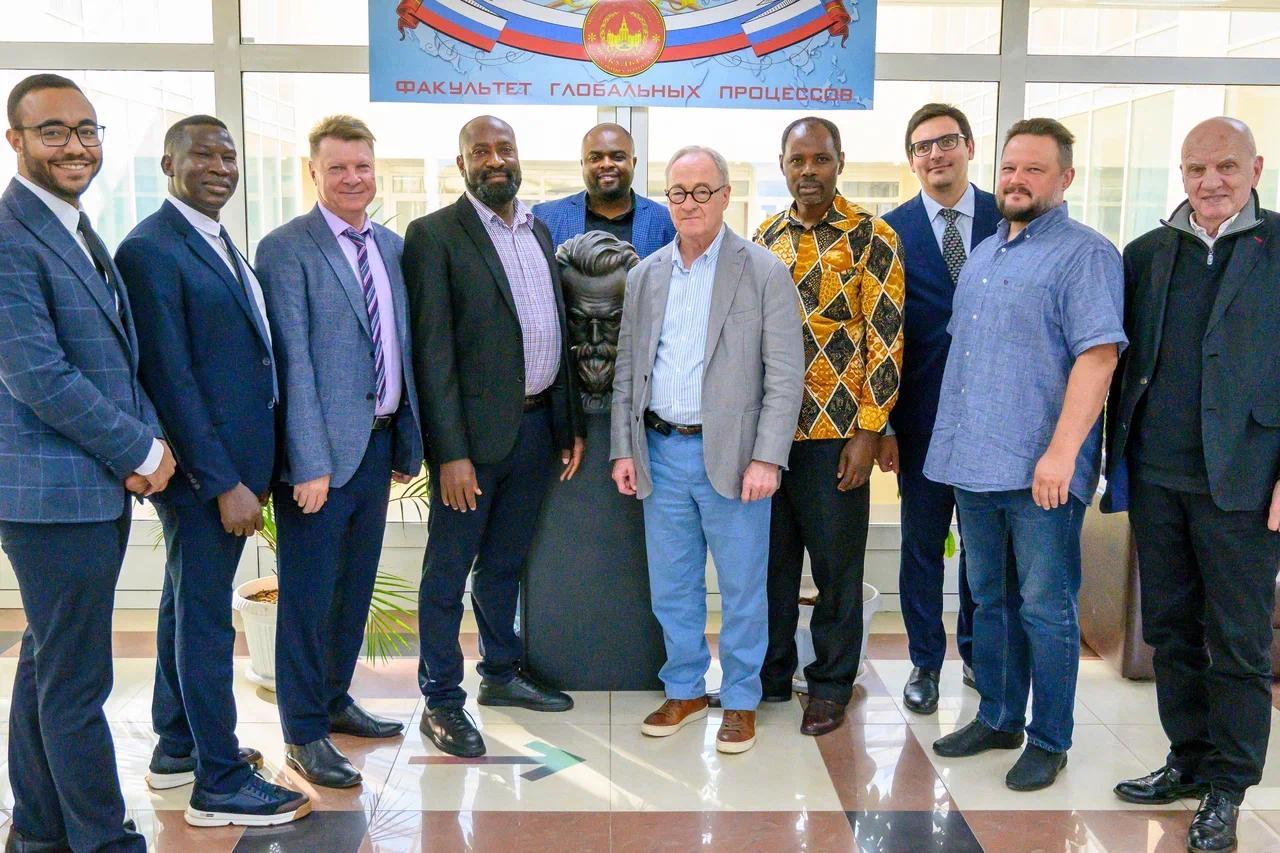
A roundtable of laureates of the first International Contest of Russian and African Journalists: “Great Personalities in the History of Russian-African Relations”, timed to coincide with the 225thanniversary of A.S. Pushkin’s birth, was held on July 31, 2024. The round table was organized by the Russian-African Club of Lomonosov Moscow State University in partnership with the Union of Journalists of Russia, the Faculty of Journalism and the Faculty of Global Studies of Lomonosov Moscow State University with the support of the Secretariat of the Russia-Africa Partnership Forum (Ministry of Foreign Affairs of Russia).
The speakers of the round table were award-winning contestants, diplomats, media top managers, producers, TV presenters, journalists, public figures, scientists, teachers, and culture and mass media representatives of Russia and African countries.
The contribution of outstanding personalities to the development of relations between Russia and African countries in the works of the contest winners was discussed in the course of the round table. The participants put forward ideas and proposals to popularize knowledge in Russia and Africa about significant persons who contributed to the strengthening of Russian-African relations. They also discussed preparations for the second International contest for Russian and African journalists on the topic: “Short video stories about landmarks of your country”, dedicated to the 270th anniversary of Moscow University. The meeting was held in Russian, English, French and Arabic.
Timur Shafirа, Secretary of the Union of Journalists of Russia, addressed the participants with his welcoming speech. He expressed confidence that events like this contest are of great importance in strengthening relations between nations. In his opinion, journalists are civil diplomats, helping to build constructive partnerships and preserve stability and cooperation.
Anna Gladkova, Deputy Dean for International Cooperation of the Faculty of Journalism of Lomonosov Moscow State University, in her speech, conveyed greetings to the participants from Elena Vartanova, Dean of the Faculty of Journalism of MSU. The speaker also emphasized the special importance of holding this contest on the anniversary of the great genius of Russian poetry Alexander Pushkin and wished further success to the project.
The winner of the contest, a student of the University of International Relations from Cameroon Danielle Juanita Kabeyene told about her article, which she dedicated to the modern Togolese public and political figure, president of the “League for the Defense of Black Africans” Egountchi Behanzin. Winning such a prestigious competition is a great honour, Danielle noted.
Hafiz Basi from Sudan, who also won the contest, wrote an article about Alexander Pushkin, as he considers the great poet to be a true symbol who combined a true love for Russia and Africa. Hafiz noted that the poet never forgot his African roots, which can be proved by many lines from his poems. At the same time, Africa has always known and remembered Pushkin. Many generations of Africans got acquainted with the great Russian literature through Pushkin’s works. Hafiz also told his second article about Pushkin’s ancestor – Abram Petrovich Hannibal who was African. According to the contestant, this bright man also became a symbol of historical relations between Russia and Africa.
Christian Mounene, a laureate from the Democratic Republic of Congo, wrote an article about Patrice Lumumba for the contest, as he considers him a man of great stature, one of the most prominent fighters against colonialism, who stood up for the rights of Africans and expressed the aspirations of African peoples to rapprochement with the USSR and Russia.
The contestant from Senegal, Abdou Karim Diakhate, editor-in-chief of Le Panafricain magazine, who also won the competition, wrote an article about the Senegalese writer and film director Sembene Ousmane, who made a great contribution to awakening Africans in their struggle for independence.
Another contestant from Russia, Anastasia Zapolskaya, called her award-winning article “Sergey Lavrov – the face of Russian diplomacy in the 21st century”. Anastasia said that she was particularly interested in the role of diplomacy in modern world processes. She is sure that Sergei Lavrov, as Russian Foreign Minister, makes a huge contribution to building a just world order based on multipolarity and equality.
The main character of the article by the award-winning contest from South Africa, Khola Kesva, was a prominent military and political leader from Mozambique, Samora Machel, a revolutionary who waged an active guerrilla struggle against the colonizers in close cooperation with the USSR and later became President of Mozambique.
Yves Ekoué Amaïzo, Director of the Afrocentrism think tank from Togo, noted that when writing the article for the contest, he was guided by the idea that there were and are many ordinary people from different countries who make their huge contribution to strengthening ties between Russia and Africa, but their activities are hardly covered in the media. The contest winner expressed the opinion that it is ordinary people working in the Russia-Africa agenda who are the foundation on which strong friendly relations are built day by day.
This idea was supported by a round-table participant from Rwanda, Chairman of the Board of the African Diaspora Union for Truth and Advancement of People of African Descent “Inganzo Gakondo” François-Xavier Tulikunkiko. He noted that there are various Russian-African organizations in many cities in Russia where many things are being done to strengthen relations between Russia and Africa. Besides, a very large number of university graduates from the USSR and Russia now live in almost all African countries, and many of them hold significant positions. The speaker suggested that graduates should be regularly involved in such competitions.
Ilya Shershnev, Program Director of the Russian-African Club of Lomonosov Moscow State University, Associate Professor of the Faculty of Global Studies of Moscow State University, noted the important work of university ambassadors – alumni as “envoys” and “ambassadors” of universities in Russia and Africa. In recent years, university ambassadors have appeared in many Russian and foreign universities, they are actively deploying their activity abroad. The geographical expansion of this journalistic contest will largely depend on university ambassadors and their personal relations and contacts.
Zenebe Kinfu, President of the Union of African Diasporas, joined his colleagues’ opinion and called on all organizations active in the field of relations between Russia and Africa to stand together and work on a united front.
President of the Cameroon Diaspora and the round table moderator, Louis Gowend, who is also the Director for African Diasporas and Media at the Russian-African Club of the Lomonosov MSU, stressed that African alumni and Russian-African organizations should become the foundation for relations between Russia and Africa to be built on.
Daniel Sawadogo, Cultural Relations Attaché at the Embassy of Burkina Faso, emphasized the importance of the international journalism contest and called for such contests to be held as often as possible. According to the diplomat, it is necessary for close cooperation between African countries and Russia. Mr. Sawadogo called the journalists’ contest a brilliant success of the MSU Russian-African Club.
Sergey Chesnokov, permanent expert of the Russian-African Club of Lomonosov Moscow State University, international journalist, and academician of PANI, proposed to create branches of the club in African countries. In the expert’s opinion, this would contribute to even closer interaction and would allow us to receive information and exchange opinions with African experts.
Summarizing the round table, Alexander F. Berdnikov, Executive Secretary of the Russian-African Club of MSU, supported the need for interaction between the African diaspora established in Russia and alumni located in African countries. According to him, this contest promotes the establishment of such ties. He suggested publishing a collection of articles written by all participants of the journalism contest and organizing the next contest together with other universities that are also working to strengthen ties between Russia and Africa.


