
World
Some Reflections on Russia’s Economic Policy with Africa

By Kestér Kenn Klomegâh
During the September ceremony to receive foreign ambassadors, Russian leader Vladimir Putin offered spiteful goal-setting policy outlines and some aspects of lofty Russia’s economic policy directions for Africa. Most of these directions considered significant have, over these years, featured prominently in all his previous speeches on Russia’s relations with Africa.
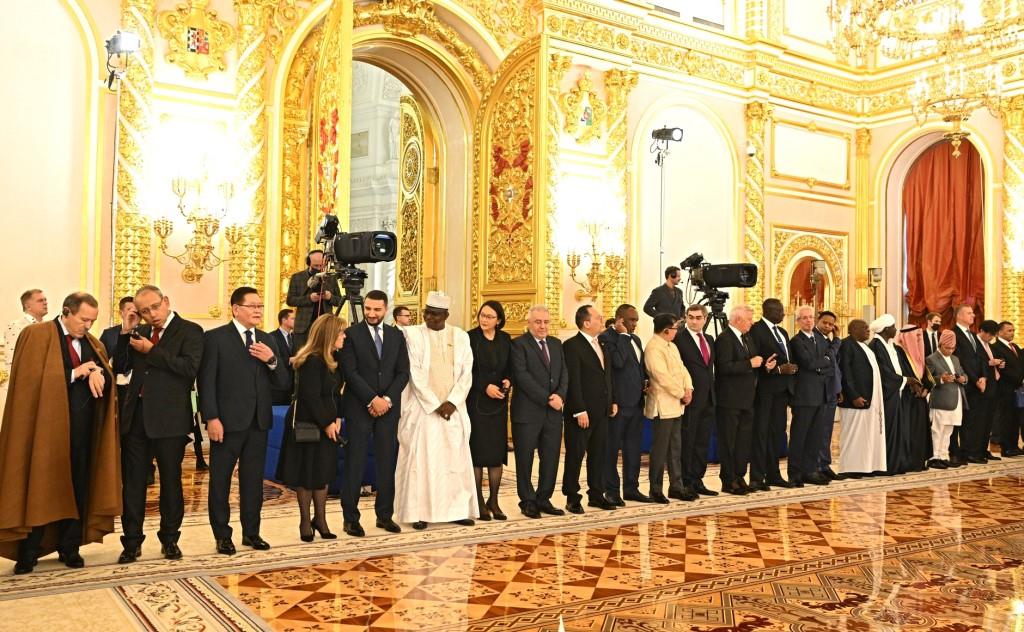
On September 20, in the St Alexander Hall of the Grand Kremlin Palace, Putin received letters of credence from 24 newly-arrived ambassadors, including nine from Africa (Algeria, Egypt, DR Congo, Libya, Mali, Senegal, Sudan, Tanzania and Uganda). By tradition, Putin briefly characterised the relations between Russia and countries whose envoys came to the Kremlin ceremony.
In a grandiose style, Putin gave a line-up of cheerful-looking ambassadors a step-by-step account of the global situation, the necessity for Russia’s “special military operation” in neighbouring Ukraine, questions relating to regional security, and economic instability due to rising prices for energy and commodities. He underscored the development of multipolar and more democratic and fair world order had entered its active phase.
“Regrettably, the objective movement towards multipolarity has come up against resistance from those trying to preserve their dominant role in international affairs and to control everything – Latin America, Europe, Asia and Africa,” Putin said.
Referencing the current international situation with an emphasis on the critical regional problems of the African continent and the bilateral relations of African countries whose ambassadors were accredited to the Russian Federation, Putin stressed “the importance of the upcoming second Russia-Africa summit in St. Petersburg in 2023 for strengthening diverse relations between Russia and African countries.”
Putin further touched on Moscow’s efforts to restore its geopolitical foothold on the continent after the historical collapse of the Soviet era. While the summit is considered a significant development for Russia’s power-wielding ambitions, Putin strongly reminded African ambassadors that the second Russia-Africa summit is scheduled to be held in St Petersburg in 2023. “We hope that together we will be able to give a new impetus to the comprehensive development of mutually beneficial cooperation between Russia and the African states,” he said.
Significant to note here that at the far end of the first summit, Russia and Africa issued a joint declaration; among the questions was to hold the summit every three years. Both Russia and Africa could not hold the summit during its third year, and both Russia and Africa failed to choose the summit venue. While reasons were not assigned for this sharp inconsistency, policy experts suggested either the Central African Republic (CAR) or the Republic of Mali could hold the summit. CAR and Mali are “reliable Russia’s partners,” and holding the summit would have resonating effects.
During his speech, Putin invited the President of Algeria Abdelmadjid Tebboune, to visit Russia. Understandably, Algeria is Russia’s second-largest trading partner in Africa regarding trade volume. And trade and economic cooperation continue to develop actively, as well as ties in other areas, including military-technical and cultural ties. Reports say Russia supports Algeria’s balanced regional and international affairs policy and continues to work together towards strengthening stability in the Middle East, North Africa and the Sahara-Sahel region.
“We consistently build friendly relations with Egypt under the fundamental Agreement on Comprehensive Partnership and Strategic Cooperation signed in 2018. We view Egypt as one of our most important partners in Africa and the Arab world. We are in constant contact with President Sisi,” according to Putin.
The intergovernmental commission has been working, promoting trade growth, which increased by more than 40 per cent in the first six months of this year. Large joint projects are being implemented, such as constructing the El Dabaa nuclear power plant and creating a Russian industrial zone near the Suez Canal. There is a regular political dialogue and close foreign policy coordination. Within the general policy framework, Russia does not grant concessionary loans and has not publicly allocated a budget for Africa.
But in this exceptional case, Russia and Egypt signed an agreement, and the total cost of construction is fixed at $30 billion. Russia provides Egypt with a loan of $25 billion, which will cover 85% of the work. The Egyptian side will cover the remaining expenses by attracting private investors. Under the agreement, Egypt is to start payments on the loan, which was provided at 3% per annum, in October 2029.
Ambassador Harouna Samake (Republic of Mali) was among the envoys in the Kremlin and listened attentively as Putin welcomed the intention of the leadership of the Republic of Mali to form a long-term strategic partnership with Russia and develop mutually beneficial ties.
During a detailed telephone conversation in August with Interim President Assimi Goïta, Putin agreed to continue joint efforts in countering international terrorism and religious extremism. He further pledged that Russia would continue to provide the Malian people with comprehensive assistance and support in various ways.
The same diplomatic rhetoric praised Russia’s relations with Uganda, one of Russia’s reliable partners in Africa. The United Republic of Tanzania has listed promising spheres such as peaceful nuclear research, transport, energy and tourism. These spheres have been on Russia’s list for many other African countries.
Over the years, Russia has performed dismally in Africa’s transport and energy sector. In theory, it has expressed heightened interest in exploring and producing oil and gas in Africa. But so far, its investment efforts are not seen in the region. Russia claims the leading position as an energy supplier and is now rapidly diversifying its products at discounted prices to the Asian market. Therefore, it is logical that African leaders should not expect much from the Russian Federation in this oil and gas (energy) sector.
Currently, all African countries have a serious energy crisis. Over 620 million in Sub-Saharan Africa do not have electricity out of 1.3 billion people. In this context, several African countries are exploring nuclear energy as part of the solution. Three decades after the Soviet collapse, not a single nuclear plant has been completed in Africa.
Some still advocate for alternative energy supply. Gabby Asare Otchere-Darko, Founder and Executive Director of Danquah Institute, a non-profit organization that promotes policy initiatives and advocates for Africa’s development, wrote in an email that “Africa needs expertise and knowledge transfer that can assist Africa to develop its physical infrastructure, add value to two of its key resources: natural resources and human capital.”
Russia has respectable expertise in one key area for Africa: energy development. “But, has Russia the courage, for instance, to take on the stalled $8-$10 billion Inga-3 hydropower project on the Congo river? This is the kind of development project that can vividly send out a clear signal to African leaders and governments that Russia is, indeed, ready for business,” he said in an interview discussion.
The renewable energy potential is enormous in Africa, citing the Democratic Republic of Congo Grand Inga Dam. Grand Inga is the world’s largest proposed hydropower scheme. It is a grand vision to develop a continent-wide power system. Grand Inga-3 is expected to have an electricity-generating capacity of about 40,000 megawatts – nearly twice as much as the 20 largest nuclear power stations. The cost of building nuclear power does not make sense when compared to the cost of building renewables or other energy sources to solve energy shortages in Africa.
With high optimism and a high desire to strengthen its geopolitical influence, Russia has engaged in sloganism, and many of its signed agreements have not been implemented. The joint declaration adopted at the first summit is intended to raise the African agenda of Russia’s foreign policy to a new level and remains the main document determining the conceptual framework of Russian-African cooperation. Many remain as submit paperwork. China, Japan, India, the United States, the European Union and other players are progressively implementing their African strategies.
Over the years, Russia has shown high interest in Libya, whose ambassador, Emhemed Almaghrawi (State of Libya), was part of the Kremlin ceremony in September. Over the years, Russia has struggled to improve its bilateral political and economic dialogue and cooperation with that North African country. It has faced many pitfalls and obstacles, though.
“We attach great importance to relations with Libya and are interested in a fair and lasting settlement of the protracted internal conflict in that country. Russia will continue to support Libya’s sovereignty and territorial integrity and help the friendly Libyan people defend their right to a decent life, peace and security. As the internal situation in Libya stabilises, we look forward to resuming bilateral cooperation in various fields,” Putin said.
Russian Foreign Minister Sergey Lavrov condemned the Atlantic alliance when he spoke to students at the Moscow State Institute of International Relations in Moscow on September 1. Russia claims it lost billions of dollars in energy, defence, and infrastructure contracts it had negotiated with the removal of Col. Qaddafi. Russia’s state arms exporter lost an estimated $4 billion in Libyan contracts after the UN Security Council imposed an arms embargo on Libya.
Russian Railways had secured a $3 billion contract to build a high-speed rail link from Sirt to Benghazi. Many of these contracts were either signed in Qaddafi’s presence or were organized by him. Russia’s state news agency ITAR-TASS estimates that the country could lose as much as $10 billion in business if Libya’s new leadership challenges the legality of the existing contracts.
As Anna Borshchevskaya, an Ira Weiner Fellow at the Washington Institute for Near East Policy, observes that military has been part of the foreign policy of the Russian Federation, and Russian authorities have been strengthening military-technical cooperation with some African countries.
“A major driver for Moscow’s push into Africa is military cooperation more broadly. These often include officer training and the sale of military equipment, though the details are rarely publicly available,” she acknowledges, “and it will continue so in Russia’s relations with Africa.
Russia has made significant arms deals with Angola and Algeria. Reports show that Egypt, Uganda, Tanzania, Somalia, Mali, Sudan and Libya have also bought arms from Russia. Small countries such as Burundi, Botswana, and Rwanda, with distinctively impoverished populations and budgetary limitations, have signed agreements. Russia also provides military training and support; it has defence orders worth $14 billion from African countries.
According to Nezavisimaya Gazeta, quoting military experts, Russia has much to gain by promoting and attempting to dispose of its Soviet-era military equipment in Africa. After all, Russia is self-sufficient and has economic independence, so with enthusiasm, convincing African leaders to purchase fertilizers and grains, thereby pushing them towards depleting their hard-earned revenues. Without a doubt, African leaders endlessly boast of vast uncultivated lands.
During these months of the Russia-Ukraine crisis and sanctions from the United States, Europe and Pacific allies, Russian diplomacy has repeatedly stressed that Moscow is ready to export 30 million tons of grain and over 20 million tons of fertilizer by the end of 2022.
According to local Russian media reports, the Russian Agriculture Ministry’s Agroexport Federal Centre for Development of Agribusiness Exports, in close partnership collaboration with Trust Technologies and the business expert community, drew up a business plan for the development of exports for agricultural products (grain, dairy, meat and confectionery products) to promising markets of African countries.
The project’s goal is to prepare a practice-oriented model for increasing supplies and enhancing the competitiveness of Russian agricultural goods in the African market. The report says nine African countries have been chosen as target markets for the delivery of agricultural products. These are Angola, Cameroon, Ethiopia, Ghana, Kenya, Mauritius, Nigeria, Tunisia and South Africa.
That report explicitly notes African leaders’ readiness to spend state budgets on food imports; without a doubt, “food security” is the central theme for the 2023 Russia-Africa summit. These countries account for 40% of the continent’s population and one-third of all African imports of agricultural products; Russia estimates to earn some $33 billion from Africa.
In practical terms, a microscopic analysis of Russia’s economic presence gives many interpretations and contradictions. While currently, Russia seems to be soliciting the support of Africa to lead the emerging new world order, Russia still does not recognize that it needs to adopt more public outreach policies to win the minds and hearts of Africans. Its economic footprint on the continent is comparatively weak. Instead of addressing its own investment agenda, it has consistently criticised other foreign players, especially the United States and European countries, that are active in Africa.
Many Russian companies have abandoned their projects in Africa. The latest is the lucrative platinum project contract that was signed for $3 billion in September 2014, the platinum mine is located about 50 km northwest of Harare, the Zimbabwean capital. The Darwendale project involves a consortium of the Rostekhnologii State Corporation, Vneshekonombank and Vi Holding in a joint venture with some private Zimbabwe investors and the Zimbabwean government.
After widely campaigning for the construction of what was referred to as the “Southern Oil&Gas Pipelines” that was supposed to connect three or four southern African countries, Russia’s Rosneft finally abandoned the project. And similarly, State Nuclear Enterprise Rosatom never mentioned again the proposed nuclear plant construction signed by Jacob Zuma of South Africa.
Russia’s Lukoil undertook exploratory feasibility studies in Sierra Leone, Nigeria, Cameroon and Ghana, only to abandon these projects. Nigeria’s Ajeokuta Steel Plant project remains a dream project for Russians. Norilsk Nickel (Nornickel), the Russian mining giant, ceased operations in Botswana. It owned a stake in the Tati Nickel in Botswana, where production was expected to reach its highest level. It has previously given a positive assessment of the possibilities for developing its production assets in South Africa and many African countries. There is a long list of Russian companies that under-performed or performed badly and finally exited Africa.
Just a few weeks before his departure from Moscow, the Zimbabwean ambassador to the Russian Federation, Brigadier General Nicholas Mike Sango, told me in an interview discussion that several issues could strengthen the relationship. One important direction is economic cooperation. African diplomats have consistently been persuading Russia’s businesses to take advantage of the Africa Continental Free Trade Area (ACFTA) as an opportunity for Russian businesses to establish footprints on the continent. This view has not found favour with them, and it is hoped over time, it will.
Although the government has not pronounced incentives for businesses to set sights and venture into Africa, Russian businesses generally view Africa as too risky for their investment. He said that Russia needs to set footprints on the continent by exporting its competitive advantages in engineering and technological advancement to bridge the gap that is retarding Africa’s industrialization and development.
“Worse is that there are too many initiatives by too many quasi-state institutions promoting economic cooperation with Africa saying the same things in different ways, but doing nothing tangible,” he told me during the lengthy pre-departure interview. He served the Republic of Zimbabwe in the Russian Federation from July 2015 to August 2022. He previously held various high-level posts, such as military adviser in Zimbabwe’s Permanent Mission to the United Nations and as an international instructor in the Southern African Development Community (SADC).
There are several similar criticisms from former ambassadors. According to Mandisi Mpahlwa, former South African Ambassador, Sub-Saharan Africa has understandably been low on post-Soviet Russia’s list of priorities, given that Russia is not as dependent on Africa’s natural resources as other major economies. The reason: Soviet and African relations, anchored as they were on the fight to push back the frontiers of colonialism, did not necessarily translate into trade, investment and economic ties, which would have continued seamlessly with post-Soviet Russia.
“Russia’s objective of taking the bilateral relationship with Africa to the next level cannot be realized without a close partnership with the private sector. Africa and Russia are close politically but geographically distant, and the people-to-people ties are still underdeveloped. This translates into a low level of knowledge on both sides of what the other has to offer. There is perhaps also a fear of the unknown in both countries,” Mpahlawa said in an interview after completing his ambassadorial duty in the Russian Federation.
Russia has a lot of policy weaknesses in Africa. Reports indicated that more than 90 agreements were signed at the end of the first Russia-Africa summit. Thousands of bilateral agreements are still on the drawing board, and century-old promises and pledges for supporting sustainable development are authoritatively renewed with African countries. Like a polar deer waking up from its deep slumber, Russia is flashing its geopolitical headlights in all directions on Africa.
Russia’s Ministry of Foreign Affairs website indicates that there have been several top-level bilateral meetings, signing of MoUs and bilateral agreements during the past years. In November 2021, a policy document titled the ‘Situation Analytical Report’ presented at the premises of TASS News Agency was very critical of Russia’s current policy towards Africa.
While the number of high-level meetings has increased, the share of substantive issues and definitive results on the agenda remains small. It explicitly points out the inconsistent approach in dealing with Africa. Russia lacks public outreach policies for Africa. Apart from the absence of a public strategy for the continent, there is a lack of coordination among various state and para-state institutions working with Africa.
Ultimately, actions, not words, will determine if upcoming Russia -Africa Summit and the proposed Africa strategy will reset relations with the continent. The significant fact here is that little has been achieved since the first Russia-Africa summit held in October 2019. According to the Russian Foreign Ministry’s Ambassador-at-Large and head of the Secretariat of the Russia-Africa Partnership Forum, Oleg Ozerov, food security will be one of the top issues on the agenda of the second Russia-Africa Summit.
It is a fact that Russia’s ties with Africa declined with the collapse of the Soviet Union in 1991. In the aftermath of the Soviet Union, Russia continues efforts in search of possible collaboration and opportunities for cooperation in the past years. But most essentially, Russians must understand clearly that little has been achieved in Africa. Several bilateral agreements signed with individual countries are not implemented, while in the previous years, there has been an unprecedented huge number of “working visits” to Africa.
According to our research findings, in stark contrast to key global players, for instance, the United States, China, the European Union and many others, Russia’s policies have little impact on African development paradigms. Russia’s policies have often ignored Africa’s sustainable development questions. Experts have repeatedly suggested Russia adopt an Action Plan – a practical document that would fill cooperation with substance between summits. In conclusion, Russians must strongly remember that Africa’s roadmap is the African Union Agenda 2063.



By Kestér Kenn Klomegâh
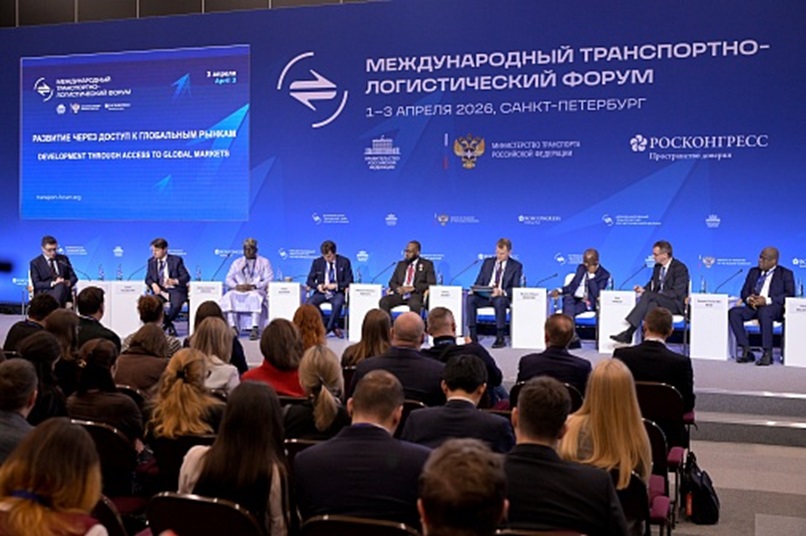
At the plenary session under the theme “Development Through Access to Global Markets” organised during the first International Transport and Logistics Forum held in St. Petersburg, both Russian and African speakers have acknowledged, in their high-quality presentations, the importance of fostering understanding of transport innovations, shifting investment and the possibility of addressing current infrastructure challenges for economic growth.
In promoting comprehensive cooperation in the transport and logistics sphere, Deputy Minister of Transport of the Russian Federation, Dmitry Zverev, stressed that the African continent is one of the fastest-growing regions of the world, demonstrating an average GDP growth rate of 4.5% per year.
According to expert projections, by 2050, Africa’s population will reach 2.5 billion people. To ensure logistical links, it is necessary to build a clear and understandable dialogue with partners, working simultaneously at two levels: at the level of governments, through intergovernmental agreements, and at the level of co-business partnerships. Russian transport corridors guarantee the stability of supplies. Today, there are issues of food security, fertiliser supply and formation of new chains, and other emerging geopolitical challenges facing Africa.
As the guest/main speaker, Zverev explained that Russian companies such as FESCO, RZD, GLONASS and Avtodor are actively involved in this process. This is a unique experience sharing technology and infrastructure solutions in significant volumes. “And frankly, that’s an important image distinction of Russia: we’re not just exporting or selling something – we’re offering technologies and cooperation. Together with technologies, we provide training and prepare national personnel who will work on their transport infrastructure in the future,” asserted Zverev.
Minister of Energy and Infrastructure of the United Arab Emirates, Suhail Mohammed Al Mazrouei, spoke of his country’s decision to invest significant money in the development of its railway infrastructure, with work already underway to connect to Oman by rail and open up new opportunities for freight transportation to Africa and Asia.
“We continue to invest in the development of our country’s logistics network and alternative routes. Russia is an important exporter of raw materials, and development in its regions will contribute to economic growth across the globe. Central Asia is also emerging as a key player, and we are investing in the region’s infrastructure and connecting China to the global economy through Russia and the Middle East,” he said.
Minister Delegate for Maritime Economy of the Ministry of Maritime Economy, Fisheries, and Coastal Protection of the Togolese Republic, Kokou Edem Tengue, spoke of the importance of understanding the African perspective on changing maritime routes as the situation around the Suez Canal and the Strait of Hormuz creates new opportunities for West Africa.
The Port of Lomé, the largest container port in Sub-Saharan Africa, handles approximately 30 million tonnes of goods annually, and its importance for the region is difficult to overstate. “We are actively working with Mali, Burkina Faso, and Niger; the Port of Lomé is a key logistics hub for the landlocked nations of the Sahel,” he said. “It should be noted that Africa relies on chemical fertilisers and grain produced in Russia. We believe that the Port of Lomé could be a part of new sea routes between Africa and Russia.”
In his speech, Minister of Transport of the United Republic of Tanzania, Makame Mnyaa Mbarawa, reported on the active modernisation of the Dar es Salaam port. Previously, the depth of the water was 9–12 meters; now it has increased to 12–15 meters. An increase in the number of operators operating in the port is planned. Thanks to these measures, cargo turnover increased significantly, and ship handling times decreased from 10 days to 2–3. This is an important achievement, after all, speed is a key factor for investors.
However, the port cannot function in isolation; it needs modern rail infrastructure. Tanzania’s government is leading the construction of a new railway to Kigoma, and then into Burundi and south, creating a reliable transportation artery. Dar es Salaam will become a gateway to Burundi, Rwanda, Malawi and Zambia, which depend on cargo flow through this port. Therefore, the development of the port and associated railway is of strategic importance in the region.
“In parallel, the modernisation of the TAZARA railway is going on – a historic artery that requires an upgrade. The private sector is actively involved in this work. After revitalisation, this line will become a key link between Dar es Salaam port and Zambia, he stated. The Government of Tanzania will make every effort to implement these projects and will work closely with the private sector. We invite Russian companies – both state and private – to participate in logistics projects and port infrastructure modernisation.”
As far as road safety in Niger is concerned, the country is facing various challenges that require finding ways to improve the situation, according to the Speaker from Niger, Abdurakhaman Amadou. Within the framework of the discussion, he also noted that an important step was to upgrade the car park and road network. As Niger has no access to the sea, the emphasis is on road traffic to ensure the country’s supply.
“We have access to the port of Lome in the Togolese Republic, which remains neutral towards us. However, the Caton port is closed for us, which created serious difficulties as 80% of our exports and imports passed through it. Recently, the situation has started to improve due to the construction of a railway by Nigeria, which will provide us with access to its ports,” Abdurakhaman informed.
In addition, diplomatic relations with Algeria have been restored after a long hiatus, which opens an exit to the Mediterranean. The conference of Islamic states confirmed the intention to build a grand railway linking Dakar and Djibouti across the entire continent from west to east. This railway will partially pass through Niger, which will be an important step in the development of the region’s transportation infrastructure.
President Vladimir Putin, in a message to participants, organisers, and attendees of the International Transport and Logistics Forum, says that Russia is ready to share its experience through joint science and technology programmes and, of course, by training specialists able to ensure the development of transport and logistics in the 21st century, using a new technological foundation. The Transport and Logistics forum was held for the first time on April 1-3 in St. Petersburg, the second-largest city in the Russian Federation.
By Kestér Kenn Klomegâh
The Arab Republic of Egypt, a country spanning the northeast corner of Africa and the southwest corner of Asia, has a highly strategic location and attracts multifaceted interests of foreign players. For decades, Russia has established diplomatic relations with Egypt and has consistently sustained diverse ties with this country. It is no secret that Russia’s lust for the region is primarily due to the strategic importance of the Mediterranean Sea for investment and economic cooperation with the Maghreb region.
Determined to strengthen, particularly, economic cooperation, Russian President Vladimir Putin has maintained regular contacts with his colleague, President of Egypt, Abdel Fattah el-Sisi, mostly discussing both bilateral cooperation and broader regional developments. The current world’s geopolitical development, for instance, the United States-Israeli war on Iran in the Middle East, constitutes one theme both leaders frequently review, attempting to find long-term solutions.
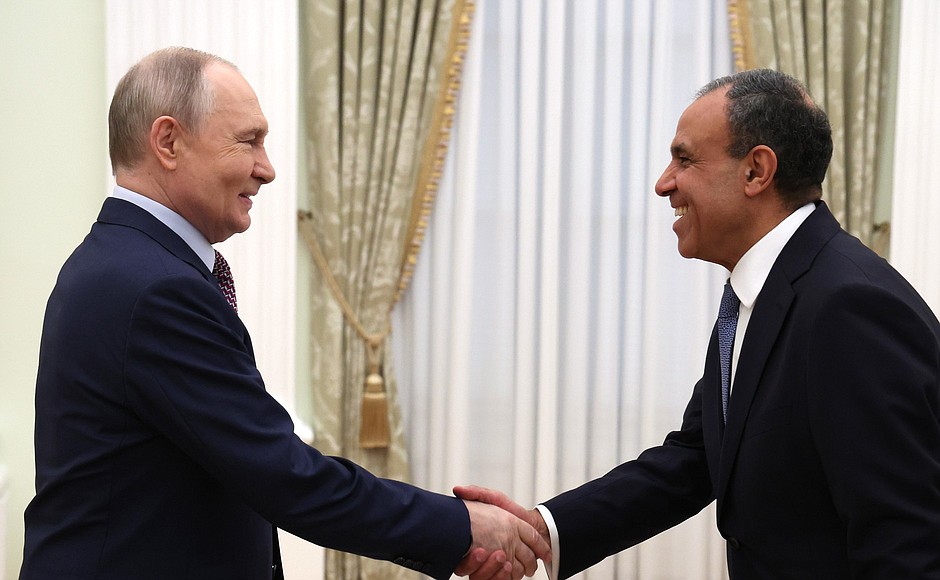
On April 2, Putin met with the Minister of Foreign Affairs, Emigration, and Egyptian Expatriates of the Arab Republic of Egypt, Badr Abdelatty, in the Kremlin – the seat of Russia’s presidency. In attendance during the official talks on the Russian side were Foreign Minister Sergei Lavrov and Presidential Aide Yury Ushakov, while Egypt was represented by Ambassador Extraordinary and Plenipotentiary to the Russian Federation Hamdy Shaaban. Ultimately, there is no need to overstate the importance of this meeting.
Russia’s footprints are expanding in Egypt, highlighting the growing industrial investment and the strengthening of bilateral manufacturing ties by undertaking projects to ensure energy security. At the same time, maintaining regular dialogue remains very important for both leaders.
Putin, speaking with the three-member delegation in the Kremlin, underlined the fact that there are many promising initiatives underway, many of which are already being implemented. He has previously spoken in detail about the construction of a nuclear power plant and the construction of an industrial zone, and over ten major Russian companies have expressed interest in participating in this project.
Nuclear Plants in El-Dabaa, Egypt
The construction of nuclear plants in the city of El-Dabaa, about 320 kilometres northwest of Cairo, the capital of Egypt. It is the first nuclear power plant in Egypt, and will have four VVER-1200 reactors, making Egypt the only country in the region to have a Generation III+ reactor. On November 19, 2015, Egypt and Russia signed an initial agreement, under which Russia agreed to build and finance Egypt’s first nuclear power plant. These are now being carried out, not as a charity project, but with a loan of $28 billion. According to reports, Russia will finance 85% as a state loan of $25 billion, and Egypt will provide the remaining 15% in the form of instalments. The Russian loan has a repayment period of 22 years, with an annual interest rate of 3%.
At the meeting, Putin also raised the construction of an industrial zone in Egypt. There are many appealing and related opportunities in this, regarding having an industrial zone to be located on the banks of the Suez Canal. The industrial zone is also entering a new phase, as Russian auto-manufacturing enterprises are advancing distinctive plans to expand local vehicle production, reinforcing the country’s role as a regional manufacturing hub. The move reflects broader economic linkages between Russia and Africa, particularly in industrial development and supply chain integration.
Conveying Greetings and Reviewing the Middle East Situation
Naturally, the situation in the region remains a shared concern, according to Putin, and further hope that the ongoing conflict will be promptly resolved. “As you know, President Trump also addressed this issue yesterday. Let me reiterate that we are prepared to make every effort to help stabilise the situation and, as they say in such cases, return it to normal,” he stressed during the meeting. In this context, it is particularly important to know Egypt’s assessment as a key country in the Middle East.
Putin reminded the delegation of another Russia-Africa summit, which is planned for October 2026. With high hopes that Egypt will be represented by a strong, high-level delegation. Should the Egyptian President’s schedule allow, he would, of course, ahead of the summit, be very pleased to welcome him to Moscow. Jointly chaired by Vladimir Putin and Abdel Fattah el-Sisi, the first Russia-Africa summit, an important acute phase of the developments with Africa, under the motto of ‘For Peace, Security and Development’, was held for the first time in October 2019, in Sochi, a city located on the Black Sea coast. The idea to hold a Russia-Africa forum was initiated by President Putin at the BRICS (Brazil, Russia, India, China and South Africa) summit in Johannesburg in July 2018.
The head of the Egyptian Foreign Ministry, as traditionally expected, conveyed greetings from President El-Sisi to the Russian president and handed over a written message. President el-Sisi places great value on all aspects of the bilateral cooperation, and is extremely grateful for constructive collaboration on the El Dabaa Nuclear Power Plant, which represents a key milestone in the partnership. Despite the challenges, it is evident that the project is moving forward and will be completed by 2028.
In summary, as Egypt and Russia are reliable and time-tested partners, Putin plans to promote strategic projects, particularly in trade, economics, energy, and food security. With over 107 million inhabitants, Egypt is the most populous country in the Arab world, the third-most populous country in Africa, and the 15th-most populous in the world.
By Kestér Kenn Klomegâh
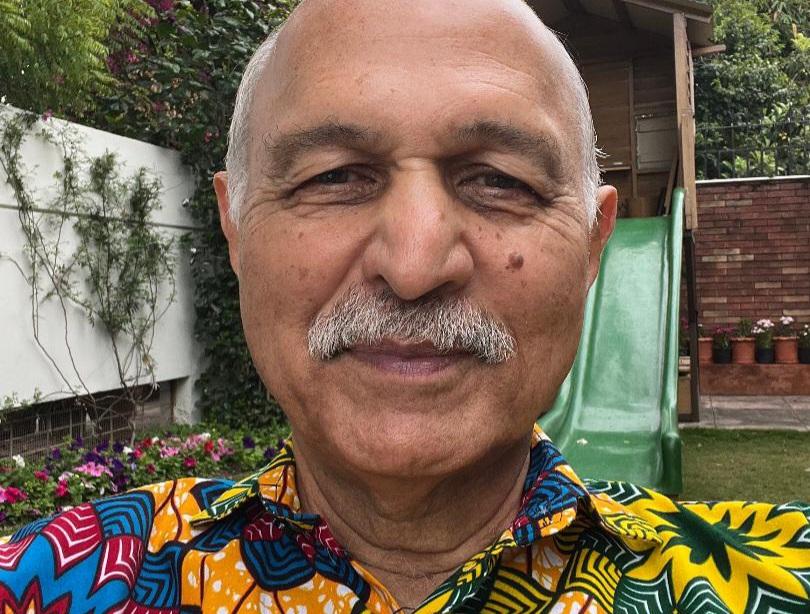
In an interview, Senator Mushahid Hussain, President of Pakistan-Africa Institute for Development and Research (PAIDR), explicitly offers a few important insights into the US-Israeli war on Iran and its implications for BRICS+ and Africa. Here are the interview excerpts:
What’s your interpretation of the US-Israel war on Iran, in the context of developments in the Middle East region?
The US-Israel illegal and unwarranted war on Iran was spearheaded by [Benjamin] Netanyahu (Prime Minister of Israel) and actively supported by [Donald] Trump (President of USA) as a Joint Operation with three fundamental goals: a) decimate the Islamic Revolutionary Regime; b) reshape the Middle East as part of Zionism’s ‘Greater Israel’ Project; c) preclude any possibility of establishing a Palestinian State with Jerusalem as its capital.
What is your assessment of Iran’s joining BRICS+ in 2025, China’s and Russia’s roles as members of this association, in this US-Israel war with Iran?
China and Russia have played, by and large, a low-key diplomatic role in supporting Iran but without any active political initiatives. BRICS is divided from within, as India is keen to curry favour with the USA and avoids close association with BRICS since the time that Trump attacked BRICS last year. But China & Russia are clear political beneficiaries of the war as American prestige is at an all-time low, having got entangled in an unwinnable war, resulting in weakening of the US ‘sole superpower’ image.
As an Asian expert, how would you characterise Africa’s reactions? And do you think that reactions were objectively authentic, basing perspectives broadly on Arab and Middle East contributions to Africa’s development?
Africa’s reactions to the war are primarily through the prism of the Global South, viewing Iran as resisting American-Israeli hegemonic designs, as, for example, manifested in two examples: South Africa’s rejection of American pressures to wean South Africa away from its support for Iran. Plus, Somalia joined Pakistan and China in supporting the Russian resolution in the UN Security Council seeking an immediate ceasefire and negotiations to halt the War, despite strident Western/US opposition to the Russian resolution.
-
 Feature/OPED6 years ago
Davos was Different this year
-
Travel/Tourism10 years ago
Lagos Seals Western Lodge Hotel In Ikorodu
-

 Showbiz3 years ago
Estranged Lover Releases Videos of Empress Njamah Bathing
-
 Banking8 years ago
Sort Codes of GTBank Branches in Nigeria
-

 Economy3 years ago
Subsidy Removal: CNG at N130 Per Litre Cheaper Than Petrol—IPMAN
-

 Banking3 years ago
Sort Codes of UBA Branches in Nigeria
-

 Banking3 years ago
First Bank Announces Planned Downtime
-

 Sports3 years ago
Highest Paid Nigerian Footballer – How Much Do Nigerian Footballers Earn