World
What Could Drive Biden’s Energy Policy—Agunbiade
By Ahmed Rahma
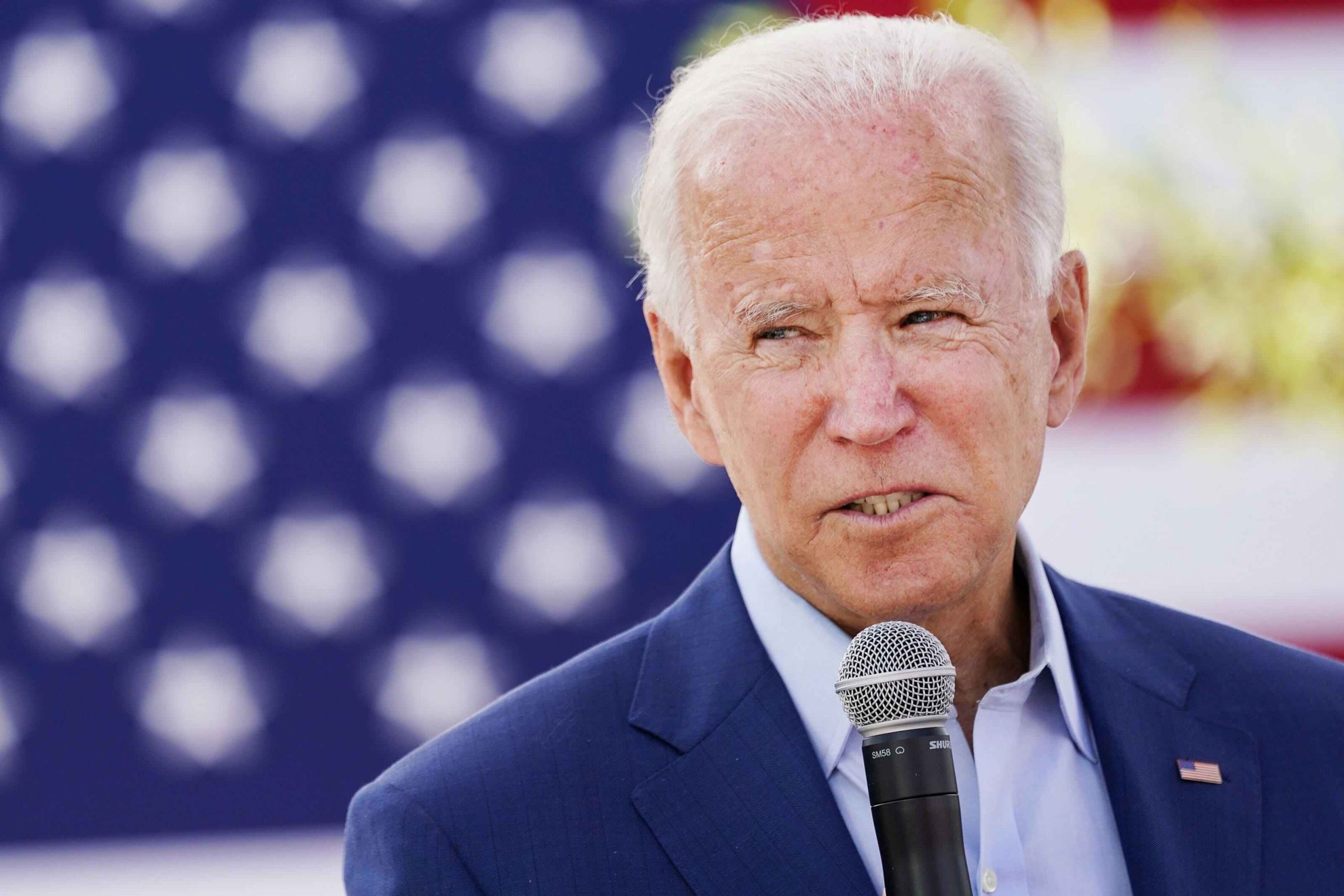
An expert in subsea engineering and director at the National Oilwell Varco based in Houston, Texas, USA, Dr Babajide Agunbiade, has highlighted three-point agenda that could drive the US president-elect, Mr Joe Biden’s energy policy.
Mr Agunbiade, while responding to the question of what will be the future of US oil and gas industry with Mr Biden at the helm of affairs, stated that clean energy innovation and the pursuit of zero-emission are expected to form the pivot of the incoming US government’s energy policy.
He listed the three key focus of the incoming president as an irreversible path to achieve economy-wide net-zero emissions by 2050, a drive towards a historic investment in clean energy and innovation, and aggressive methane pollution limits for new and existing oil and gas operations.
“While Trump had sought to maximize domestic oil and gas production within the United States, Biden will ban the issuance of new drilling permits on federal lands and waters to fight global climate change,” he said.
He argued that part of the broad agenda will include developing rigorous new fuel economy standards aimed at ensuring 100 per cent of new sales for vehicles which will be zero-emissions; protecting America’s natural treasures by permanently protecting the Arctic National Wildlife Refuge and other areas impacted by President Trump’s policy on federal lands and waters including also the banning of new oil and gas leasing on public lands and waters.
According to data from the Interior Department, the US produced nearly 3 million barrels of crude oil per day from federal lands and waters in 2019, along with 13.2 billion cubic feet per day of natural gas, saying “that amounts is about a quarter of total domestic oil output and more than an eighth of total US production of gas. A federal ban on new permits would mean those numbers trend toward zero over a matter of years.”
“I foresee that without the political sheltering by Trump’s leadership in Washington, the US majors like ExxonMobil and Chevron that have remained focused mainly on the traditional energy business will begin implementing strategies for a global energy transition more like European oil and gas companies like BP and Royal Dutch Shell.
“The implication for Sub-Saharan Oil and Gas production is that with renewable energy taking the more central stage during the Biden administration, fossil fuel demand will continue to decline, leading to reduced drilling, production, and exploratory activities,” he added.
Mr Agunbiade emphasised that there would be an impact on global and the US public revenues as oil and gas production generated about $12 billion in public revenue in 2019, divided between the US Treasury, states and counties, tribes, and clean up funds.
Citing Wood Mackenzie, 2020, Mr Agunbiade posited that there are potential legal implications as upstream producers have already invested billions of dollars into exploration and development projects.
The expert mentioned that, “In US GoM alone, companies have invested over $180 billion since 2005 in drilling and exploratory activities on the land the Biden government is looking to ban. There would be removing subsidies for fossil fuels, which, some environmentalists say, inject roughly $20 billion into the industry annually.”
He also noted that there would be an emphasis on low or zero-carbon energy production, green industry manufacturing, and more climate-friendly regulations with an optimistic view on the future of renewable energy and there will also be generous government research grants to renewable energy start-ups.
“The solar and wind producers will enjoy munificent tariffs, and, hopefully, the nuclear industry and fusion pioneers. Potential job loss may occur in areas that traditionally rely on oil and gas employment. However, this could be balanced out by Biden’s plan that would create millions of new jobs.
“There is a further decrease in global demand for hydrocarbons due to renewable energy options coming to play, which will impact the already volatile oil prices,” he said.
Concluding, Mr Agunbiade stressed that it will be imperative for the incoming federal government to maintain a balanced curve in passing relevant energy legislation.
He proposed that the oil and gas industry still maintains a reliable place in annual revenue generated and that Mr Biden’s proposals could bring about some of the most substantial deviations that the US offshore industry has ever seen.
“After all, not every President has fully stuck with their pre-election promises. The fact that Biden mentioned that he wouldn’t end fracking could be a good omen and some light at the end of the tunnel for the USA oil and gas industry,” Mr Agunbiade said.
World
Russia, Tanzania Boost Bilateral Economic Ties
By Kestér Kenn Klomegâh
From Africa’s perspectives on attaining economic sovereignty, Tanzania, located in East Africa, has seriously begun showing the investment model as Russia pledges tremendous support during the meeting of the Russian-Tanzanian intergovernmental commission in Arusha, in mid-May 2026. Russia is undertaking various development projects as well as addressing bilateral issues relating to investment, trade and innovation on the African continent, and described Tanzania as the gateway to the broader East African region.
Step 1: Gazprom is interested in implementing comprehensive gas projects in Tanzania, according to the report issued by the Ministry of Economic Development. It says Gazprom, in addition to selling natural gas, LNG, and petrochemical products, is ready to supply technologies and equipment for gas production, processing, transportation, and sales. It says Gazprom is continuing its work on a pilot project launched last year to supply two mobile gas tankers to Tanzania.
NOVATEK has also indicated its preparedness to participate in natural gas exploration and production projects in Tanzania, and for now, the staff are awaiting information on the date of the fifth round of license allocation for exploration blocks, as well as on the acquisition of blocks outside the tender process—specifically, at the Ntorya field. “Tanzania has significant resource potential, and the economy’s growing demand for electricity and fuel opens up significant opportunities for joint projects. The current situation in the Strait of Hormuz compels us to seek new solutions to ensure that it does not reduce economic growth on the African continent, and particularly in Tanzania,” said Maxim Reshetnikov, head of the Ministry of Economic Development, speaking at a meeting of the Russian-Tanzania intergovernmental commission in Arusha.
Step 2: Russia and Tanzania plan to sign a memorandum of cooperation in tourism in Moscow. In June, as part of the “Travel!” forum in Moscow (June 10-14), the Tanzanian delegation was already given the invitation to participate, noted Reshetnikov while further explaining that Russia is interested in launching direct air service between the two countries, which would “give a powerful boost to tourism development.”
Air Tanzania’s initiative to launch flights from Moscow to Dar es Salaam, with high hopes that Russia and Tanzania will complete the necessary procedures for the entry into force of the new air traffic agreement as quickly as possible. In particular, officials are awaiting notification from the Tanzanian side regarding the entry into force of this agreement.
Air Tanzania will begin flights from Dar es Salaam, Tanzania’s largest city, on May 28. According to the online flight information at the capital’s Vnukovo Airport, flights on this route will include a stopover on the island of Zanzibar. Flights will operate three times a week, on Tuesdays, Thursdays, and Saturdays. The program will run until October 24.
Step 3: Tanzanian President Samia Suluhu Hassan is expected on an official state visit to Russia in June, and that will boost bilateral trade and investment, and provide an additional impetus to developing mutual cooperation.
“In preparation for the upcoming high-level meeting, I propose discussing both promising areas and specific projects… and identifying key areas for further cooperation. In addition to trade, these include energy, transport, industry, agriculture, tourism, science, and education,” Reshetnikov said.
The Tanzanian delegation is expected to participate in the St. Petersburg International Economic Forum, which will be held from June 3 to 6. Usually, at the St. Petersburg forum, the African agenda is of great importance. The programme includes the Russia-Africa Business Dialogue, which, since 2016, has been the annual meeting place for representatives of Russian and African business and official communities. Roscongress Foundation organises it.
World
AFC Backs Future Africa, Lightrock in $100m Tech VC Funding Bet
By Adedapo Adesanya
Infrastructure solutions provider, Africa Finance Corporation (AFC), has committed parts of a $100 million investment to fund managers—Future Africa and Lightrock Africa—to boost African tech venture backing.
The commitment to Lightrock Africa Fund II and Future Africa Fund III is the first tranche of a broader deployment, AFC noted.
The corporation added that it is actively evaluating a pipeline of additional Africa-focused funds spanning a range of strategies and stages, with further commitments expected in the near term.
This is part of its efforts to plug a persistent gap in long-term institutional capital on the continent, which constrains the development and scaling of high-potential technology businesses across the continent, especially with a drop in foreign investments.
“Through this commitment, AFC will deploy catalytic capital in leading Africa-focused technology Funds and, in particular, African-owned fund managers,” it said in a statement on Monday.
AFC aims to address the underrepresentation of local capital in venture funding by catalysing greater participation from African institutional investors and deepening local ownership within the ecosystem.
Despite some success stories on the continent, local institutional capital remains significantly underrepresented across many fund cap tables, with the majority of venture funding continuing to flow from international sources.
AFC’s commitment is designed to shift that dynamic, according to Mr Samaila Zubairu, its chief executive.
“Across the continent, young Africans are not waiting for the digital economy to arrive; they are seizing the moment — adopting technology, creating markets and solving real economic problems faster than infrastructure has kept pace. That is the investment signal.
“AFC’s $100 million Africa-focused Technology Fund will accelerate the convergence of growing demand, rapid technology adoption, youthful demographics and the enabling infrastructure we are building.
“Digital infrastructure is now as fundamental to Africa’s transformation as roads, rail, ports and power — enabling productivity, payments, logistics, services, data and cross-border trade, while creating jobs and industrial scale.”
Mr Pal Erik Sjatil, Managing Partner & CEO, Lightrock, said: “We are delighted to welcome Africa Finance Corporation as an anchor investor in Lightrock Africa II, deepening a strong partnership shaped by our collaboration on high-impact investments across Africa, including Moniepoint, Lula, and M-KOPA.
“With aligned capital, a long-term perspective, and a shared focus on value creation, we are well positioned to support exceptional management teams and scale category-leading businesses that deliver attractive financial returns alongside measurable environmental and social outcomes,” he added.
Adding his input, Mr Iyin Aboyeji, Founding Partner, Future Africa, said: “By investing in AI-native skills, financing productive tools such as phones and laptops, and expanding energy, connectivity and compute infrastructure, we can convert Africa’s greatest asset — its people — into critical participants in the new global economy. AFC’s US$100 million commitment is the anchor this moment demands.
“As our first multilateral development bank partner, AFC is sending a clear signal that digital is as fundamental to Africa’s transformation as agriculture, manufacturing and physical infrastructure. We trust that other development finance institutions, insurers, reinsurers and pension funds will follow AFC’s lead.”
World
Dangote Secures Uganda’s Support for East African Refinery Ambition
By Adedapo Adesanya
Dangote’s East African refinery plan gained momentum as Ugandan President Yoweri Museveni threw his support behind the proposed project following talks with Mr Aliko Dangote.
In a tweet posted on X (formerly Twitter) on May 17, 2026, the Ugandan President announced that he had met with the Nigerian billionaire at Nakasero, and revealed that the meeting centred around the development of a proposed 650,000 barrels per day regional oil refinery in East Africa.
Mr Museveni emphasised adding value by refining oil locally rather than exporting crude, to maximise economic and strategic benefits for the region.
He called for greater regional cooperation and market integration in East Africa, highlighting the importance of large-scale projects for shared prosperity.
Business Post has earlier reported that Kenya has been positioned as the central player following Tanzania’s recent denial of its support of the project.
Mr Dangote said the East African country was his preferred choice due to its established fuel logistics network and port infrastructure serving several neighbouring countries.
In the latest development, the Ugandan president explained that his primary focus remains on value addition.
He detailed why Uganda has historically refrained from exporting raw crude oil, arguing that doing so allows foreign entities to exploit the country’s natural resources and reap the financial rewards of refined products.
“Without refining our oil, it would not make economic or strategic sense to simply export crude oil while others benefit from the finished products,” Mr Museveni stated.
The president expressed strong support for a larger regional refinery, describing it as a crucial step toward “African integration and shared prosperity.”
He further emphasised that East African nations must move past an individualistic mindset and overcome fragmented markets, urging regional cooperation to execute large-scale projects that benefit the entire populace.
“We cannot continue operating in fragmented and weak markets,” Mr Museveni wrote. “If East Africa works together, such projects become more viable and beneficial to our people.”
“Uganda is ready to support the regional refinery initiative while also continuing with the development of our own refinery in Hoima,” he added.
-
Feature/OPED6 years agoDavos was Different this year
-
Travel/Tourism10 years ago
Lagos Seals Western Lodge Hotel In Ikorodu
-
Showbiz3 years agoEstranged Lover Releases Videos of Empress Njamah Bathing
-
Banking8 years agoSort Codes of GTBank Branches in Nigeria
-
Economy3 years agoSubsidy Removal: CNG at N130 Per Litre Cheaper Than Petrol—IPMAN
-
Banking3 years agoSort Codes of UBA Branches in Nigeria
-
Banking3 years agoFirst Bank Announces Planned Downtime
-
Sports3 years agoHighest Paid Nigerian Footballer – How Much Do Nigerian Footballers Earn