Economy
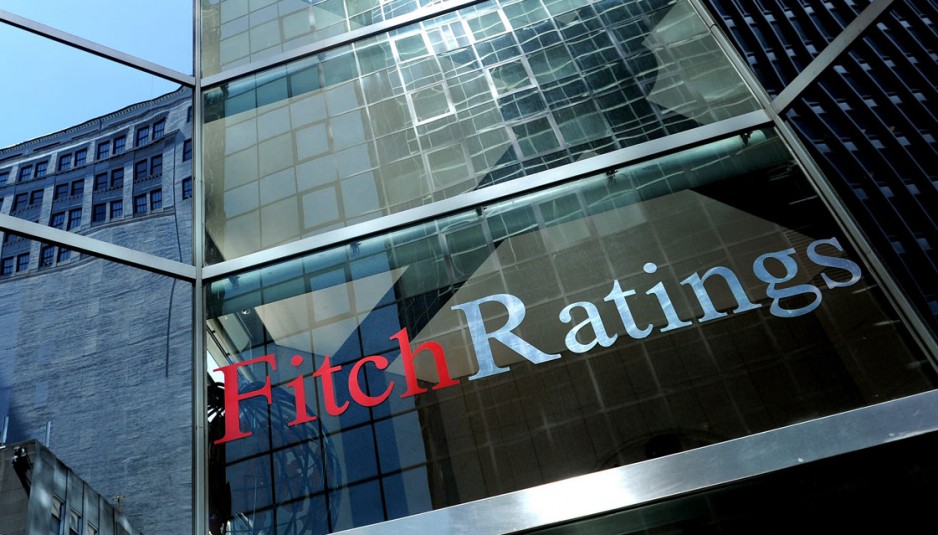
Fitch Launches Index to Replace World Bank Doing Business Report
By Adedapo Adesanya
Fitch Solutions has launched a revamped and enhanced Operational Risk service which will provide an immediately accessible alternative to the now-discontinued World Bank Doing Business report.
Business Post had reported that the Bretton Wood Institution discontinued the publishing of its Ease of Doing Business report after 18 years due to irregularities. The report measures regulations directly affecting the ease of doing business in 190 countries.
An independent investigation document had found that Ms Kristalina Georgieva, who is now the managing director of the International Monetary Fund (IMF) and served as the bank’s chief executive officer from 2017 to 2019 had applied “pressure” to have China ranked more favourably.
The remodelled Fitch Solutions Operational Risk Index provides an objective and data-driven assessment of the ease of doing business across 201 markets, enabling users to quantify and compare business environment risks to their investments, supply chains and day-to-day operational activities.
The Operational Risk Index is also used in Fitch Ratings Bank Rating Criteria to derive an implied Operating Environment Score for a given jurisdiction, replacing the World Bank Doing Business data that was previously used as part of the bank rating methodology.
The index, which was developed by the Fitch Solutions Country Risk and Industry Research team, is underpinned by 90 input metrics that are updated quarterly and was designed with full transparency in mind.
Each of the 201 markets covered is given a headline Operational Risk score out of 100 to allow for direct market-by-market benchmarking and comparison.
However, the index’s explanatory power lies in its ability to capture and quantify operational challenges via a focus on the four underlying elements of risk that combine to give the headline score: Crime and Security, Logistics, Trade and Investment, and Labour Market Risk.
It will be made available via Fitch Solutions’ online platform, Fitch Connect and users can use interactive charting capabilities and proprietary data download tools to access and fully appraise all of the data contained in each of the four underlying risk categories.
The index captures metrics that go beyond those that were previously included in the now discontinued World Bank Doing Business report.
In addition to the index and the data, 370 new reports will be released to provide qualitative analysis. The reports align four main areas of risk captured by the Index under the headings Crime, Defence and Security; Logistics and Freight Transport; Trade and Investment and Education and Labour.
The company noted that analysis will include, but not be limited to, coverage of crime, cyber and conflict risk; economic openness; labour costs, availability and skills; access to utilities and transport networks.
Speaking on this, Mr Nick Morgan, Managing Director and Head of Country Risk and Industry Research at Fitch Solutions, said: ‘’This is a timely opportunity to introduce the Operational Risk Index to clients who may have previously used the World Bank’s Doing Business data and analysis.”
“The Operational Risk Index gives a comprehensive picture of business environment risks across 201 markets, giving users access to a more agile, extensive and transparent range of comparable metrics.
“Quarterly updates of the 90 underlying metrics for each market mean that the Index and reports can be used to support a range of business activities, including risk benchmarking, business climate and supply chain analysis, investment decision making.
“The inclusion of the Index in the Fitch Ratings Bank Rating Criteria is in line with our commitment to ensuring our methodologies are transparent and robust,” he said.
Economy
Seplat Completes Conversion of Onshore Assets to PIA Fiscal Regime
By Adedapo Adesanya
Seplat Energy Plc has completed the conversion of its operated onshore oil and gas assets to the fiscal regime of Nigeria’s Petroleum Industry Act (PIA), marking a major regulatory milestone for the company.
In a statement issued on Tuesday, the dual-listed Nigerian energy firm said its subsidiaries, Seplat West Limited and Seplat East Onshore Limited, finalised the conversion from the former Petroleum Profits Tax framework to the PIA regime following the fulfilment of all technical and regulatory requirements.
The PIA, signed into law in August 2021, was introduced to modernise governance, improve transparency, attract investment, and make Nigeria’s petroleum fiscal framework more competitive globally.
The conversion covers assets previously held under Oil Mining Leases (OMLs) 4, 38, 41 and 53. During the first nine months of 2025, these assets recorded an average working interest production of 42,591 barrels of oil equivalent per day, accounting for approximately 31 per cent of Seplat’s total output.
According to the company listed on both the Nigerian Exchange Limited and the London Stock Exchange, the PIA framework is expected to support increased investment, production growth and improved operational efficiency. The anticipated impact of the conversion had already been factored into Seplat’s medium-term guidance presented at its Capital Markets Day in September 2025.
Seplat noted that it executed Conversion Contracts with its joint venture partners in February 2023 and has since worked closely with the Nigerian Upstream Petroleum Regulatory Commission (NUPRC) to complete the process. New Petroleum Mining Lease (PML) and Petroleum Prospecting Licence (PPL) numbers have now been issued, with PIA-based operations expected to commence from January 1, 2026, subject to regulatory guidance.
Commenting on the development, Chief Executive Officer Roger Brown said the successful conversion reflects the company’s commitment to regulatory compliance and value creation.
“Conversion to the PIA fiscal regime has been an important focus for Seplat, and we are delighted to have delivered, alongside our respective joint venture partners, the conversion of our onshore operated assets within the timeline outlined at our recent Capital Markets Day,” Mr Brown said.
He added that the transition positions the company for improved profitability and stronger cash flow margins in its onshore business.
Seplat also disclosed that it is continuing efforts to convert its offshore assets to the PIA regime, with a target completion date of 2027.
Economy
NASD Index Rises 0.16% on Renewed Investors’ Appetite
By Adedapo Adesanya
The NASD Over-the-Counter (OTC) Securities Exchange rose by 0.16 per cent on Monday, December 22 as investors showed hunger for unlisted stocks.
Trading data showed that the volume of securities traded at the session surged by 532.9 per cent to 12.6 million units from the previous 1.9 million units, as the value of transactions jumped by 64.3 per cent to N713.6 million from N80.3 million, though the number of deals moderated by 13.5 per cent to 32 deals from the 37 deals recorded in the previous trading session.
Infrastructure Credit Guarantee Company (InfraCredit) Plc ended the day as the most traded stock by value on a year-to-date basis with 5.8 billion units sold for N16.4 billion, followed by Okitipupa Plc with 178.9 million units worth N9.5 billion, and MRS Oil Plc with 36.1 million units transacted for N4.9 billion.
InfraCredit Plc also finished the trading day as the most traded stock by volume on a year-to-date basis with 5.8 billion units traded for N16.4 billion, trailed by Industrial and General Insurance (IGI) Plc with the sale of 1.2 billion units for N420.7 million, and Impresit Bakolori Plc with a turnover of 537.0 million units valued at N524.9 million.
The unlisted securities market printed a price loser, FrieslandCampina Wamco Nigeria Plc, which dropped 20 Kobo to sell at N53.80 per share versus last Friday’s closing price of N54.00 per share.
However, the loss was offset by the trio of NASD Plc, Golden Capital Plc, and UBN Property Plc.
NASD Plc gained N5.00 to close at N60.00 per unit versus N55.00 per unit, Golden Capital Plc appreciated by 77 Kobo to N8.45 per share from N7.68 per share, and UBN Property Plc improved by 22 Kobo to N2.43 per unit from N2.21 per unit.
As a result, the market capitalisation increased by N3.38 billion to N2.125 billion from N2.121 trillion, and the NASD Unlisted Security Index (NSI) grew by 5.65 per cent to 3,552.06 points from 3,546.41 points.
Economy
Nigeria’s Stock Exchange Sustains Bull Run by 0.26%
By Dipo Olowookere
The bulls remained on the floor of the Nigerian Exchange (NGX) Limited on Monday, rallying by 0.26 per cent at the close of transactions.
This was buoyed by the gains recorded by 34 equities on Nigeria’s stock exchange, which outweighed the losses posted by 20 equities, indicating a positive market breadth index and strong investor sentiment.
Aluminium Extrusion gained 9.72 per cent to quote at N13.55, International Energy Insurance improved by 9.69 per cent to N2.49, Mecure Industries rose by 9.64 per cent to N60.30, Royal Exchange expanded by 9.60 per cent to N1.94, and Austin Laz grew by 9.50 per cent to N2.65.
On the flip side, Custodian Investment depleted by 10.00 per cent to N35.10, ABC Transport crashed by 10.00 per cent to N3.15, Prestige Assurance weakened by 7.41 per cent to N1.50, and Guinea Insurance slipped by 7.38 per cent to N1.13.
During the session, investors traded 451.5 million shares worth N13.0 billion in 33,327 deals compared with the 1.5 billion shares valued at N21.8 billion transacted in 25,667 deals in the preceding session, showing spike in the number of deals by 29.84 per cent, and a decline in the trading volume and value by 69.90 per cent and 40.37 per cent apiece.
The first trading session of the Christmas week had Tantalizers as the most active with 50.2 million units sold for N127.5 million, First Holdco transacted 32.6 million units worth N1.5 billion, Access Holdings exchanged 27.3 million units valued at N562.3 million, Custodian Investment traded 22.1 million units for N857.8 million, and Chams transacted 21.3 million units valued at N71.1 million.
When the closing gong was struck at 2:30 pm to end trading activities, the All-Share Index (ASI) was up by 401.69 points to 152,459.07 points from 152,057.38 points and the market capitalisation went up by N256 billion to N97.193 trillion from N96.937 trillion.
-
Feature/OPED6 years agoDavos was Different this year
-
Travel/Tourism9 years ago
Lagos Seals Western Lodge Hotel In Ikorodu
-
Showbiz3 years agoEstranged Lover Releases Videos of Empress Njamah Bathing
-
Banking7 years agoSort Codes of GTBank Branches in Nigeria
-
Economy3 years agoSubsidy Removal: CNG at N130 Per Litre Cheaper Than Petrol—IPMAN
-
Banking3 years agoFirst Bank Announces Planned Downtime
-
Banking3 years agoSort Codes of UBA Branches in Nigeria
-
Sports3 years agoHighest Paid Nigerian Footballer – How Much Do Nigerian Footballers Earn