Connect with us

World

Russia Turns to Africa for Trade Amid US, EU Sanctions

Published

on

Russia Africa Trade

By Kester Kenn Klomegah

As the United States and the European Union (EU) tighten their sanctions on Russia due to special military operation, demilitarization and denazification in Ukraine, Russians are now looking to diversify both exports and imports in Africa’s direction.

After the first summit held in 2019 in Sochi where so many pledges were incorporated in a joint declaration, but have not been given serious attention as expected.

Russia and Ukraine share a common border, both are former Soviet republics struggling to move onto the global stage. Russia was angered because of Ukraine’s ambition to join the North Atlantic Treaty Organization (NATO) and the EU.

With the conflict that began February 24, and amid Western and European sanctions, Russia plans to expand its network of trade missions in Africa, according to Vladimir Padalko, Vice President of the Russian Chamber of Commerce and Industry.

State support and business facilitation have been on the agenda these several years and was exhaustively discussed during the panel session in Sochi. However, in early March, a special meeting was held to discuss and re-examine possible support for Russian enterprises and organizations in entering the African market.

“During the meeting, the participants voiced a proposal to expand the network of trade missions in Africa in the countries, which are a priority for trade. It was agreed that the Industry and Trade Ministry would work on this issue together with the Foreign Ministry and the Economic Development Ministry,” Padalko said.

According to official reports, the popular Russian perception is that Africa is a promising market for Russia and information data obtained from the Industry and Trade Ministry, Russia has only four trade missions in Africa – in Morocco, Algeria, Egypt and South Africa. In addition, several interviews and research indicated that the Russian expert community advocates for strengthening business relations with Africa, and for example see fruits, tea, coffee from the EU countries can be replaced with products from African countries.

Deputy Director of the Department of Asia, Africa and Latin America of the Ministry of Economic Development of the Russian Federation, Alexander Dianov, spoke about the non-financial support measures for Russian companies operating within the department.

On the other hand, he said: “There are trade missions only in four African countries, and if you take sub-Saharan African countries, the trade mission operates effectively only in South Africa. It is obvious that there is something to work on in terms of developing the infrastructure to support Russian businesses. If there is a serious request from the business community, we are ready to expand the geography of our presence.”

Senator Igor Morozov, Head of the Coordinating Committee on Developing Economic Cooperation with Africa (AfroCom), a business lobbying group established back in 2009, expressed his views posted to the website: “It is impossible to grow the national economy without developing new markets. Only more than 20 companies are working on raw materials projects in different parts of the continent, there are traditional deliveries through the military-technical cooperation, export of grain, mineral fertilizers, oil products with a total turnover of $17 billion (2020)!”

Morozov argued that “it is necessary to involve large-scale involvement of small and medium-sized businesses from the Russian regions in the African direction. It is necessary to reconsider the entire range of the export potential of the regional economy: the transport industry, agricultural machinery and units, mechanical engineering and navigation equipment, the mining sector, water treatment, and information technology.”

Africa is one of the most promising and fastest-growing regions of the world, with leading powers, actively competing with one another, the Senator frankly acknowledged, and added that there is nothing surprising in the fact that the European Union is increasing its trade turnover with African countries, and it amounts to more than US$300 billion a year. For instance, the United States, implementing the Prosper Africa Programme, continues to push American investments and high-tech products to priority African markets.

In this regard, in order to promote Russian goods, it is necessary to create conditions that would be competitive for exporters. It is obvious that the Russian Export Center (REC) does not have a direct investment fund in the system of financing African projects. Successful practice in Africa clearly demonstrates the widespread use of such funds by China, India, France and many other players.

Russian Export Center says the market is potentially the largest, Africa – is the continent of the future, but currently, the demand is generally limited. Speaking about Africa, we need to distinguish the countries of the continent into two groups: the northern and southern parts.

“We note an increase in the number of requests to find a Russian supplier from sub-Saharan Africa. Companies from such countries as South Africa, Nigeria, Ivory Coast, Ghana, Ethiopia, Tanzania, and Benin are most interested in increasing imports. We frequently receive requests to search for suppliers in such industries as mineral fertilizers, food products and the rest,” explains an official from the Russian Export Center.

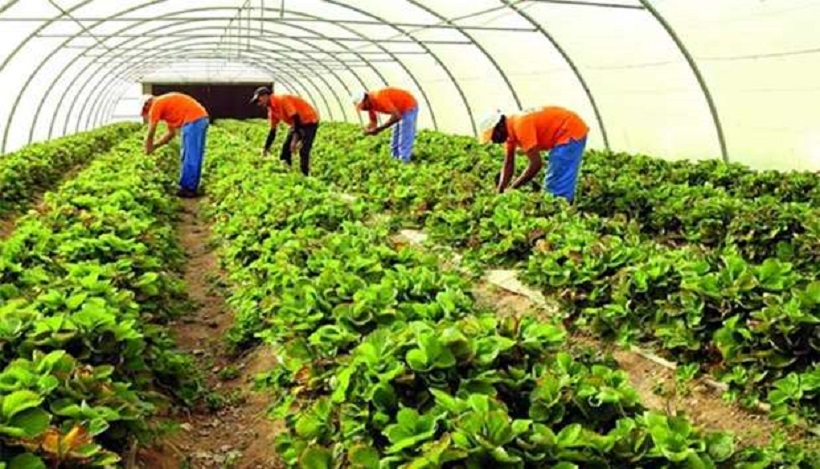
The Maghreb region is an important gateway to Europe and to sub-Saharan Africa. In the past few years, Russian companies have taken active steps to increase both imports and exports of agricultural products. Morocco has been delivering fruit in the Russian market.

In such a Russia-Ukraine paradigm, Russian enterprises and importers still need to understand a set of priority problems and barriers, especially now when showing searching for alternatives for European suppliers, and interested in establishing stable long-term with African partners.

Polina Slyusarchuk, Head of Intexpertise (St. Petersburg-based African focused Consultancy Group), has questioned whether Russia has a long-term strategy in there. “Today, Russia wants to deepen its understanding of the business climate and explore trade and partnership opportunities in Africa. Now at this critical time, Russians have to decide what they can offer that foreign players haven’t yet been made available in the African market in exchange for needed importable consumables,” she underscored.

In an interview discussion for this article, Dr Chtatou Mohamed, a senior professor of Middle Eastern politics at the International University of Rabat, emphasized that, on the geo-economic level, the five Arab countries present themselves as an unavoidable interface to enter the African continent, these are rich in raw materials and present as the great consumer market.

“While the context between Russia and Western countries is highly troubling, and characterized in particular by a regime of sanctions and counter-sanctions, it is to better serve the interests of their peoples and find solutions by exploiting the opportunities. Moscow has more room for turn round export-import business with the countries of sub-Saharan Africa,” he pointed out.

Currently, the geopolitical relations of most Mediterranean Arab countries with Russia are good, even for those who were allies of the United States during the period of world bipolarity along the years of the Cold War (the case of Egypt and Morocco).

Members of African diplomatic missions informed the greatly unrealized potential of cooperation between Russia and African countries, and interest in attracting investments in agro-industry infrastructure, education and many other sectors, and unreservedly called for a wider interaction between African business circles and Russian businesses.

During the early March discussion, the participants mentioned high import duties, complicated certification procedures, high cost of products, expensive logistics, security and guarantee issues, and information vacuum as some of the barriers to Russian-African trade and economic cooperation. As always, the participants agreed on the need to develop a comprehensive strategy for Russia to work with Africa.

Indeed, Russia is already one of the ten largest food suppliers to Africa. Removing barriers could help export-import collaboration reach an entirely new level. Russian and African business communities lack awareness regarding the current state of markets, along with trade and investment opportunities. There is an insufficient level of trust towards potential partners. These issues swiftly have to be solved through establishing an effective system of communication to guarantee their reliability and integrity between public business associations in Russia and Africa.

In the meanwhile, Russian President Vladimir Putin has ordered to restrict or prohibit import and export of certain products and raw materials from Russia in 2022, according to the decree on special foreign economic measures aimed to ensure Russia’s security.

“Ensure implementation of the following special economic measures until December 31, 2022: export and import ban of products and/or raw materials in accordance with lists to be defined by the government of the Russian Federation,” the document says, adding that a separate list will define goods, whose export and import will be restricted. The decree becomes necessary in order to ensure Russia’s security and uninterrupted operation of agriculture and industry.

According to the Russian Ministry of Foreign Affairs, the preparations for the Russia-Africa summit are in the active stage. The dates of the summit have not been determined yet. The first Russia-Africa summit took place in October 2019, and it was co-chaired by Russian and Egyptian Presidents, Vladimir Putin and Abdel Fattah el-Sisi. The next summit is scheduled for autumn 2022.


Click to comment

Leave a Reply

Your email address will not be published. Required fields are marked *

World

Russia-Africa Dialogue: Untapped Prospects for Economic Cooperation

Published

on

Russia-Africa Dialogue SPIEF-2026

By Kestér Kenn Klomegâh

At the St Petersburg International Economic Forum 2026, the traditional “Russia-Africa Business Dialogue”, which was initiated in 2016, will deliberate aspects of forging economic cooperation between Russia and African countries. For a decade since its creation, this platform has practically discussed most pertinent roadblocks, highlighted the economic sectors, and outlined the prospects. The significant issues have also been treated at the first and second Russia-Africa summits.

As Moscow prepares to hold the next Russia-Africa summit in October, it is quite clear that Russia has still not worked out financial mechanisms to support its investments across Africa. Generally, the federal strategy for this area has been mapped out, Russian investors understand where to invest in Africa, but lacks extremely the financial motivation and approach to integrate young people into the business environment. Other constraining factors include a lack of financial support instruments the suitable environment for experience sharing and collaboration. At the same time, there are reports that point to a broad range of factors that hinder the development of youth entrepreneurship.

Historically, Russia–Africa relations have evolved through distinct phases after phases. The latest phase began from the first Russia-Africa summit through the second, and is currently moving to the third summit in October. As part of the strategic preparations, Tanzanian President Samia Suluhu Hassan was the guest of Vladimir Putin in the Kremlin. Russia and Tanzania have had good relations, but it has been more than a century since the last state visit of a Tanzanian leader to Russia. From the historical records, Mwalimu Nyerere visited in 1969. As a result, Samia Hassan’s official working visit had a special historic significance for the bilateral relations. “We see this as a very positive sign,” noted Putin. Further to that, Samia Hassan was decorated with an honorary doctorate degree (Doctor Honoris Causa) at the Russian Peoples Friendship University, expressed gratitude for the political solidarity, and underlined Russia for the great contribution which it provided during the African political liberation in the 60s.

Tanzania’s Distinctive Profile

Sergei Kiriyenko, the Deputy Chief of Staff of the Presidential Administration who oversees the department, visited Tanzania after the November 2025 elections. In addition, Putin’s aide Yuri Ushakov called Tanzania “one of the key partners on the African continent,” recalling that it is home to approximately 70 million people. Samia’s visit to Russia is a victory for Russian diplomacy in Africa, as Tanzania is one of those allies that strengthen Moscow, says Andrey Maslov, Director of the HSE Centre for African Studies. According to the expert, cooperation is based on mutual benefit, and Tanzania does not require assistance. The country is among the continent’s economic leaders, distinguished by high growth rates, a stable political system, and a friendly attitude towards Russia. Russia’s interest in Tanzania is largely due to its geographic location and access to the Indian Ocean. The port of Dar es Salaam is considered a key transport hub in East Africa, serving transit routes to the East African Community (EAC) countries, along with the Kenyan port of Mombasa. Given Tanzania’s population, the EAC’s combined market represents over 300 million people, and the potential for expanding trade lies primarily in agricultural products, fertilisers, and basic industrial goods.

Africa’s participation at the St Petersburg 29th forum is very unique, with the majority from East and Southern Africa. The Director General of the Tanzania Investment and Special Economic Zones Authority (TISEZA), Gilead J. Teri, noted that the Tanzanian delegation has a unique opportunity to advance its agenda and strengthen bilateral relations. The forum gave a powerful boost to trade and economic cooperation. Tanzania presented its investment potential to the Russian business community. Therefore, it could be said that bilateral relations between Russia and Tanzania are flourishing and developing dynamically today.

Eastern and Southern Africa’s Dimensions

While it envisages strengthening ties in a broad range of fields, targeting the Eastern and Southern regions by utilising Tanzania as the gateway, Russia shows that the key partners in that part of Africa. Russia’s attributes for raising investment relations are clear: stability, untapped resources and human capital.

Putin’s meeting with Tanzania’s Samia Hassan, aiming at lifting up bilateral cooperation, which symbolises a new qualitative stage or a new chapter in the relations between Russia, Tanzania and the entire SADC. “Africa is an important partner for Russia, a participant in the emerging and sustainable polycentric architecture of the world order. Our relations with the states of that continent are valuable in their own right and should not be subject to the fluctuations on the international arena,” Foreign Minister Sergey Lavrov also said long time ago at the Russia-Africa civil/public gathering held in 2018, in attendance was Stergomena Lawrence Tax, who headed the Southern African Development Community (SADC).

“We are aware that our African friends hold the same views. Relying on the accumulated experience of productive cooperation, Russian diplomats seek to pursue a consistent policy for deepening the range of Russia-Africa relations,” he added. Lavrov said it is necessary to maximise the potential of public, cultural and business diplomacy in the interests of strengthening and expanding the mutually beneficial ties between Russia and African states while invariably adhering to the principle of African solutions to African problems, formulated by the Africans themselves.

Stergomena Lawrence, however, observed that Russia has not been that visible in the region as compared to China, India or Brazil. But it is encouraging that Russia has made the decision to reposition itself as a major partner with Southern Africa. She expressed gratitude that Russia has launched a plan aimed at improving direct trade with the continent/region beyond the traditional sectors like mining, seeking to invest in areas like agriculture, industrial production, high technology and transport.

The Russian Federation’s priorities are also in line with SADC priorities, as evidenced by the priorities of the Foreign Economic Strategy in the region, as indicated below:

Prospecting, mining, oil, construction and mining, purchasing gas, oil, uranium, and bauxite assets (Angola, Namibia and South Africa);

Construction of power facilities—hydroelectric power plants on the River Congo (Angola, Namibia and Zambia) and nuclear power plants (South Africa);

Creating a floating nuclear power plant, and South African participation in the international project to build a nuclear enrichment centre in Russia;

Railway Construction (Angola);

Creation of Russian trade houses for the promotion and maintenance of Russian engineering products (South Africa).

Participation of Russian companies in the privatisation of industrial assets, including those created with technical assistance from the former Soviet Union (Angola).

In the Russian Federation, 10 SADC member countries have their diplomatic offices, namely: Angola, Democratic Republic of Congo, Madagascar, Mauritius, Mozambique, Namibia, South Africa, Tanzania, Zambia and Zimbabwe.

Final Words of Wisdom

In pursuit of following Putin’s policy to strengthen ties with the Global South, including Africa, Russia has to re-strategise and take up the existing critical challenges. Despite a noticeable increase in activity, Russia’s strategy on the continent faces several persistent structural limitations that require thoughtful responses. As geopolitical changes heat up, Russia has to understand the necessity to move ahead, back away from tectonic rhetoric and symbolism of diplomacy. By 2025–2026, the African continent had firmly established itself as a key area of ​​global competition and, simultaneously, one of the most important reserves of economic growth. For Russia, this is important to change the very logic of its African ties. It is logical to walk the talk. In other words, Russia’s relations with African countries have to shift from historical rhetoric to a more practical architecture of interests.

On December 19–20, 2025, the second ministerial conference of the Russia-Africa Partnership Forum was held in Cairo, with the Roscongress Foundation acting as the operator on the Russian side. The conference was attended by the heads of the African foreign ministries and the leaders of the continent’s integration associations. That conference has been defined as a key stage in the preparations for the third Russia-Africa summit, scheduled for October 2026. As noted by Russian Foreign Ministry spokesperson Maria Zakharova, the meeting is intended to “give additional impetus to the development of the Russian-African partnership and the strengthening of its truly strategic nature.”

For Moscow, institutionalising the format is crucial given the overall transformation of global politics. And ultimately, Africa is becoming a space where external players’ ability to not only declare respect for sovereignty but also propose practical mechanisms for cooperation is being tested. Russia’s strategy is built on combining political rhetoric about multipolarity with concrete areas of cooperation—from trade to energy, and food security to personnel training and military-technical cooperation. Economic spheres and building infrastructures are important for Africa, which is ready for foreign investors with adequate funds and not just geopolitical rhetoric. It has to be noted that Africa is a space of competition between external players.

The continent is an arena of intense competition, with China, the European Union, the United States, Turkey, India, and the Gulf states all operating simultaneously, each offering its models of interaction: from large-scale infrastructure financing to military cooperation and religious and cultural influence. African states are becoming increasingly pragmatic and multi-vector—they are consistently expanding their foreign policy space, weighing the conditions, benefits, and political costs.

In such an environment, the sustainability of Russia’s presence is determined by its ability to offer a concrete and replicable set of advantages. Anti-colonial rhetoric and appeals to historical legacy remain important, but they no longer provide a long-term advantage on their own. Each competitive proposition must be backed by institutional support.

At the St. Petersburg forum, there was a genuine international community of like-minded partners practically united by a common goal: networking and developing business cooperation. “The continued participation confirms the demand for building relationships of business trust and confidence with foreign partners from different regions, including the United States, Europe, the Middle East, Latin America, Asia and Africa,” said Alexander Stuglev, Chairman of the Board and CEO of the Roscongress Foundation. The Roscongress Foundation held the 29th St Petersburg International Economic Forum (SPIEF) from 3 to 6 June 2026.

Continue Reading

World

CANAL+ Eyes MultiChoice Turnaround as Stocks Debut on JSE

Published

on

CANAL+ JSE

By Adedapo Adesanya

CANAL+ has expressed confidence in its ability to turn around the fortunes of struggling broadcaster MultiChoice as it marks a milestone by becoming the first French company listed on the Johannesburg Stock Exchange (JSE).

The secondary listing of CANAL+ signals strong international confidence in South Africa’s capital markets and reinforces the JSE’s role as a conduit between global capital and African growth opportunities, it said in a statement.

CANAL+ enhances the JSE’s sectoral diversity and provides local investors with direct, rand-denominated exposure to a globally diversified media and entertainment business with a significant African footprint. CANAL+ listed on the London Stock Exchange in December 2024.

The group’s listing on the JSE aligns with its long-term strategy to expand its presence in high-growth markets, particularly in sub-Saharan Africa, where rising connectivity, a young and growing population (expected to increase by 800 million by 2050), strong GDP growth (4.5 per cent growth expected between 2026 and 2030) and accelerating demand for content and connectivity continue to drive sector growth.

The JSE listing will increase CANAL+ liquidity and enable African investors to benefit from CANAL+ growth.

According to Mr Maxime Saada, CEO of CANAL+ said, “Joining the Johannesburg Stock Exchange is a statement of our ambition and illustrates our belief in Africa’s future and its creative industry.

“We are proud to become the first French company ever to list in Johannesburg and the only global media and entertainment company listed on the exchange.

“Following our listing on the London Stock Exchange 18 months ago, this dual listing reinforces our ambition to be a bridge between Europe and Africa and anchors our dual-continental approach, consolidating our unique position in the global media and entertainment industry,” he said.

He noted that CANAL+ serves more than 40 million subscribers and generates €9bn in annual revenue.

“Africa will be our growth engine for years to come, and we are dedicated to creating value on the continent and sharing it with our African partners, investors and the creative community. By welcoming African investors, we deepen our roots, diversify our investor base and lay the foundation for the next phase of our growth.”

Commenting on the listing, Ms Valdene Reddy, Group CEO of the JSE, said, “We are proud to welcome CANAL+ to the JSE and to mark the first listing of a French company on our exchange.

Continue Reading

World

AfDB President Sees More African Nations Regaining Investment-Grade Ratings

Published

on

Sidi Ould Tah

By Adedapo Adesanya

The President of the African Development Bank (AfDB), Mr Sidi Ould Tah, says more African countries are likely to regain or achieve investment-grade credit ratings by next year as reforms begin to deliver results and economic growth accelerates.

Several African sovereigns have already been upgraded in recent months, including Nigeria. However, Nigeria is not yet near investment-grade status.

In May, S&P Global Ratings upgraded Nigeria’s sovereign credit ratings to ‘B’ with a stable outlook, citing structural reforms under President Bola Tinubu and key drivers like higher oil production and improved fiscal revenue.

The country is still five notches from investment-grade. Under S&P’s rating scale, the progression follows— B → B+ → BB- → BB → BB+ → BBB- (investment grade).

S&P raised Morocco to investment grade last year and increased South Africa by one level to BB in November. Ghana, Zambia, the Ivory Coast and Kenya have also benefited from positive rating action linked to fiscal, debt and economic reforms.

“We’re quite confident that the continent will continue to grow very strongly and that African countries will be better rated in the coming years,” Mr Ould Tah said in an interview with Bloomberg.

“We’ve seen Morocco receive investment grade during the last few months, and we expect other countries by next year to get toward that,” he added.

The outlook reflects improving fiscal positions and reforms implemented across countries on the continent, even as the conflict in the Middle East threatens to slow economic growth and raise costs for energy-importing nations. Better credit ratings can help countries borrow at lower rates and fund development projects.

The AfDB projects the continent’s gross domestic product expansion will accelerate to 4.4 per cent next year, if the conflict in the Middle East does not extend for a longer period. It expects the continent to slow to 4.2 per cent this year.

The war in Iran has benefited oil producers such as Nigeria, Angola and Gabon, while exerting pressure on the fiscal positions of net energy importers such as South Africa, Kenya, Ghana and Senegal.

Mr Ould Tah said the bank is ready to support countries facing budget constraints and high debt burdens due to the impact of the Iran crisis, including increasing credit lines to them.

“The board of directors of the bank will examine in the coming days how the bank can increase the volume of resources it will provide to its member countries in this specific situation,” he said.

Continue Reading

Trending