Connect with us

Banking

FirstBank: A Triumphant Return to the Nigerian Banking Frontline

Published

on

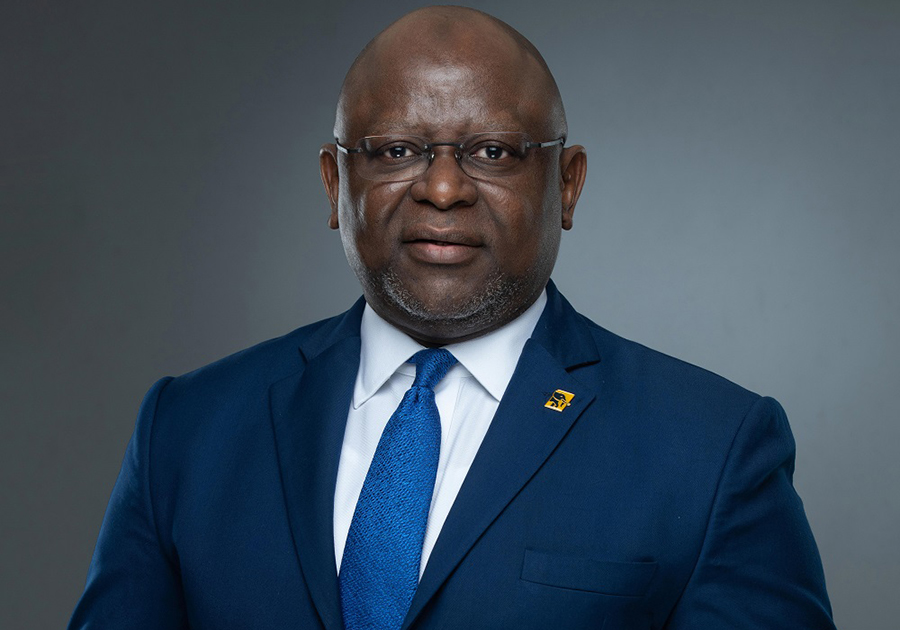
Dr. Adesola Adeduntan

The story of corporate Nigeria in 2022 cannot be complete without a chapter on the incredible performance of First Bank of Nigeria Limited, which saw the hitherto encumbered bank now returning to the top of the ladder of the Nigerian banking industry amid a harvest of international laurels, writes Festus Akanbi.

By December this year, Nigerian quoted companies will begin to upload their full-year 2022 results in compliance with the dictates of the principle of disclosures to regulators, investors and customers as enshrined in the act of corporate governance.

While the waiting game for the release of the more detailed full-year results continues, analysts said that bookmakers can only assess the current level of profitability, efficiency and recovery of these companies based on their half-year reports which began to hit the various media platforms from July.

For FirstBank, a subsidiary of the behemoth FBN Holdings Plc, the 2022 operation year has been characterised by a superlative performance which analysts believed signposts the confirmation of the bank’s return to the frontline of the Nigerian banking industry following its 2021 equally stellar performance.

From its half-year 2022 reports, which show a remarkable turnaround, and the ability of the management of the bank not only to resolve old corporate governance issues but also to return the bank to the path of profitability, it has been proven beyond any reasonable doubt that FirstBank has freed itself from old encumbrances and it is back to its old trajectory of breaking boundaries and being a pacesetter in the Nigerian banking industry.

For instance, analysts who believed that FirstBank’s current excellent performance is a reaffirmation of the new era of a return to greater and better times ahead are quick to point to the bank’s half-year 2022 results which proved the solidity of the financial institution and confirmed that it is back in form as a formidable industry leader.

Reinforcing Quantum Profitability Leap Agenda

For instance, in its half-year 2022 scorecard, FirstBank recorded a 22.6 per cent year-on-year growth in gross earnings to N338.5 billion while net interest income was up 49.3 per cent year-on-year to N152.9 billion respectively.”

The bank’s Managing Director/Chief Executive, Adesola Adeduntan, who gave this figure, disclosed that “Amidst a challenging operating and dynamic regulatory environment in the half year 2022, the commercial banking group remained focused on executing key initiatives to position the group for improved profitability in the full year 2022. Our half-year results further reinforced our drive towards our ‘Quantum Profitability Leap’ agenda.”

Adeduntan said, “On the back of the impressive growth recorded in our top line, our profit before tax recorded a strong growth of 40.0 per cent year on year to N60.0 billion, whilst profit after tax also grew by 42.3 per cent year on year to N53.3 billion as the bank continues to reap the dividends of the successful restructuring of our balance sheet and revamping of our risk management architecture.”

“We continue to record progress in driving down our non-performing loan ratio, which now stands at 5.4 per cent at the end of H1 and we are on target to bring it within the regulatory limit of 5 per cent by the end of full-year 2022.”

Awards and Recognitions: FirstBank’s Leading the Pack

In terms of recognition, there is no doubt that the ongoing transformation in FirstBank is globally recognised when one considers the harvests of awards and recognitions that are already pouring in for the bank.

Analysts said the awards and recognitions, which include those from the Fitch Ratings and The Banker awards and Euromoney rankings are testimonials of FirstBank’s consistent performance.

Fitch Rerating

Analysts maintained that the current Fitch rerating of FirstBank aligns with ratings of other global agencies (such as S&P: B- with a stable outlook; Moodys: B2 with stable outlook) – a confirmation of what industry peers already acknowledge – back to leading the pack.

On September 16, 2022, Fitch Ratings announced the upgrade of FBN Holdings Plc’s (FBNH) and First Bank of Nigeria Ltd’s (FBN) Long-Term Issuer Default Ratings (IDRs) to ‘B’ from ‘B-’, and according to the rating agency, the Outlooks are Stable. Fitch has also upgraded their Viability Ratings (VR) to ‘b’ from ‘b-’.

It explained that the upgrade of the Long-Term IDRs follows that of the VRs, reflecting that corporate governance irregularities publicly raised by the Central Bank of Nigeria (CBN) in April 2021, including two longstanding related-party exposures, have largely been addressed and therefore risks to capitalisation have receded, helped by strong internal capital generation since the irregularities were raised.

Governance Issues Laid To Rest

Following its monitoring of the Bank’s corporate Banking endeavours within the last year, the rating agency gave FirstBank a clean bill of health, saying the bank’s governance irregularities have been addressed, and according to the management of the bank, “the two related-party exposures highlighted by the CBN, which included equity and credit exposures to two companies of whom FBNH’s previous chairman was also chairman, have largely been disposed of and repaid. Fitch understands from management that FBNH and FBN have not been subject to penalties about irregularities raised by the CBN in April 2021, and no further irregularities have been raised.”

It also attests to the solidity of the bank, affirming that FBN is the third-largest bank in Nigeria, representing 11% of domestic banking-system assets at the end of 2021.

Another reason for the high rating is the fact that the bank’s improved asset quality since FirstBank’s impaired loans (Stage 3 loans under IFRS 9) ratio has declined significantly.

FirstBank also boasts of a Stable Funding Profile. For instance, FBN’s customer deposit base (76% of total funding at end-1H22) comprises a high share of retail deposits (64% at end-2021) and current and savings accounts (81% at end-1H22), supporting funding stability and a low-cost of funding. Depositor concentration is fairly low. Liquidity coverage is comfortable in local and foreign currencies.

Bankers Magazine: FirstBank Best Performing In Nigeria

It is also not a coincidence that FirstBank was rated first among its peers in Nigeria by Bankers Magazine, a publication of the Financial Times.

The Top 100 African Bank Rankings 2022, recently released by The Banker, shows FirstBank leading the Nigerian table in four areas, the highest achieved by any Nigerian bank; only FirstBank leads in four areas. The rankings, based on the end of year 31 December 2021 audited financials of all banks in the Top 100, reveal FirstBank’s ranking as number one in Nigeria in terms of Overall Performance, Profitability, Efficiency and Return on Risk.

The magazine, which explained that its Top 100 African Banks ranking for 2022, demonstrates a broad return to stability by African banks after a torrid year for the continent’s largest lenders placed FirstBank among other banks in Nigeria because it happened to be the only bank that led in four areas.

First Bank of Nigeria Limited leads its peers in fifth place overall, displacing Guaranty Trust Bank, now in seventh place. Access Bank ranks in the eighth position, with Zenith Bank in 10th place.

Euromoney Rankings: FirstBank, Market Leader

In addition, in 2022, Euromoney Market Leaders, an independent global assessment of the leading financial service providers conducted by Euromoney Institutional Investor Plc, crowned FirstBank as a market leader. The bank was rated as a tier-one bank in the areas of corporate and social responsibility (CSR).

Not only that, but FirstBank also emerged as a market leader among the tier-one banks in the area of Environmental, Social and Governance (ESG).

In the area of corporate banking and digital solution, FirstBank was highly regarded, while it was crowned as a notable player in SME Banking for the period under review.

FirstBank was named “Best Bank Brand in Nigeria” for six years in a row – 2011 to 2016 – by The Banker magazine of the Financial Times Group; it was awarded “Most Innovative Bank in Africa” in the EMEA Finance African Banking Awards 2014; it has clinched the “Best Bank in Nigeria” award by Global Finance Magazine 15 times and the “Best Private Bank in Nigeria” by World Finance Magazine seven times. Some other recent awards received by the Bank are “Best Banking Brand Nigeria, 2019” by Global Brands Magazine; “Best Mobile Banking App – Nigeria, 2019” by Global Business Outlook and “Best Financial Inclusion Program – Nigeria, 2019 by International Investor.

In the words of FirstBank’s CEO, Dr Adesola Adeduntan, ‘what all these current ratings and recognitions demonstrate is that FirstBank is strongly back on course!  Knowing this is only the beginning of a new era of return to the trailblazing position and that better times lie ahead, we encourage our customers and other stakeholders to keep believing and keep standing by us.’

Banking On Robust Customer Service Network

Through the last 128 years of its operations, FirstBank has played a leading role in utilising its robust customer service network and digital banking architecture to support its customers – cutting across diverse cultures, tribes and races beyond the shores of Nigeria – in meeting their individual and business needs.

First Bank of Nigeria Limited operates as a parent company, with the subsidiaries FBNBank in the Democratic Republic of Congo, Ghana, The Gambia, Guinea, Sierra Leone and Senegal; FBN Bank UK Limited in the United Kingdom with a branch in Paris; First Bank Representative Office in Beijing to capture trade-related business between geographies. FirstBank also operates First Pension Custodian Nigeria Limited, Nigeria’s foremost pension custodian. The teeming customers of the First Bank Group are serviced from a network of over 700 business locations across Africa.


Banking

5 Smart Moves to Wrap Up Your Year in Financial Style

Published

on

FairMoney

By Margaret Banasko

“Detty December,” Nigeria’s unofficial end-of-year spectacle, is an annual economic boom of concerts and parties, amplified by the return of the “IJGB (I Just Got Back) crowd. This celebration drives massive discretionary spending and consumer euphoria.

However, this festive high often leads to a financial low; the “Long January.” This is when critical non-negotiable expenses like rent and school fees hit hard.

Do not treat December as a financial free-for-all. Savvy individuals and business leaders must reframe it as the final, crucial financial quarter. The goal is to shift from emotional spending to deliberate, strategic saving.

Here are five smart, actionable financial moves that are critical for maintaining fiscal discipline that will enable you to maximize the festive season’s enjoyment while effortlessly de-risking and prepping your finances for a strong Q1 trajectory.

  • Capitalize on Discounted Bill Payments: The increased consumption of utilities, airtime, and data during this period necessitates higher essential recurring costs. Smart financial governance dictates actively seeking value on these high-frequency expenditures. Pay all essential bills from electricity tokens to data bundles and Cable TV subscriptions through a platform, such as the FairMoney app, that provides a direct financial incentive or cashback on purchases. This ensures that operational necessity does not unduly drain capital, as every percentage saved on recurring utilities is capital effectively preserved for critical Q1 requirements.
  • Implement the 50/30/20 Rule Strategically: Acknowledge the inevitable social expenditure of Detty December by imposing a clear framework for resource allocation. This strategic rule dictates how your income must be distributed to ensure financial security. Divide your December income into three non-negotiable categories: Allocate 50 percent of your income directly to critical January financial requirements like rent, transportation, and structured debt payments; this sum must not be compromised. Allocate 30 percent to your discretionary December wants, covering social activities, gifts, and controlled splurges; once this budget threshold is met, spending must cease. Crucially, assign the remaining 20 percent to structured savings and investment.

    This 20 percent is non-negotiable and serves as the anchor for long-term wealth creation and a buffer against the Long January strain. You can automate this crucial 20 percent deduction before you even begin spending using the FairSave feature on the FairMoney App, which enables instant autosave while you earn daily interest and retain the flexibility to withdraw anytime.

  • Convert Festive Windfalls into Capital: Do not view every incoming festive cash gift or unexpected bonus as mere spending money. Instead, strategically treat any financial “windfall” as a direct deposit into your future wealth accumulation. The 100 Percent Rule applies here: commit to saving or investing 100 percent of any financial gift, as this capital was not part of your planned income, offering a critical opportunity to grow your savings effortlessly. Immediately isolate any unexpected cash injections and categorize them as investment capital rather than disposable income.

By leveraging FairLock on the FairMoney App, you can save 100 percent of the festive cash into a fixed deposit. This ensures the funds are secure and illiquid, accruing interest over the stipulated savings period, which can then be released on maturity to sort out major Q1 projects or investments.

  • De-Risk Your December Savings Strategy: FairMoney’s premium, revolving credit line up to ₦5,000,000, FlexiCredit, serves as a crucial liquidity shield over your protected capital. Instead of being forced to prematurely break fixed deposits or liquidate interest-earning savings accounts to cover sudden, urgent expenses such as an unexpected repair or a short-notice business need, you can immediately draw the required funds from your FlexiCredit limit.

This allows critical, ring-fenced funds to remain untouched, continue accruing interest, and maintain their full readiness for the inevitable “Long January” obligations like rent and school fees. FlexiCredit empowers the savvy individual who earns a minimum of ₦250,000 as salary to strategically manage cash flow and capture short-term high-return opportunities without depleting their primary savings or operational capital, offering immediate bridge financing, charged at a competitive 0.25 percent per day only on the amount utilized.

  • Prioritize High-Value, Low-Cost Experiential Activities: While Detty December’s allure often stems from high-ticket social events and luxury venues, truly impactful celebrations are measured by the quality of connection, not the cost of admission. Instead of defaulting to expensive restaurant dinners, exclusive concerts, or impulse travel, strategically redirect your social budget toward creative, high-value experiential activities.

Organize themed potlucks with friends, host a family Christmas hangout at home, or explore local attractions like parks and museums that offer rich experiences without the premium price tag. By substituting generic, high-cost outings with thoughtful, collective events, you significantly slash discretionary spending while often increasing the depth and enjoyment of the festive season, guaranteeing maximum emotional return on minimum financial investment.

By applying these five smart moves, you assert control over your finances, ensuring you do not just survive Detty December and the Long January, but wrap up the year not just in celebration, but in financial style, positioning yourself for an empowered and prosperous New Year.

Margaret Banasko is the Head of Marketing at FairMoney MFB

Continue Reading

Banking

Stanbic IBTC Bank Assures Continued Strategic Investment in Artists, Designers

Published

on

stanbic ibtc 2207bytbally

By Aduragbemi Omiyale

The creative industry in Nigeria may have nothing to worry about with the likes of Stanbic IBTC Bank around the corner.

The financial institution, which has not hidden its love for the sector, has promised to continue with its strategic investment in the country’s designers and artists.

Speaking at an event, An Evening of Fashion, Art & Lifestyle, the Executive Director for Personal and Private Banking at Stanbic IBTC Bank, Mr Olu Delano, represented by the Head of its Private Banking Segment, Ms Layo Ilori-Olaogun, said the company was proud to be associated with the programme, which it also sponsored.

“At Stanbic IBTC, we recognise Nigeria’s creative sector as a vital driver of economic diversification, employment, and global cultural influence.

“We are proud to support the individuals behind these platforms that elevate African excellence and provide visionary talents the visibility that they deserve.

“Nights like this reaffirm our commitment to continued strategic investment in our artists and designers,” he stated.

The invitation-only ceremony, which was held at The Garden, Federal Palace Hotel, Victoria Island, Lagos, hosted by Africa’s leading luxury fashion house, 2207bytbally, in collaboration with the acclaimed art collective Torrista, brought together high-net-worth individuals, art collectors, designers, media personalities, and luxury brand executives for an unparalleled showcase of creativity and sophistication.

The evening opened with a breathtaking runway presentation featuring three signature segments from the Evolve collection by 2207bytbally: Denim, Ethnic, and 2207 Prints. Each piece exemplified the meticulous craftsmanship, bold innovation, and cultural storytelling that has established the brand as a standard-bearer in African luxury fashion.

Complementing the couture was a curated exhibition by Torrista, transforming the venue into an immersive gallery. Commissioned artworks exploring themes of culture, femininity, and evolution created a robust visual dialogue with the collections, demonstrating the seamless harmony that can result when fashion and fine art converge.

“This evening was about more than clothes or canvases; it was about showing the world that African creativity is limitless. When fashion and art share the same space, magic happens, and tonight, Lagos felt that magic,” the Creative Director of 2207bytbally, Tolu Bally, stated.

Continue Reading

Banking

Secure IT, StockMed, 18 Others Make Wema Bank Hackaholics 6.0 Top 20 List

Published

on

Wema Bank Hackaholics 6.0

By Modupe Gbadeyanka

The six edition of the Hackaholics of Wema Bank Plc has produced 20 top finalists shared equally between two streams, Ideathon and Hackathon.

The Hackathon finalists are Rapid DEV, Secure IT, Neurafeed, Trust Lock Babcock, Pulse Track, IlluminiTrust, Trust Lock FUTA, Fix Fraud AI, KASH Flow and VOC AI.

The Ideathon finalists include PLOY, Fertitude, VarsityScape, Mama ALERT, StockMed, Chao, All Arbitrate, FarmSlate, Sane AI and Cycle X.

They emerged after a two-day pre-pitch held on December 16 and 17, 2025, for the grand finale slated for Friday, December 19, 2025.

They grand finale of Hackaholics 6.0 will convene the top players in Africa’s tech and innovation ecosystem, creating an avenue for these finalists to not only put their creativity to the ultimate test but also give their solutions visibility to potential investors for additional funding opportunities beyond the prizes to be won.

The prizes to be won for the Ideathon include N25 million for the winner, N20 million for the first runner-up, N15 million for the second runner-up and N5 million each for two women-led teams.

In the Hackathon category, the first to fourth-place winners will receive N20 million, N15 million, N10 million and N5 million, respectively.

The pre-pitch saw the top 43 contenders battle in a game of innovation and problem solving, presenting compelling pitches for a chance to make it to top 10 in their respective streams.

After a rigorous stretch of pitches and presentations, the top 20 emerged, securing their spot in the grand finale of Hackaholics 6.0.

“Hackaholics started off as a hackathon and morphed into an ideation. For Hackaholics 6.0, the sixth edition, we decided to give both the builders of new solutions and the refiners of existing ones, an opportunity to make meaningful impact.

“For us at Wema Bank, we understand that innovation isn’t just building from scratch. Sometimes, it’s looking at what exists and developing new ways to optimise that and create more efficiency. This is the idea behind our two-stream Ideathon-Hackathon structure.

“Every year, Hackaholics shows us just how eager and motivated Nigerian youth are when it comes to exploring creativity and innovation, and we are honoured to be the institution that provides them with the platform and resources to put this drive to good use.

“We toured seven cities, indulged 1,460 participants and discovered hundreds of remarkable ideas; some of which needed some refining and some of which deserved to move to the next stage.

“For those who needed to go back to the drawing board, we provided useful guidance and for the top contenders, we were able to shortlist to the top 43, who proceeded to the pre-pitch. To every participant, Wema Bank is proud of you. This is just the beginning,” the chief executive of Wema Bank, Mr Moruf Oseni, said.

Continue Reading

Trending