World
Russia and Africa: Who is Courting Whom?
By Kestér Kenn Klomegâh
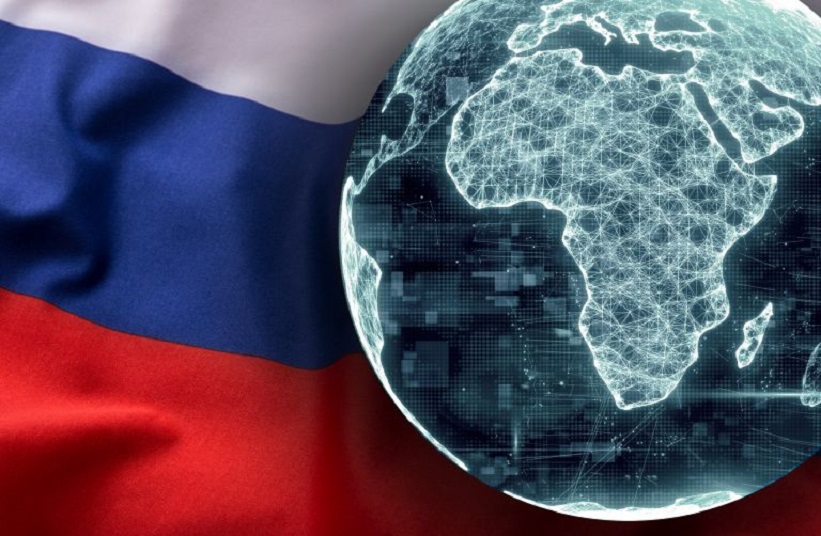
The South African Institute of International Affairs has put into circulation its latest policy report on Russia-African relations. In the introductory chapter, Steven Gruzd, Samuel Ramani and Cayley Clifford – have summarized various aspects of the developments between between Russia and Africa over the past few years and finally questioned the impact of Russia’s policy on Africa.
According to Steven Gruzd, Samuel Ramani and Cayley Clifford, this special far-reaching policy report includes academic research from leading Russian, African and international scholars. It addresses the dimensions of Russian power projection in Africa, new frontiers of Russian influence and provides a roadmap towards understanding how Russia is perceived in Africa.
It highlights narratives about anti-colonialism and describes how these sources of solidarity are transmitted by Russian elites to their African public. For seeking long-term influence, Russian elites have oftentimes used elements of anti-colonialism as part of the current policy to control the perceptions of Africans and primarily as new tactics for power projection in Africa.
The reports delved into the historical fact that after the collapse of the Soviet era, already more than three decades, Russia is resurgent in Africa. While Russia has been struggling to make inroads into Africa these years, the only symbolic event was the first Russia-Africa Summit held in Sochi, which fêted heads of state from 43 African countries and showcased Moscow’s great power ambitions.
Moscow has signed bilateral agreements to participate in various economic directions with many African countries. It has also signed military-technical agreements with over 20 African countries and has secured lucrative mining and nuclear energy contracts on the continent. Russia exports more arms to Africa than the United States, France and China combined. It uses private military contractors.
While it has made thousands of promises and signed bilateral agreements, Russia is largely invisible in economic sectors, keeps a remote distance from participating in building critical infrastructures and investing in industrial spheres. Moscow simply builds relations on illusions and lacks the capacity and overwhelming power to realize its policy goals in Africa. During critical times of coronavirus pandemic, Moscow terribly failed to supply 300 million Sputnik V vaccines through the African Union.
Russia’s expanding influence in Africa are compelling, but a closer examination further reveals a murkier picture. Despite Putin’s lofty trade targets, Russia’s trade with Africa stands at just $20 billion, which is lower than that of India or Turkey.
The report authors said that the renewed attention by Russia to Africa presents both risks and opportunities for the continent, especially in this changing geopolitical situation. But the key question arises: Who is courting whom?
The report points to the fact that African countries have engaged with Russia in a ‘business-as-usual fashion’ and have either refrained from condemning Russia’s aggression or from expressing explicit solidarity with Ukraine. Nevertheless, over half of all African states sided with the West in condemning Russia’s aggression against Ukraine in UN General Assembly votes in March and October 2022.
Russia’s major breakthroughs on the continent are confined to its support for fragile states, such as Mali, or autocracies, such as Cameroon, as major regional powers are reluctant to convert rhetorical cooperation into multidimensional partnerships.
The authors further wrote that “Russia’s growing assertiveness in Africa is a driver of instability and that its approach to governance encourages pernicious practices, such as kleptocracy and autocracy promotion, and the dearth of scholarship on Moscow’s post-1991 activities in Africa is striking.”
Records further show that Russia indeed kept a low profile for two decades after the Soviet collapse. One particularly problematic assumption is that Russia’s resurgence in Africa is a relatively recent phenomenon, which took hold at the tail end of Putin’s second term from 2004 to 2008 and accelerated after Russia-West relations soured over the 2014 Ukraine crisis and Russia’s annexation of Crimea.
Now Russia’s main tactics to expand its influence, such as debt forgiveness, arms contracts to fragile states and resistance to US unilateralism, come from its transition-era playbook and are not simply throwbacks to its Soviet-era superpower status. These continuities and forces that have shaped them are largely ignored in Western accounts and deserve granular attention.
In addition, Russia has used social media, state media and ‘political technologists’ to create distorted narratives of Russian largesse and to erode public support for Western involvement in Africa. At times, image triumphs over reality, as Russian narratives are more appealing than its actions. It is clear that Moscow’s approach to Africa is customised and is not a mere extrapolation from Putin’s global approach to foreign policy.
Moreover, the limited amplification of African voices causes sub-Saharan Africa to be viewed as a passive pawn of Russian power projection and neglects the perspectives of African civil society and the historical legacies that drive elites to court the Kremlin. Africa’s agency is thus discounted and diminished.
On the other hand, Russian public diplomacy in Africa explores the targeted use of historical ties, existing anti-Western narratives, state-centric approach and educational programmes to enhance Moscow’s ‘soft power’ on the continent.
In Southern Africa, a pattern of ‘differentiated courtship’ emerges clearly. By bridging Southern and Eastern Africa, its tactics include debt-for-development, nuclear energy, military and paramilitary cooperation, disinformation campaigns and election interference and sponsorship of political parties.
Further in the Horn of Africa, Russia’s tactics for influence projections span from participating in anti-piracy missions to vaccine diplomacy.
The war in Ukraine has elevated the level of scrutiny of Russia’s actions both in Europe and elsewhere in the world, including in Africa. Undeniably, Moscow is wooing African elites to serve its interests, African states are trying to play off Moscow, Washington, Brussels and Beijing for maximum advantage. While many complexities and nuances still remain in the entire relationships, it necessary not to over-generalize the unique features in the bilateral ties.
In the context of a multipolar geopolitical order, Russia’s image of cooperation could be seen as highly enticing, but it is also based on illusions. Better still, Russia’s posture is a clash between illusions and reality. “Russia, it appears, is a neo-colonial power dressed in anti-colonial clothes,” says the report.
Simply put, Moscow’s strategic incapability, inconsistency and dominating opaque relations are adversely affecting sustainable developments in Africa. Thus far, Russia looks more like a ‘virtual great power’ than a genuine challenger to European, American and Chinese influence.
The second Russia-Africa Summit – if it indeed goes ahead in July 2023 – will provide an ideal opportunity to reflect on progress since the inaugural gathering in 2019, and attempt to separate bluster from the concrete facts on the ground. But, ‘who is courting whom’ in the current relations between Africa and Russia.
World
United States Congress Pursuing AGOA Extension
By Kestér Kenn Klomegâh
After the expiration of bilateral agreement on trade, the US Congress as well as African leaders, highly recognizing its significance, has been pursuing the extension of the African Growth and Opportunity Act (AGOA). The agreement, which allows duty-free access to American markets for African exporters, expired on September 30, 2025.
The US Congress is advancing a bill to revive and extend AGOA, but South Africa’s continued inclusion remains uncertain. The trade pact still has strong bipartisan support, with the House Ways and Means Committee approving it 37-3. However, US Trade Representative, Jamieson Greer, raised concerns about South Africa, citing tariffs and non-tariff barriers, and said the administration could consider excluding the country.
This threat puts at risk the duty-free access that has significantly benefited South African automotive, agricultural, and wine exports. The debate highlights how trade policy is becoming entangled with broader diplomatic tensions, casting uncertainty over a key pillar of US-Africa economic relations.
Nevertheless, South Africa continues to lobby for inclusion. South Africa trade summary records show that the US goods and services trade with South Africa estimated at $26.2 billion in 2024. The US and South Africa signed a Trade and Investment Framework Agreement (TIFA) as far back as in 2012.
The duty-free access for nearly 40 African countries has boosted development and fostered more equitable and sustainable growth in Africa. By design AGOA is a useful mechanism for improving accessibility to trade competitiveness, connectivity, and productivity. During these past 25 years, AGOA has been the cornerstone of US economic engagement with the countries of sub-Saharan Africa.
Key features and benefits of AGOA:
It’s worth reiterating here that during these past several years, AGOA has been the cornerstone of US economic engagement with the countries of sub-Saharan Africa. In this case, as AGOA is closely working with the African Continental Free Trade Area (AfCFTA) Secretariat and with the African Union (AU), trade professionals could primarily leverage various economic sectors and unwaveringly act as bridges between the United States and Africa.
* Duty-free Access: AGOA allows eligible products from sub-Saharan African countries to enter the US market without paying tariffs.
* Promotion of Economic Growth: The program encourages economic growth by providing incentives for African countries to open their economies and build free markets.
* Encouraging Economic Reforms: AGOA encourages economic and political reforms in eligible countries, including the rule of law and market-oriented policies.
* Increased Trade and Investment: The program aims to strengthen trade and investment ties between the United States and sub-Saharan Africa.
With the changing times, Africa is also building its muscles towards a new direction since the introduction of the African Continental Free Trade Area (AfCFTA), which was officially launched in July 2019.
In practical terms, trading under the AfCFTA commenced in January 2021. And the United States has prioritized the AfCFTA as one mechanism through which to strengthen its long-term relations with the continent. In the context of the crucial geopolitical changes, African leaders, corporate executives, and the entire business community are optimistic over the extension of AGOA, for mutually beneficial trade partnerships with the United States.
Worthy to say that AGOA, to a considerable degree, as a significant trade policy has played a crucial role in promoting economic growth and development in sub-Saharan Africa.
World
Accelerating Intra-Africa Trade and Sustainable Development
By Kestér Kenn Klomegâh
Africa stands at the cusp of a transformative digital revolution. With the expansion of mobile connectivity, internet penetration, digital platforms, and financial technology, the continent’s digital economy is poised to become a significant driver of sustainable development, intra-Africa trade, job creation, and economic inclusion.
The African Union’s Agenda 2063, particularly Aspiration 1 (a prosperous Africa based on inclusive growth and sustainable development), highlights the importance of leveraging technology and innovation. The implementation of the African Continental Free Trade Area (AfCFTA) has opened a new chapter in market integration, creating opportunities to unlock the full potential of the digital economy across all sectors.
Despite remarkable progress, challenges persist. These include limited digital infrastructure, disparities in digital literacy, fragmented regulatory frameworks, inadequate access to financing for tech-based enterprises, and gender gaps in digital participation. Moreover, Africa must assert its digital sovereignty, build local data ecosystems, and secure cyber-infrastructure to thrive in a rapidly changing global digital landscape.
Against this backdrop, the 16th African Union Private Sector Forum provides a timely platform to explore and shape actionable strategies for harnessing Africa’s digital economy to accelerate intra-Africa trade and sustainable development.
The 16th High-Level AU Private Sector forum is set to take place in Djibouti, from the 14 to 16 December 2025, under the theme “Harnessing Africa’s Digital Economy and Innovation for Accelerating Intra-Africa Trade and Sustainable Development”
The three-day Forum will feature high-level plenaries, expert panels, breakout sessions, and networking opportunities. Each day will spotlight a core pillar of Africa’s digital transformation journey.
Day 1: Digital Economy and Trade Integration in Africa
Focus: Leveraging digital platforms and technologies to enhance trade integration and competitiveness under AfCFTA.
Day 2: Innovation, Fintech, and the Future of African Economies
Focus: Driving economic inclusion through fintech, innovation ecosystems, and youth entrepreneurship.
Day 3: Building Policy, Regulatory Frameworks, and Partnerships for Digital Growth
Focus: Creating an enabling environment for digital innovation and infrastructure through effective policy, governance, and partnerships.
To foster strategic dialogue and action-oriented collaboration among key stakeholders in Africa’s digital ecosystem, with the goal of leveraging digital economy and innovation to boost intra-Africa trade, accelerate economic transformation, and support inclusive, sustainable development.
* Promote Digital Trade: Identify mechanisms and policy actions to enable seamless cross-border digital commerce and integration under AfCFTA.
* Foster Innovation and Fintech: Advance inclusive fintech ecosystems and support innovation-driven entrepreneurship, especially among youth and women.
* Policy and Regulatory Harmonization: Build consensus on regional and continental digital regulatory frameworks to foster trust, security, and interoperability.
* Encourage Investment and Public-Private Partnerships: Strengthen collaboration between governments, private sector, and development partners to invest in digital infrastructure, R&D, and skills development.
* Advance Digital Inclusion and Sustainability: Ensure that digital transformation contributes to environmental sustainability and the empowerment of marginalized communities.
The AU Private Sector Forum has held several forums, with key recommendations. These recommendations provide valuable insights into the challenges and opportunities facing the African private sector and offer guidance for policymakers on how to support its growth and development.
World
Russia’s Lukoil Losses Strategic Influence Across Africa
By Kestér Kenn Klomegâh
Lukoil, Russia’s energy giant, has seriously lost its grounds across Africa, due to United States sanctions. Sanctions have complicated the company’s potential continuity in operating its largest oil field projects, grappling its investment particularly in Republic of Ghana, Democratic Republic of Congo, and Federal Republic of Nigeria.
Reports indicated the sanctions are further dismantling most of Lukoil’s operations, causing significant staff layoffs in its offices worldwide. For instance, Lukoil’s significant upstream operations in the Middle East include a 75% stake in Iraq’s West Qurna 2 oilfield and a 60% stake in Iraq’s Block 10 development. In Egypt, the company holds stakes in various oilfields alongside local partners.
Lukoil has until December 13, 2025, to negotiate the sale of most of its international assets, including those in Asia, Africa and Latin America. It has already terminated several important agreements that were signed with international partners due to difficulties in circumventing the sanctions.
Reports said calculated efforts to diversify exploration business relations is turning extremely complex, and current at the cross-roads, Lukoil will have to ultimately give up existing contracts and agreements it had signed with external countries.
Lukoil’s website reports also pointed to reasons for abandoning oil and gas exploration and drilling project that it began in Sierra Leone. According to those reports, Lukoil could withdraw from almost all of the projects in West Africa.
In addition to geopolitical sanctions, technical and geographical hitches, Lukoil noted on its website, an additional obstacles that “the African leadership and government policies always pose serious problems to operations in the region.” Similarly, the Kremlin-controlled Rosneft abandoned its interest in the southern Africa oil pipeline construction, negatively impacted on Angola, Mozambique, South Africa and Zimbabwe.
United States sanctions has hit Lukoil, one of the Russia’s biggest oil companies, like many other Russian companies, that has had a long history shuttling forth and back with declaration of business intentions or mere interests in tapping into oil and gas resources in Africa.
-
Feature/OPED6 years agoDavos was Different this year
-
Travel/Tourism9 years ago
Lagos Seals Western Lodge Hotel In Ikorodu
-
Showbiz3 years agoEstranged Lover Releases Videos of Empress Njamah Bathing
-
Banking7 years agoSort Codes of GTBank Branches in Nigeria
-
Economy3 years agoSubsidy Removal: CNG at N130 Per Litre Cheaper Than Petrol—IPMAN
-
Banking3 years agoFirst Bank Announces Planned Downtime
-
Banking3 years agoSort Codes of UBA Branches in Nigeria
-
Sports3 years agoHighest Paid Nigerian Footballer – How Much Do Nigerian Footballers Earn