Economy
Corruption: CBN Calls Nigerian Wailers Paid Agents

By Modupe Gbadeyanka
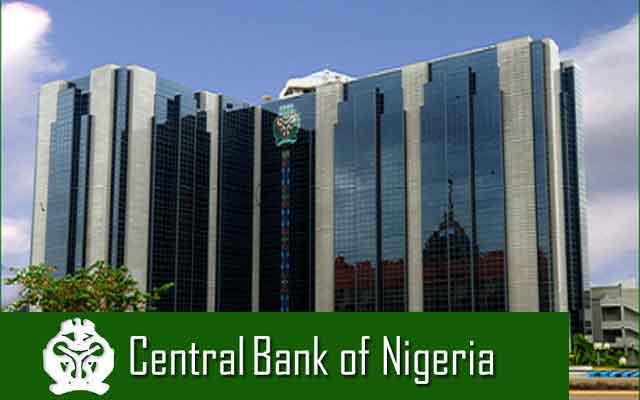
Central Bank of Nigeria (CBN) has reacted to allegations of corruption levelled against it by Nigerian Wailers, saying that the Wailers are paid agents and would fail in their bid to distract the government from its focus.
Acting Director of Corporate Communications, Mr Isaac Okorafor reacted to the allegation in a conversation with the Economic Confidential.
The Nigerian Wailers had, in a statement, alleged wide-spread corruption in the administration of foreign exchange and illegally lending money to President Buhari’s administration to support the budget.
But the CBN spokesperson said, “The allegations are totally false and fabricated. Such a thing is not possible under the new forex system. It is not enough to make wild allegations.
“Those who are paid agents of selfish interests and the enemies of the Nigerian economy will fail in their bid to distract the CBN and the Federal Government from their focus on the diversification of the Nigerian economy away from import and crude oil dependency.”
Mr Okorafor said, “No amount of blackmail will make the CBN allow a practice where by our farmers and industrialists who have invested heavily and employed our youths in the production of Nigerian made rice, fish, industrial starch, palm produce, wheat, tooth pick, wines, etc would be made to close their farms and factories again.”
“What these charlatans and hirelings want are basically twofold.
“First they want the CBN to give out the nation’s scarce foreign exchange to their sponsors to import all manner of foreign goods and dump them on our markets thereby frustrating the good work our own farmers and manufacturers.
“Secondly, they want the CBN to fold its arms and allow currency speculators to drive the naira down to a level at which it will be easy for their paymasters to buy up and take control of the Nigerian economy.
“They have even gone to the extent of making false allegations that some banks are having trouble just to trigger panic in the financial system. These will not happen. Nigerians have rejected these foreign agents.
Twenty states have adopted the CBN Anchor Borrowers Programme (ABP). Nigeria is set to be self-sufficient in rice, fish and wheat production.
“What happened during the past Christmas and new year celebrations has proved this. It will be economically suicidal for the CBN to allocate our scarce forex to those who will engage in another escapade in senseless importation which will again discourage our local producers who have borrowed money to engage in agriculture and local manufacturing.
“It will be dangerous to our poor people in the rural areas and indeed to masses of Nigerian workers who are on fixed incomes for the CBN to allow speculators to drive the value of the naira to any level just for the selfish gains of the sponsors of these arrangee protests. We will not succumb to blackmail.
“Again, the issue of the CBN funding the Federal Government budget has been long addressed with clear figures which have been widely publicized.
“Let me once again state that the role of the CBN as banker to the Federal Government is to do exactly what we have done and within the limits specified by law.
“Or would the so called group want the CBN to withhold advances so that the government will collapse?” he concluded.
But in a statement from the Nigerian Wailers signed by its Deputy National Publicity Secretary, Mr Fasipe Oluyemi, the group called on Nigerians to come out en mass for a protest (#OccupyCBN) to stop this impunity of the Fraudulent Forex Trading, Round Tripping and racketeering going on in the CBN allegedly aided by its Governor, Mr Godwin Emefiele and bring to an end the Manipulation of Forex, illegally funding Federal Government budget, short-changing the Money Deposit Bank’s reserve ratio at the expense of the masses as the abuse of internal process.
The group recalls that the apex bank’s top management carried out a backdoor recruitment exercise for the children of high profile Nigerian politicians, business men, in which the door was shut against the children of average Nigerian who may have been qualified to work in the bank on merit basis and were not allowed, but, the employment was freely handed to the children of friends and families of those in Government.
“Since the emergence of the administration of President Buhari, Forex Trading has been illegally turned to an exclusive business of the friends and family of those in power as against the principle of banking which allows for professionalism in trading and ensuring circulation to the business community for import and export of goods and services that will have direct positive impact on the economy and the people,” the statement said.
Economy
Tinubu Okays Extension of Ban on Raw Shea Nut Export by One Year
By Aduragbemi Omiyale
The ban on the export of raw shea nuts from Nigeria has been extended by one year by President Bola Tinubu.
A statement from the Special Adviser to the President on Information and Strategy, Mr Bayo Onanuga, on Wednesday disclosed that the ban is now till February 25, 2027.
It was emphasised that this decision underscores the administration’s commitment to advancing industrial development, strengthening domestic value addition, and supporting the objectives of the Renewed Hope Agenda.
The ban aims to deepen processing capacity within Nigeria, enhance livelihoods in shea-producing communities, and promote the growth of Nigerian exports anchored on value-added products, the statement noted.
To further these objectives, President Tinubu has authorised the two Ministers of the Federal Ministry of Industry, Trade and Investment, and the Presidential Food Security Coordination Unit (PFSCU), to coordinate the implementation of a unified, evidence-based national framework that aligns industrialisation, trade, and investment priorities across the shea nut value chain.
He also approved the adoption of an export framework established by the Nigerian Commodity Exchange (NCX) and the withdrawal of all waivers allowing the direct export of raw shea nuts.
The President directed that any excess supply of raw shea nuts should be exported exclusively through the NCX framework, in accordance with the approved guidelines.
Additionally, he directed the Federal Ministry of Finance to provide access to a dedicated NESS Support Window to enable the Federal Ministry of Industry, Trade and Investment to pilot a Livelihood Finance Mechanism to strengthen production and processing capacity.
Shea nuts, the oil-rich fruits from the shea tree common in the Savanna belt of Nigeria, are the raw material for shea butter, renowned for its moisturising, anti-inflammatory, and antioxidant properties. The extracted butter is a principal ingredient in cosmetics for skin and hair, as well as in edible cooking oil. The Federal Government encourages processing shea nuts into butter locally, as butter fetches between 10 and 20 times the price of the raw nuts.
The federal government said it remains committed to policies that promote inclusive growth, local manufacturing and position Nigeria as a competitive participant in global agricultural value chains.
Economy
NASD Bourse Rebounds as Unlisted Security Index Rises 1.27%
By Adedapo Adesanya
The NASD Over-the-Counter (OTC) Securities Exchange expanded for the first session this week by 1.27 per cent on Wednesday, February 25.
This lifted the NASD Unlisted Security Index (NSI) above 4,000 points, with a 50.45-point addition to close at 4,025.25 points compared with the previous day’s 3,974.80 points, as the market capitalisation added N30.19 billion to close at N2.408 trillion versus Tuesday’s N2.378 trillion.
At the trading session, FrieslandCampina Wamco Nigeria Plc grew by N5.00 to trade at N100.00 per share compared with the previous day’s N95.00 per share, Central Securities Clearing System (CSCS) Plc improved by N4.18 to sell at N70.00 per unit versus N65.82 per unit, and First Trust Mortgage Bank Plc increased by 14 Kobo to trade at N1.59 per share compared with the previous day’s N1.45 per share.
However, the share price of Geo-Fluids Plc depreciated by 27 Kobo at midweek to close at N3.27 per unit, in contrast to the N3.30 per unit it was transacted a day earlier.
At the midweek session, the volume of securities went down by 25.3 per cent to 8.7 million units from 11.6 million units, the value of securities decreased by 92.5 per cent to N80.7 million from N1.2 billion, and the number of deals slipped by 33.3 per cent to 32 deals from the preceding session’s 48 deals.
At the close of business, CSCS Plc remained the most traded stock by value on a year-to-date basis with 34.1 million units exchanged for N2.0 billion, trailed by Okitipupa Plc with 6.3 million units traded for N1.1 billion, and Geo-Fluids Plc with 122.0 million units valued at N478.0 million.
Resourcery Plc ended the trading session as the most traded stock by volume on a year-to-date basis with 1.05 billion units valued at N408.7 million, followed by Geo-Fluids Plc with 122.0 million units sold for N478.0 million, and CSCS Plc with 34.1 million units worth N2.0 billion.
Economy
Investors Lose N73bn as Bears Tighten Grip on Stock Exchange
By Dipo Olowookere
The bears consolidated their dominance on the Nigerian Exchange (NGX) Limited on Wednesday, inflicting an additional 0.09 per cent cut on the market.
At midweek, the market capitalisation of the domestic stock exchange went down by N73 billion to N124.754 trillion from the preceding day’s N124.827 trillion, and the All-Share Index (ASI) slipped by 114.32 points to 194,370.20 points from 194,484.52 points.
A look at the sectoral performance showed that only the consumer goods index closed in green, gaining 1.19 per cent due to buying pressure.
However, sustained profit-taking weakened the insurance space by 3.79 per cent, the banking index slumped by 2.07 per cent, the energy counter went down by 0.24 per cent, and the industrial goods sector shrank by 0.22 per cent.
Business Post reports that 25 equities ended on the gainers’ chart, and 54 equities finished on the losers’ table, representing a negative market breadth index and weak investor sentiment.
RT Briscoe lost 10.00 per cent to sell for N10.35, ABC Transport crashed by 10.00 per cent to N6.75, SAHCO depreciated by 9.98 per cent to N139.35, Haldane McCall gave up 9.93 per cent to trade at N3.99, and Vitafoam Nigeria decreased by 9.93 per cent to N112.50.
Conversely, Jaiz Bank gained 9.95 per cent to settle at N14.03, Okomu Oil appreciated by 9.93 per cent to N1,765.00, Trans-nationwide Express chalked up 9.77 per cent to close at N2.36, Fortis Global Insurance moved up by 9.72 per cent to 79 Kobo, and Champion Breweries rose by 5.39 per cent to N17.60.
Yesterday, 1.4 billion shares worth N46.2 billion were transacted in 70,222 deals compared with the 1.1 billion shares valued at N53.4 billion traded in 72,218 deals a day earlier, implying a rise in the trading volume by 27.27 per cent, and a decline in the trading value and number of deals by 13.48 per cent and 2.76 per cent, respectively.
Fortis Global Insurance ended the session as the busiest stock after trading 193.7 million units for N152.7 million, Zenith Bank transacted 120.7 million units worth N11.1 billion, Japaul exchanged 114.8 million units valued at N407.0 million, Ellah Lakes sold 98.4 million units worth N999.2 million, and Access Holdings traded 63.1 million units valued at N1.7 billion.
-
Feature/OPED6 years agoDavos was Different this year
-
Travel/Tourism10 years ago
Lagos Seals Western Lodge Hotel In Ikorodu
-
Showbiz3 years agoEstranged Lover Releases Videos of Empress Njamah Bathing
-
Banking8 years agoSort Codes of GTBank Branches in Nigeria
-
Economy3 years agoSubsidy Removal: CNG at N130 Per Litre Cheaper Than Petrol—IPMAN
-
Banking3 years agoSort Codes of UBA Branches in Nigeria
-
Banking3 years agoFirst Bank Announces Planned Downtime
-
Sports3 years agoHighest Paid Nigerian Footballer – How Much Do Nigerian Footballers Earn