Connect with us

Economy

An In-depth Look into Best CFD Trading Platforms in South Africa by Traders Union

Published

on

best cfd trading platform

Recent years have witnessed a significant surge in the popularity of Contract for Difference (CFD) trading in South Africa. In light of this evolving market dynamic, Traders Union experts conducted a meticulous examination of the top CFD trading platforms catering to the South African market. Their insightful findings aim to assist novice and experienced traders in navigating through various platforms, each boasting unique offerings and services.

The experts considered numerous best CFD trading platforms in South Africa to ensure an unbiased assessment, eventually identifying a select few that demonstrated outstanding performance across all assessment criteria. A multifaceted approach, including comprehensive evaluations of regulatory compliance, asset variety, trading features, and overall user experience, underpinned the TU expert analysis.

The forthcoming sections present a detailed summary of their findings. Read and learn about the top platforms to trade CFDs in South Africa for novice and experienced traders.

Pioneering CFD Trading Platforms in South Africa

The Traders Union team, having scrutinized the market, has delineated several trading platforms. Learn about their features and tools.

RoboForex

Regulated by IFSC, RoboForex provides traders with an extensive array of 9 asset types for CFD trading, including Forex, stocks, indices, ETFs, commodities, metals, energies, and cryptocurrencies. With a low minimum deposit of $10, the platform offers multiple account types, catering to different trading styles and risk appetites. Their platform is easy to navigate, allowing traders to maximize their trading efficiency.

XM Group

XM Group stands out with its impressive regulatory portfolio, which includes ASIC and CySEC. They offer various CFDs on asset classes such as Forex, stocks, commodities, indices, and cryptocurrencies. Traders can enjoy competitive spreads, rapid execution of orders, and dedicated support for MT4 and MT5 trading platforms.

Tickmill MT4

Tickmill offers an assortment of CFDs, including Forex, stock indices, bonds, and commodities, on its MT4 platform. The platform, regulated by the FCA, CySEC, and FSA, requires a minimum deposit of $100. Key features include low spreads, high-speed order execution, and no requotes, contributing to a seamless trading experience.

IC Markets cTrader

IC Markets facilitates trading in Forex, indices, commodities, bonds, futures, and cryptocurrencies CFDs on its sophisticated cTrader platform. It boasts high-speed order execution, level II pricing, and detachable charts. Furthermore, it is regulated by ASIC, a globally recognized financial regulator.

Understanding CFDs

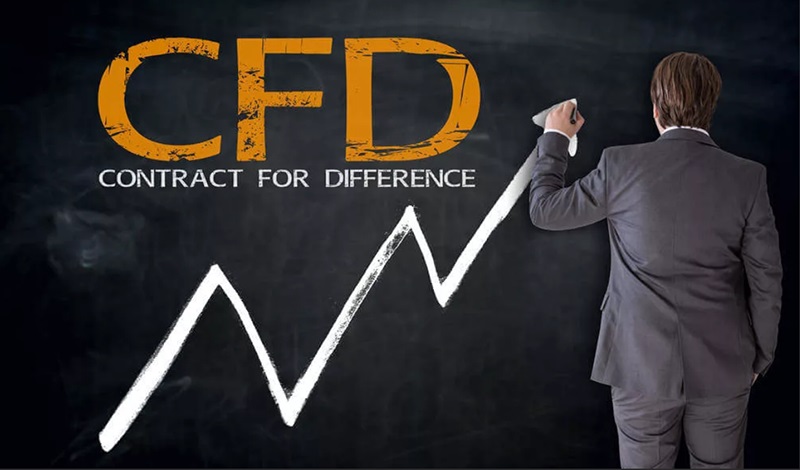
CFDs are complex financial instruments that enable traders to speculate on the price movements of various global financial markets. In CFD trading, traders do not directly own the underlying asset. Rather, they enter into a contract with the broker to exchange the difference in the price of an asset from the time the contract is opened to when it is closed. TU team discussed key steps in CFD trading:

  1. Checking the regulatory status of the platform.
  2. See the available markets.
  3. Verify the availability of direct share CFDs from the broker.
  4. Check the features and tools of the platform.
  5. Check commissions and fees, including spread and withdrawal costs.
  6. Confirm the minimum deposit amount.
  7. Learn about available software.
  8. Check the customer support service availability via email, phone or live chat.
  9. Sign up to start trading CFDs.

Evaluating the Legality of CFD Trading in South Africa

CFD trading is legal in South Africa and is regulated by various entities. The Financial Sector Conduct Authority (FSCA) is South Africa’s main financial regulator, ensuring fairness and integrity in the financial markets. The Australian Securities and Investments Commission (ASIC) and Cyprus Securities and Exchange Commission (CySEC) are well-recognized global regulators that oversee Forex and CFD brokers. The UK’s Financial Conduct Authority (FCA) and Germany’s Federal Financial Supervisory Authority (BaFin) are further assurances of regulatory oversight, providing robust investor protection.

Assessing Tax Implications for CFD Traders in South Africa

Traders engaging in CFD trading are subject to South African tax laws. Income from CFD trading falls under gross income as per the Income Tax Act and must be reported to the South African Revenue Service (SARS). Capital Gains Tax (CGT) also applies to the profits earned from CFD trading. Traders Unions’ experts explain that traders must consider these tax implications when calculating their potential returns.

Identifying Ideal CFD Platforms for Beginners in South Africa

For novice traders, platforms that offer copy trading or PAMM accounts present an excellent starting point. Some of these platforms include XM Group and RoboForex. These features allow beginners to learn from experienced traders, gaining insights into successful trading strategies.

Conclusion

For a more exhaustive understanding of the CFD trading landscape in South Africa, readers are advised to visit the TU website. This rich repository hosts a plethora of detailed reviews, guides, and invaluable resources to equip traders with the knowledge they need for successful trading.


Click to comment

Leave a Reply

Your email address will not be published. Required fields are marked *

Economy

Corporate Reporting Boosts Market Integrity, Investor Confidence—NGX RegCo CEO

Published

on

Olufemi Shobanjo NGX RegCo

By Aduragbemi Omiyale

The chief executive of the Nigerian Exchange (NGX) Regulation Limited, Mr Femi Shobanjo, has made a strong case for corporate reporting, submitting that it remains critical to enhancing market integrity and boosting investor confidence.

He gave this view at the 3rd edition of the Corporate Reporting Awards organised by his organisation and the Institute of Chartered Accountants of Nigeria (ICAN).

The event recognised listed companies on the local stock exchange for excellence in financial reporting, corporate governance, and sustainability disclosures for the 2024 financial year.

The awards, which cover companies on the NGX 30 Index, assessed performance across three pillars: Financial Reporting (35 per cent), Corporate Governance (30 per cent), and Sustainability Reporting (35 per cent).

Organisers said the 2024 assessment was conducted under strict confidentiality and objectivity, with outcomes based strictly on merit. The exercise builds on earlier editions covering the 2022 and 2023 financial years and continues to serve as a benchmark for corporate disclosure standards in the Nigerian capital market.

Mr Shobanjo highlighted NGX RegCo’s continued adoption of global reporting frameworks, including the International Financial Reporting Standards (IFRS), the Nigerian Code of Corporate Governance, and the IFRS Sustainability Disclosure Standards (IFRS S1 and S2).

According to him, the growing emphasis on environmental, social, and governance (ESG) disclosures reflects an important shift in market expectations, as sustainability considerations are increasingly becoming central to corporate strategy and long-term value creation.

“Strong corporate reporting is fundamental to market integrity and investor confidence. Beyond financial performance, there is now a clear expectation for companies to disclose how environmental, social, and governance considerations are embedded in their strategy.

“Long-term corporate success is increasingly linked to the integration of sustainability into core business decisions,” he said.

He added that the “Most Improved Company” category was introduced to encourage continuous improvement in reporting quality among listed firms.”

On his part, the president of ICAN, Mr Haruna Nma Yahaya, said corporate reporting has evolved significantly beyond compliance, becoming a strategic instrument for communicating purpose, resilience, and direction.

He noted that organisations are now expected not only to report performance but also to demonstrate how they are responding to change and creating sustainable value.

“Corporate reporting has evolved beyond compliance to become a strategic tool that communicates purpose, resilience, and direction.

“In today’s environment, organisations are expected not only to report performance, but also to demonstrate how they are adapting to change and creating sustainable value. Transparency remains central to building trust, strengthening investor confidence, and supporting market stability,” he said.

International Breweries Plc was named Most Improved Company (Overall), while First HoldCo Plc won the Sustainability Reporting Award. Zenith Bank Plc received the Corporate Governance Award, and MTN Nigeria Communications Plc clinched the Financial Reporting Award.

In the top overall category, Access Holdings Plc won Silver, Airtel Africa Plc took Gold, while Seplat Energy Plc emerged Platinum winner.

Continue Reading

Economy

Crude Oil Rises 3% as Iran Hesitates on US Peace Talks

Published

on

crude oil exports

By Adedapo Adesanya

Crude oil climbed about 3 per cent on Tuesday after Iran said it had yet to decide whether to attend peace talks with the United ​States.

With one day left before the ceasefire runs out in the Iran war, US President Donald Trump said he hoped to ‌reach a deal to end the war. However, he said he did not want to extend the ceasefire, adding that the US military was “raring to go” if negotiations were not successful.

This development raised the price of Brent futures by $3 or 3.1 per cent to $98.48 a barrel, and lifted the US West Texas Intermediate (WTI) futures by $2.52 or 2.8 per cent to $92.13 per barrel.

Crude oil prices have spent most of March-April seesawing up and down, reacting to Iran’s closure of the Strait of Hormuz and President Trump’s Truth Social posts.

The lack of progress in US-Iran talks and their continuous postponement are keeping the oil market on edge, with the American President’s latest comments about no extension sending another wave of anxiety across market watchers.

Shipping traffic through the Strait ​of Hormuz, which normally handles about 20 per cent of global oil and liquefied natural gas supplies, remained broadly halted on ⁠Tuesday with only three ships passing the waterway in the past 24 hours. Over 1 billion barrels of crude have been disrupted due to the blockade.

Meanwhile, the Israeli military said Hezbollah fired rockets at Israeli troops in southern Lebanon, accusing the Iran-backed group of violating a ceasefire ahead of US-mediated talks between the government of Israel and Lebanon this week.

The European Union (EU) said it will provide guidance to airlines on how to handle issues such as airport slots, passenger rights ​and public service obligations in the event of jet fuel shortages because of the Iran war.

Countries continued to feel the effects of the war. In Germany, the biggest economy ​in Europe, investor morale declined to its ​lowest level in more than three ⁠years in April, while in the US, retail sales increased more than expected in March as the war in ​Iran boosted gasoline prices.

Ukrainian President Volodymyr Zelenskiy said the Druzhba oil ‌pipeline, which pumps ⁠Russian oil to Europe, is ready to resume operations, signalling that Ukraine now expects an over $106 billion aid package to be unblocked.

The American Petroleum Institute (API) estimated that crude oil inventories in the US fell by 4.4 million barrels in the week ending April 17. In the week prior, US crude oil inventories rose by 6.10 million barrels. Official data from the Energy Information Administration (EIA) will be released later on Wednesday.

Continue Reading

Economy

NASCON, Others Drive Stock Exchange’s 0.06% Rise as Bulls, Bears Fight for Control

Published

on

Local Stock Exchange

By Dipo Olowookere

The local stock exchange recorded a marginal 0.06 per cent surge on Tuesday as the bulls and the bears engaged in a fierce battle for control of the bourse.

Business Post reports that the Nigerian Exchange (NGX) Limited experienced a mix of profit-taking and bargain-hunting, with two of the five key sectors ending in green.

According to data from Customs Street, the banking counter lost 1.30 per cent, the consumer goods sector decreased by 0.39 per cent, and the energy index tumbled by 0.09 per cent.

However, the industrial goods and the insurance indices appreciated by 1.64 per cent and 0.19 per cent, respectively, as a result of buying pressure.

Consequently, the All-Share Index (ASI) went up by 135.97 points to 218,249.81 points from 218,113.84 points, and the market capitalisation soared by N87 billion to N140.523 trillion from N140.436 trillion.

The market breadth index for the session was negative, like the preceding session, with 26 price gainers and 45 price losers, showing bearish investor sentiment.

Again, NASCON led the advancers’ group after it chalked up another 10.00 per cent to close at N171.60. Union Dicon increased by 9.92 per cent to N19.95, Lafarge Africa gained 9.64 per cent to trade at N273.00, Trans-Nationwide Express appreciated by 8.27 per cent to N7.20, and UAC Nigeria rose by 7.84 per cent to N110.00.

On the other side, Legend Internet depreciated by 9.92 per cent to N5.63, Abbey Mortgage Bank shed 9.59 per cent to quote at N6.60, Stanbic IBTC weakened by 8.96 per cent to N154.50, Access Holdings dropped 8.83 per cent to close at N29.95, and Veritas Kapital crashed by 7.50 per cent to N1.85.

On top of the activity chart yesterday was Access Holdings with 110.7 million shares sold for N3.6 billion, FCMB transacted 57.7 million equities valued at N751.5 million, Fidelity Bank exchanged 44.8 million stocks worth N1.0 billion, Zenith Bank traded 44.2 million equities for N5.5 billion, and UBA transacted 43.6 million shares valued at N2.2 billion.

At the close of trades, 842.5 million stocks worth N44.9 billion exchanged hands in 61,617 deals versus the 984.0 million stocks valued at N50.8 billion executed in 76,410 deals on Monday, indicating a shortfall in the trading volume, value, and number of deals by 14.38 per cent, 11.61 per cent, and 19.36 per cent, respectively.

Continue Reading

Trending