Connect with us

World

Reassessing Russia’s Engagement with Zimbabwe

Published

on

Harare Zimbabwe Economy

By Kestér Kenn Klomegâh

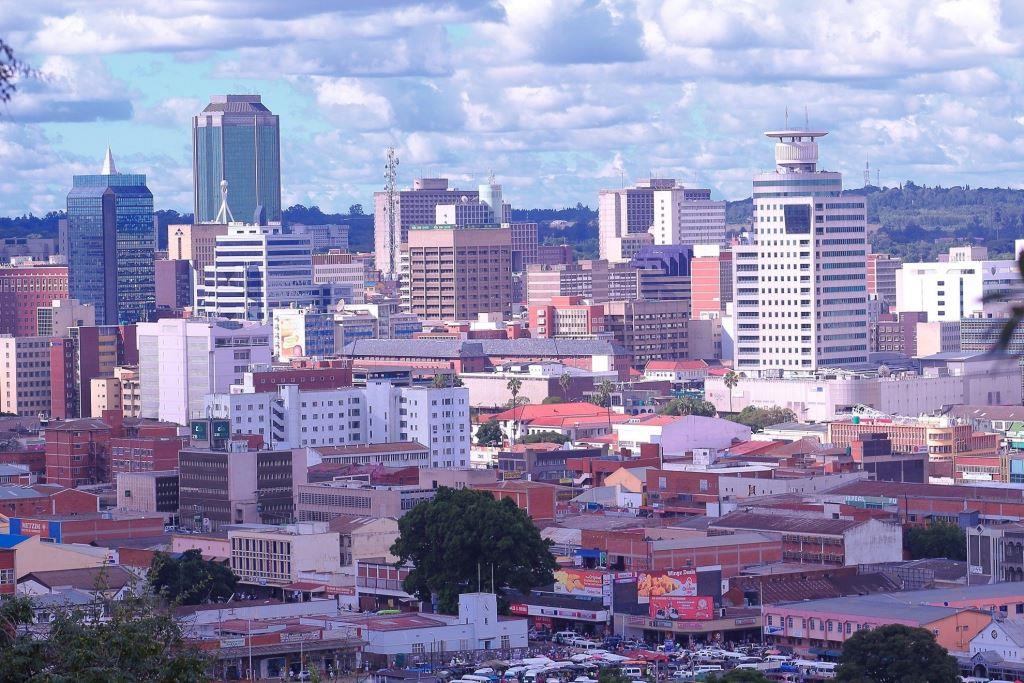
As often reiterated, Russia and Zimbabwe have had excellent bilateral relations, dating from the time of Zimbabwe’s struggle for political independence. The Soviet Union supported with military equipment, and training specialists and offered humanitarian supplies, and until today Zimbabwe is still looking for such bilateral relations. A comprehensive analysis indicates that not much is visible on the landscape of Zimbabwe, except frequent shuttling visits of government officials between Harare and Moscow.

The list of those official visits can be found on government websites. Of course, not all have been documented there such as those dealing with military-technical cooperation and intelligence services. But it can also be recalled here in 2022, Speaker of the National Assembly of the Republic of Zimbabwe Jacob Mudenda and his delegation paid a reciprocal working visit late September to Moscow, held separate meetings with Russian Upper House Speaker Valentina Matviyenko and Chairman of the State Duma Vyacheslav Volodin, and finally addressed the plenary session of the State Duma.

Upper Chamber Senator Matviyenko and Lower Chamber Legislator Volodin, both have similar unique declaratory statements emphasizing the fact that Russia considers cooperation with African countries to be a foreign policy priority. And that Zimbabwe is Russia’s priority in the southern African region.

Upper House Speaker Valentina Matviyenko visited and donated, as Zimbabweans expected from Moscow, huge gifts in June 2022. During her conversation with the head of the charitable foundation and First Lady of the Republic of Zimbabwe Auxilia Mnangagwa Matviyenko noted mutual understanding that has developed in Russian-Zimbabwean relations. She, in addition, drew attention to the fact that the Angels of Hope charity fund coordinates the selection of candidates from low-income families for higher education in Russia under the quota of the Government of the Russian Federation.

“We highly appreciate it that the Zimbabwean leadership remains committed to the development of bilateral relations and mutually beneficial cooperation with Russia. And that Zimbabwe is resolutely resisting the unprecedented pressure of the collective West led by the United States, their open attempts to dictate their will,” Matviyenko said.

Besides the above charity, the Russia-Zimbabwe Intergovernmental Commission on Economic, Scientific and Technical Cooperation has held a series of meetings in Harare and Moscow. Several agreements have been signed over the years to engage seriously in economic sectors, including, infrastructure development, transport, agriculture, industry nuclear technology et cetera. An increasing interest points to the Russian business community in building a beneficial partnership with Zimbabwe. For these to materialize, frequent interactions have been made possible, based on decades of strong ties of friendship and cooperation since the days of Zimbabwean Robert Mugabe.

One major landmark was Zimbabwe and Ethiopia, among African countries, have signed agreements with Russia to cooperate on the peaceful use of nuclear technology on the sidelines of the Russia-Africa Economic and Humanitarian Forum in St Petersburg, in July 2023. Rosatom has offices in Cairo and Pretoria with the responsibility of managing the nuclear projects in Africa.

For decades, Rosatom has signed (and resigned) agreements with African countries for the construction of nuclear plants for civilian purposes. Today, African countries face major challenges in ensuring energy security. Experts believe that nuclear technologies can become a driver for socio-economic development and a comprehensive solution to systemic continent-wide problems. In addition, nuclear, of course, offers long-term sustainability and diversity away from solar and hydro.

These unique steps seemingly suggest a pragmatic approach prioritizing Africa’s energy security, on one hand. It is interesting to note, on the other hand, that Russia’s nuclear agreements with 28 African countries have been fully undertaken and completed primarily due to a lack of finance. The key hindrance is the cost of producing nuclear energy how best to deal with nuclear waste to maintain a safe environment, and the risk that it poses from poor handling and management. After the first Russia-Africa summit held in 2019, Russia has, as an exceptional case, granted a $29 billion loan for the nuclear plant construction in Egypt based on its strategic bilateral relations. The nuclear agreement was signed as far back as 2015.

President of the Republic of Zimbabwe, Emmerson Dambudzo Mnangagwa, since the beginning of the Russia-Ukraine crisis and the ‘special military operation’ aims at denazifying and demilitarizing Ukraine, has utterly rejected the United States’ appeal to support sanctions against Russia. It has, therefore, won Russia’s sympathy as a ‘friendly’ African ally. In return, Zimbabwe was given in late 2023 what was termed ‘delivery at no-cost’ grains and fertilizers, these were in addition to supplies of military equipment and training of Zimbabwean citizens on state budget at educational institutions in the Russian Federation. According to the official statistics, there are currently 400 Zimbabweans studying in the Russian Federation.

Mnangagwa, while visiting as a guest speaker at the 27th St. Petersburg International Economic Forum (SPIEF) and his special meeting with President Vladimir Putin in June 2024, was excited at winning favours by explaining, at length, how the United States has been supporting neighbouring southern African countries. Ultimately, Mnangagwa was to get better treatment for a broader supply of arms and weaponry, and food to feed the impoverished population. He did not negotiate for investment in agriculture, he did not suggest the construction of, at least, a kilometre road or a local school in any of the rural regions in Zimbabwe.

What was important for Zimbabwe, Mnangagwa asked for the chance to enhance bilateral cooperation, and that Zimbabwe is “one of the few countries in southern Africa that is regarded as anti-West” so there is a concrete basis for pursuing more consolidated relations to escape being further isolated in southern Africa. “And there is a lot more that we can open for the Russian Federation to participate in our economy, especially in the mining sector and agriculture,” he stressed in his discussion.

Russia’s perspectives on the struggle against growing neo-colonialism and Western-style tendencies, most probably, have to do with pushing for large-scale development programmes, and support for attaining economic sovereignty. If that is the case, then Russia needs to borrow a single page from China. Zimbabwe has the full-fledged confidence to opt for hosting the third Russia-Africa Summit in Harare simply because China has given that country a new parliamentary village with modern facilities for large conferences. Compared, Russia has not constructed a single one-kilometre road in the transport sector in Zimbabwe consistently claims to have under its umbrella excellent relations from the Soviet times.

The new parliament building is located in Mount Hampden, approximately 25 kilometres (16 mi) northwest of Harare. The parliamentary chambers can accommodate up to 650 legislators, their offices, conference rooms and meeting spaces. The engineering, procurement and construction (EPC) contract was awarded to Shanghai Construction Group, which erected the building between December 2018 and April 2022. A Chinese government delegation officially handed over the building complex to the government of Zimbabwe on 26 October 2023. The construction was fully funded at the cost of nearly $200 million by the Government of China, according to reports by Zimbabwean media.

Perhaps generally, Russia aspires to position itself as a leader in Africa, it thus far remains with its aspirations in the media headlines. Uprooting neo-colonialism requires investment in building economic sectors designed to improve the living standards of the impoverished population, creating employment for the youth. Russia’s footprints, such as providing infrastructure in agriculture, industry, transport and other sectors, are invisible in the continent. The fundamental conservative assessment indicates that Africa is largely at the bottom position in terms of overall development in the southern hemisphere, what is now called the Global South.

Russia is gathering the Global South as a force against the United States and Western Europe. Africa has been given all kinds of descriptions, one being having “unparalleled natural wealth and boundless potentials,” and by this definition, Russia has to determine its proposed commitment to driving economic diversification, transformation and development across the African continent. That, however, its rhetoric has reached the highest peak of the African mountains.

Zimbabwe has the world’s second-largest platinum reserves after South Africa. Russia declared interest in the development of a platinum deposit in Darwendale. Several reports later confirmed that Russians had abandoned their lucrative platinum project contract that was signed for $3 billion in September 2014, the platinum mine in the sun-scorched location about 50 km northwest of Harare, the Zimbabwean capital. With great pomp and pageantry, Foreign Minister Sergey Lavrov launched the $3 billion Russian project back in 2014, after years of negotiations, with the hope of raising its economic profile in Zimbabwe.

Reports also indicated that the project was expected to involve a consortium consisting of the Rostekhnologii State Corporation, Vneshekonombank and Vi Holding in a joint venture with some private Zimbabwe investors as well as the Zimbabwean government.

Mnangagwa has been committed to opening up Zimbabwe’s economy to the rest of the world to attract the much-needed foreign direct investment to revive the ailing economy and make maximum use of the opportunities for bolstering and implementing some large projects in the country. That Zimbabwe would undergo a “painful” reform process to achieve transformation and modernization of the economy.

Zimbabwe has various potential investment sectors besides mining. There is a possibility of greater participation of Russian economic operators in the development processes in Zimbabwe, and southern Africa. But Russians need to move away from too much rhetoric and make concrete economic engagement over the forthcoming years.

Zimbabwe, a landlocked country in southern Africa, shares a 200-kilometre border on the south with South Africa, bounded on the southwest and west by Botswana, on the north by Zambia and the northeast and east by Mozambique. Zimbabwe is a member of the Southern African Development Community (SADC).


World

Amid Rising Geopolitical Challenges India Prioritizing Global South Under its BRICS Leadership

Published

on

india BRICS Leadership

By Kestér Kenn Klomegâh

By rotational procedures and consensus adopted in Brazil in December, India has taken over the BRICS+ presidency for 2026, underscoring its highly-enriching membership and gracious opportunity to deepen the intergovernmental association as a leading geopolitical force in the Global South. Brazil took over the BRICS presidency from Russia on January 1, 2025. Following its expansion, BRICS+ currently comprises ten countries: Brazil, China, Egypt, Ethiopia, India, Indonesia, Iran, Russia, South Africa and the United Arab Emirates.

Historically, its conceptual origins were articulated by Russian foreign minister Yevgeny Primakov in 1998, and can be traced to series of informal forums and dialogue groups such as RIC (Russia, India, and China) and IBSA (India, Brazil, and South Africa). In addition to that significant aspect of its history, BRIC was originally a term coined by British economist Jim O’Neill, and later championed by his employer Goldman Sachs in 2001, to designate a group of emerging markets.

The bloc’s inaugural summit was held in 2009 (Yekaterinburg summit) and featured the founding countries of Brazil, Russia, India, and China. These four founding members adopted the acronym BRIC and formed an informal diplomatic club where their governments could meet annually at formal summits and coordinate multilateral policies. The following year, South Africa officially became a member after it was formally invited and supported by China, and unreservedly backed by India and Russia.

South Africa joined the organization in September 2010, which was then renamed BRICS, and attended the third summit in 2011 as a full member. The biggest expansion witnessed Iran, Egypt, Ethiopia, and the United Arab Emirates attending the first summit as member states in 2024 in Kazan, the autonomous Republic of Tatarstan, part of the Russian Federation. Later on, Indonesia officially joined in early 2025, becoming the first Southeast Asian member. The acronym BRICS+ or BRICS Plus has been informally used to reflect new membership since 2024.

On 24 October 2024, an additional 13 countries, namely Algeria, Belarus, Bolivia, Cuba, Indonesia, Kazakhstan, Malaysia, Nigeria, Thailand, Turkey, Uganda, Uzbekistan and Vietnam, were invited to participate as “partner countries”. The partner status would allow these countries to engage with and benefit from BRICS initiatives. It is still unclear whether the countries in this tier have received official membership invitations. But there is the high possibility to ascend the association as full-fledged members in future.

Persistent Multiple Differences

Now as India takes on the helm of BRICS+, experts and research analysts are showing deep interest and are discussing possibilities of multilateral cooperation, existing challenges and identifying diverse priorities, the strength and weaknesses of BRICS+. On a more negative note, multiple contradictions keep piling up among the group, including questions about the future of BRICS as anything other than an ineffective growing talk-shop market.

The biggest obstacle being political divergencies and economic development perceptions. Cultures are distinctive different among the members of this informal BRICS+ association, while all are consistently advocating for wholesale reforms, especially of the United Nations Security Council, and multinational financial institution such as the World Bank (WB) and International Monetary Fund (IMF). Some the members have been adamant to undertake internal reforms at their own state institutions.

As a founding member of BRICS, India plans to find a more suitable  path for balancing its non-aligned policy, forge new directions for the development of the Global South under its BRICS+ presidency, while emphasizing trends on the global economic landscape. Arguably, India will definitely act with precision. India is most likely to be non-critical, and moreso with an insight understanding that, not antagonism, but rather ‘cooperation’ must be the underlying basic principle of a multipolar environment.

India’s Rotating BRICS Presidency

Leaders’ meetings (or leaders’ summits) are held once a year on a rotating basis. BRICS has neither a permanent seat nor secretariat. A number of ministerial meetings, for example, between foreign ministers, finance ministers, central bank governors, trade ministers and energy ministers in the country which is presiding BRICS+ association.

Speaking at the BRICS summit back in 2014, Prime Minister Narendra Modi has assertively said that “reform of institutions of global governance … has been on the BRICS agenda since its inception.”

Later, prior to the Kazan summit, Prime Minister Modi explicitly stated that BRICS was never meant to be against anyone or be anti-western, and that it is only non-western. At the Kazan summit, Prime Minister Modi further stated: “We must be careful to ensure that this organization does not acquire the image of one that is trying to replace global institutions”.

At the 17th BRICS Summit held in Rio de Janeiro on 7 July 2025, Prime Minister Modi stated that India would give a “new form” to the BRICS grouping during its presidency in 2026.

Prime Minister Modi proposed redefining BRICS as “Building Resilience and Innovation for Cooperation and Sustainability” and emphasized a people-centric approach, drawing parallels with India’s G-20 presidency where the Global South was prioritized.

Prime Minister Modi affirmed that India would advance BRICS with a focus on “humanity first” highlighting the need for joint global efforts to address common challenges such as pandemics and climate change.

Prime Minister Modi also called for urgent reform of global institutions to reflect the realities of the 21st century, emphasizing greater representation for the Global South and criticizing outdated structures like the UN Security Council and World Trade Organization.

Clarifying further and clearly BRICS+ position: In a briefing in October 2024, Russian Foreign Ministry stated, on its website, that “BRICS framework is non-confrontational and constructive” and that “it is a viable alternative to a world living by someone else’s, alien rules” and by this functional definition, it reinforces BRICS role in the world. BRICS members has the opportunity to mutually deal with any country in the world. It is not prohibited to forge amicable relations with United States and in Europe.

President Putin quoted Prime Minister Narendra Modi in saying that “BRICS is not anti-western but simply non-western” and even suggested that BRICS countries could be a part of the Ukraine peace process.

There are other classical analysis. For instance, Joseph Nye wrote in January 2025 that BRICS, “as a means of escaping diplomatic isolation, it is certainly useful to Russia” and that the same goes for Iran. Nevertheless, political expert Nye explained that the expansion of the BRICS could bring in more “intra-organizational rivalries” which is limiting the groups’ effectiveness. Yet, BRICS consolidation has turned the group into a potent negotiation force that now challenges Washington’s geopolitical and economic goals.

Despite frequent criticisms against Donald Trump, most of BRICS members are pursuing relations with United States, with Kremlin appointing Chief Executive Officer of Russian Direct Investment Fund (RDIF) Kirill Dmitriev as the Special Representative of the Russian President for Economic Cooperation with Foreign Countries. Since his appointment, returning U.S. business to Russia’s market forms the primary focus in the United States. Russian President Vladimir Putin has tasked him to promote business dialogue between the two countries, and further to negotiate for the return of U.S. business enterprises. Without much doubts, similar trends are not difficult to find as India, Ethiopia and South Africa fix eyes on identifying pragmatic prospects for economic cooperation, further to earn significant revenue from trade, and also including pathways to sustain the huge Diaspora’s financial remittances from the United States.

BRICS+ Financial Architecture

The group is dominated by China, which has the largest share of the group’s GDP, accounting to about 70% of the organization total. The financial architecture of BRICS is made of the New Development Bank (NDB) and the Contingent Reserve Arrangement (CRA). These components were signed into a treaty in 2014 and became active in 2015. The New Development Bank (NDB), formally referred to as the BRICS Development Bank, is a multilateral development bank operated by the five BRICS states.

The bank’s primary focus of lending is infrastructure projects with authorized lending of up to $34 billion annually. South Africa hosts the African headquarters of the bank. The bank has a starting capital of $50 billion, with wealth increased to $100 billion over time. Records show Brazil, Russia, India, China, and South Africa initially contributed $10 billion each to bring the total to $50 billion. As of 2020, it had 53 projects underway worth around $15 billion. By 2024 the bank had approved more than $32 billion for 96 projects. In 2021, Bangladesh, Egypt, the United Arab Emirates and Uruguay joined the NDB.

Future of BRICS+ in Geopolitical World

Last year, several countries began working within the BRICS framework, and many states are planning to join this association. In practical terms, BRICS needs to increase its practical impact of its partnership on the level of qualitative development, not just organizational symbolism and public rhetoric as it has been during the past few years. Time has come to avoid excessive bureaucracy and avoid any undesirable rigid attachment to an organizational structure. BRICS has to enhance its economic potential, develop appropriate mechanisms for financial, trade, and economic cooperation.

With India’s presidency in 2026, which is estimated to be a comprehensive and promising eventful year for BRICS, as India has already outlined its  framework of priorities, as it did during its G20 presidency several years ago. In close-coordination with members and partner-states within the BRICS association, India has to ensure the balance of multifaceted interests, and ensure or establish mutual-trust in the multipolar world system. The goal of transforming into a full-fledged international organization must go beyond addressing current geopolitical challenges, the necessity to develop effective ways of engaging in global development to reflect multipolarity.

Since its inception, BRICS has undergone a transformation and has gone through several stages of qualitative change. The organizers are still touting the expansion as part of a plan to build a competing multipolar world order that uses Global South countries to challenge and compete against the western-dominated world order. There is obvious interest in this consensus-based platform, hundreds of economic and political areas for cooperation, and for collaborating including politics, economic development, education, and scientific research. The New Development Bank finances various projects in member countries: Brazil, Russia, India, China and South Africa.

On January 1, 2024, five new members officially entered BRICS, namely Egypt, Iran, the United Arab Emirates, Saudi Arabia, and Ethiopia. At a BRICS Summit in Kazan, Russia in October 2024, it was decided to establish a category of BRICS partner countries. The first countries to become partners were Belarus, Bolivia, Kazakhstan, Cuba, Malaysia, Thailand, Uganda and Uzbekistan. The expanded BRICS+ generates 36% of global GDP. That however, according to Economist Intelligence Unit, the collective size of the economies of BRICS+ will overtake G7 by 2045. Today, collectively, BRICS comprises more than a quarter of the global economy and nearly half the world’s population.

Continue Reading

World

Comviva Wins at IBSi Global FinTech Innovation Award

Published

on

Rajesh Chandiramani

By Modupe Gbadeyanka

For transforming cross-border payments through its deployment with Global Money Exchange, Comviva has been named Best In-Class Cross Border Payments.

The global leader in digital transformation solutions clinched this latest accolade at the IBS Intelligence Global FinTech Innovation Award 2025.

The recognition highlights how Comviva’s mobiquity Pay is helping shape a modern cross-border payment ecosystem that stretches far beyond conventional remittance services.

Deployed as a white label Wallet Platform and launched as Global Pay Oman App, it fulfils GMEC’s dual vision—positioning itself as an innovative payment service provider while digitally extending its core money transfer business.

The solution allows GMEC to offer international money transfers alongside seamless forex ordering and other services. These capabilities sit alongside a broad suite of everyday financial services, including bill and utility payments, merchant transactions, education-related payments, and other digital conveniences — all delivered through one unified experience.

“This award is a testament to Oman’s accelerating digital transformation and our commitment to reshaping how cross-border payments serve people and businesses across the Sultanate.

“By partnering with Comviva and bringing the Global Pay Oman Super App, we have moved beyond traditional remittance services to create a truly inclusive and future-ready financial ecosystem.

“This innovation is not only enhancing convenience and transparency for our customers but is also supporting Oman’s broader vision of building a digitally empowered economy,” the Managing Director at Global Money Exchange, Subromoniyan K.S, said.

Also commenting, the chief executive of Comviva, Mr Rajesh Chandiramani, said, “Cross-border payments are becoming a daily necessity, not a niche service, particularly for migrant and trade-linked economies.

“This recognition from IBS Intelligence validates our focus on building payment platforms that combine global reach with local relevance, operational resilience and a strong user experience. The deployment with Global Money Exchange Co. demonstrates how mobiquity® Pay enables financial institutions to move beyond remittances and deliver integrated digital services at scale.”

“The deployment of mobiquity Pay for GMEC showcases how scalable, API-driven digital wallet platforms can transform cross-border payments into seamless, value-rich experiences.

“By integrating remittances, bill payments, forex services, and AI-powered engagement into a unified Super App, Comviva has reimagined customer journeys and operational agility.

“This Best-in-Class Cross-border Payments award win stands as a testament to Comviva’s excellence in enabling financial institutions to compete and grow in a digitally convergent world,” the Director for Research and Digital Properties at IBS Intelligence, Nikhil Gokhale, said.

Continue Reading

World

Russia Renews Africa’s Strategic Action Plan

Published

on

Russia Africa's Strategic Action Plan

By Kestér Kenn Klomegâh

At the end of an extensive consultation with African foreign ministers, Russian Foreign Minister, Sergey Lavrov, has emphasized that Moscow would advance its economic engagement across Africa, admittedly outlining obstacles delaying the prompt implementation of several initiatives set forth in Strategic Action Plan (2023-2026) approved in St. Petersburg during the Russia-Africa Summit.

The second Ministerial Conference, by the Russian Foreign Ministry with support from Roscongress Foundation and the Arab Republic of Egypt, marked an important milestone towards raising bilateral investment and economic cooperation.

In Cairo, the capital city of the Arab Republic of Egypt, Lavrov read out the final resolution script, in a full-packed conference hall, and voiced strong confidence that Moscow would achieve its strategic economic goals with Africa, with support from the African Union (AU) and other Regional Economic blocs in the subsequent years. Despite the complexities posed by the Russia-Ukraine crisis, combined with geopolitical conditions inside the African continent, Moscow however reiterated its position to take serious steps in finding pragmatic prospects for mutual cooperation and improve multifaceted relations with Africa, distinctively in the different sectors: in trade, economic and investment spheres, education and culture, humanitarian and other promising areas.

The main event was the plenary session co-chaired by Russian Foreign Minister Sergey Lavrov and Egyptian Minister of Foreign Affairs, Emigration, and Egyptians Abroad Bashar Abdelathi. Welcome messages from Russian President Vladimir Putin and Egyptian President Abdelhak Sisi were read.

And broadly, the meeting participants compared notes on the most pressing issues on the international and Russian-African agendas, with a focus on the full implementation of the Russia-Africa Partnership Forum Action Plan for 2023-2026, approved at the second Russia-Africa Summit in St. Petersburg in 2023.

In addition, on the sidelines of the conference, Lavrov held talks with his African counterparts, and a number of bilateral documents were signed. A thematic event was held with the participation of Russian and African relevant agencies and organizations, aimed at unlocking the potential of trilateral Russia-Egypt-Africa cooperation in trade, economic, and educational spheres.

With changing times, Africa is rapidly becoming one of the key centers of a multipolar world order. It is experiencing a second awakening. Following their long-ago political independence, African countries are increasingly insisting on respect for their sovereignty and their right to independently manage their resources and destiny. Based on these conditions, it was concluded that Moscow begins an effective and comprehensive work on preparing a new three-year Cooperation and Joint Action Plan between Russia and Africa.

Moreover, these important areas of joint practical work are already detailed in the Joint Statement, which was unanimously approved and will serve as an important guideline for future work. According to reports, the Joint Statement reflects the progress of discussions on international and regional issues, as well as matters of global significance.

Following the conference, the Joint Statement adopted reflects shared approaches to addressing challenges and a mutual commitment to strengthening multifaceted cooperation with a view to ensuring high-quality preparation for the third Russia-Africa Summit in 2026.

On December 19-20, the Second Ministerial Conference of the Russia-Africa Partnership Forum was held in Cairo, Egypt. It was held for the first time on the African continent, attended by heads and representatives of the foreign policy ministries of 52 African states and the executive bodies of eight regional integration associations.

Continue Reading

Trending