

General
NDDC and Girl Child Education

By Jerome-Mario Utomi
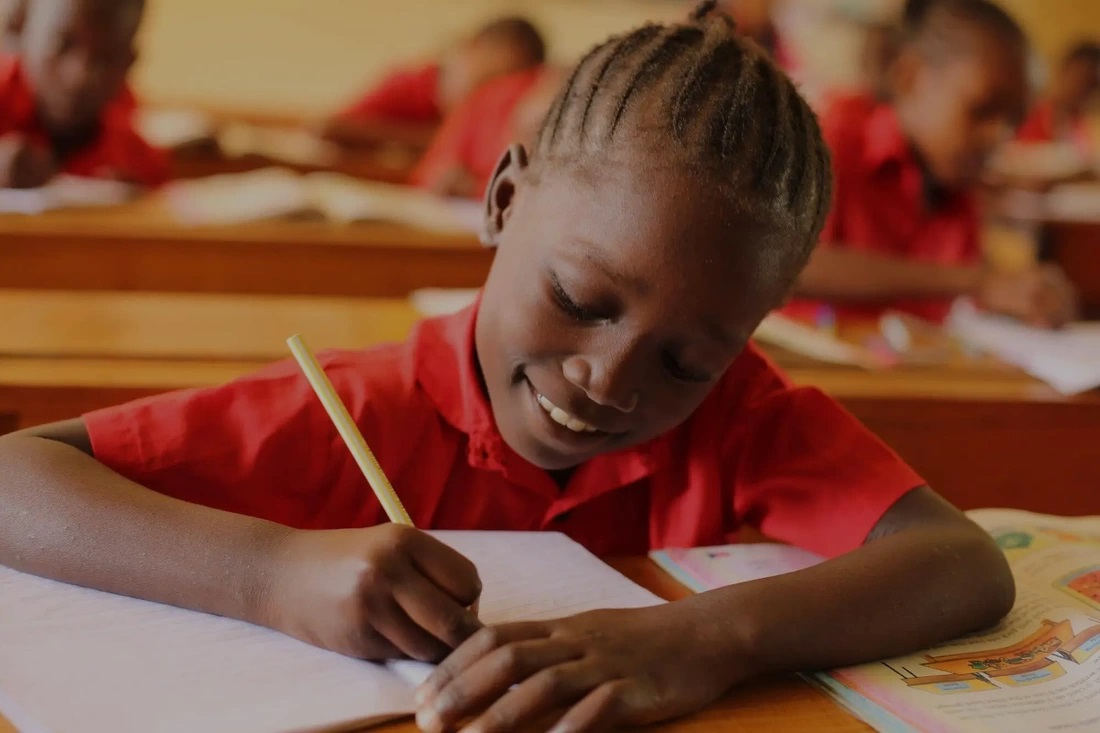
Each passing day brings to mind the fact that the Governing board and management of the Niger Delta Development Commission (NDDC) are fast becoming a bunch trademarked for appreciating education as the bedrock for sustainable development of the Niger Delta region and reputed for commitment to promoting learning among youths from the region, particularly the girl child.
Aside from the well-thought-out scholarships awarded a few months ago, to 200 deserving candidates from the region to pursue Master’s Degrees overseas, a programme which of course forms an important component of the agency’s human capital development that seeks to use education to change the fortunes of the region, the latest of such efforts was the recent call by the commission’s Chairman, Mr Chiedu Ebie, for prioritization of education of the girl child as it holds the key to sustainable development in the country.
Speaking at a ceremony put together by the Commission, on Friday, July 5, 2024, in Agbor, Delta state, to mark International Women’s Day, the Commission urged the various tiers of government to evolve measures that will enable the girl child to secure access to quality education. Chiedu Ebie, Chairman of NDDC, who was represented at the ceremony by Hon. John C. Aleh, his Special Assistant, said as a pivotal segment of the population, educating the girl child empowers women to succeed in all areas of life.
The guest speaker, Mrs Ben Utalor Goziem, who spoke on: “Girl Child Education”, said that women are the heart of the nation, hence, they should be equipped with sound education. According to her, “It is very important for the girl child to be educated.
‘A good education is a foundation for the girl child. An educated woman possesses so many attributes that will make her survive tomorrow’s challenges. I am confident that if we want our future to be full of joy, we need to educate every girl in our society. I have known for a long time that girls’ education is a way to nation-building. Perhaps, this is a time to give our girls a chance to explore their potential through quality education. ”
Indeed, while this piece commends Ebie and the NDDC for supporting the fight for the education and empowerment of women, there are, however, more reasons that render the present call by Ebie and NDDC as germane, commendable and an initiative that other government agencies, Non-Governmental Organizations (NGOs) and of course, good spirited Nigerians must imbibe.
First and very fundamental, it is globally acknowledged that when the leader protects and empowers a girl child in all aspects of her identity, such a leader automatically assists her, takes her own decisions as well as ensures the future against absenteeism of women from different socio-political and economical spheres of the country.
In the same vein, in the words of the late former Secretary General of the United Nations (UN), Kofi Annan, ‘there is no tool for development more effective than the empowerment of women, and no other policy is as likely to raise economic productivity, or to reduce infant and maternal mortality’.
Analysts also believe that a significant function of the education of the girl-child in Nigeria is that it offers her the opportunity to chart her destiny with the skills and information she acquired from basic education up to tertiary education.
Separate from providing the girl child with diverse basic knowledge, skills, and training which contribute to national development, the report also has it that education offers girls the necessary skills and information needed to excel in a chosen career in future; hence, a girl who is educated can grow to become a teacher, architect, doctor, computer scientist, lawyer and pharmacist, among other lucrative and noble professions. And by giving girls a right to education we can be able to right the wrongs in our society’.
Very unique about NDDC’s educational and empowerment initiatives is the consciousness that it considers education and youth development from a democratized prism that goes beyond conventional learning to include holistic knowledge areas that cover agriculture, skill and talent development and all-around insight.
A typical example of a similar learning and human capital development plan is the agency’s Project HOPE programme, a visionary initiative born out of the renewed hope Agenda of President Bola Ahmed Tinubu’s administration, targeted at changing the narrative of the Niger Delta region from one of agitation and unrest to peace and prosperity and ensures that the youths will be matched with suitable and legitimate means of livelihood.
Speaking recently on the programme, Dr Samuel Ogbuku, Managing Director of NDDC, stated that Project HOPE was designed to develop an exhaustive digital repository comprising vital information about the youths of the Niger Delta region, including their qualifications, skills, interests, needs and current employment status, noting that the database would serve as a plank for data-driven planning, enabling the formulation of impactful policies and programmes targeted at the youths- and will help eliminate the past practice of youths benefitting in our programmes multiple times. But now, once you’ve been engaged, it will be recorded in our database,”
Ogbuku added that the NDDC had identified what should be done to fill the development gap in the Niger Delta region, stating: “We need to create a balance between infrastructure projects and agricultural programmes that will help to guarantee food security in Nigeria’s oil-rich region.”
While he described “Project HOPE as a means of training teeming youths, a means of empowerment and means of changing the toga of militancy to one of skills and useful youths, Ogbuku assures that the HOPE initiative is real and will be sustained. The database that we are building will not only help us to select the right persons, but it will also help us to monitor their progress. We are using technology to ensure that you do not need to know anybody to be enlisted into the programme.”
‘The initiative is positioned to create youth employment opportunities, especially in agriculture through support to small-holder farmers to ensure operational growth while shifting from traditional to mechanized farming methods. Because of the arable wetlands, rainfalls and other favourable ecological factors to plant various crops and vegetables at least four times within a farming season, the agency is proactively moving away from the oil economy to the agricultural sector which can accommodate our youths in large numbers.”
Explicitly, why this author is particularly thrilled about these recent initiatives formulated by the Commission’s board and management is that they advertised a detailed understanding that education and youth empowerment are pivotal to achieving development and therefore, must be at the centre of such moves. This is in addition to the fact that NDDC’s solution to youth unemployment and the development of a climate for a sustainable future and innovation will assist in promoting the critical thrust of governance and maximize the benefits citizens derive from their leaders.
The present efforts (promotion of girl-child education, Project Hope, among others) by NDDC’s governing board and management become even more appreciated when one remembers that very recently, the nation was warned with mountains of statistics that we are in a dire state of strait because unemployment has diverse implications and Security-wise, a large unemployed youth population is a threat to the security of the few that are employed. This concern is not Niger Delta-specific but cuts across regions, religions, and tribes, and has in the past led to the proliferation of ethnic militia as well as youth restiveness across the country.
What the above information tells us as a nation is that the ongoing creative and transformative leadership at NDDC calls for collective support from all critical stakeholders.
For their part, youths from the region (Niger Delta) must take advantage of these initiatives. Those who have benefitted in the past from such programmes/skills by NDDC should take both practical and coordinated steps to put such knowledge/skill into use, particularly as any knowledge derived but not applied ‘remains but a mere library in between the two ears’.
Utomi Jerome-Mario, a Media Professional, writes from Lagos, Nigeria. He can be reached via [email protected]/08032725374


