Connect with us

Economy

Stanbic IBTC PMI for Private Sector Shows Rise in Business Confidence

Published

on

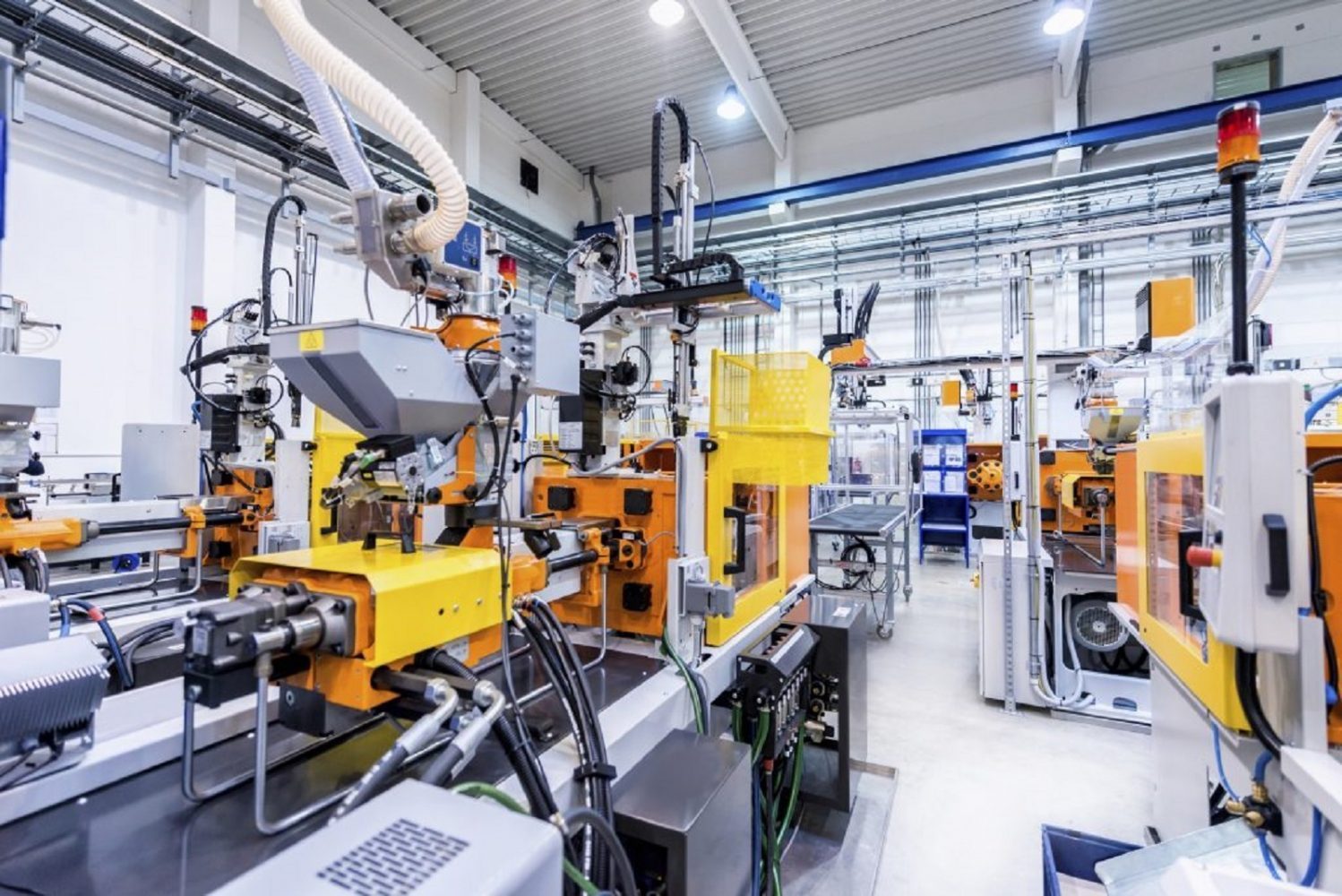
Manufacturing PMI

By Modupe Gbadeyanka

The private sector in Nigeria sustained growth in January 2025, though lower than what was achieved in the preceding month.

The Purchasing Managers’ Index (PMI) of Stanbic IBTC Bank for the month stood at 52.0 points compared with the 52.7 points recorded in December 2024.

It was observed that new orders and business activity maintained an upward trend amid a large improvement in business confidence as firms expanded employment, purchasing and inventories.

Although input costs and output prices continued to rise rapidly, respective rates of inflation were much slower than seen in December.

Business activity rose solidly in January, after having returned to growth in December. That said, the rate of expansion eased from the previous month. Activity increased across three of the four monitored sectors, the exception being wholesale and retail.

Signs of improving customer demand and a greater willingness among clients to commit to new projects supported the rise in output and also contributed to the growth of new orders. As was the case with activity, new business increased for the second month running, but at a softer pace than in December.

Companies were also much more optimistic regarding the future in January, with business expansion plans and marketing activities set to support output growth over the coming year. Although remaining relatively muted overall, the uplift in sentiment seen at the start of the year was the largest since the survey began just over 11 years ago.

There were signs of inflationary pressures softening in January. Although rates of increase in both input costs and output prices remained elevated, in both cases the rises were much weaker than seen in December. Overall input price inflation was the slowest since April 2024, while charges increased at the weakest pace in six months.

Efforts to satisfy customer requirements in a timely manner led companies to expand their staffing levels, purchasing activity and inventory holdings at the start of the year. In each case, the rises were the second in as many months. In particular, the accumulation of stocks of purchases was the most pronounced in just over a year and a half.

The attempts to get through projects quickly meant that firms were more successful in depleting backlogs of work, which decreased at a solid pace that was the most pronounced since June 2022. Finally, suppliers’ delivery times continued to shorten amid good arrangements with vendors and prompt payments.

“Nigeria’s private sector activity sustained its improvement in January 2025, albeit lower than levels seen in December 2024. We note an increase in both output (53.7 vs December 2024: 54.8) and new orders (52.6 vs December 2024: 53.2) although slightly weaker than that seen at the end of 2024, on account of improving customer demand and more willingness to commit to new projects.

“Given the rising new orders, companies took on additional workers in January – representing the second month running in which this has been the case.

“Elsewhere, input prices increased at a slower pace while the pace of increase in output prices is the slowest since July 2024.

Headline inflation averaged 33.18% y/y in 2024 from an average of 24.52% y/y in 2023 mostly driven by significant FX depreciation; renewed petrol price increases in line with full petrol price liberalization; structurally low food supplies exacerbated by high extreme weather conditions; and increased food demand, especially during the festive season.

“We expect a moderation in the inflation rate in 2025 although the pace of the moderation is only likely to be faster in late Q3:25. Notably, we expect headline inflation to average 30.5% y/y in 2025 and end the year at 27.1% y/y.

“In 2025, we project the non-oil sector to grow by 3.2% y/y from an estimated 3.0% y/y in 2024. Growth is likely to pick up across manufacturing and trade, while ICT and finance & insurance should continue to play a big role in economic performance.

“However, agriculture will likely still lag its long-term average amid lingering internal security challenges, high input costs, and extreme weather conditions. Within the manufacturing sector, cement, food and chemicals & pharmaceutical products are key sub-sectors that have been exceeding the manufacturing sector’s growth since Q4:22,” the Head of Equity Research West Africa at Stanbic IBTC Bank, Mr Muyiwa Oni, said.


Modupe Gbadeyanka is a fast-rising journalist with Business Post Nigeria. Her passion for journalism is amazing. She is willing to learn more with a view to becoming one of the best pen-pushers in Nigeria. Her role models are the duo of CNN's Richard Quest and Christiane Amanpour.

Economy

Food Concepts Return NASD OTC Exchange to Danger Zone

Published

on

NASD OTC exchange

By Adedapo Adesanya

Food Concepts Plc neutralized the gains recorded by three securities, returning the NASD Over-the-Counter (OTC) Securities Exchange into the negative territory with a 0.27 per cent loss on Thursday, December 4.

Yesterday, the share price of the parent company of Chicken Republic and PieXpress declined by 34 Kobo to sell at N3.15 per unit compared with the previous day’s N3.49 per unit.

This shrank the market capitalisation of the OTC bourse by N5.72 billion to N2.136 billion from N2.142 trillion and weakened the NASD Unlisted Security Index (NSI) by 9.57 points to 3,571.53 points from 3,581.10 points.

Business Post reports that Central Securities Clearing System (CSCS) Plc went down by 50 Kobo to N38.50 per share from N38.00 per share, FrieslandCampina Wamco Nigeria Plc gained 29 Kobo to sell at N55.79 per unit versus N55.50 per unit, and Geo-Fluids Plc added 5 Kobo to close at N4.60 per share compared with Wednesday’s closing price of N4.55 per share.

Trading data indicated that the volume of securities recorded at the session surged by 6,885.3 per cent to 4.3 million units from the 61,570 units posted a day earlier, the value of securities increased by 10,301.7 per cent to N947.2 million from N3.3 million, and the number of deals went up by 146.7 per cent to 37 deals from the 15 deals achieved in the previous trading session.

At the close of business, Infrastructure Credit Guarantee Company (InfraCredit) Plc was the most traded stock by value on a year-to-date basis with the sale of 5.8 billion units for N16.4 billion, trailed by Okitipupa Plc with 170.4 million units worth N8.0 billion, and Air Liquide Plc with 507.5 million units valued at N4.2 billion.

InfraCredit Plc also finished the session as the most traded stock by volume on a year-to-date basis with 5.8 billion units transacted for N16.4 billion, followed by Industrial and General Insurance (IGI) Plc with 1.2 billion units sold for N420.2 million, and Impresit Bakolori Plc with 536.9 million units traded for N524.9 million.

Continue Reading

Economy

Investors Gain N97bn from Local Equity Market

Published

on

Nigerian equity market

By Dipo Olowookere

The upward trend witnessed at the Nigerian Exchange (NGX) Limited in recent sessions continued on Thursday as it further improved by 0.10 per cent.

This was despite investor sentiment turning bearish after the local equity market ended with 23 price gainers and 28 price gainers, indicating a negative market breadth index.

UAC Nigeria gained 10.00 per cent to finish at N88.00, Morison Industries appreciated by 9.94 per cent to N3.54, Ecobank rose by 8.53 per cent to N36.90, and Coronation Insurance grew by 8.47 per cent to N2.56.

On the flip side, Ellah Lakes depreciated by 10.00 per cent to N13.14, Eunisell Nigeria also shed 10.00 per cent to finish at N72.90, Transcorp Hotels slipped by 9.95 per cent to N157.50, Omatek shrank by 9.23 per cent to N1.18, and Guinea Insurance dipped by 8.46 per cent to N1.19.

Yesterday, the All-Share Index (ASI) went up by 152.28 points to 145,476.15 points from 145,323.87 points and the market capitalisation chalked up N97 billion to finish at N92.726 trillion compared with the previous day’s N92.629 trillion.

Customs Street was bubbling with activities on Thursday, though the trading volume and value slightly went down, according to data.

A total of 1.9 billion stocks worth N19.2 billion exchanged hands in 23,369 deals during the session versus the N2.3 billion valued at N21.0 billion traded in 21,513 deals a day earlier.

This showed that the number of deals increased by 8.63 per cent, the volume of transactions depleted by 17.39 per cent, and the value of trades decreased by 8.57 per cent.

For another trading day, eTranzact led the activity chart with 1.6 billion units sold for N6.4 billion, Fidelity Bank traded 31.0 million units worth N589.3 million, GTCO exchanged 28.3 million units valued at N2.5 billion, Zenith Bank transacted 27.1 million units for N1.6 billion, and Ecobank traded 21.9 million units worth N744.3 million.

Continue Reading

Economy

Naira Loses 18 Kobo Against Dollar at Official Market, N5 at Black Market

Published

on

forex Black Market

By Adedapo Adesanya

The Naira marginally depreciated against the United States Dollar in the Nigerian Autonomous Foreign Exchange Market (NAFEM) on Thursday, December 4 amid renewed forex pressure associated with December.

At the official market yesterday, the Nigerian currency lost 0.01 per cent or 18 Kobo against the Dollar to close at N1,447.83/$1 compared with the previous day’s N1,447.65/$1.

It was not a different scenario with the local currency in the same market segment against the Pound Sterling as it further shed N15.43 to sell for N1,930.97/£1 versus Wednesday’s closing price of N1,925.08/£1 and declined against the Euro by 20 Kobo to finish at N1,688.74/€1 compared with the preceding session’s N1,688.54/€1.

Similarly, the Nigerian Naira lost N5 against the greenback in the black market to quote at N1,465/$1 compared with the previous day’s value of N1,460/$1 but closed flat against the Dollar at the GTBank FX counter at N1,453/$1.

Fluctuations in trading range is expected to continue during the festive season as traders expect the Nigerian currency to be stable, supported by intervention s by to the Central Bank of Nigeria (CBN)in the face of steady dollar demand.

Support is also expected in coming weeks as seasonal activities, particularly the stylised “Detty December” festivities, will see inflows that will give the Naira a boost after it depreciated mildly last month, according to a new report.

“As the festive Detty December season intensifies, inbound travel, tourism spending, and diaspora inflows are expected to provide moderate support for FX liquidity,” analysts at the research unit of FMDA said in its latest monthly report for November.

Traders cited by Reuters expect that the Naira will trade within a band of N1,443-N1,450 next week, buoyed by improved FX interventions by the apex bank.

Meanwhile, the crypto market was down as the US Federal Reserve’s preferred inflation gauge, core PCE, likely rose in September—moving in the wrong direction. However, volatility indices show no signs of major turbulence.

If the actual figure matches estimates, it would mark 55 straight months of inflation above the US central bank’s 2 per cent target. The sticky inflation would strengthen the hawkish policymakers, who are in favour of slower rate cuts.

Ripple (XRP) depreciated by 4.5 per cent to $2.08, Solana (SOL) went down by 3.8 per cent to $138.11, Litecoin (LTC) shrank by 3.1 per cent to $83.23, Dogecoin (DOGE) slid by 2.5 per cent to $0.1463, Cardano (ADA) declined by 2.1 per cent to $0.4368, Bitcoin (BTC) fell by 0.9 per cent to $91,975.45, Binance Coin (BNB) crumbled by 0.9 per cent to $899.41, and Ethereum (ETH) dropped by 0.7 per cent to $3,156.44, while the US Dollar Tether (USDT) and the US Dollar Coin (USDC) closed flat at $1.00 apiece.

Continue Reading

Trending