Connect with us

Feature/OPED

How Insecurity is Bleeding Nigeria about $15bn Annually and Destroying Its Economic Future

Published

on

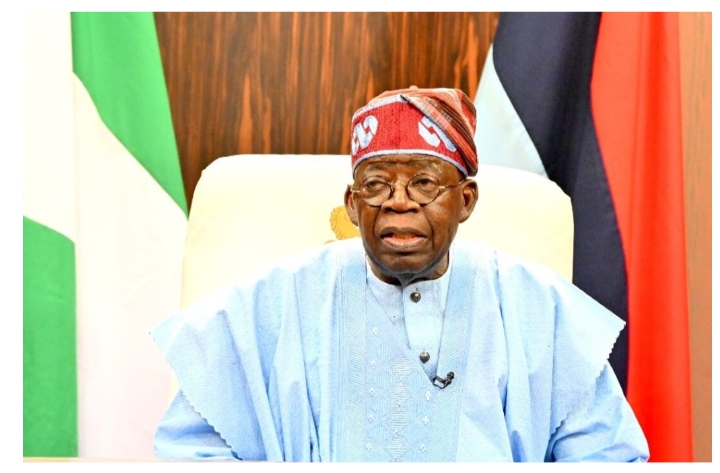
Tinubu's Portrait

By Blaise Udunze

Nigeria is undergoing one of the stormiest periods in the history of its post-independence. This is not because of global oil shock, recession, or political instability; it is because of a far prevalent and devastating threat of the incessant insecurity. These once emanated as isolated insurgent attacks have now evolved into a nationwide web of terrorism, banditry, mass abductions, militancy, separatist violence, and organized crime. The repeated attacks across the North-East, North-West, North-Central, and increasingly the South have created an environment where fear, uncertainty, and instability have become the daily reality for millions of Nigerians.

But beyond the tragic loss of lives and communities torn apart, insecurity is quietly becoming Nigeria’s most devastating economic burden. It is the silent dagger cutting into the country’s gross domestic product (GDP), sabotaging investments, crippling agriculture, eroding human capital, and dragging millions deeper into poverty.

Recent events illustrate the depth of the crisis. In one of the most alarming incidents in Nigeria’s history, 315 students and staff were abducted from St. Mary’s Catholic School in Papiri, Niger State and a figure surpassing the infamous 2014 Chibok kidnapping. The Christian Association of Nigeria confirmed that 303 students and 12 teachers were taken after a verification exercise, making it one of the worst mass abductions the country has ever witnessed.

Parents wept openly on camera. A distressed woman told the BBC that her nieces, aged six and 13, were among the abducted: “I just want them to come home.” All schools in Niger State were ordered to close afterward as a move that, while necessary for safety, further chokes already strained educational access.

This tragedy was not isolated. It was the third mass abduction in a single week. In Kebbi State, over 20 schoolgirls were kidnapped days earlier. A church attack in Kwara State left two dead and 38 abducted. The rapid succession of attacks forced President Bola Tinubu to cancel foreign trips, underscoring the gravity of the situation. These incidents reveal a terrifying truth that insecurity has become a pervasive national emergency, one that carries enormous economic, financial, human, and socio-economic costs.

Agriculture, which accounts for more than 25 percent of Nigeria’s GDP and employs over 60 percent of the workforce, is one of the worst-hit sectors. Across the North-West and North-Central, Nigeria’s food-producing zones, its farmers live in fear. Bandits ambush farmlands, burn crops, extort communities, and abduct farmers for ransom. Recent estimates suggest that over 200,000 farmers and rural inhabitants have been displaced, abandoning vast hectares of arable land. The Northern Governors Forum admits that up to 60 percent of farmlands in key agricultural states have either been abandoned or severely underutilized due to unrelenting attacks.

The consequences are severe, resulting in reduced food production, escalating food prices, declining rural income, worsened inflation, and deepening threats to national food security. Nigeria now faces the possibility of a major food crisis by 2026, as farmers in Niger, Nasarawa, Kaduna, and Kogi warn that high insecurity, rising input costs, and massive post-harvest losses are driving them away from agriculture entirely. The United Nations Food and Agriculture Organization (FAO) warned that about 34.7 million Nigerians could face severe food insecurity during the next lean season (June to August 2026) if timely and coordinated interventions are not implemented.

A Niger State rice farmer, Ibrahim Abdullahi, lamented: “The cost of fertiliser, pesticides, and fuel has tripled. Most of us are running into debt. If this continues, many will leave farming completely.” If farmers retreat en masse, hunger will deepen and Nigeria’s dependence on food imports will worsen.

Kidnapping for ransom has also evolved into one of Nigeria’s most lucrative criminal enterprises. SBM Intelligence reports that kidnapping has grown into a self-sustaining industry, no longer merely a symptom of weak security but a thriving criminal ecosystem. In the first half of 2021 alone, 2,371 people were kidnapped, an average of 13 per day. By 2024, the numbers had surged, with hundreds of kidnappings recorded within months. Ransoms worth billions of naira change hands monthly. These payouts drain household savings, wipe out small business capital, push families into debt, and funnel enormous sums into criminal networks that reinvest the proceeds in more sophisticated weaponry.

The wider economic effect is crippling. Families sell properties and liquidate businesses to rescue loved ones. Schooling, commerce, and inter-state travel are disrupted. Regional trade routes deteriorate. Investors, both local and foreign, flee high-risk zones. Entire communities slip deeper into poverty. Insecurity has dismantled the confidence required for investment, expansion, and long-term planning.

Business confidence in Nigeria has fallen sharply as insecurity spreads. Large corporations, manufacturing firms, logistics companies, agribusinesses, and multinationals now operate in fear. Many are either scaling down or completely exiting Nigeria. Factories operate on skeletal staff; supply chains are strained; transportation costs skyrocket; and insurance premiums become prohibitive.

Foreign Direct Investment has steadily declined over the past decade, while Nigerian investors increasingly relocate capital abroad. No investor thrives in fear, and no economy thrives without investment.

The human cost is even more devastating. Millions have been displaced, forcing entire communities to flee their homes, farms, and businesses. Displaced populations lose their homes, farms, schools, livelihoods, and community networks. Their absence from productive work reduces national output, shrinks tax revenue, and overwhelms urban centres already battling unemployment, rising crime, and overstressed public services. The theoretical perspective by Stewart (2004), which argues that insecurity destroys productive capacity by killing workers, damaging infrastructure, and displacing populations, finds painful validation in Nigeria’s current reality.

Nigeria’s insecurity is multidimensional and regionally distinct. In the North-East, Boko Haram and ISWAP continue to operate, exploiting porous borders and challenging state authority. In the North-West and North-Central, banditry and mass kidnapping have become entrenched. In the South-East, separatist-linked violence and illegal sit-at-home orders shut down economic activity weekly. In the South-South, oil theft, pipeline vandalism, and militancy drain billions in oil revenue. In the South-West, urban crime, ritual killings, and gang violence create pockets of insecurity that hinder business operations. Each zone suffers differently, but collectively, the threats cost Nigeria billions of dollars annually, hinder trade, restrict mobility, and erode state authority.

The financial implications of insecurity are staggering, far greater than many realize. Conservative estimates from security trackers, development agencies, and fiscal analysts indicate that Nigeria loses approximately $15 billion (N20 trillion) annually due to insecurity-induced disruptions in agriculture, trade, manufacturing, transportation, and extractive industries. These losses weaken GDP growth and deepen the country’s fiscal strain.

Meanwhile, Nigeria’s security spending has ballooned. Defence and security now consume between 20 and 25 percent of the federal budget annually. More than N4 trillion has been spent on security in the past three years alone, excluding off-budget defence allocations, special interventions, and state-level spending. The opportunity cost is devastating: every naira spent fighting endless waves of violence is a naira not spent on education, healthcare, infrastructure, power, water systems, or technological advancement. Insecurity is not just costing Nigeria money; it is robbing the nation of future development.

This prevalent violence deepens poverty and inequality. Businesses shut down, schools close, markets collapse, food becomes scarce, jobs disappear, and vulnerable groups, especially women and children, bear disproportionate hardship. Healthcare deteriorates, rural communities empty out, and social cohesion breaks down.

Transportation and logistics, which happen to be the backbone of commerce, are particularly affected. Nigeria’s highways are now labelled among the most dangerous in West Africa. Haulage firms require armed escorts. Farmers cannot safely transport produce to major markets. Supply chains are broken, pushing prices even higher. When transportation collapses, commerce collapses, and so does the economy.

Food insecurity is escalating rapidly. Banditry is blocking farms, fuel prices are rising, fertiliser costs have tripled, farmlands are abandoned, and post-harvest losses are mounting. A nation that cannot feed itself cannot grow its economy.

Nigeria cannot achieve sustainable economic growth without restoring order. The solutions must be comprehensive: modernizing security infrastructure with drones, satellite imaging, and digital surveillance; building a unified national intelligence framework; empowering local and community policing systems; addressing youth unemployment; strengthening judicial processes; securing borders; and rebuilding public trust through transparency and accountability.

Nigeria’s insecurity crisis is not merely a security challenge; it is an economic emergency. It drains national resources, scares away investors, cripple’s agriculture, destroys human capital, and sabotages the nation’s pursuit of sustainable development. Until Nigeria defeats insecurity decisively, all economic reforms will remain fragile.

No investor thrives in fear.

No farmer plants on a battlefield.

No child learns in captivity.

No economy grows in chaos.

Security is the foundation of development. Nigeria must rebuild that foundation now or risk watching its economic future slip further away.

Blaise, a journalist and PR professional, writes from Lagos, can be reached via: [email protected]

Feature/OPED

In Praise of Nigeria’s Elite Memory Loss Clinic

Published

on

memory loss clinic Busayo Cole

By Busayo Cole

There’s an unacknowledged marvel in Nigeria, a national institution so revered and influential that its very mention invokes awe; and not a small dose of amnesia. I’m speaking, of course, about the glorious Memory Loss Clinic for the Elite, a facility where unsolved corruption cases go to receive a lifetime membership in our collective oblivion.

Take a walk down the memory lane of scandals past, and you’ll encounter a magical fog. Who remembers the details of the N2.5 billion pension fund scam? Anyone? No? Good. That’s exactly how the clinic works. Through a combination of political gymnastics, endless court adjournments, and public desensitisation, these cases are carefully wrapped in a blanket of vagueness. Brilliant, isn’t it?

The beauty of this clinic lies in its inclusivity. From the infamous Dasukigate, which popularised the phrase “arms deal” in Nigeria without actually arming anything, to the less publicised but equally mystifying NDDC palliative fund saga, the clinic accepts all cases with the same efficiency. Once enrolled, each scandal receives a standard treatment: strategic denial, temporary outrage, and finally, oblivion.

Not to be overlooked are the esteemed practitioners at this clinic: our very own politicians and public officials. Their commitment to forgetting is nothing short of Nobel-worthy. Have you noticed how effortlessly some officials transition from answering allegations one week to delivering keynote speeches on accountability the next? It’s an art form.

Then there’s the media, always ready to lend a hand. Investigative journalists dig up cases, splash them across headlines for a week or two, and then move on to the next crisis, leaving the current scandal to the skilled hands of the clinic’s erasure team. No one does closure better than us. Or rather, the lack thereof.

And let’s not forget the loyal citizens, the true heroes of this operation. We rant on social media, organise a protest or two, and then poof! Our collective short attention span is the lifeblood of the Memory Loss Clinic. Why insist on justice when you can unlook?

Take, for example, the Halliburton Scandal. In 2009, a Board of Inquiry was established under the leadership of Inspector-General of Police, Mike Okiro, to investigate allegations of a $182 million bribery scheme involving the American company Halliburton and some former Nigerian Heads of State. Despite Halliburton admitting to paying the bribes to secure a $6 billion contract for a natural gas plant, the case remains unresolved. The United States fined the companies involved, but in Nigeria, the victims of the corruption: ordinary citizens, received no compensation, and no one was brought to justice. The investigation, it seems, was yet another patient admitted to the clinic.

Or consider the Petroleum Trust Fund Probe, which unraveled in the late 1990s. Established during General Sani Abacha’s regime and managed by Major-General Muhammadu Buhari, the PTF’s operations were scrutinised when Chief Olusegun Obasanjo assumed office in 1999. The winding-down process uncovered allegations of mismanagement, dubious dealings, and a sudden, dramatic death of a key figure, Salihijo Ahmad, the head of the PTF’s sole management consultant. Despite the drama and the revelations, the case quietly faded into obscurity, leaving Nigerians with more questions than answers.

Then there is the colossal case of under-remittance of oil and gas royalties and taxes. The Federal Government, through the Special Presidential Investigatory Panel (SPIP), accused oil giants like Shell, Agip, and the NNPC of diverting billions of dollars meant for public coffers. Allegations ranged from falsified production figures to outright embezzlement. Despite detailed accusations and court proceedings, the cases were abandoned after the SPIP’s disbandment in 2019. As usual, the trail of accountability disappeared into thin air, leaving the funds unaccounted for and the public betrayed yet again.

Of course, this institution isn’t without its critics. Some stubborn Nigerians still insist on remembering. Creating spreadsheets, tracking cases, and daring to demand accountability. To these radicals, I say: why fight the tide? Embrace the convenience of selective amnesia. Life is easier when you don’t worry about where billions disappeared to or why someone’s cousin’s uncle’s housemaid’s driver has an oil block.

As World Anti-Corruption Day comes and goes, let us celebrate the true innovation of our time. While other nations are busy prosecuting offenders and recovering stolen funds, we have mastered the fine art of forgetting. Who needs convictions when you have a clinic this efficient? Oh, I almost forgot the anti-corruption day as I sent my draft to a correspondent very late. Don’t blame me, I am just a regular at the clinic.

So, here’s to Nigeria’s Memory Loss Clinic, a shining beacon of how to “move on” without actually moving forward. May it continue to thrive, because let’s face it: without it, what would we do with all these unsolved corruption cases? Demand justice? That’s asking a lot. Better to forget and focus on the next election season. Who knows? We might even re-elect a client of the clinic. Wouldn’t that be poetic?

Now, if you’ll excuse me, I have a new scandal to ignore.

Busayo Cole is a Branding and Communications Manager who transforms abstract corporate goals into actionable, sparkling messaging. It’s rumored that 90% of his strategic clarity is powered by triple-shot espresso, and the remaining 10% is sheer panic. He can be reached via busayo@busayocole.com. 

Continue Reading

Feature/OPED

How Nigerian Companies are Leading More Responsible Digital Transformation

Published

on

Kehinde Ogundare 2025

By Kehinde Ogundare

Artificial intelligence is everywhere–in polished social media posts, in the recommendations that guide our viewing habits, and in the bots that handle customer queries before a human agent steps in. On LinkedIn, AI-assisted writing has become standard practice.

A year ago, more than half of English long-form posts that went viral were estimated to have been written by or assisted by AI. If that’s the norm on the world’s biggest business network, it’s no surprise that AI is driving conversations in Nigerian boardrooms as companies move from experimentation to embedding AI into their daily operations.

Part of the package

The Nigeria Data Protection Act (NDPA), modelled on the European Union’s General Data Protection Regulation, together with the Nigeria Data Protection Commission, requires companies to build privacy into their systems from the outset rather than adding it later. This clear regulatory framework has evolved alongside a rapid rise in AI adoption.

New research from Zoho on responsible AI adoption highlights the impact of the regulations. As per the report, 93% of Nigerian companies have already started using AI in their daily operations; 84% have tightened their privacy controls after adoption, and 94% now have a dedicated privacy officer or team, which is well above global averages.

The survey, conducted by Arion Research LLC among 386 senior executives, shows just how deeply embedded AI has become in Nigeria. One in four companies already uses it across several departments, and nearly a third report advanced integration. Financial services firms are pioneers in this sector, using AI to automate client interactions, streamline operations and sharpen their marketing, while staying compliant with data protection rules.

The NDPA has helped make privacy part of business planning. Four in ten companies now spend more than 30% of their IT budgets on privacy. Regular audits, privacy impact assessments and explainability checks are becoming standard practice.

Skills, compliance and capacity

Rapid adoption brings challenges. More than a third of businesses say that their biggest obstacle is a lack of technical skills, and another 35% cite privacy and security risks. Instead of outsourcing, most are building capacity in-house: nearly 70% of companies are training staff in data analysis, more than half are improving general AI literacy, and 40% are investing in prompt engineering for generative tools.

The understanding of the NDPA regulation, which came into force in 2023, has also improved. 65% of organisations see compliance as essential. Many voluntarily apply data-minimisation and transparency standards even when not required to do so, aligning more closely with international norms and easing collaboration with global partners.

Privacy is increasingly influencing business decisions — from investment priorities to system design. Companies are asking tougher questions: is specific data essential? How can exposure be limited? How can fairness and transparency be proven?

Trusted systems

As privacy becomes part of how technology is built, companies are being more cautious about the tools they use because they now want systems that protect customer data, with clear boundaries between data and model training, straightforward controls, and reliable records for compliance teams.

Demand for business software that balances productivity with privacy is also growing. Zoho, among others, has seen strong customer growth as more organisations are looking for platforms that support responsible data handling.

The study identifies three main reasons behind AI adoption: to make work more efficient by automating routine tasks, to support better decision-making by identifying patterns sooner, and to improve customer engagement through faster, more relevant interactions. But none of this can succeed without trust. Nigeria’s experience shows that privacy and innovation can reinforce each other when they’re built together.

There’s still work to do because some industries are moving faster than others, and smaller businesses often face the biggest hurdles in time, cost and skills. Enforcement is also patchy; while the law is clear, application across sectors and geographies is a work in progress.

The next steps are more practical, requiring investment in skills – from data analysis and AI literacy to sector-specific training – and for governance to be put in place, with clear responsibilities, written policies, and a plan for managing errors or breaches. Privacy impact assessments should become part of every new system rollout, enabled by technology.

As AI becomes fundamental to doing business, Nigerian companies that build it carefully and responsibly will be better able to compete at home and abroad.

Kehinde Ogundare is the Country Head for Zoho Nigeria

Continue Reading

Feature/OPED

Nigeria’s Schools Closure and the Disease of Rhotacism

Published

on

school closure

By Prince Charles Dickson, PhD

The inability to pronounce the letter r is called rhotacism—a quiet irony in speech pathology, where sufferers lack the tongue to name their condition. Nigeria today appears afflicted by a similar policy disorder: an incapacity to articulate the real threats to learning, safety, and development, while endlessly announcing their symptoms. The reflexive closure of schools across states, often with the Federal Government’s blessing, is not merely a security response; it is a linguistic failure of governance. We cannot pronounce the problem, so we silence the classroom.

At surface level, school closures masquerade as prudence. No leader wants abducted children, grieving parents, viral outrage. But development practice teaches us to distrust surface logic. If classrooms are unsafe, what calculus deems campuses secure? If primary schools are closed in the name of vulnerability, why do lecture halls hum, convocation grounds fill, churches and mosques swell, markets bustle, and political rallies roar? The policy geometry is incoherent. Risk does not dissolve with age brackets or academic levels; it migrates along opportunity lines. Violence, like water, flows where barriers are weakest—not where regulations are loudest.

The headline figures tell a damning story. Over 42,000 schools categorized as vulnerable. A $30 million Safe School Initiative announced, lauded, and then largely evaporated into PowerPoint memory. What exactly has closure achieved in this arithmetic? If risk prompted closure, closure must prompt mitigation. Yet what we witness is substitution, not solution. Strategy is replaced by symbolism. Doors are shut to demonstrate action while the engines of threat, the logistics, financing, intelligence gaps, and ungoverned spaces remain scandalously intact.

The first ethical question is not poetic distrust; it is arithmetic ethics. How many days of learning are lost per closure? How many children drift permanently out of school into child labor, early marriage, recruitment pipelines, or migration traps? Empirical evidence across fragile contexts, from the Sahel to Northeast Nigeria, shows that prolonged closures fracture educational trajectories irreversibly. A classroom shut today becomes a livelihood foreclosed tomorrow. When education systems stall, insecurity does not retreat; it recruits.

Development is not administered by press statements. It is built through boring, relentless infrastructure—data infrastructure, trust infrastructure, and response infrastructure. Consider Community Early Warning Systems (CEWS). Where they exist and function, attacks are anticipated, routes mapped, and escalation interrupted. Where they are absent, closure becomes the blunt instrument of last resort. Yet how many states have meaningfully integrated CEWS into school security architecture? How many have empowered bodies to convene multi-actor protection coalitions that include women, youth, traditional leaders, transport unions, and faith networks? The chalk does not hold risk; the cheque does. And the cheque has been shamefully mute.

Security is not the absence of pupils; it is the presence of intelligence. Closing schools without opening data is policy rhotacism. We cannot pronounce “threat mapping,” so we mouth “shutdown.” We cannot say “transport node vulnerability,” so we say “holiday.” We cannot articulate “perimeter hardening and community interception routes,” so we declare “postponement.” The oxygen of risk—enrolment points, travel corridors, marketplaces abutting school fences requires monitoring in real time. If threat mapping did not intensify the moment schools closed, then the threat merely changed address, not behavior.

The contradiction deepens when worship spaces remain open. Christian Association of Nigeria congregations gather. Nigeria Supreme Council for Islamic Affairs convenes faithful. If the doctrine is crowd risk, the exemptions are indefensible. If the doctrine is youth vulnerability, then universities must not be exempt. If the doctrine is intelligence deficit, then closure is an admission of systemic failure. You cannot claim safety by relocating learning into chaos. Faith spaces recognize a truth policy forgets: protection flows from relationship density. The congregation knows its strangers. Does the school gate?

Globally, contexts plagued by school-related violence have moved in the opposite direction—not toward retreat, but toward smart hardening. Drone reconnaissance over school corridors. AI-assisted risk scoring that fuses incident data, weather, market days, and movement patterns. Platforms to defuse land, grazing, and community disputes before they metastasize into school-adjacent violence. Psychosocial resilience units embedded in schools. Community rangers trained, insured, and supervised, not as vigilantes but as guardians accountable to law. Transparent pilots with public dashboards. Sanctions for local leaders who ignore warning signals. None of this is theoretical.

Because closure is administratively convenient. It transfers responsibility from execution to explanation. Once schools are shut, failure becomes abstract. Metrics blur. When exactly did the risk reduce? Who measures it? At what threshold does reopening occur? Without benchmarks, closure becomes the chief KPI of insecurity governance. That is not security architecture; it is security bureaucracy—forms without force, memos without muscle.

Local Government Areas on volatile frontiers—whether in Niger State or Kogi are living laboratories of conciliation culture. Traditional dispute resolution, faith mediation, women-led early warning, youth intelligence networks; these are not weaknesses to be ignored until Abuja’s biro approves boots on the ground. They are strengths to be funded, trained, and supervised. Development practice demands co-design. Are LGA leaders co-authoring protection protocols, or passively awaiting circulars? Centralization kills time; time kills children’s futures.

The opportunity costs of closure are staggering and gendered. Girls pay first and longest. Distance learning fantasies collapse where electricity, devices, and safety at home are uneven. Boys drift into non-state labor or armed networks promising income and belonging. Teachers disengage. Trust between communities and state frays further. When schools finally reopen—if they do—the damage is cumulative. Closure does not pause risk; it compounds it.

There is also a moral hazard. Normalizing closure teaches adversaries what works. Disrupt learning to extract concessions. Threaten the symbol to paralyze the system. Deterrence requires resilience. A state that keeps schools open while hardening them sends a different signal: intimidation will not erase futures.

To be clear, this is not romantic defiance. There are moments when temporary closure is warranted. But temporary requires temporality: timelines, triggers, alternatives. Closure without an accompanying surge in intelligence, infrastructure, and accountability is futility dressed as care. It is rhotacism—the inability to name and thus cure the disease.

So, the unperfumed questions must persist. What exactly is being done differently today that was not urgent yesterday? Where are the transparent pilots funded by the Safe School Initiative? Who owns the dashboards? Which perimeters were hardened, which routes monitored, which sanctions enforced? Who measures risk reduction, and when is bureaucracy upgraded into architecture?

Shutting schools may shelter minds briefly. But without strategy that attacks the root—financing of violence, data blindness, local exclusion, and accountability gaps—it only shelters the conscience of policy. Until answers arrive with evidence of execution, Nigeria’s schools are not closed for safety. They are closed for convenience. And convenience, like rhotacism, leaves us unable to pronounce the truth. May Nigeria win.

Continue Reading

Trending