

Brands/Products
Why Airtel Spam Alert Service is a Game Changer for Mobile Security

By Joan Aimuengheuwa
By embedding real-time spam alert at both the network and systems level, Airtel strengthens trust in telecom infrastructure, a foundational element for digital economies, ensuring cross-network security accountability, proving that telcos can and should take more responsibility for securing the digital environment, not just selling data plans.
Have you ever won a “N5 million giveaway” from a number you’ve never dialled? Or been warned that your BVN would be “blocked in 24 hours” unless you click a link? If you never fell for these, then congratulations, you’re a part of Nigeria’s club named, The National Association of Spam SMS Survivors.
That’s not a real club though, but seriously, in 2024 alone, fraud in Africa surged by 21%, with phishing and SMS scams responsible for nearly half (48%) of all incidents.
As revealed by the Nigeria Inter-Bank Settlement System (NIBSS), the country’s financial sector lost over N52.26 billion to fraud, a 350% increase, over five years. This tells us that mobile networks are no longer used as just channels of communication, they are becoming active fields for criminals.
This is why Airtel’s launch of a Spam Alert Service in March 2025 couldn’t have been better timed. It is a commendable effort that also signifies in mobile security across Africa. It is beyond merely reacting to fraud; it appears to be preventing it in real time.
The Scale of the Problem
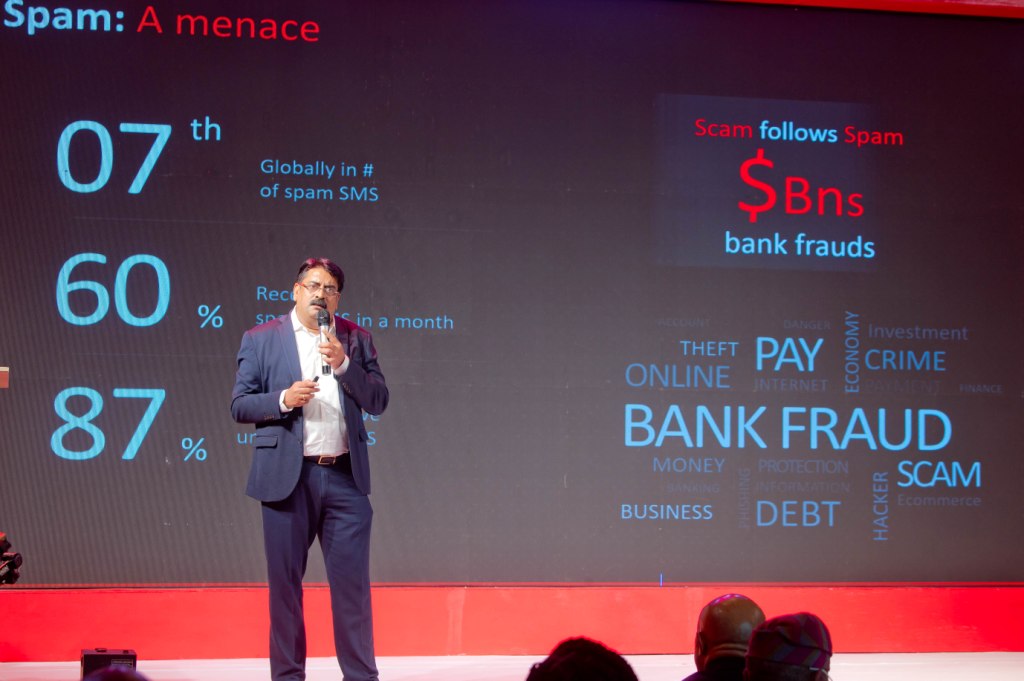
Nigeria is ranked 7th globally for spam SMS. Research shows that 87% of mobile users in the country receive unsolicited messages, many of which are fraudulent. Airtel itself reported that its internal analysis showed that 60% of its customers were receiving spam monthly.
These are not just annoying messages, they open the gates to fraud, asking users to click dangerous links or share sensitive data.
And while East Africa leads the continent with a 27% fraud rejection rate, West and Central Africa still struggle at 22%. The threat has gone beyond a telecoms issue, we can see it’s now an economic and societal one.
Airtel’s Intelligent Countermeasure
Airtel Africa, with over 150 million subscribers and operations in 14 countries, has responded with a network-level AI-powered Spam Alert Service.
While some members of the public have raised concerns over likely privacy breaches, Airtel has confirmed that the Artificial Intelligence in the backend of the Spam Alert Service does not read user messages. Instead, it analyses over 250 parameters including the frequency of the sender, message volume, link patterns, and geographical spread.
At its core, the service simply identifies and flags suspicious SMS messages in real time, labelling them as “Suspected SPAM” and alerting the recipient immediately. It requires no app download, no user configuration, and is automatically activated for all Airtel users, smartphone or feature phone. It’s a simple, although not easy, solution to a thorny problem.
Using a proprietary dual-layer protection system, one at the network level and another at the IT systems level, Airtel AI Spam Alert Service is reported to process over 1.5 billion messages in under two milliseconds.
Real Time Results
Between it launch in Nigeria on March 13 and May 20, 2025, just two months, the Spam Alert Service flagged 9,667,008 suspicious messages, according to Airtel reporting. That number includes 528,080 sent by userson the Airtel network (on-net) and 9,138,928 sent by users from other networks (off-net).
This staggering number indicates both the scale of fraud attempts and the importance of cross-network security measures. The Airtel system doesn’t just defend its own users, it monitors the messages entering the network from outside, offering an additional layer of safety for subscribers.
According to Airtel Nigeria CEO, Dinesh Balsingh, this innovation reiterates the strength of the telco’s AI-driven infrastructure in tackling the threat of spam and scam messages. “We understand that trust is the cornerstone of digital communication,” he stated, adding that, “This is why the AI is constantly learning, so as to keep pace with the changes in methods employed by spammers.”
Why This is a Game Changer
Network-Level Protection: Unlike most solutions that depend on user-side apps, Airtel’s service operates within its core infrastructure; it is always on and scanning, making it harder for threats to go undetected.
No User Action Required: There are no installations, updates, or settings for users to worry about.Every Airtel user, regardless of their phone type, gets protected by default.
Real-Time Alerts: The AI flags spam SMS in milliseconds, giving users feedback on potentially harmful messages as the messages arrive.
Scalable and Inclusive: Whether you’re using a basic feature phone in rural Tanzania or a smartphone in Lagos, you get the same level of protection, and this makes the service replicable in all of Airtel’s markets across Africa.
National Support and Expansion
Dr. Bosun Tijani, minister for Communications, Innovation and Digital Economy, endorsed the solution, commending Airtel for aligning with national priorities.He stressed that the Airtel Spam Alert Service demonstrates how artificial intelligence can enhance online security and economic empowerment.
Similarly, Dr. Aminu Maida, EVC/CEO of the industry regulator, the Nigerian Communications Commission (NCC), noted the sector-wide value, pointing out that it boosts consumer trust and directly supports national telecom security goals.
Following its success in Nigeria, the service has now expanded to Tanzania and Kenya, with a rollout planned for all 14 countries where Airtel operates.
Feedback from early users has been overwhelmingly positive. Many have reported improved personal awareness to SMS messages.
According to Balsingh, the AI Spam Alert Service is not a one-off solution, it is embedded in Airtel’s focus on integrating intelligent systems across its offerings while improving user experience. With threats becoming more sophisticated, “so will our solutions,” he said.
The company’s Spam Alert Service is a necessary evolution in how we think about mobile security, proactive, intelligent, and inclusive. Mobile phones are lifelines to finance, communication, and commerce, and this service does more than pinpoint spam, it restores user confidence.
And across the current digital space, confidence is indeed everything.


