Feature/OPED
Is the Fear of Missing Out Draining Your Productivity?Here is an Answer!
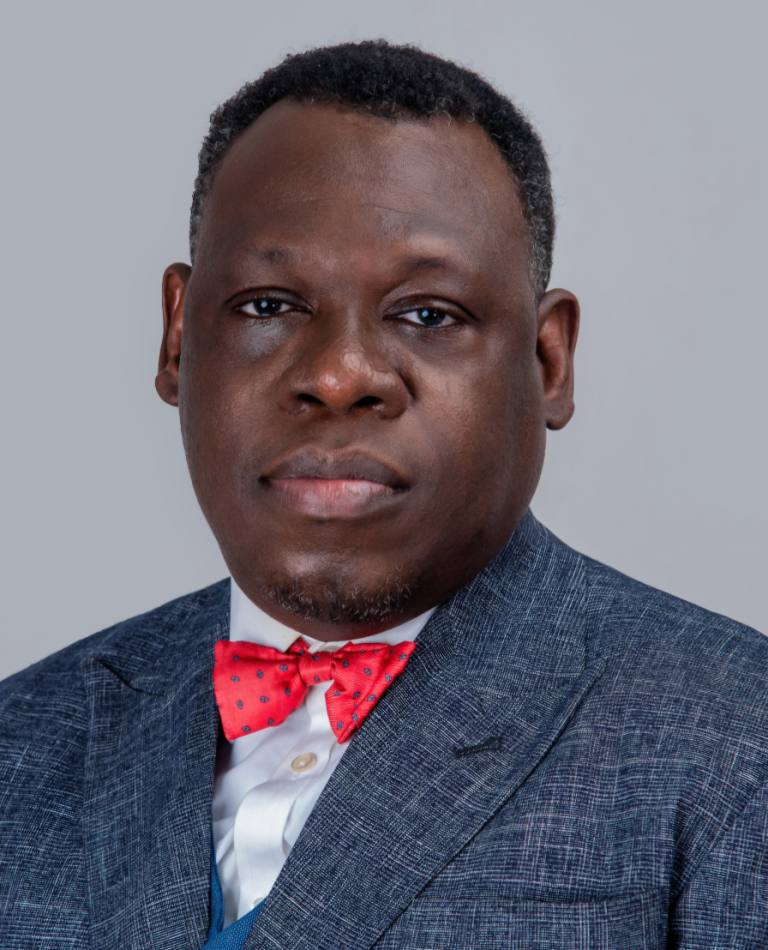
By Timi Olubiyi, PhD
We have all been there. You pick up your phone “just to check something quickly” before work, and suddenly, thirty minutes have vanished. You have scrolled through endless social media reels, skimmed the latest headlines, and perhaps even replied to a message that could have waited. Sound familiar? Today, the explosion of content creation fueled by monetization where creators are incentivized to produce viral content for likes, shares, and revenue is making this habit even harder to resist. Every swipe and scroll is now part of an economic game, designed to capture attention and keep users engaged longer. Technology was intended to make our lives easier, yet it often leaves us feeling more overwhelmed than ever.
In recent time, breaking news about political developments about Trump sending troops to Nigeria, Omoge Saida’s viral drama, different viral celebrity drama, or the constant stream of weddings, divorces, and high-profile events keeps eyes glued to screens even when focus should be on productivity or on other pressing tasks. These constant barrage of stories makes us feel like we need to stay connected to stay in the social media loop. This is where FOMO (Fear of Missing Out) comes in. We feel like if we don’t check the latest post or see who’s at the wedding party this weekend, we are somehow disconnected from the world, out of touch, and falling behind.
In fact, the average worker checks their phone more than 150 times a day, and a survey by Deloitte revealed that over 60% of professionals struggle to focus at work due to constant digital interruptions. This relentless pursuit of digital engagement is draining creativity, reducing effectiveness, and leaving us more exhausted than before. Here is the deeper truth: technology has fundamentally rewired the way we think, work, and rest. Psychologists call this state “continuous partial attention,” in which we are never fully present. We bounce between screens, applications, and thoughts without ever concentrating on a single task.
Research shows that multitasking does not enhance productivity; it undermines it. Every time we switch tasks, we deplete cognitive energy. The result is a workforce that is always connected but rarely engaged, constantly busy but seldom productive. This challenge extends to personal life as well: family dinners are interrupted by notifications, relaxation is stolen by scrolling, and vacations are no longer escapes from the digital noise.
What is truly unsettling is that social media platforms and applications are deliberately designed to be addictive You experience phantom of vibrations and fear of missing out (FOMO) every minute of the day. Infact, in the authors opinion, every like, comment, or share releases a small dose of dopamine, reinforcing habitual behavior and connections on the social media.It’s a trap that many of us fall into without even realizing it.
FOMO has become an ever-present companion, encouraging us to scroll mindlessly through updates that are, in reality, often irrelevant to our daily goals or well-being. Over time, this fosters compulsive digital patterns that are difficult to break. The consequences are significant: shortened attention spans, mental fatigue, and anxiety when disconnected. The World Health Organization identifies excessive screen time and digital multitasking as major contributors to burnout, especially among younger professionals. In short, we are living in a world that is digitally rich but mentally depleted.
The irony is that technology itself is not the enemy; it is our relationship with it that is the issue. When used mindfully, digital tools can enhance efficiency, foster communication, and drive innovation. However, when technology dictates our behavior, it becomes toxic. Consider a typical workday: emails open in the morning, followed by a LinkedIn notification, a trending post on X (formerly Twitter), and then a YouTube video.
Suddenly, an hour has passed. This constant micro-distraction erodes what is known as “deep work,” the focused, uninterrupted effort that drives meaningful success. According to Cal Newport, author of Deep Work, the capacity for such focus is rapidly diminishing.
For leaders, the consequences are even more severe. Decision fatigue, information overload, and screen-induced stress erode judgment and creativity, leaving teams in reactive mode and mistaking busyness for productivity. Official meetings are not left out, you find attendees distracted with lack of full attention at the meetings in recent times instead the gaze is usually on the phones, most times attending meetings absent minded which at the end of the day affect the decision makings at such meetings.
So, what is the solution? A digital detox- a deliberate pause from technology designed to reset our relationship with it. Think of it as recalibration rather than deprivation. Research published by the Harvard Business Review shows that professionals who take regular digital breaks report improved focus, better sleep, and enhanced emotional regulation. Even small adjustments, such as not using screens during meals or setting application limits, can boost creativity and concentration within days. The key is intention. A digital detox does not require abandoning technology; it is about regaining control over it. Individuals can designate “no-notification” periods, or schedule specific times for social media use instead of mindlessly scrolling.
Forward-thinking organizations are already adopting “digital wellness” initiatives. Such as screen-free meetings which are becoming more common, and mindfulness and productivity training is being introduced as part of corporate development programs. These small interventions yield significant benefits for both individual well-being and corporate performance. Digital detoxing is not easy initially. The first few days can feel disorienting, almost like withdrawal.
You may experience phantom vibrations or fear of missing out. Yet this is where transformation occurs. When the noise is stripped away, clarity emerges. Conversations deepen, work feels more meaningful, and creativity flows. You rediscover productivity with focus and the satisfaction of completing tasks without constant interruptions. Once consciousness is introduced to time on social media or online presence, it becomes evident how much attention was previously consumed by trivial distractions.
How can one start a digital detox without neglecting professional or social responsibilities? The answer is moderation rather than total abstinence. Begin by auditing digital habits and tracking time spent on social media or checking devices. The results are often startling. Next, set clear boundaries: disable unnecessary notifications, schedule specific times for email, and charge devices outside the bedroom. Replace digital downtime with activities that recharge your mind, such as reading, journaling, walking, or sitting in silence.
In workplaces, for meetings “focus blocks,” can be encourage where teams’ mute communication and concentrate on uninterrupted work or meetings. Organizations that model this behavior can regulate productivity. Ultimately, the goal of a digital detox is not disconnection but reconnection with time, thoughts, creativity, and the people who truly matter. The more we master our attention, the more control we gain over our work and our lives.
In a society obsessed with staying online, one of the most radical acts of productivity may be learning how to log off. The next time you feel compelled to check your phone before breakfast, pause. Take a deep breath. Ask yourself: is this urgency real, or is it simply another notification attempting to steal your focus? The answer may surprise you and mark the first step toward reclaiming your time, focus, and freedom. Good luck!
How may you obtain advice or further information on the article?
Dr Timi Olubiyi is an expert in Entrepreneurship and Business Management, holding a PhD in Business Administration from Babcock University in Nigeria. He is a prolific investment coach, author, columnist, and seasoned scholar. Additionally, he is a Chartered Member of the Chartered Institute for Securities and Investment (CISI) and a registered capital market operator with the Securities and Exchange Commission (SEC). He can be reached through his Twitter handle @drtimiolubiyi and via email at dr***********@***il.com for any questions, feedback, or comments.
The opinions expressed in this article are solely those of the author, Dr. Timi Olubiyi, and do not necessarily reflect the views of others.
Feature/OPED
Nigeria’s Children Under Siege as Politics Trumps over Governance
By Blaise Udunze
Chapter Two, Section 14 (b) of the 1999 Constitution of Nigeria (as amended) is explicit when it states that the security and welfare of the people shall be the primary purpose of government. Hence, by every standard, the welfare of Nigerians should be the first priority of the government. What would be said if the same government had failed on this path? Judging by this rhetorical question and series of unfolding events, indications have shown that Nigeria is drifting into a dangerous territory where politics increasingly overshadows governance, and the amazing part of it is that insecurity, poverty and social despair continue to consume the very foundations of the state.
Surprisingly, this is eventually playing out when millions of Nigerians expect leadership, empathy and decisive action, the political class appears preoccupied with permutations for 2027, coalition-building, defections, endorsements and electoral calculations. Meanwhile, criminals are expanding their territory.
The horrendous, tragic kidnapping of pupils, teachers and school workers in Oriire Local Government Area of Oyo State has become one of the most painful symbols of Nigeria’s deepening security crisis. Shamefully, it would be recalled that recently armed terrorists invaded three schools in Ahoro-Esinle and Yawota communities. Yes, this might not be the first time of abducting school pupils, but one thing that is more troubling in this case is that dozens of schoolchildren and teachers were abducted, as this includes toddlers barely old enough to understand what was happening around them.
Intently looking at the incident, one vicious act is that among those abducted were two-year-old Christianah Akanbi and three-year-old Sikiru Salami, who are also not exempt from the daily torture.
The horror became even more devastating when a video emerged confirming the gruesome murder of Michael Oyedokun. He was a Mathematics teacher who had simply gone to work on a Friday morning to educate Nigerian children. He never returned home. The life of a teacher, a father and a mentor was cut short when beheaded in captivity by terrorists in Nigeria in May 2026.
His death is not merely a tragedy for his family. But the harrowing experience is that it is an indictment of a nation that appears increasingly unable to guarantee the safety of its citizens.
Let us consider the recent attack in Oyo State; this is not an isolated incident. It is part of a growing pattern that demonstrates the alarming deterioration of security across the country. And this is one harrowing and traumatic situation that might continue to heighten fear in the southwest: barely days after the Oyo school abductions, gunmen invaded Yashikira in Baruten Local Government Area of Kwara State, attacked the Emir’s palace, set parts of it ablaze and abducted ten residents. Also, of great concern is that just days earlier, worshippers had been killed and others abducted from a prayer ground in the same state.
Worst still, these nightmares have been the lived realities confronting Nigerians across Benue, Plateau, Katsina, Zamfara, Borno, Niger and other states. Stories of killings, kidnappings and displacement have become routine headlines.
The frightening reality is that Nigeria is gradually normalising the abnormal. Schools are becoming targets. Highways have become theatres of terror. Farms have become killing fields. Communities are becoming refugee camps. And citizens increasingly feel abandoned.
What makes the situation even more troubling is the growing perception that governance has been subordinated to politics.
This is to say that it has become glaring that while communities mourn their dead and families desperately search for abducted loved ones, the “sorry” situation is that public attention at the highest levels of government often appears focused on political calculations ahead of the 2027 elections.
This perception gained further traction following the Oyo school abductions. Nigerians watched grieving parents cry on television. Videos emerged showing abducted teachers pleading for help from captivity. This has triggered a negative notion, as many citizens felt there was insufficient urgency from the federal authorities in responding to one of the most horrifying school attacks in recent years.
Leadership is not measured only by policies and speeches. It is measured by empathy, responsiveness and the ability to assure citizens that their pain matters.
Section 14(2)(b) of Nigeria’s Constitution leaves no room for ambiguity. It states clearly that the security and welfare of the people shall be the primary purpose of government. Not politics. Not elections. Not defections. Not coalition building. Security and welfare.
Unfortunately, many Nigerians increasingly believe that the priorities of government no longer reflect this constitutional obligation. The consequences extend far beyond security. The educational sector is becoming one of the biggest casualties of the country’s security collapse.
The vicious incidents have brought the society to a standpoint whereby parents who once worried about examination results now worry whether their children will return home alive from school. Meanwhile, teachers who have continued to work tirelessly and still should be focused on learning outcomes are increasingly forced to think about survival.
One glaring adverse impact from all these abnormalities is that school enrolment in vulnerable communities is likely to decline as parents choose safety over education.
The long-term implications are frightening because the fact is that every child denied education today becomes a future economic liability. Every school abandoned due to insecurity creates another generation vulnerable to poverty, extremism and social exclusion. Every teacher lost to violence weakens Nigeria’s human capital.
Another aspect that is more of concern is that the abduction of children from schools represents more than a security challenge, but this is a thorough attack on Nigeria’s future. Perhaps the most heartbreaking and horrendous aspect of these attacks is the psychological damage inflicted on children. It must be established beforehand that when rescued, many victims may never fully recover from the trauma. This could be linked to, especially to the screams, the gunshots, the confusion, the separation from parents and the terror of captivity.
With the recent and past occurrences, without any iota of doubt, such experiences often leave invisible wounds that endure for years. Considering that the children who should be learning multiplication tables and nursery rhymes are instead learning fear.
The real question is, can a nation that cannot protect its children confidently speak about its future? Never! Emphatically, it should be understood that beyond education, insecurity is fueling a broader socio-economic epidemic.
Nigeria is already grappling with one of the worst affordability crises in its history, which also depicts the continued governance complacency. Talking of the removal of fuel subsidy and exchange rate liberalisation, inflation has eroded purchasing power, while food prices, transportation costs, rents and utility bills continue to soar, and worse off is the skyrocketing price of cooking gas.
Yet insecurity is making the crisis even worse. Farmers cannot access their farmlands. Harvests are disrupted. The country has witnessed the rural economies collapsing heavily. The resultant effect is that food production has continued to decline, and supply chains are increasingly vulnerable. The result is predictable because the simple arithmetic is that higher food prices, worsening hunger and deeper poverty.
The level of security collapse has shown that many northern farming communities, bandits now function as parallel authorities, imposing levies and determining who can farm and who cannot. This directly impacts food availability in urban centres hundreds of kilometres away.
Thus, insecurity is no longer merely a security problem; the truth is that it has become an economic problem, which is developmental, educational, and humanitarian. And ultimately, a governance problem.
The inability to effectively confront insecurity also raises difficult questions about institutional capacity.
As public affairs commentator Leonard Umunna recently observed, weak institutions produce weak outcomes. Corruption, poor accountability and ineffective governance structures have collectively undermined the state’s ability to deliver security and development.
Some of the terrifying truths Nigerians must take into cognisance are that when institutions become compromised, citizens lose confidence. Also, when accountability disappears, impunity flourishes, as the same applies when governance fails, criminality fills the vacuum. One truth that cannot be argued is that the vacuum is becoming increasingly visible across Nigeria.
The irony being experienced today in Nigeria is that while political actors are preparing intensely for 2027, the very foundations required for democratic stability are being eroded.
The terror and anxiety are definitely obvious, and the fact is that democracy cannot thrive in an environment of widespread fear.
Citizens who cannot travel safely, farm safely, worship safely or send their children to school safely are unlikely to have confidence in democratic institutions.
Perhaps, some ought to translate these messages to those at the helm of affairs in Nigeria that security is the foundation upon which every other national aspiration rests. And, without security, economic reforms become ineffective. Without security, educational investments become vulnerable. Without security, foreign investment declines. Without security, national unity weakens. Also, another underlying fact is that without security, democracy itself becomes fragile.
The well-known truth, which is quite unfortunate today, is that Nigeria’s challenges are not insurmountable because the country possesses the manpower, resources and institutional structures necessary to reverse the tide.
What appears lacking is the political will, urgency and strategic focus required to confront the crisis comprehensively.
This moment demands more than condolences after attacks. It demands intelligence-driven operations. It demands stronger coordination among security agencies. It demands improved local intelligence networks. It demands accountability. It demands institutional reforms. Most importantly, it demands leadership that places governance above politics.
As Nigeria inches toward another election cycle, political leaders must recognise a simple truth, and that truth is that there may be little value in winning elections in a nation increasingly overwhelmed by insecurity, poverty and social fragmentation.
The pursuit of political power cannot become more important than the survival of the republic itself. The death of Michael Oyedokun should haunt the conscience of the nation. So should the tears of Christianah Akanbi. So, should every parent be afraid to send a child to school? So should the pain of every community living under the shadow of terror. Nigeria is at an intersection; it has reached a tough moment where important and critical decisions must be made.
One path leads to deeper insecurity, educational decline, economic hardship and national instability. The other requires courage, responsibility and a renewed commitment to governance. The choice should not be difficult.
For if politics continues to take precedence over governance, the greatest casualty may not be any political party or administration. It may be Nigeria itself. The country is redeemable, and there is still hope for a better Nigeria.
Blaise, a journalist and PR professional, writes from Lagos and can be reached via: bl***********@***il.com
Feature/OPED
Facing the Reality of Inflation in Everyday Life
By Timi Olubiyi, PhD
Currently, many are passing through one of the most difficult times due to inflationary pressures. From transportation to food, electricity, healthcare, school fees, rent, and communication, the rising cost of living has altered the daily experience of millions of households. What used to be considered necessities have now become luxuries for many families. Across the country, the average citizen is under enormous pressure to survive amid worsening inflation, shrinking purchasing power, and economic uncertainty.
While inflation is a global phenomenon, the Nigerian experience has become particularly severe because of the combined effects of fuel subsidy removal, exchange rate volatility, high transportation costs, insecurity in food-producing regions, and weak wage growth. The reality of petrol selling at nearly N1,400 per litre in some parts of the country has significantly changed household economics and business sustainability. The consequences are visible everywhere in markets, offices, homes, schools, hospitals, and on the streets.
In practical terms, transportation fares have more than tripled in many cities within a short period. Food inflation has equally become alarming. Bread, eggs, cooking gas, yams, tomatoes, beans, and other staple foods continue to rise beyond the reach of average Nigerians. Electricity tariffs and telecommunications costs have also increased, while rent in urban centres keeps climbing. Unfortunately, salaries and wages have not kept pace with these realities. This is perhaps the greatest crisis confronting workers and small business owners today. Many employees still earn wages negotiated several years ago under entirely different economic conditions. Yet the value of those salaries has been severely eroded by inflation. In real terms, many workers are poorer today despite remaining employed.
The truth is that the salary structure available now can no longer effectively support decent living standards for many households. Even professionals with stable employment now struggle to meet basic obligations. Civil servants, teachers, artisans, small traders, entrepreneurs, and even middle-income earners are feeling the weight of the economic squeeze.
For many families, survival now depends on borrowing, reducing consumption, postponing healthcare, or sacrificing savings and investments. More troubling is the psychological effect of this prolonged hardship. Economic pressure is increasingly and significantly affecting mental health, marriages, productivity, and social stability.
Anxiety, frustration, depression, anger, and emotional exhaustion are becoming common experiences among citizens trying to survive difficult conditions. Difficult times and hardship often fuel marital conflicts, domestic tension, and reduced emotional well-being. In workplaces, economic uncertainty lowers morale, concentration, and productivity as employees struggle to cope with transportation costs, food, and other basic needs.
In fact, many people now live permanently in survival mode, uncertain about what tomorrow may bring. Businesses are equally under pressure. Rising operational costs continue to threaten sustainability, especially for small and medium-scale enterprises. Diesel prices, transportation costs, imported raw materials, electricity bills, taxation, and weak consumer spending have reduced profitability across many sectors. Several businesses have downsized operations, reduced staff strength, or shut down completely. Others remain in operation but merely struggle to survive.
Consequently, the era when a single salary could comfortably sustain a family is gradually disappearing in Nigeria. One of the clearest lessons from the current economic climate is that relying solely on one source of income has become increasingly risky. Economic realities now require individuals and households to think beyond traditional salary structures and embrace income diversification. In fact, multiple streams of income are no longer optional; they are becoming a necessity for financial survival and resilience. Families that depend entirely on one monthly salary are highly exposed to economic shocks, inflation, job loss, or business disruptions. The harsh reality is that even regular employment no longer guarantees financial security.
Therefore, Nigerians must begin to intentionally explore additional income opportunities that can complement existing earnings. This does not necessarily mean abandoning primary jobs or businesses, but rather creating alternative sources of income that can provide support during difficult times. Technology and digital platforms have made this more possible than ever before. Social media, e-commerce, freelancing, online consulting, digital content creation, virtual training, and remote services now offer opportunities for additional income generation.
Many professionals can monetise their knowledge, experience, or talents through side engagements without compromising their primary employment. In a way, passive income opportunities such as agriculture, cooperative investments, real estate, dividend-paying stocks, mutual funds, and small-scale trading can help cushion economic shocks over time. Land acquisition, for instance, remains one of the most reliable long-term stores of value in Nigeria despite current economic challenges. Assets that appreciate over time can provide financial protection against inflation. More so, living below one’s means may no longer be a matter of choice but a practical necessity under present realities. The culture of excessive social competition and pressure to maintain appearances despite declining income can worsen financial stress. Economic survival today requires financial honesty, discipline, and strategic planning.
In conclusion, the current economic realities in Nigeria demand a shift in mindset, financial behaviour, and survival strategies. Fuel at N1,400 per litre is not merely an energy issue; it affects transportation, food prices, school fees, healthcare costs, business operations, and overall quality of life.
Inflation has redefined daily living for millions of Nigerians. Therefore, building multiple streams of income, improving financial literacy, embracing prudent spending, and investing for the future are no longer luxury ideas but necessary responses to economic realities.
The truth is simple: depending solely on salary income in today’s Nigeria may no longer be sufficient for financial stability. The earlier households adapt to this reality, the better positioned they may be to survive and thrive despite the challenges ahead. Good luck!
How may you obtain advice or further information on the article?
Dr Timi Olubiyi is an expert in Entrepreneurship and Business Management, holding a PhD in Business Administration from Babcock University in Nigeria. He is a prolific investment coach, author, columnist, and seasoned scholar. Additionally, he is a Chartered Member of the Chartered Institute for Securities and Investment (CISI) and a registered capital market operator with the Securities and Exchange Commission (SEC). He can be reached through his Twitter handle @drtimiolubiyi and via email at dr***********@***il.com for any questions, feedback, or comments. The opinions expressed in this article are solely those of the author, Dr Timi Olubiyi, and do not necessarily reflect the views of others.

Feature/OPED
Nigeria’s Booming Banks And A Collapsing Economy
By Blaise Udunze
Nigeria’s banking industry appears to be booming, largely driven by the policies of the Central Bank of Nigeria (CBN), under Governor Olayemi Cardoso, while the real economy continues to suffocate.
At a time when millions of Nigerians are sinking deeper into poverty, when inflation continues to erode household incomes, when businesses are collapsing under unbearable operating costs, and when migration has become a survival strategy for many young professionals, Nigerian banks are announcing staggering profits, stronger capital positions and unprecedented liquidity growth.
According to the bank’s financial statements, the financial system appears healthy. In reality, the economy where citizens work, trade and survive is gasping for breath.
This growing disconnect between financial sector prosperity and economic suffering now represents one of the gravest threats to Nigeria’s long-term economic stability and its ambition of building a $1 trillion economy.
The numbers are indeed impressive. Nigerian banks’ shareholders’ funds reportedly surged to about N27 trillion following the recapitalisation exercise. The top five banks now command balance sheets estimated at over N164 trillion. Tier-1 banks collectively generated trillions in profits within the first quarter of 2026 alone, while the sector-wide recapitalisation exercise raised over N4.56 trillion.
Ordinarily, such figures should inspire confidence about the future of the economy. Stronger banks are expected to translate into stronger businesses, more jobs, industrial expansion and wider economic opportunities. But Nigeria’s experience is proving otherwise.
Instead of serving as engines of productive growth, banks are increasingly becoming custodians of liquidity trapped within the financial system itself. That is the real danger.
Even as banking liquidity expands sharply, lending to the productive economy remains weak and constrained. Reports indicate that banks parked a record N24.13 trillion with the CBN, while simultaneously increasing investments in government securities and treasury bills because these avenues are safer, more profitable and less risky than lending to businesses operating within Nigeria’s harsh economic climate. This reality exposes a dangerous contradiction.
A developing economy desperately in need of industrialisation, manufacturing growth, infrastructure expansion and job creation cannot afford a banking system that prefers financial safety over productive economic risk.
A sustainable economy cannot thrive where the real sector is starved of funds. Yet this is exactly where Nigeria now stands.
Despite the massive liquidity in the banking system, growth in lending to the private sector continues to lag behind the pace of liquidity expansion. The implication is clear. Financial sector strength is no longer translating into real economic development. This is not how healthy economies function.
Ordinarily, banks in developing economies are expected to operate as catalysts for economic transformation. Across successful economies, commercial banks finance manufacturing, agriculture, innovation, infrastructure and entrepreneurship because those sectors generate jobs, productivity and national wealth.
Small and Medium Enterprises (SMEs), especially, are globally recognised as the backbone of grassroots economic development. Nigeria is no exception.
SMEs account for over 70 per cent of registered businesses, contribute nearly half of Nigeria’s GDP and generate between 84 and 90 per cent of employment opportunities. Yet despite their overwhelming importance, SMEs reportedly receive barely between 0.5 per cent and one per cent of total commercial bank lending. That is not merely a policy failure. It is an economic tragedy.
Every denied SME loan is a denied employment opportunity. Every failed business represents another frustrated entrepreneur. Every frustrated entrepreneur becomes another Nigerian contemplating migration.
This is how economic dysfunction transforms into human displacement. The so-called “Japa” phenomenon did not emerge in isolation. It is deeply connected to economic hopelessness. When productive citizens lose faith in their country’s economic future, migration stops being a lifestyle choice and becomes a survival mechanism.
Unbeknownst to the policymakers is that Nigeria cannot realistically build a $1 trillion economy while productive sectors remain financially suffocated.
A closer glance at the trend of events helps to reveal that the danger becomes even more severe when viewed against the backdrop of the recent outcome of the 305th Monetary Policy Committee (MPC) meeting, where the CBN retained the Monetary Policy Rate (MPR) at 26.5 per cent in its bid to sustain disinflation and macroeconomic stability.
It is understandable and certain that inflation control is important, but the fact is that at 15.69 per cent, inflation remains painfully high and continues to weaken purchasing power. Food prices remain elevated. Transportation costs remain unbearable. Consumer demand is weakening. The middle class is shrinking rapidly.
But maintaining elevated interest rates also comes with painful consequences. Simple arithmetic tells us that higher interest rates mean higher lending costs. Higher lending costs mean higher production costs. Higher production costs worsen inflationary pressures and weaken business survival rates.
Invariably, this also tells us that for Nigerian manufacturers and corporates already battling a weak naira, volatile exchange rates, expensive diesel, energy insecurity and declining consumer demand, access to affordable credit is becoming almost impossible.
Many businesses are no longer borrowing to expand production or employ workers. They are borrowing merely to survive. This is economic suffocation.
Meanwhile, banks continue to profit massively from high-yield government securities and treasury investments. Reports indicate that major Nigerian banks generated over N6.68 trillion from investment securities and treasury bills instead of financing productive enterprises capable of stimulating growth and employment.
The government’s appetite for borrowing itself shows no sign of slowing down. Public borrowing reportedly climbed above N39 trillion. Historically, excessive government borrowing crowds out private sector investment because banks naturally prefer lending to the government rather than exposing themselves to risks associated with businesses operating in unstable economic conditions.
The result is predictable. The real sector weakens while speculative and non-productive financial activities flourish. This explains why Nigeria increasingly resembles a financial system disconnected from the realities of ordinary citizens.
While banks celebrate rising profits, poverty and hunger worsen visibly across the country. Unemployment continues to rise. Small businesses are dying quietly. Household purchasing power is collapsing under inflationary pressure.
Yet the financial system appears more liquid than ever. That contradiction should alarm policymakers. The recapitalisation exercise itself now raises difficult questions.
What exactly is the purpose of stronger banks if stronger banks do not strengthen national productivity?
If recapitalisation merely empowers banks to deepen investments in government debt instruments while manufacturers, farmers, exporters and SMEs remain starved of affordable credit, then the exercise risks becoming financially impressive but economically hollow.
Indeed, the current monetary environment appears to reward financial conservatism over productive risk-taking.
The stringent Cash Reserve Requirement (CRR), elevated interest rates and broader macroeconomic uncertainty continue to discourage aggressive lending to the private sector. Banks understandably seek safety. But nations do not industrialise through excessive financial caution.
No economy develops when capital circulates primarily within treasury bills and government securities instead of flowing into factories, farms, logistics, housing, innovation and production.
This is the larger danger confronting Nigeria today. Economic crises rarely begin with recession statistics alone. Sometimes, they begin when financial institutions become detached from the suffering realities of the wider economy. They begin when growth exists only within banking balance sheets but disappears from households, factories and streets.
Without productive credit expansion, economic growth becomes artificial and exclusionary. Without affordable financing, businesses cannot scale. Without business expansion, jobs cannot emerge. Also, it must be noted that without jobs, insecurity, poverty and migration inevitably worsen. The implications for social stability are enormous.
One painful fact is that citizens already burdened by inflation, debt pressures and widespread distrust now face a system where economic opportunities continue shrinking despite apparent financial sector prosperity. One of the lurking dangers is that this deepens resentment, weakens confidence in institutions and threatens long-term economic cohesion.
The CBN’s inflation fight may be necessary, but monetary stability alone cannot substitute for productive economic expansion. Financial stability without inclusive growth eventually becomes unsustainable.
The real economy matters more than banking optics. Nigeria urgently needs policies that incentivise real sector lending, reduce structural risks facing manufacturers and SMEs, strengthen credit infrastructure, lower production bottlenecks and redirect liquidity toward productive economic activity.
As a matter of fact, it is high time for Nigeria to start rethinking the growing dependence on debt-driven fiscal management that continues to crowd out private investment. Development cannot occur when government borrowing consumes the financial oxygen needed by businesses.
Ultimately, banking profitability should not become an isolated island of prosperity surrounded by a collapsing productive economy.
A nation cannot celebrate trillion-naira banking profits while millions of citizens sink deeper into economic despair. No society sustains such a contradiction indefinitely.
If Nigeria truly hopes to build a resilient and inclusive economy, then the banking sector must once again become a vehicle for national development rather than merely a beneficiary of government debt and monetary tightening.
Otherwise, the country risks creating a contradictory economy where banks grow richer while citizens grow poorer and where financial prosperity exists only on paper while economic hardship defines everyday life.
Blaise, a journalist and PR professional, writes from Lagos and can be reached via: bl***********@***il.com
-
Feature/OPED6 years agoDavos was Different this year
-
Travel/Tourism10 years ago
Lagos Seals Western Lodge Hotel In Ikorodu
-
Showbiz3 years agoEstranged Lover Releases Videos of Empress Njamah Bathing
-
Banking8 years agoSort Codes of GTBank Branches in Nigeria
-
Economy3 years agoSubsidy Removal: CNG at N130 Per Litre Cheaper Than Petrol—IPMAN
-
Banking3 years agoSort Codes of UBA Branches in Nigeria
-
Banking3 years agoFirst Bank Announces Planned Downtime
-
Sports3 years agoHighest Paid Nigerian Footballer – How Much Do Nigerian Footballers Earn