Connect with us

Banking

How Access Bank is Linking Africa’s Landlocked Markets

Published

on

Link Africa’s Landlocked Markets

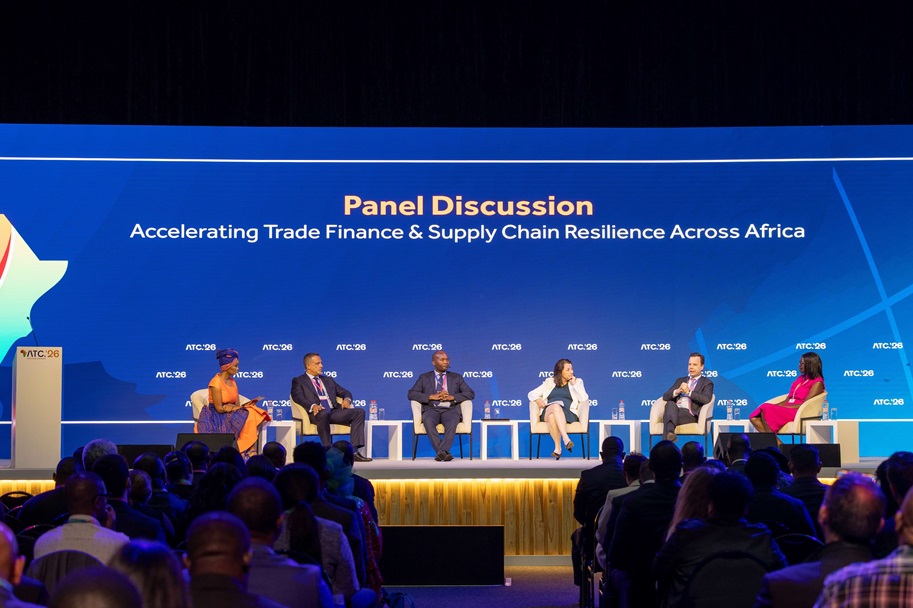
At the Africa Trade Conference (ATC) 2026 held in Cape Town, South Africa, policymakers, financiers, and global business leaders gathered to confront one of Africa’s most persistent economic constraints: the continent’s vast trade financing gap.

Hosted by Access Bank Plc, the conference brought together stakeholders from governments, development finance institutions and the private sector to explore how Africa can transform its fragmented trade ecosystem and unlock the promise of the African Continental Free Trade Area.

The central message emerging from the discussions was clear: Africa must move from being a continent of landlocked markets to a network of land-linked economies, connected through finance, infrastructure and digital trade systems.

Turning Vision into Velocity

The conference, themed “Turning Vision into Velocity: Building Africa’s Trade Ecosystem for Real-World Impact,” focused on translating policy ambition into practical solutions for businesses across the continent.

Delivering the welcome address, Roosevelt Ogbonna, Managing Director and Chief Executive Officer of Access Bank Plc, emphasised that Africa must confront the structural barriers that continue to limit intra-continental commerce.

“The reality is that Africa still controls a small share of global trade,” Ogbonna said. “The corridors are still fragmented and more aspirational than functional, and too many small businesses that aspire to trade across Africa remain constrained.”

According to him, the conference was convened to continue the conversation begun at its inaugural edition in 2025, focusing on how Africa can expand trade within the continent while strengthening its participation in global markets.

“This conference must not end as another talking shop,” he said. “It must become the birthplace of a movement that contributes to transforming intra-African trade.”

For Access Bank Plc, the role of financial institutions in that transformation is evolving.

“At Access Bank, we see ourselves as financiers and connectors of markets, ideas and opportunities,” Ogbonna noted. “Our role is to help African businesses move from ambition to impact, from local relevance to global competitiveness.”

Bridging Africa’s Trade Finance Gap

Despite its abundant natural resources and population of more than 1.3 billion people, Africa remains underrepresented in global trade flows.

One of the biggest barriers is the lack of accessible financing for exporters, manufacturers and small businesses seeking to expand across borders. The trade finance gap continues to constrain intra-African commerce, which remains significantly below levels recorded in other regional trading blocs.

To address this, Ogbonna highlighted three strategic priorities that emerged from the previous edition of the conference: breaking down silos between policymakers, financial institutions and businesses; building a trade ecosystem powered by reliable data and analytics, and developing systems that support both large corporations and smaller businesses expanding across borders

Encouragingly, he noted that progress is already emerging across several sectors.

“We have seen value chains emerging across agriculture, manufacturing and services, and we are seeing African brands crossing borders and building a global presence,” he said.

Nevertheless, the gains remain uneven across the continent, with progress concentrated in a few markets and trade corridors.

Financing the Future of African Trade

Beyond the structural challenges of trade finance and infrastructure, the conference also explored the evolving financial architecture required to unlock Africa’s full trade potential.

Keynote addresses were delivered by Kennedy Mbekeani, Director General for the Southern Africa Region at the African Development Bank, and Kwabena Ayirebi, Managing Director of Banking Operations at the African Export-Import Bank.

Both speakers emphasised the need for stronger collaboration among development finance institutions, commercial banks and governments to mobilise the capital required to drive infrastructure development and support trade across the continent.

Mbekeani stressed that private capital would be crucial in bridging Africa’s infrastructure financing gap.

“The mobilisation of private capital remains crucial as many African governments are constrained by limited fiscal space and overstretched balance sheets,” he said.

“The mobilisation of capital, particularly private capital, is something that we need to work on.”

The conversation was further enriched by insights from Tolu Oyekan, Managing Director and Partner at Boston Consulting Group, who presented the Africa Trade Outlook 2026.

His presentation highlighted the macroeconomic forces shaping the future of African trade, including shifting global supply chains, the growing importance of regional value chains and emerging opportunities for African industries to capture greater value in global markets.

Digital infrastructure and payments were also central to the conversation.

Mike Ogbalu, Chief Executive Officer of the Pan-African Payment and Settlement System, underscored the importance of payment interoperability in enabling seamless cross-border transactions across the continent.

Efficient payment systems, he noted, are essential to reducing the cost and complexity of trading across African borders, particularly for small and medium-sized enterprises.

Policy, Finance and Partnerships

The conference also convened a high-level ministerial panel that brought together policymakers and financial sector leaders to examine the policy environment required to accelerate Africa’s economic integration.

Participants included Elizabeth Ofosu Adjare, Ghana’s Minister for Trade, Agribusiness and Industry, and Tiroeaone Ntsima, Botswana’s Minister of Trade and Entrepreneurship, alongside senior executives from international financial institutions.

Together, they explored how regulatory alignment, infrastructure development and innovative financing structures can accelerate the implementation of the African Continental Free Trade Area and unlock intra-African trade.

The objective, participants agreed, was not merely dialogue but partnership, bringing together the policymakers, financiers and businesses capable of translating Africa’s trade ambitions into tangible outcomes.

Reimagining Africa’s Economic Geography

Beyond policy discussions and financing strategies, the conference reflected a deeper shift in how Africa views its economic geography.

For decades, the continent’s development challenges have often been framed in terms of physical constraints: landlocked economies, fragmented markets and weak infrastructure.

But the emerging vision presented in Cape Town suggests a different future,  one where integrated banking networks, digital payment systems and trade finance platforms transform isolated markets into connected trade corridors.

For Access Bank Plc, that transformation is already underway.

With operations spanning 25 countries globally, including 16 across Africa, the bank is building financial corridors that link African businesses to each other and to global markets.

From Potential to Participation

The conversations at the Africa Trade Conference reinforced a growing consensus across the continent: Africa’s economic transformation will depend on policy reforms and institutions capable of financing and facilitating trade.

Banks, development finance institutions and payment platforms are increasingly becoming the connective tissue linking African markets.

For Access Bank, the ambition is clear,  helping reshape the narrative of African trade.

From isolated markets to integrated corridors. From landlocked constraints to land-linked opportunity. And from economic potential to meaningful participation in the global trading system.


Banking

Access Holdings to Focus on Earnings Quality, Value Creation After Impressive FY25

Published

on

Access Holdings

By Aduragbemi Omiyale

If what is promised is achieved, shareholders of Access Holdings Plc will be the toast of others, as the financial institution is moving into its next phase after spending resources to expand its operations, capturing different markets.

The 2025 financial year marked a significant turning point in its corporate journey as it shifted from a growth model defined by scale to one increasingly anchored on value creation, efficiency, and earnings quality.

In the year under review, the company grew its pre-tax profit by 16.2 per cent to N1.01 trillion, underscoring its steady progression toward becoming a high-performing and resilient financial institution.

Net interest income rose to N1.36 trillion, while net fees and commission income recorded a particularly strong growth of 40.9 per cent to N585.1 billion, reflecting increasing diversification in revenue streams. Overall operating income after impairment grew by 23.9 per cent to N3.17 trillion.

At the same time, the firm improved its cost discipline, with its cost-to-income ratio declining to 51.7 per cent from 56.7 per cent in 2024. Returns also remained solid, with return on average equity at 18.4 per cent and return on average assets at 1.6 per cent, reinforcing the quality of earnings delivered during the year.

As for the balance sheet, it recorded significant expansion, driven by strong deposit mobilisation and sustained customer confidence, with total assets up by 24.3 per cent to N51.57 trillion, and customer deposits rising by 53.4 per cent to N34.56 trillion.

Shareholders’ funds rose by 15 per cent to N4.33 trillion, reflecting both retained earnings and continued investor confidence in the institution. This growth highlights not only the scale of its operations but also the deepening trust of customers, counterparties, and investors.

“Our 2025 performance reflects both the resilience of the Access franchise and the strength of the institution we have built over time. Despite a dynamic operating environment, we delivered strong earnings supported by diversified income streams, disciplined execution, and a continued focus on balance sheet optimisation.

“We have now entered a more deliberate optimisation phase, with a stronger emphasis on returns on capital, earnings quality, and long-term value creation,” the chief executive of Access Holdings, Mr Innocent Ike, said.

The operating environment during the year showed signs of gradual improvement, which supported performance. Nigeria’s economic growth strengthened to about 3.9 per cent, inflation moderated from elevated 2024 levels, and foreign exchange reserves rose above $45 billion. The NGX All Share Index gained over 51 per cent during the year, reflecting renewed investor confidence and stronger capital market activity. These developments contributed to improved capital flows and a more supportive backdrop for financial institutions.

While banking remains the core earnings driver, contributing about 97 per cent of total revenue, the Group continues to make measured progress in diversifying its income base. Its investment management and insurance businesses, including Access ARM Pensions and Access Insurance Brokers, provide stable and recurring income streams, while technology-led platforms such as Oxygen X Finance and Hydrogen Payment Services are strengthening its position in the digital financial services landscape.

The Group’s strategic direction is now increasingly defined by a shift from scale to value. Having built scale across markets and segments, management is focusing more deliberately on improving returns on capital, enhancing earnings quality and deepening cost discipline. This transition reflects a clear objective to build a more valuable institution capable of delivering consistent and resilient returns over the long term.

Looking ahead, Access Holdings expects macroeconomic conditions to continue stabilising, creating opportunities for credit expansion, increased transaction volumes, and higher levels of activity across the financial system. The Group intends to maintain its focus on disciplined execution, improved capital efficiency, and sustainable growth across its diversified platform.

“Africa remains one of the most compelling long-term growth frontiers globally. Our role is not only to participate in that growth, but to help shape and finance it.

“At Access Holdings, we have built an institution designed to endure, anchored on strong governance, disciplined execution, and a clear strategic direction. Our focus remains on delivering consistent, high-quality, risk-adjusted returns while building a financial institution that will stand the test of time,” Mr Ike stated.

Continue Reading

Banking

We’re Well Capitalised Within our Regulatory Category—Providus Bank

Published

on

Providus Bank Ado-Ekiti

By Modupe Gbadeyanka

Providus Bank has dismissed insinuations that it failed to meet the new minimum capital requirements of the Central Bank of Nigeria (CBN).

The banking sector regulators gave financial institutions in the country a deadline of March 31, 2026, to shore up their capital base.

Before the deadline, there were speculations that Providus Bank, which plans a merger with Unity Bank Plc, would miss out because the deal had not concluded.

Unity Bank had to inform the public that it was only waiting for court authorisation to complete the merger, which may happen before March 31.

The Chief Financial Officer of Providus Bank, Mr Deoye Ojuroye, speaking at the opening of a new branch of the company in Ekiti State, reaffirmed the capital strength of the financial institution.

He emphasised that Providus Bank remains on a strong footing, with a disciplined approach to capital and risk management underpinning its growth.

“We are well capitalised within our regulatory category, and that gives us the confidence to continue expanding responsibly while supporting businesses and communities,” he stated at the commissioning of the new branch in Ado-Ekiti, the state capital.

The new branch marked another step in the steady expansion of the organisation across key growth markets in Nigeria.

The next item on the lender’s agenda is expanding its footprint to support local enterprise, deepen financial inclusion, and bring banking services closer to individuals and businesses nationwide over the next 12 months.

“Our approach is deliberate—we are growing in the right places, supporting real economic activity, and building a bank that is both resilient and responsive to the needs of our customers,” Mr Ojuroye stated.

According to him, the bank plans to open additional branches in strategic locations over the coming year, reinforcing its commitment to scale, accessibility, and long-term value creation, and positioning itself as a reliable partner to businesses and individuals, combining financial strength with a clear focus on sustainable growth.

Continue Reading

Banking

Zenith Bank Launches Côte d’Ivoire Subsidiary

Published

on

zenith bank plc

By Aduragbemi Omiyale

A Côte d’Ivoire subsidiary of Zenith Bank Plc will be launched on Wednesday, April 29, 2026, after obtaining an operating licence in December 2025 from the country’s Ministry of Finance and Budget.

The country’s subsidiary will operate from its headquarters at SCI Wall Street, Avenue Noguès, Plateau, Abidjan.

Zenith Bank is in Côte d’Ivoire to deepen its presence in Francophone West Africa and strengthen financial intermediation within the West African Economic and Monetary Union (WAEMU).

Positioned as a gateway for cross-border trade and investment, Zenith Bank Côte d’Ivoire will focus on corporate banking, trade finance, local and offshore banking services, and structured financial solutions tailored to businesses operating across Africa and internationally.

Expected at the official opening ceremony tomorrow are senior government officials and regulators from Nigeria and Côte d’Ivoire, continental business leaders, and members of the diplomatic community, highlighting the strategic economic ties and investment opportunities between the two markets.

The Côte d’Ivoire launch forms part of Zenith Bank’s broader continental growth strategy. In addition to the Anglophone countries where it currently operates, and in line with the expansion into the Francophone market, the bank has commenced its entry process into the CEMAC (Central African Economic and Monetary Community) region, with Cameroon as the focal point.

It was gathered that the new subsidiary will be headed by Mr Cédric Tano, a seasoned banking executive with over two decades of experience.

“We are proud to establish Zenith Bank’s presence in Côte d’Ivoire at a time of strong economic growth in the country and increasing regional integration.

“Our focus is to showcase the Zenith brand as a customer-centric institution that combines global best practices with deep local insight.

“We are well-positioned to support businesses with innovative financing solutions, facilitate cross-border trade, and contribute meaningfully to the growth of the Ivorian economy and the wider WAEMU region,” Mr Tano commented.

Also speaking, the chief executive of Zenith Bank, Ms Adaora Umeoji, said, “From the very beginning, our founder and chairman, Mr Jim Ovia, set out to build a truly global brand with a strong presence across Africa and key international markets.

“The launch of Zenith Bank Côte d’Ivoire is a bold step in realising that vision; opening a strategic corridor into Francophone West Africa and reinforcing our commitment to facilitating trade, investment, and enterprise growth across the continent.

“As we continue to expand thoughtfully and strategically, we remain focused on delivering world-class banking solutions that connect African businesses to global opportunities.”

Continue Reading

Trending