Connect with us

Banking

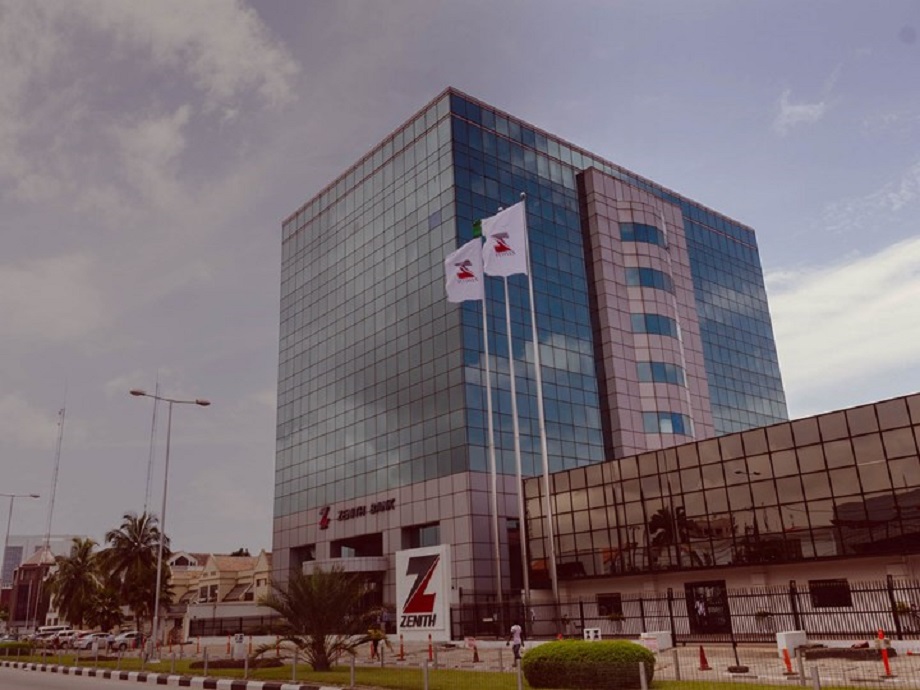
Zenith Bank Shares Crash After Declaring 25k Interim Dividend

Published

on

Zenith Bank profit

By National Daily

For a second session in a row last Friday, Zenith Bank shares depreciated despite a sharp rise in its first-half earnings.

Last Thursday, the lender announced that its pre-tax profit in the first six months jumped 71 percent to N92.2 billion.

Afterwards, the board of directors of the financial institution declared an interim dividend of 25 kobo, an amount some investors believed was lower than expected.

According to National Daily, Zenith Bank stock fell one percent to N23.75 on Friday, the lowest since July 26.

In May 2017, the bank raised $500 million Eurobond which could increase its funding costs.

Recall that the first tier lender Q2 2017 results showed that PBT grew by a remarkable 120% y/y to N48 billion. The strong PBT growth was mainly driven by a stellar growth of 389% y/y to N88.5 billion on the non-interest income line.

Growth on this line was underpinned by a strong performance in forex trading income which grew to N46 billion from a forex loss of N496 million in 2016. In contrast, funding income came in flat y/y.

The strong revenue contribution was strong enough to completely offset increases of 196% y/y and 39% y/y in loan loss provision and opex respectively.

Further down the P&L, PAT declined by 19% y/y to N31.4 billion mainly because of a negative result of N6.3 billion in other comprehensive income line (OCI) compared with a strong gain of N30.2 billion in Q2 2016 on the same line.

On a sequential basis, the results mirrored the y/y trends. PBT was up by 9% q/q.

Again, robust growth of N199% q/q on the non-interest income line was the key driver underpinning the q/q growth in PBT. PAT fell by -19% q/ because of the negative result on the OCI line.

Compared with our forecasts, PBT beat by 22%.

However, PAT was broadly (-4%) in line with our N32.8 billion forecast.

In terms of the H1 performance, PBT and PAT expanded by 71% y/y and 8% y/y to N92.2 billion and N70.3 billion respectively.

Although both revenue lines contributed to the strong results, non-interest income which grew by 254% y/y was the major driver. The y/y growth on the funding income line was 9% y/y.

The company is proposing an interim dividend of N0.25 which is flat y/y and in line with our expectations. The proposed dividend translates to a dividend yield of 1.0% and a payout ratio of 11.2%.

While the strength of the non-interest income result will be welcomed, we believe the weakness on the funding income line and the spikes in impairments and opex will also attract investors’ attention.

On funding income, it appears that Zenith Bank also may have struggled to capitalise (effectively) on the elevated yields in the fixed income market because sourcing deposits may have been trickier, and the workings of the NAFEX forex market may also have led to a loss of funds from customers.

Its deposits fell -1% q/q. Pending comments from management, we believe that the bank may have capitalised on the strong set of results to book significantly higher provisions. It is not clear why opex jumped 55% q/q.

Zenith Bank’s H1 PBT tracks well ahead of consensus FY 2017 PBT forecast of N165 billion. As such, we expect to see marked upward revisions to consensus PBT forecast. The shares have outperformed the Index this year. They have gained 62.7% ytd vs. 41.8% ytd for the ASI.


Modupe Gbadeyanka is a fast-rising journalist with Business Post Nigeria. Her passion for journalism is amazing. She is willing to learn more with a view to becoming one of the best pen-pushers in Nigeria. Her role models are the duo of CNN's Richard Quest and Christiane Amanpour.

Banking

Senate Seeks CBN’s Full Disclosure on Unremitted N1.44trn Surplus

Published

on

senate cbn

By Adedapo Adesanya

The Senate has demanded detailed explanation from the Central Bank of Nigeria (CBN) over the alleged non-remittance of N1.44 trillion in operating surplus.

The Senate Committee on Banking, Insurance and Other Financial Institutions, chaired by Mr Tokunbo Abiru, opened its statutory briefing with a firm call for transparency at the apex bank, noting that the Auditor-General’s query on the unremitted funds required a full, clear and documented response, insisting that public trust in monetary governance depended on strict accountability.

While acknowledging the CBN’s achievements in stabilising the foreign exchange market and reducing inflation, Mr Abiru underscored that such progress must be accompanied by institutional responsibility.

He stated the Senate expected the CBN to explain the circumstances surrounding the query, outline corrective steps taken and reveal safeguards against future lapses.

This came as the Governor of the central bank, Mr Yemi Cardoso, appeared before the senate committee and offered an extensive review of economic conditions, asserting that Nigeria was experiencing renewed macroeconomic stability across major indicators.

Mr Cardoso attributed the progress to bold monetary reforms, foreign-exchange liberalisation and disciplined liquidity management implemented since mid-2025.

According to him, headline inflation had declined for seven consecutive months, from 34.6 per cent in November 2024 to 16.05 per cent in October 2025, marking the steepest and longest disinflation trend in over a decade.

Food inflation accruing to him also slowed to 13.12 per cent, supported by improved supply conditions and exchange-rate predictability.

The CBN governor described the foreign-exchange market as fundamentally transformed, adding that speculative attacks and arbitrage opportunities had largely disappeared.

According to him, the premium between the official and parallel markets had fallen to below two per cent, compared to over 60 per cent a year earlier. As of November 26, the naira traded at N1,442.92 per dollar at the Nigerian Foreign Exchange Market, stronger than the N1,551 average recorded in the first half of 2025.

He also announced a sharp rise in external reserves to $46.7 billion, the highest in nearly seven years and sufficient to cover over ten months of imports.

Diaspora remittances, he noted, had tripled to about $600 million monthly, while foreign capital inflows reached $20.98 billion in the first ten months of 2025, 70 per cent higher than in 2024 and more than four times the 2023 figure.

Cardoso further confirmed that the CBN had fully cleared the $7 billion verified FX backlog, restoring investor confidence and strengthening Nigeria’s balance-of-payments position.

On banking-sector stability, he reported that recapitalisation efforts were progressing smoothly. Twenty-seven banks had already raised new capital, with sixteen meeting or surpassing the new regulatory thresholds ahead of the March 31, 2026 deadline, highlighting improvements in ATM cash availability, digital-payments oversight and cybersecurity compliance.

Despite the positive indicators, the Senate sought clarity on several policy decisions.

Mr Abiru pressed for explanations on the sustained 45 per cent Cash Reserve Ratio (CRR), the 75 per cent CRR applied to non-Treasury Single Account public-sector deposits, FX forward settlements, mutilated naira notes in circulation, excessive bank charges, failed electronic transactions and the compliance of CBN subsidiaries with parliamentary oversight.

He also requested an update on the activities of the Financial Services Regulatory Coordinating Committee, arguing that stronger inter-agency cooperation was necessary to maintain public confidence.

The session later moved into a closed-door meeting.

Continue Reading

Banking

Toxic Bank Assets: AMCON Repays CBN N3.6trn, Still Owes N3trn

Published

on

AMCON headquarters

By Modupe Gbadeyanka

About N3.6 trillion has been repaid to the Central Bank of Nigeria (CBN) by the Asset Management Corporation of Nigeria (AMCON) since its inception in 2010.

This information was revealed by the chief executive of AMCON, Mr Gbenga Alade, during a media parley to update the press on the activities of the agency.

Mr Alade said at the moment, the organisation still owes the central bank about N3 trillion for toxic assets of banks in the country.

He praised the organisation for its asset recovery drive, stressing that when compared with others across the world, Nigeria has done well.

“It is important to stress that the corporation has done tremendously well, especially when compared to other notable government-owned Asset Management Corporations around the world.

“Based on the balance at purchase, AMCON outperformed other Asset Management Corporations all over the world by achieving over 87 per cent in recoveries despite the unique challenges associated with debt recovery in Nigeria.

“The Malaysian Danaharta, which is adjudged one of the best performing Asset Management Corporation’s, only achieved 58 per cent. The Chinese Asset Management Corporation, despite its stricter laws, achieved just 33 per cent.

“Only the Korean Asset Management Corporation (KAMCO), South Korea, has achieved more recoveries than AMCON, with about 100 per cent. This was due to their brute force with which they chased the obligors.

“Despite KAMCO’s recovery records, the agency is still operational to date with slight realignments in its mandate.

“Other noted Asset Management Corporations that have transitioned into a perpetual institution of the various governments include, China Asset Management Company, Federal Deposit Insurance Corporation (FDIC) USA, and KFW Germany.

“So, gentlemen, without sounding immodest, AMCON has done well, and we will not relent until all the outstanding debts are fully realized,” Mr Alade stated.

On the financial performance of AMCON, he said last year, the firm posted a revenue of N156.25 billion and operating expenses of N29.04 billion, while for the 2025 fiscal year should be a revenue of N215.15 billion and operating expenses of N29.06 billion.

Continue Reading

Banking

The Alternative Bank Opens Effurun Branch in Delta

Published

on

The Alternative Bank Effurun

By Modupe Gbadeyanka

One of the non-interest banks in Nigeria, The Alternative Bank (AltBank), has opened a new branch in Effurun, Delta State.

The new office will serve the Edo-Delta region and provide purposeful banking and real financial empowerment for individuals, entrepreneurs, and businesses, a statement from the firm stated.

The lender disclosed that the Effurun branch is a bold move in its mission to reshape banking in Nigeria.

The launch was graced by key dignitaries, including the Ovie of Uvwie Kingdom, Emmanuel Ekemejewa Sideso Abe I; the Chairman of Uvwie Local Government, Anthony O. Ofoni, represented his vice, Andrew Agagbo; and the Special Adviser to the Governor of Delta State on Community Development, Mr Ernest Airoboyi; amongst others.

The Divisional Head for South at The Alternative Bank, Mr Chukwuemeka Agada, emphasised the institution’s commitment to Warri and its surrounding communities.

“By establishing a presence here, we are initiating a transformation in the way banking serves the people of Delta. Our purpose-driven approach ensures that customers’ financial goals are not just met but exceeded,” he stated.

“This branch represents our pledge to empower Warri’s dynamic businesses and families, providing them with the tools to grow without compromise,” Mr Agada added.

“We understand the heartbeat of this community, and we are excited to integrate our bank into the fabric of this dynamic region,” he stated further.

On his part, the representative of the Ovie, Mr Samuel Eshenake, challenged the bank to facilitate development and employment within the Effurun community.

The Regional Head for Edo/Delta at The Alternative Bank, Mr Akanni Owolabi, embraced this challenge, pledging that the bank will work sustainably to drive local commerce.

“At The Alternative Bank, we are committed to being an active partner in the development of Effurun. We see this branch as a catalyst for creating opportunities, driving employment, and supporting the growth of local businesses.

“Our mission is to empower this community, ensuring that every step forward is one of progress, prosperity, and shared success.”

Continue Reading

Trending