Connect with us

Economy

Anxiety as 24th Africa Oil Week Draws Closer

Published

on

Africa Oil Week

By Dipo Olowookere

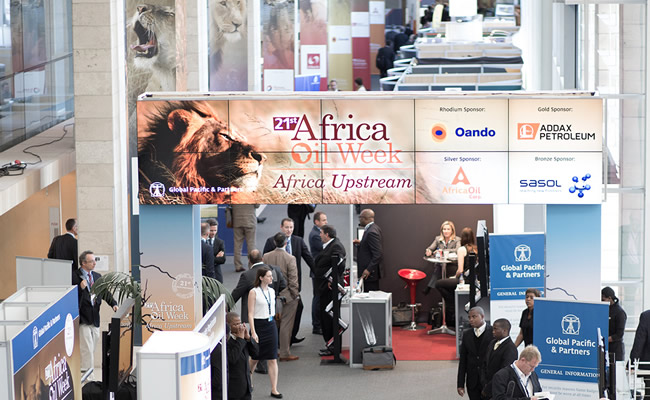
Stakeholders in the oil and gas industry in Africa are eagerly gearing up for the forthcoming 24th Africa Oil Week, which holds in Cape Town, South Africa, from 23-27 October.

At the moment, organisers of leading international oil and gas event have announced highlights of the internationally renowned programme.

The restrained business climate that has reigned over the industry for the past few years demanded that all operators review and adapt their business models and the way they operate. By the same token, the organisers of Africa Oil Week had to radically rethink the content for this year’s edition to meet the needs of delegates in search of solutions for tackling new challenges.

ITE’s Vice President for Africa, Sonika Greyvenstein, says, “We pride ourselves on being recognised as the world’s leading Africa-focused oil and gas event. To retain this title, we really had to think outside the box to design a programme that offers something over and above our renowned networking and deal-making opportunities – we want to give delegates access to revolutionary new ways of working, so they go away with knowledge, tools and methods to help them face a fast-evolving industry”.

The result is a programme strong on skills, solutions and strategies and infused with talks and debates of an ethical, political and motivational nature.

With the aim of providing the most current status of African and international policy, ITE has ramped up the presence of top ranking government officials. Rick Perry, US Energy Secretary, has been invited to speak as guest of honour at a session on global energy policy as well as during his department’s presentation of its LNG Handbook, designed to facilitate LNG projects in Sub-Saharan African nations.

In terms of African oil and gas ministers, participants will be able to engage directly with them on issues crucial to their investment plans and projects at the Ministerial Panel on African government strategies for “Attracting Operators and Investment”.

It includes presentations covering fiscal reforms and investment opportunities from the oil and gas ministers of Egypt, Angola, Equatorial Guinea, Ivory Coast, Republic of Congo and Namibia. South African Minister of Energy, Mmamoloko Kubayi, will open proceedings on Tuesday 24th October with a talk on the right energy mix for meeting environmental and development goals.

The Côte d’Ivoire Roadshow, presided over by Minister Thierry Tanoh, will promote the country’s hydrocarbons code and introduce its energy strategy 2020 along with available blocks coming up for licensing, thereby providing further opportunities for showcasing its investment environment as well as its petroleum code and legal and fiscal framework.

Mali, ranked one of the most dynamic countries in the region by the World Bank’s “Doing Business” report and winner of the AIM “Investment Award” for its incentive-strengthening reforms, is promoting its five oil-rich basins. Mr Hamed Ag Mohamed, Director-General of the Authority for the Promotion of Oil Research, will present the investment framework and its Public-Private Partnership policy.

A not-to-be-missed event is the debate  “Phasing Out Fossil Fuels: The Moral Case”. Alex Epstein, Founder and President of the Center for Industrial Progress and author of the New York Times bestseller, “The Moral Case for Fossil Fuels” will pitch his pro-fossil fuels argument against that of renewable energy development and investment pioneer Charlotte Aubin-Kalaidjian, co-Founder and CEO of GreenWish Partners. Later in the day, Mr Epstein is the guest speaker at the invitation-only VIP & CEO Luncheon, to be held in the Exhibition Ballroom.

Contributing to the cutting edge content is the AAPG Science Seminar, comprising three half-day forums focusing on energising the growing world through knowledge and technology. This is especially important considering that the new wave of exploration is spearheaded by digital technology which, in turn, paves the way for new careers.

This digital aspect of the industry is of special interest to the students and graduates attending the Young Professional Roundtable discussions, during which they will be looking at the capabilities and skills that will secure their future in a constrained job market.

With the evolution of the industry requiring operators and stakeholders to be more resourceful and inventive, Africa Oil Week is bringing out some big guns in terms of analysis, inspiration and motivation. Daniel Silke, South African futurist and leading political economy analyst, kicks off the third day of the conference with a keynote on Africa’s resilience.

Mr Silke is renowned for his insights into issues surrounding global change, volatility and the future of the world. Then there’s Gilan Gork, renowned mentalist and master of influence. As a guest speaker at the SA Rugby Museum Cocktail Reception, Gilan will challenge delegates thinking while intelligently entertaining and motivating them.

Along with these exciting and innovative additions to this year’s Africa Oil Week programme, each session now includes an interactive Q&A, during which delegates can engage on a wide range of issues. In addition, there is an official Africa Oil Week App for IOS & Android devices to give delegates up-to-date information about the event, speakers, programme, networking sessions and venues and enabling them to post questions, participate in polls and contact other delegates.

Delegates who register by 30th September qualify for the £300 Early Bird Discount while companies registering three or more delegates benefit from an additional 10% discount.

All registration fees include access to the 17th Africa Independents Forum and the 24th Africa Upstream Conference and Exhibition but exclude the 80th PetroAfricanus Dinner and 9th Global Women Petroleum & Energy Club Luncheon, which must be booked separately. Companies registering three or more delegates benefit from an additional 10% discount.


Dipo Olowookere is a journalist based in Nigeria that has passion for reporting business news stories. At his leisure time, he watches football and supports 3SC of Ibadan. Mr Olowookere can be reached via [email protected]

Click to comment

Leave a Reply

Your email address will not be published. Required fields are marked *

Economy

Senate Seeks Stronger Financial Sector Collaboration for Economic Stability

Published

on

Godswill akpabio Senate President

By Adedapo Adesanya

The Senate Committee on Banking, Insurance and Other Financial Institutions has called for stronger collaboration among financial sector regulators and other stakeholders to strengthen Nigeria’s financial system and support sustainable economic growth.

The committee made the call during an expanded stakeholders’ engagement in Lagos, attended by the leadership of the Central Bank of Nigeria (CBN), Nigeria Deposit Insurance Corporation (NDIC), Asset Management Corporation of Nigeria (AMCON), National Insurance Commission (NAICOM) and Nigeria Export-Import Bank (NEXIM), among other industry stakeholders and financial experts.

Chairman of the committee, Mr Adetokunbo Abiru (Lagos East), who was represented by Mr Osita Izunaso (Imo West), said stronger legislative reforms and regulatory collaboration were necessary to reposition Nigeria’s financial architecture for long-term economic prosperity.

Mr Abiru said the financial sector remained critical to investment, job creation, business expansion and macroeconomic stability, stressing that its ability to mobilise savings, channel credit to productive sectors, facilitate investment and manage risks was fundamental to sustainable economic growth.

He said the current economic realities required closer collaboration between the legislature and financial regulators, noting that challenges confronting the sector were interconnected and could not be effectively addressed through isolated interventions.

The lawmaker identified inflationary pressures, global economic uncertainties, cybersecurity threats, low insurance penetration and the need to diversify Nigeria’s export base as some of the challenges requiring coordinated policy responses.

He said the engagement was aimed at generating practical solutions to strengthen the country’s financial architecture and support sustainable economic growth.

According to him, monetary policy, financial safety nets, banking institutions, the insurance industry and export finance were interdependent components of a stable financial system and must therefore be strengthened collectively.

The Commissioner for Insurance and Chief Executive Officer of the National Insurance Commission (NAICOM), Mr Olusegun Ayo Omosehin, said the Nigeria Insurance Industry Reform Act (NIIRA) 2025 had contributed significantly to stabilising and repositioning the insurance sector.

Mr Omosehin disclosed that 43 insurance companies had successfully recapitalised, describing the development as a major milestone for the industry.

He commended Abiru and members of the committee for their role in advancing insurance sector reforms and urged the House of Representatives to expedite action on the relevant insurance reform bill to enable it to receive presidential assent and become operational.

Representatives of the CBN Governor and the Managing Directors of AMCON, NEXIM and NDIC also commended the Senate committee for its oversight and legislative support, saying its interventions had strengthened the agencies’ capacity to discharge their statutory mandates.

The engagement, held under the theme, Strengthening Financial System Architecture for Sustainable Economic Growth and Stability in Nigeria, also featured presentations by Professor Uche Uwaleke, President of Capital Market Academics of Nigeria (CMAN); Professor Biodun Adedipe, Chief Consultant, B. Adedipe Associates Limited; and Dr Tilewa Adebajo, Chief Executive Officer of CFG Advisory.

The experts presented policy recommendations on key issues affecting Nigeria’s financial system, with emphasis on financial stability, investment and sustainable economic growth.

Mr Abiru said the Senate would continue to engage financial regulators and other stakeholders to deepen financial inclusion, strengthen public confidence in financial institutions and improve regulatory effectiveness.

He said the broader objective was to position Nigeria’s financial system to compete more effectively in the global economy while remaining resilient and responsive to the country’s economic transformation agenda.

Continue Reading

Economy

Caverton Declares N8.7bn Half-Year Loss Amid 10.9% Shrink in Revenue

Published

on

Caverton

By Aduragbemi Omiyale

The first six months of 2026 were not too good for Caverton Offshore Support Group Plc, as it suffered an N8.7 billion loss compared with the N2.1 billion net profit it recorded in the same period of 2025.

This occurred as the company posted a 10.91 per cent decline in earnings between January and June 2026, according to its financial statements for the period ended June 30, 2026.

Analysis of the results showed that the revenue generated in the period under review stood at N14.7 billion versus the N16.5 billion printed in the corresponding period of last year.

Business Post observed that the revenue was negatively impacted by a decline in earnings from helicopter charter and helicopter/airplane contract.

Further analysis of the financial results indicated that operating profit went down by 22.34 per cent to N7.3 billion from N9.4 billion, with administrative expenses jumping to N7.9 billion from N4.7 billion.

But Caverton believes things will get better, noting that the clearest driver of the recovery is Caverton Marine.

Through its relationship with Stena Bulk, one of the world’s leading tanker operators, the organisation now participates in three Suezmax tankers trading a rare source of foreign-currency revenue for a Nigerian-listed company.

It noted that the relationship is being deepened through Unity Shipping Worldwide, a joint venture with the Nigerian National Petroleum Company (NNPC) Limited and Stena Bulk that pairs the state-owned oil firm’s national position and Stena Bulk’s fleet with Caverton’s indigenous operating platform

Closer to home, the firm’s OMIBUS platform, developed with Shanghai-based electric-propulsion OEM Explomar, is bringing battery-electric passenger ferries to Lagos waterways. A prototype is already in service, and Caverton holds a firm order from Lagos State for ten vessels, an early-mover position in clean inland-water transport that the group believes can be replicated across other states as the fleet enters service and ferry operations mature into steady, recurring revenue.

In aviation, the institution said the recovery is anchored on its partnership with NHV, a Belgium-based international helicopter operator, with the restructuring of charter operations targeted for the second half of 2026.

“The first half of the year tested us, but the direction of travel is now visible in the numbers.

“Quarter on quarter, we are working to build up our revenue to narrow losses. Our marine business units, from international tankers to electric ferries, are scaling.

“Meanwhile, our aviation relaunch is on track for the second half, and our cost base is tighter than it has been in years. There is distance still to travel, but Caverton is moving from stabilisation to recovery, and we intend to finish 2026 with that momentum intact,” the chief executive of Caverton, Mr Olabode Makanjuola, stated.

Continue Reading

Economy

NRS, JRB Issue Guidelines for Taxation of Virtual Assets

Published

on

virtual assets taxation

By Adedapo Adesanya

The Nigeria Revenue Service (NRS) and the Joint Revenue Board (JRB) have issued new guidelines clarifying the taxation of virtual assets in Nigeria.

The guidelines provide an administrative framework for the taxation of virtual assets and specify the tax obligations of individuals and businesses operating in the sector.

According to a public notice issued by the two agencies, the framework covers registration, reporting and record-keeping requirements, valuation principles and the tax treatment of virtual asset transactions.

It applies to taxpayers, Virtual Asset Service Providers (VASPs), peer-to-peer (P2P) marketplace operators, tax practitioners and other persons engaged in virtual asset-related activities.

The NRS and JRB said the guidelines were developed in line with the provisions of the Nigeria Tax Act 2025 and the Nigeria Tax Administration Act 2025.

The two bodies said the release was aimed at providing clarity, certainty and consistency in the administration of Nigeria’s tax laws as the country’s virtual asset ecosystem continues to evolve.

The agencies added that the framework would promote voluntary compliance, enhance transparency and support the development of a fair and efficient tax system for digital asset transactions.

They urged all affected taxpayers and stakeholders to familiarise themselves with the guidelines and ensure compliance with the applicable tax obligations.

The guidelines are available on the official websites of the two agencies.

Continue Reading