Connect with us

Economy

Mining: FG Hires 100 Experts to Boost Earnings

Published

on

By Dipo Olowookere

No fewer than 100 revenue consultants have been engaged by the Federal Government to help boost earnings from the mining sector of the country’s economy.

The experts are expected to help the government block leakages in the revenue accrued from the industry, which is still largely untapped in the country.

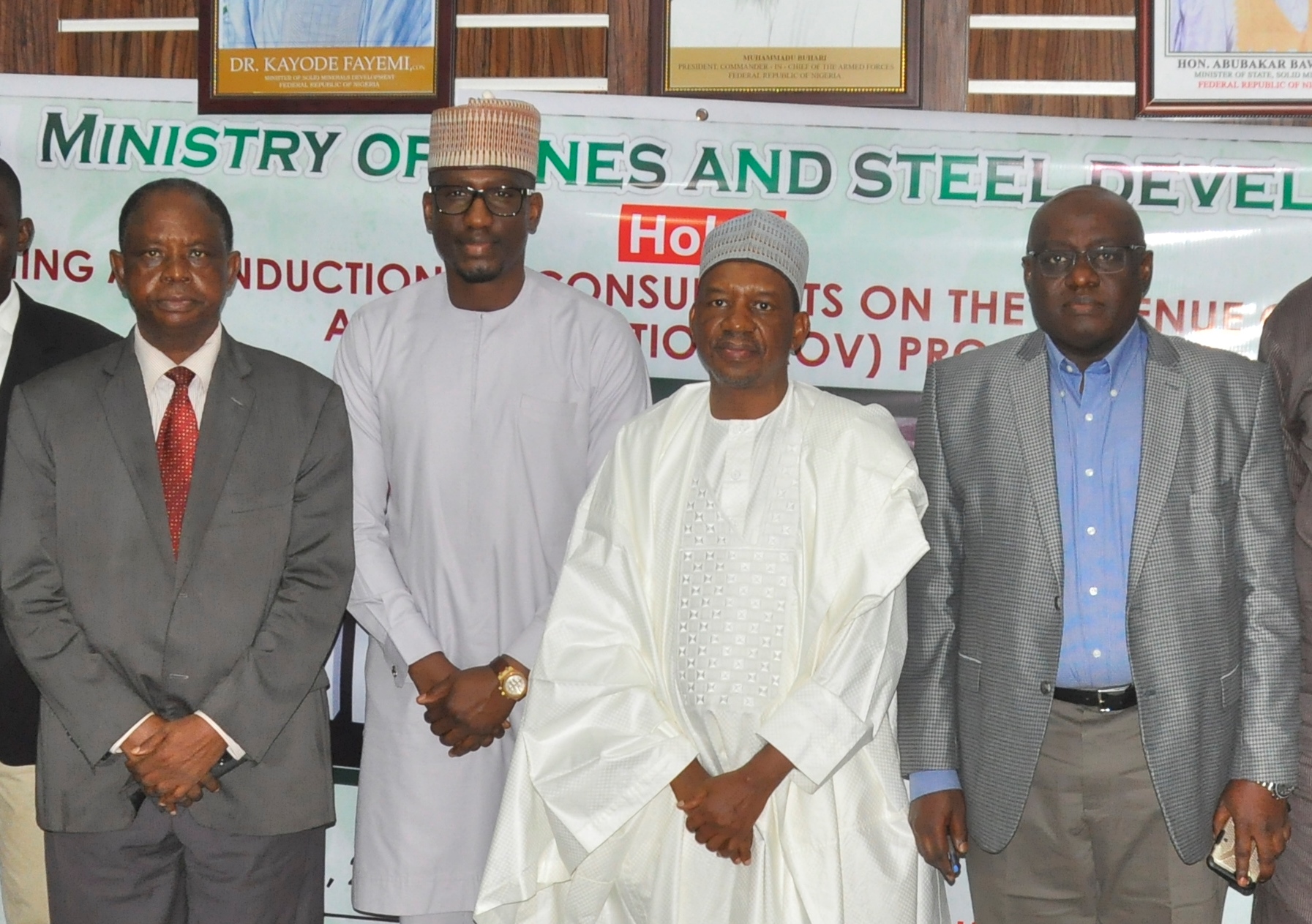
Minister of Mines and Steel Development, Mr Kayode Fayemi, explained that the consultants would be deployed to the six geo-political zones of Nigeria in the coming week are to examine financial and production records of companies involved in mining activities in the last six years.

After this, they will determine whether appropriate royalties were remitted to government by these firms.

Mr Fayemi, speaking at the three-day induction and training for the Revenue Consultants in Abuja on Monday, noted that the main target of the ministry was to ensure that the Federation Account gets its fair due in royalties and taxes.

According to the Minister, the project, tagged ‘Revenue Optimization and Verification Project,’ would assist in blocking leakages in the mining sector, thereby positioning the sector to achieve its set agenda of contributing significantly to the GDP.

The Minister noted that the consultants, who have already been grouped into all the 36 states in the six geopolitical zones of the country, are to commence work after the training programme.

He said, “Our expectation of this project is that the Ministry would emerge as a lead revenue agency for the Federal Government of Nigeria, in line with the growth projections of the Economic Recovery and Growth Plan (ERGP), which recognizes the mining sector as one of Nigeria’s most promising growth sectors, and acknowledges that its contribution to GDP doubled from N52 billion in 2010 to N103 billion in 2015.

“The ERGP further projects that revenue the mining sector would grow from N103 billion (2015) to N141 billion (2020) at an average annual growth rate of 8.54 per cent (2017-2020).”

Mr Fayemi said he was optimistic that the ministry would surpass these targets, as all stakeholders work collaboratively to ensure the success of the R.O.V. Project, resulting in improved levels of voluntary compliance of operators.

The Minister admitted that leakages in government revenue was a big challenge in the mining sector, a development, which he said the ministry was determined to redress with the ROV Project, following its approval by the National Economic Council (NEC).

He said, “The R.O.V Project is an initiative of our ministry, pursuant of one of our core mandates, which is to significantly increase the contribution of the Mining Sector to our sovereign revenue.

“Indeed, leakages in government revenue remain a big challenge in the sector, which we are working collaboratively with other government entities and sector stakeholders to fix. We have given considerable thought to this challenge and come up with a number of strategies to tackle it, one of which we are witnessing its launch today.

“I am therefore pleased to announce that following the approval of the National Economic Council (NEC), we are today inaugurating a new model of revenue generation and collection in the mining sector. This entails the engagement of Professional Revenue Consultants who would work with our ministry’s mining officers to identify revenue leakages in the system.

“The Revenue Optimization and Verification Project essentially seeks to confirm the adequacy of royalties’ remittances made by the various operators in the mining industry. They are mandated to collect and analyse data from 2012 – 2017 in the course of their work, thus giving us the opportunity to demand and receive accruals due to government from the referenced period.

“It would also ensure compliance of all operators to paying the correct amount in royalties to the government coffers going forward.”

The Minister said the exercise will be carried out in line with the provisions of Section 17 of the Nigeria Mineral and Mining Act of 2007 which empowers the Mining Inspectorate Division of the Ministry to supervise and enforce compliance of laws and also section 43 of the Nigeria Mineral and Mining Act of 2007 which mandates mining operators to keep and supply records upon request by the ministry.

Speaking further, the Minister who was represented by the Permanent Secretary of the Ministry, Dr Muazu Abdullahi, said the project was not designed to witch hunt anybody, even as he warned the consultants to avoid any shady deals.

“This is not a witch hunting initiative, but the exercise of the statutory responsibility of the Ministry to determine the adequacy of remittances made by the various operators in the mining industry,” he said.

Mr Fayemi added that, “The image and reputation of the Ministry of Mines and Steel Development, and indeed the entire Federal Government of Nigeria is key during this Revenue Optimization and Verification Project; therefore, we charge all consultants to stand for what this government stands for by avoiding any form of compromise, illegality and unprofessional conduct.

The Project Coordinator, Mr Makinde Araoye, said the projects is at no cost to the Ministry as the National Economic Council approval stated that consultants and the ministry take a certain percentage of whatever is recovered.

“NEC approved 15 per cent as cost of collection, out of the 15 per cent. The consultant will be paid a certain percentage of what they recover, the lead consultant will be paid a certain percentage of what they recover and the Ministry will also retain certain percentage as cost of collection”, he added.


Dipo Olowookere is a journalist based in Nigeria that has passion for reporting business news stories. At his leisure time, he watches football and supports 3SC of Ibadan. Mr Olowookere can be reached via [email protected]

Advertisement
Click to comment

Leave a Reply

Your email address will not be published. Required fields are marked *

Economy

Police, Capital Market Regulators Partner for Nigeria’s Economic Growth

Published

on

IGP Egbetokun capital market regulators

By Aduragbemi Omiyale

The Nigeria Police Force (NPF) has promised to work with the Securities and Exchange Commission (SEC) and the Nigerian Exchange (NGX) Group Plc for the prevention of financial crime, and the reinforcement of trust and confidence in Nigeria’s capital market.

The Inspector General of Police, Mr Kayode Egbetokun, gave this assurance on Wednesday at the closing gong ceremony in his honour at the NGX in Lagos.

The police chief said, “A transparent and well-regulated capital market is vital to Nigeria’s economic growth. The Nigeria Police Force remains committed to working with regulators and market operators to prevent financial crime, protect investors, and uphold the integrity of our financial system.”

Earlier in his welcome address, the chairman of NGX Group, Mr Umaru Kwairanga, commended the leadership of the police in supporting market integrity.

“Market integrity is a shared responsibility. By honouring the Inspector-General of Police, we are reinforcing the importance of institutional alignment in protecting investors and preserving trust in our financial system.

“Strong collaboration between regulators, enforcement agencies, and market infrastructure institutions is essential to building a resilient and credible market that supports economic growth,” he stated.

The Director-General of SEC, Mr Emomotimi Agama, while speaking, emphasized the importance of coordinated enforcement, noting: “Investor protection is at the core of market regulation, and today’s engagement highlights how critical collaboration with law enforcement is to achieving that mandate. This partnership strengthens our enforcement capacity, enhances deterrence against illegal investment activities, and reinforces confidence in the Nigerian capital market.”

As for the chairman of NGX Limited, Mr Ahonsi Unuigbe, “A transparent and orderly market can only thrive where rules are respected and misconduct is addressed decisively. The presence of the Nigeria Police Force in this collective effort sends a strong signal that safeguarding the market is a national priority.”

Similarly, the chief executive of NGX Group, Mr Temi Popoola, stressed the importance of aligning innovation with oversight, pointing out that, “Technology and market growth must be supported by strong enforcement and investor protection frameworks. Our collaboration with the SEC and the Nigeria Police Force reflects a unified approach to preserving the credibility of Nigeria’s capital market.”

Continue Reading

Economy

NASD OTC Exchange Closes Green by 0.09%

Published

on

NASD OTC exchange

By Adedapo Adesanya

The NASD Over-the-Counter (OTC) Securities Exchange rallied by 0.09 per cent on Wednesday, February 4, amid renewed appetite for unlisted stocks.

This lifted the NASD Unlisted Security Index (NSI) by 3.18 points to 3,641.30 points from the previous session’s 3,641.30 points and raised the market capitalisation by N1.9 billion to N2.180 trillion from the N2.178 trillion quoted on Tuesday.

The bourse recorded three price gainers and four price losers at the midweek session.

The advancers were led by Air Liquide Plc, which went up by N2.04 rise to end at N22.53 per share versus the previous session’s N20.49 per share, Central Securities Clearing System (CSCS) added 97 Kobo to sell at N44.97 per unit versus N44.00 per unit, and Acorn Petroleum Plc appreciated by 2 Kobo to N1.37 per share from N1.35 per share.

On the flip side, Geo-Fluids Plc lost 55 Kobo to sell at N6.26 per unit versus N6.81 per unit, Nipco Plc depreciated by 48 Kobo to trade at N259.00 per share versus N259.48 per share, FrieslandCampina Wamco Nigeria Plc declined by 40 Kobo to N63.10 per unit from N63.50 per unit, and Industrial and General Insurance (IGI) depleted by 1 Kobo to 65 Kobo per share from 66 Kobo per share.

Yesterday, the volume of trades slid by 64.5 per cent to 2.5 million units from 7.0 million units, the value of transaction decreased by 53.2 per cent to N17.7 million from N37.9 million, and the number of deals went down by 47.1 per cent to 18 deals from 34 deals.

CSCS Plc remained the most traded stock by value on a year-to-date basis with 16.0 million units valued at N652.6 million, followed by FrieslandCampina Wamco Nigeria Plc with 1.7 million units exchanged for N111.2 million, and Geo-Fluids Plc with 11.7 million units traded for N76.1 million.

CSCS Plc was also the most active stock by volume on a year-to-date basis with 16.0 million units sold for N652.6 million, trailed by Mass Telecom Innovation Plc with 13.3 million units worth N5.3 million, and Geo-Fluids Plc with 11.7 million units valued at N76.1 million.

Continue Reading

Economy

Naira Rallies to N1,358/$1 at Official Market, N1,450/$1 at Parallel Market

Published

on

Naira parallel market

By Adedapo Adesanya

The Naira rallied at the different segments of the foreign exchange (FX) market on Wednesday as supply continues to outweigh demand, giving it an edge against the United States Dollar.

In the parallel market, the Nigerian Naira improved its value on the greenback yesterday by N5 to quote at N1,450/$1 compared with the previous day’s N1,455/$1, and at the GTBank FX desk, it gained N3 to trade at N1,383/$1, in contrast to Tuesday’s exchange rate of N1,386/$1.

In the the Nigerian Autonomous Foreign Exchange Market (NAFEX), which is also the official market, the Naira firmed up against the Dollar at midweek by N14.63 or 1.1 per cent to settle at N1,358.28/$1 versus the preceding session’s N1,372.91/$1.

Against the Pound Sterling, the domestic currency appreciated on Wednesday by N14.16 to N1,863.43/£1 from the previous day’s N1,877.59/£1, and gained N13.73 on the Euro to end at N1,606.03/€1 versus the N1,619.76/€1 it was exchanged a day earlier.

The strengthening of the Naira value has been driven by the injection of forex into the financial markets by foreign investors seeking attractive investments in the emerging markets, helping to boost Nigeria’s external reserves, which provide the Central Bank of Nigeria (CBN) with the capacity to support the local currency.

As of February 4, 2026, the reserves reached $46.59 billion.

The local currency has been able to find a solid path despite no indications of any intervention from the apex bank in recent week, strengthening the case of price discovery.

Policy moves by the CBN is also offering a backbone for the FX market as it considers some strategic reforms through a policy known as the Single Regulatory Window.

In its 2025 Fintech Report, the central bank said this scheme will significantly reduce time-to-market for new digital financial products by streamlining licensing and supervisory processes across multiple agencies.

Meanwhile, the cryptocurrency market was in red amid a broad sell-off in global technology stocks, with reports showing that liquidity was notably thin, amplifying price moves and contributing to forced liquidations. The decline followed a sharp sell-off in global technology stocks overnight, where concerns over the pace of artificial intelligence adoption and rising capital spending by major firms weighed heavily on valuations.

Bitcoin (BTC) lost 7.9 per cent to sell at $70,534.94, Ripple (XRP) declined by 11.2 per cent to $1.42, Binance Coin (BNB) slumped by 9.4 per cent to $689.70, Ethereum (ETH) crashed by 8.9 per cent to $2,072.46, and Solana (SOL) dipped by 8.7 per cent to $89.86.

In addition, Dogecoin (DOGE) depreciated by 6.9 per cent to $0.1008, Cardano (ADA) slipped by 6.8 per cent to $0.2792, Litecoin (LTC) dropped 5.1 per cent to trade at $57.56, and US Dollar Tether (USDT) went down by 0.1 per cent to $0.9980, while the US Dollar Coin (USDC) closed flat at $1.00.

Continue Reading

Trending