Connect with us

Banking

Businessman Loses Billions of Naira, Properties to First Bank

Published

on

By Dipo Olowookere

Properties worth millions of Naira and money worth billions of Naira have been lost to First Bank by a businessman and owner of SmartMicro, Mr Michael Obasuyi Osasogie.

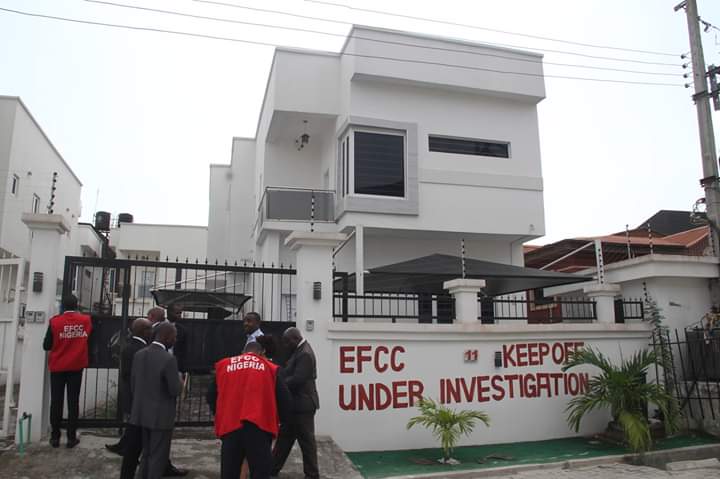
The items, which include a total of 116 cars and 20 landed properties scattered in Edo, Rivers and Lagos States, were seized by the Economic and Financial Crimes Commission (EFCC) and handed over to the financial institution on Wednesday, November 28, 2018.

Trouble began for Mr Osasogie after a petition he wrote to the anti-corruption agency against E-tranzact in March 2018.

The commission had, however, investigated Mr Osasogie’s business interests, following receipt of a counter-petition written by e-tranzact against him and one of his companies, SmartMicro.

SmartMicro was said to have approached e-tranzact in 2012 for the deployment of bulk purchase solution called “Corporatepay” to facilitate payment of salaries of Delta State employees in microfinance banks.

It was also alleged that e-tranzact configured an additional outbound fund transfer solution called “Fundgate” in 2017, which required SmartMicro to maintain a pre-funded settlement account with First Bank Plc for settlement of account it had initiated.

However, e-tranzact had further alleged that the bank, sometime in March 2018, revealed that the settlement account was in debit of N11,498,944,038.29.

Mr Osasogie, in his statement to the EFCC, confessed to have committed the crime, stating that he created fraudulent and imaginary monies through the aid of Fundgate Financial Application from the company.

Consequently, Mr Osasogie was arraigned alongside his firms-Platinum Multi-Purpose Co-operative Society, SmartMicro Systems Limited and Platinum Smart Cruise Motors Limited on May 24, 2018 before Justice Justice Mojisola Dada of the Special Offences Court sitting in Ikeja on a 14-count charge bordering on stealing to the tune of N11.5 billion.

One of the counts reads: “That you, Michael Obasuyi Osasogie, Platinum Multi-Purpose Co-operative Society, SmartMicro Systems Limited and Platinum Smart Cruise Motors Limited, sometime in the year 2016 in Lagos within the jurisdiction of this Honourable Court, conspired to commit felony, to wit: stealing of the sum of N11,498, 944, 038.29 property of First Bank Nigeria Ltd.”

He pleaded guilty to the charge preferred against.

During his trial, an investigator with the EFCC, Orji Chukwuma, had told the court how the proceeds of crime were housed in some new generation banks.

Led in evidence by the prosecution counsel, Rotimi Oyedepo, Chukwuma had told the court that “SmartMicro Systems Limited assumed a position of a fictitious microfinance bank in Nigeria through a software, Micro switch Server 1.1 created by the defendant as well as two genuine microfinance banks, which he used to carry out his fraud.

“The defendant later opened an account with First Bank Plc and subsequently raised an overdraft from his fictitious microfinance bank for his account in the bank, which it ignorantly paid.”

In his further testimony, the witness had told the court that when e-tranzact disconnected from the chain, all the transactions carried out by the defendant collapsed on his own account with First Bank, thereby leading to the discovery of the fraud.

The sums of N2,903,727,563.92, $37,992.87 and €18,538.09 were recovered by the commission from Mr Osasogie’s accounts in various banks in the country.

The agency also recovered 116 cars and 20 properties located in Lagos, Abuja, Benin and Port Harcourt.

The prosecution counsel had, therefore, urged the court to convict the defendant on counts one to 14, according to the law.

The defendant later entered into plea bargain. The prosecution counsel therefore urged the court to consider the plea bargain entered into by the defendant on May 21, 2018 as judgment in his sentencing.

Counsel to the first and second defendant, Osasu Ogebor, had told the court that his clients went into a plea bargain in order to give out what does not belong to him.

“It is not enough for the accused person to say I am sorry for what he has done. But from his inner heart, he is absolutely sorry, my Lord”, Ogebor had pleaded.

Counsels to the third and fourth defendants also aligned themselves with Ogebor’s prayers.

Delivering her judgment, Justice Dada convicted the defendant on all the counts and sentenced him to one-year imprisonment.

The Judge also ordered the forfeiture of defendant’s 116 buses, 20 properties and monies in various accounts to First Bank Plc.

At the hand- over ceremony, which held in one of the forfeited houses at Osapa London, Lekki-Lagos, Kaina Garba, Head Asset Forfeiture and Recovery Management Unit of the EFCC, Lagos office, handed over the documents and keys to the properties to Gabriel Edobor, Head, Remedial and Classified Assets Management Department, First Bank Plc and Eme Godwin, Group Head, Legal Unit, E-transact.

In a show of appreciation, both Edobor and Godwin thanked the EFCC for ensuring the recovery of the properties through diligent and uncompromising investigative efforts.

Dipo Olowookere is a journalist based in Nigeria that has passion for reporting business news stories. At his leisure time, he watches football and supports 3SC of Ibadan. Mr Olowookere can be reached via [email protected]

Banking

Cardtonic vs Cleva Virtual Card: What Nigerians Should Know Before Choosing

Published

on

Cardtonic Cleva virtual cards

The growing digital economy and the Naira card payment restriction have accelerated the rise of virtual card payments. From a single virtual card operator in 2015, Nigerians now have as many options. They can literally get a virtual card in Nigeria today from several platforms.

But among the most popular are highly reliable options like Cardtonic and Cleva. Both virtual cards deliver an excellent experience for shoppers and freelancers in Nigeria alike. They are accepted across global stores and online payment platforms.

Cardtonic is best for making subscription payments, like paying for YouTube Premium. While Cleva is for receiving foreign payments internationally. It is also one of the best ways to send money to Nigeria.

So between Cardtonic and Cleva, which virtual card would you choose? This article explains everything you need to know before choosing a particular option. Let’s get into it

Cardtonic Vs Cleva Virtual Card: Head-to-Head

Let’s compare Cardtonic and Cleva based on value proposition, card creation and other fees, funding options, global acceptance, rating and social sentiment, and extra perks.

S/No Factor Cardtonic Cleva
1. Value Proposition Affordable. High Reliability. Flexible funding. Receive payment from abroad.
2. Card Creation and Other Fees  $1.5 Card Creation Fee. 2% Funding Fee $3 Card Creation Fee. 1% Funding Fee
3. Funding Options Bank Transfer; Gift Cards Bank Transfer; Foreign Payment
4. Global Acceptance Wider acceptance at global locations Wide Acceptance
5. Rating and Social Sentiment 43.6% Positive Sentiment. 36.7% Positive Sentiment


6. Extra Perks Multi-purpose app Sleek User Interface. Speedy Customer Support.

1.    Overview and Value Proposition

Cardtonic:

Nigeria’s premium gift card brand, Cardtonic, offers virtual cards so users can navigate international payment restrictions without stress. It’s the most flexible option around, letting you fund your wallet in Naira via bank transfer or gift cards.

Furthermore, Cardtonic’s conversion fees are also very competitive, whether you are converting from Naira to USD or vice versa. You are guaranteed to get the best value for your funds.

One thing that truly stands out is that Cardtonic isn’t a one-off provider; it’s a full-scale fintech solution. Within a single app, you can access virtual dollar cards and pay utility bills, trade gift cards, shop for gadgets, and even buy eSIMs.

But how do you set up a Cardtonic virtual card? Getting started is quite straightforward. You need to download the Cardtonic app, complete KYC, and then create a virtual card in-app and fund it.

Then head to your payment page, key in your card details, just as you would use a physical card, and boom! Your payment goes through instantly.

Cleva:

Cleva is a standard solution that lets you make and receive international payments in USD. You open a Cleva USD account, and you get a virtual card linked to your account. Well, it isn’t automatic; you need to create the card and pay the card creation fee.

Cleva is particularly well-suited for freelancers and offers an alternative to major payment platforms like PayPal. You can use Cleva to receive payment from major freelance sites like Fiverr and Upwork

Unlike Cardtonic, Cleva allows you to receive and make payments. It’s not either/or; it’s both.

Once the payment arrives in your USD account, you can convert and pay out in Naira. Otherwise, you can use them to fund your virtual cards so you can shop online and pay for digital subscriptions.

2.    Card Creation and Other Fees

Cardtonic charges a low card creation fee of $1.5 for a regular card and $5 for the platinum version. Unlike the regular cards, the platinum cards offer extra flexibility. You can add them to your digital wallet, like Apple/Google Pay, to make quick payments from your device without ever needing a physical card.

Additionally, Cardtonic has no monthly or maintenance fees, so you’re never charged if your card goes unused. What’s more? Cardtonic’s funding fees are capped at 2% of the Naira value. And when you indeed make a transaction, you get charged just a fraction as transaction fees.

Lastly, the Cardtonic app is one of the few platforms where you can get the best exchange rates when converting between USD and Naira. The rates often match the prevailing market price.

On the flip side, Cleva offers a low-fee structure. For example, you get charged just $1 for up to $100; that is 1% funding fees, cheaper than most payment providers. Its card creation fee isn’t over the roof either. You get charged only $3, with $1 credited to your card balance and available for use.

But similar to Cardtonic, there are no card maintenance fees whatsoever. Cleva does not charge rent; you are free to use your card at any time and you only get charged when you do so.

3.    Funding Options

Cardtonic offers the most seamless card funding options: You can fund your digital wallet in Naira via bank transfer or even gift cards. Once your wallet is funded, you can convert Naira to USD and top up your virtual dollar card. You can then pay or shop at your favorite global platforms like Amazon and Macy’s.

When it comes to Cleva, it’s a little different. You can fund your Cleva virtual card via a bank transfer from within or outside Nigeria. You always have decent options, like US wire, ACH, or even stablecoins, available for you to receive payment from abroad.

Stablecoin payments are available for remote workers whose clients pay in crypto. They are typically settled in less than 5 minutes and provide an effective way to fund your Cleva USD account.

4.    Global Acceptance

The Cardtonic virtual card is a popular payment option supported at global merchants, particularly at vendors that accept Visa or Mastercard. That said, you can shop at eBay or Amazon and subscribe to ChatGPT, Google Cloud, and Workspace.

You also get to enjoy contactless payment. Another extra value added. You add your platinum virtual card to Apple or Google Pay and pay simply by tapping your device on supported payment terminals. That’s speed and convenience merged into one.

Other platforms where the Cardtonic virtual cards are accepted include Grammarly, Twitter Blue, Google Ads, YouTube Premium, Canva Pro, and Adobe Creative Cloud.

Comparatively, Cleva is accepted at global locations with the Visa or Mastercard logos. Like Cardtonic, you can shop at your favorite global e-commerce stores like Amazon or eBay. Additionally, you can use your Cleva virtual card to subscribe to Netflix or run Facebook or Google ads.

5.    Rating and Social Sentiments

While both products are strong options for paying internationally, ratings on Google Play showed that Cardtonic has a 4.6-star rating out of 20k reviews. Cleva, on the other hand, has received 4.7 out of 5k reviews. However, you should keep in mind that Cardtonic has way more product offerings than Cleva.

Secondly, the Virtual Card in Nigeria Report indicates that Cardtonic is hugely more popular than its counterpart. It has a stronger total number of X mentions than Cleva: 278 total tweets, ahead of Cleva’s 49.

Social sentiment also favors Cardtonic over the Cleva virtual card. Cardtonic led with a positive score of 43.6%, ahead of Cleva’s 36.7%. Overall, Cardtonic is praised for its reliability in supporting Apple and Namecheap payments, while Cleva is recognized for its sleek user interface and speedy support.

Frequently Asked Questions About Cleva and Cardtonic Virtual Card

  1. Which Virtual Card is Best in Nigeria?

The best virtual card in Nigeria currently is Cardtonic due to its high reliability. Since its launch in 2024, it has continually enabled Nigerians to pay across popular global destinations without stress.

Besides, the Cardtonic virtual card is cost-effective and provides the strongest security and the most flexible funding options.

  1. Cardtonic vs. Cleva: Which is Cheaper?

Overall, Cardtonic is cheaper: In terms of card creation fees, Cardtonic charges $1.5 compared to Cleva’s $3. And as regards card funding fees, Cardtonic charges about 1.5% on Naira deposits, with a maximum of 2,000 Naira overall. Alternatively, Cleva charges only 1% for funding in USD.

  1. Can Funds be Added in Naira?

Yes, Cardtonic lets you fund your digital wallet directly in Naira via bank transfer or gift card sales. Alternatively, Cleva has also launched its Naira funding feature. With this, you can transfer from any local bank app and have your Cleva NGN account credited.

  1. Cardtonic vs. Cleva: What Should Nigerians Consider Before Choosing?

It is important to consider your use case before choosing between the Cardtonic and Cleva virtual cards. For example, if you want to receive funds from abroad, choose Cleva. If you wish to make a payment or subscribe to popular channels, then you can choose from either Cardtonic or Cleva. However, Cardtonic offers a full fintech package.

Other factors to consider before choosing a virtual card include fees and exchange rates. If you want lower fees or the best conversion rates, the Cardtonic virtual card is your best option.

  1. Can Cleva Receive Money from Abroad?

Yes, Cleva has a USD account feature that allows users to receive payments via US wire or ACH from global locations. Additionally, Cleva supports stablecoins, so you can also receive USDT and USDC from abroad directly to your USD wallet.

  1. How Long Does it Take to Receive Payment on Cleva?

It all depends on the payment option. General ACH payment takes 1–3 business days. While wire transfer from the US takes 1 to 2 days. Meanwhile, stablecoins take less than five minutes.

Conclusion

Cardtonic vs. Cleva: Which should you choose? Well, it all depends on your needs and preferences. Choose Cardtonic if you need an all-in-one app for fintech payments and gift card trading.

Then choose Cleva if you’re a remote worker looking for an alternative means to receive payment from abroad. They may not be as popular as their counterparts, but they do work.

Cardtonic clearly outperforms Cleva, as evidenced by its user feedback and statistics. It has way more users, the most flexible funding, and the cheapest fees, and it clearly supports a wider range of platforms than Cleva.

Continue Reading

Banking

Coronation Merchant Bank Targets Top-Tier African Status in Next Growth Phase

Published

on

Coronation Merchant Bank Group1

By Adedapo Adesanya

Coronation Merchant Bank has set its sights on attaining top-tier status among African banks, leveraging a decade of operations and Nigeria’s ongoing economic reforms to drive its next phase of growth across key sectors.

Speaking at the Chairman’s Dinner held to commemorate the bank’s 10th anniversary in Lagos, the chief executive of the lender, Mr Paul Abiagam, said the institution had successfully carved out a distinct niche in Nigeria’s highly competitive financial services market despite a decade defined by economic volatility, policy shifts and macroeconomic uncertainty.

“Over the last 10 years, we have found our own space in a very tight market and built credible footprints in the specific markets we chose to serve,” Mr Abiagam said.

Describing the bank’s journey as “valiant” amid the changing economic landscape, he said the anniversary represents both a moment of gratitude to the bank’s founder, shareholders, board and partners, and a recommitment to scale new heights in the decade ahead.

Mr Abiagam attributed the bank’s resilience and steady growth to strong shareholder and board support, as well as a clear and disciplined corporate strategy.

He noted that Coronation Merchant Bank’s focus on defined target markets had enabled it to expand its footprint across key sectors of the economy while maintaining operational clarity.

Looking ahead, the CEO said ongoing reforms and the Federal Government’s ambition to build a $1 trillion economy present significant opportunities for financial institutions with the right expertise and positioning.

He identified infrastructure, construction, real estate, oil and gas, and manufacturing as priority sectors where the bank is already aligning its strategy.

“Volatility often comes with opportunity, What we see clearly is opportunity, and our strategy is to ensure we are well positioned to take advantage of it.” Mr Abiagam said.

Among the bank’s notable milestones, Mr Abiagam highlighted its international credit ratings, placing Coronation among a small group of internationally rated merchant banks in Nigeria.

He also pointed to human capital as a core strength, describing the bank’s people and talent as its greatest asset.

In his remarks, the Chairman of Coronation Merchant Bank, Mr Babatunde Folawiyo, reflected on the challenges of operating in Nigeria’s banking sector over the past decade, noting that the true measure of success lies in an institution’s ability to grow through uncertainty and emerge stronger.

“Anyone who has operated in Nigeria’s banking space over the last 10 years knows how challenging it has been,” Mr Folawiyo said, citing policy changes, macroeconomic shifts and leadership transitions. “The real test is whether you can grow through those challenges—and we have.”

Mr Folawiyo said recent reforms have introduced greater certainty into the economy, particularly in the foreign exchange market, which is critical for business planning and sustainable growth. While acknowledging that the adjustment period has been difficult, he stressed that predictability, even at higher exchange rates, is far more beneficial than extreme volatility.

“No business thrives without some level of stability. What hurts the economy most is wild and sudden swings. Predictability allows businesses to plan, adjust and grow,” he said.

On the outlook for the sector, Mr Folawiyo said Nigeria remains significantly underbanked, creating room for diverse players within the financial system. While technology and fintechs are expanding access to financial services, he emphasized the enduring role of specialized institutions such as merchant banks in serving corporate and structured finance needs.

“A corporate client structuring commercial papers or complex funding solutions needs more than a fintech app. It needs a bespoke, one-stop financial partner. That is where merchant banks like ours play a critical role,” the Chairman said.

He added that Coronation Merchant Bank’s strategy is anchored on long-term economic fundamentals rather than political cycles, noting that the current policy direction of the Central Bank and the Federal Government, though initially painful, aligns with sound economic principles.

“These are textbook reforms. There is no gain without pain, and we are already beginning to see the gains, not just in the financial sector but across the broader economy,” he added.

Continue Reading

Banking

S&P Forecasts 25% Credit Growth for Nigerian Banks in 2026

Published

on

Nigerian Banks

By Adedapo Adesanya

Nigerian banks are expected to post stronger credit growth of up to 25 per cent in 2026 while retaining positive profitability, according to a new outlook by S&P Global Ratings.

In its Nigerian Banking Outlook 2026, S&P said improved lending to key sectors of the economy alongside resilient non-interest income would help banks absorb the impact of regulatory headwinds and easing interest rates.

The ratings agency projected credit growth of between 20 and 25 per cent in 2026, driven largely by increased investments in oil and gas, agriculture and manufacturing.

It added that the outlook for lending was supported by expectations of moderating inflation and gradual monetary easing, following recent interest rate cuts by the Central Bank of Nigeria (CBN).

“We expect credit growth of about 20-25 per cent supported by investments in the oil and gas, agriculture, and manufacturing sectors. Although interest rates have started to decrease, profitability should stay resilient in 2026, supported by growth in non-interest income (NII) and lower provisions.

“We expect Nigerian banks to prove resilient and capable of preserving their profitability in 2026,” S&P said, noting that earnings would be supported by transaction driven fees, commissions and a still elevated cost of risk, even as margins come under pressure.

The ratings agency noted further that it expects nominal lending growth to remain high at about 25 per cent, supported largely by investments in the oil and gas sector, agriculture and manufacturing.

S&P said Nigerian banks would continue to benefit from rates that remain high relative to peers, supporting net interest margins while interest rates are expected to decline further in 2026.

“Although interest rates have started to decline, we expect rates to remain high relative to peers, which will continue to support banks’ net interest margins through 2026.

“We forecast the average return on equity (ROE) will normalise at 20-23 per cent in 2026 compared to 25 per cent estimated for 2025, while return on assets will decline marginally to 3.0-3.1 per cent from an estimated 3.3 per cent in 2025. Profitability will be supported by still high interest margins, growing NII, and slightly lower provisions, while capital issuance will increase the equity base leading to a lower ROE.

“Although interest rates have started to decline, we expect rates to be high relative to peers, which will continue to support the banks’ net interest margins through 2026. We forecast an average margin drop of about 50bps to 100bps in 2026, as banks’ margins will continue to benefit from higher yields on government securities and large recourse to low-cost customer deposits.”

Continue Reading

Trending